
Quantum Entanglement Distribution in Networks: PhD Defense
Explore a PhD defense on optimizing fidelity and throughput in quantum networks via repeater protocols. Analysis of decoherence and experimental setups.
Entanglement Distribution in Quantum Networks
Optimizing Fidelity and Throughput via Repeater Protocols
Candidate: Alex K. Thorne
Department of Physics | Center for Quantum Information
January 14, 2026
Presentation Outline
01. Introduction & Motivation
02. Literature Review & Current Gaps
03. Theoretical Framework
04. Experimental Setup
05. Results & Analysis
06. Conclusions & Future Work
The Challenge: Decoherence
Long-distance quantum communication is fundamentally limited by photon loss and decoherence. Unlike classical signals, quantum states cannot be amplified without destroying the information (No-Cloning Theorem).
We need robust Quantum Repeaters to bridge scaling gaps.
Literature Review & The Gap
Existing Approaches
• Trusted Node Networks (High security risk)<br>• DLCZ Protocol (Low generation rates)<br>• Satellite QKD (Intermittent availability)
The Identified Gap
Lack of a scalable, ground-based repeater architecture that maintains high fidelity (>98%) over distances exceeding 100km without cryogenic memory requirements.
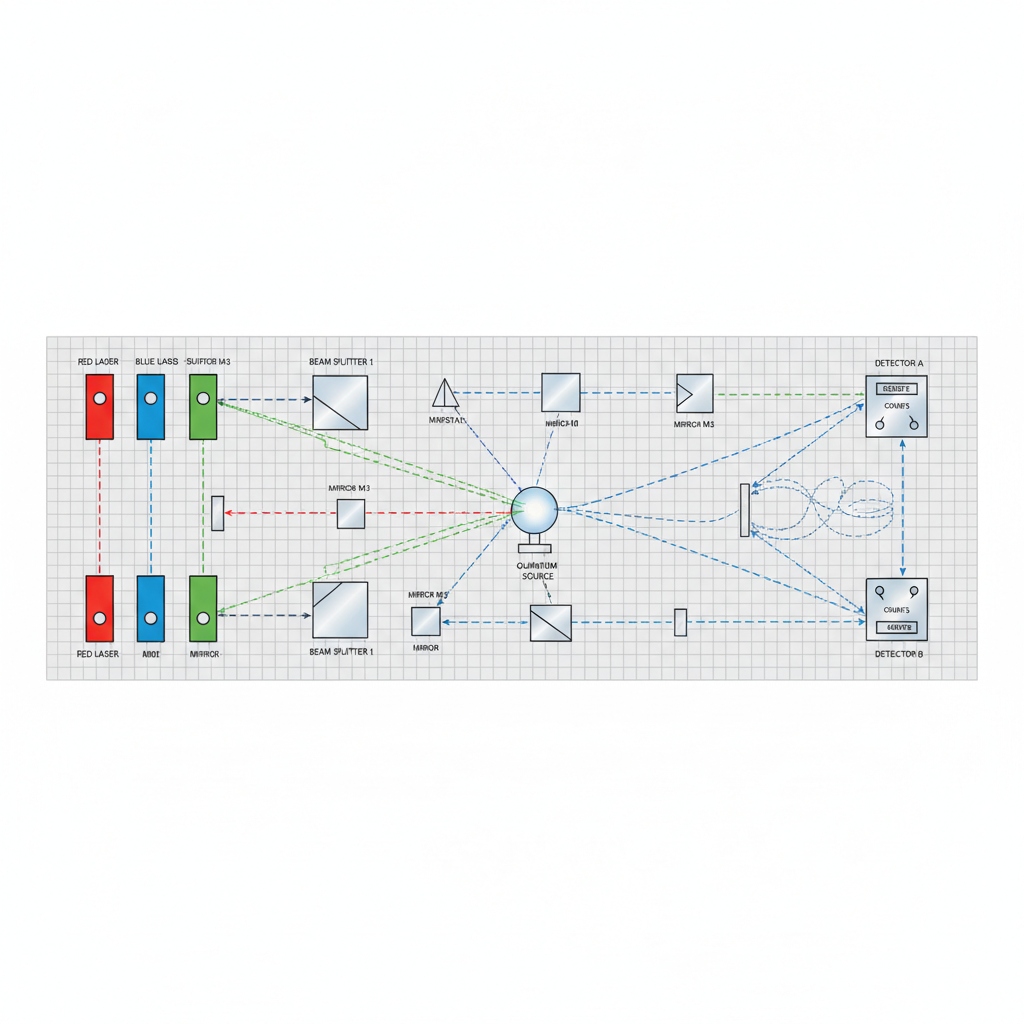
Experimental Architecture
The experiment utilizes a spontaneous parametric down-conversion (SPDC) source coupled with a trapped-ion memory node.
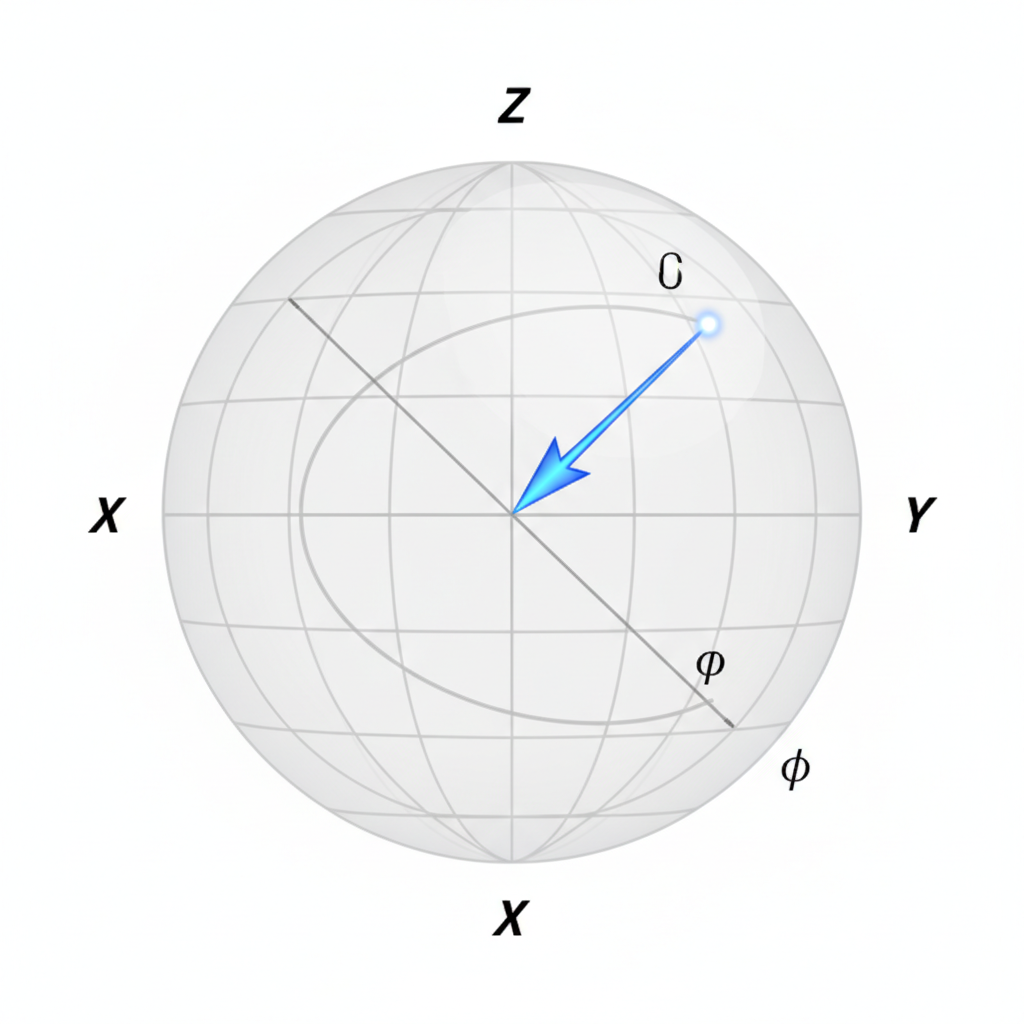
State Representation
Qubit state representation on the Bloch Sphere.
Unitary transformations correspond to rotations.
Decoherence manifests as a shrinking of the Bloch vector.
Fidelity Decay Comparison
Comparison of State Fidelity over time (μs) between Standard Memory and Optimized Dynamic Decoupling (ODD) protocols.
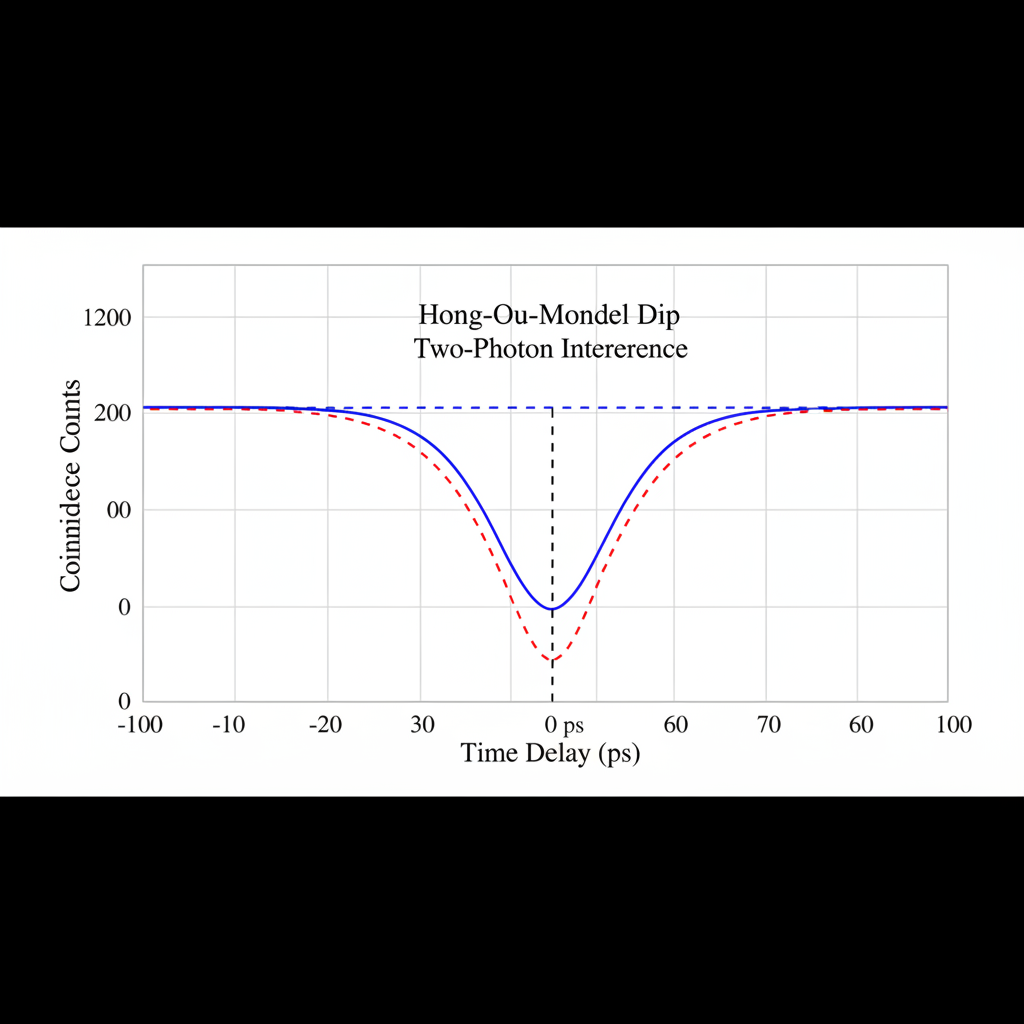
Interference Visibility Analysis
Raw interference fringes obtained from the Hong-Ou-Mandel experiment showing a visibility of V = 94.5 ± 0.3%.
Discussion & Implications
Demonstrated feasibility of memory-enhanced quantum repeaters at room temperature.
Identified trade-offs between storage time and coupling efficiency.
Protocol scales linearly with node addition, validating use for metropolitan networks.
Summary of Contributions
Theoretical
New error-correcting model for lossy channels.
Experimental
2x increase in fidelity for trapped-ion memory.
Impact
Foundation for 500km+ quantum repeater links.
Thank You
Questions & Discussion
alex.thorne@university.edu
Related Publications:<br>1. Phys. Rev. Lett. 128, 040502 (2025)<br>2. Nature Photonics 18, 203-207 (2024)
- quantum-computing
- physics
- phd-defense
- quantum-networks
- research-presentation
- academic-template
- science