





Made byBobr AI

Analyzing 'Upon a Wasp Chilled with Cold' by Edward Taylor

A comprehensive CIE AS Level Literature guide to Edward Taylor's poem. Exploration of themes, metaphysical conceits, and spiritual metaphors.

#edward-taylor#as-level-literature#poetry-analysis#puritan-poetry#metaphysical-conceit#literary-devices#cie-english
Watch
Pitch

Upon a Wasp Chilled with Cold

Edward Taylor | CIE AS Level Literature Analysis

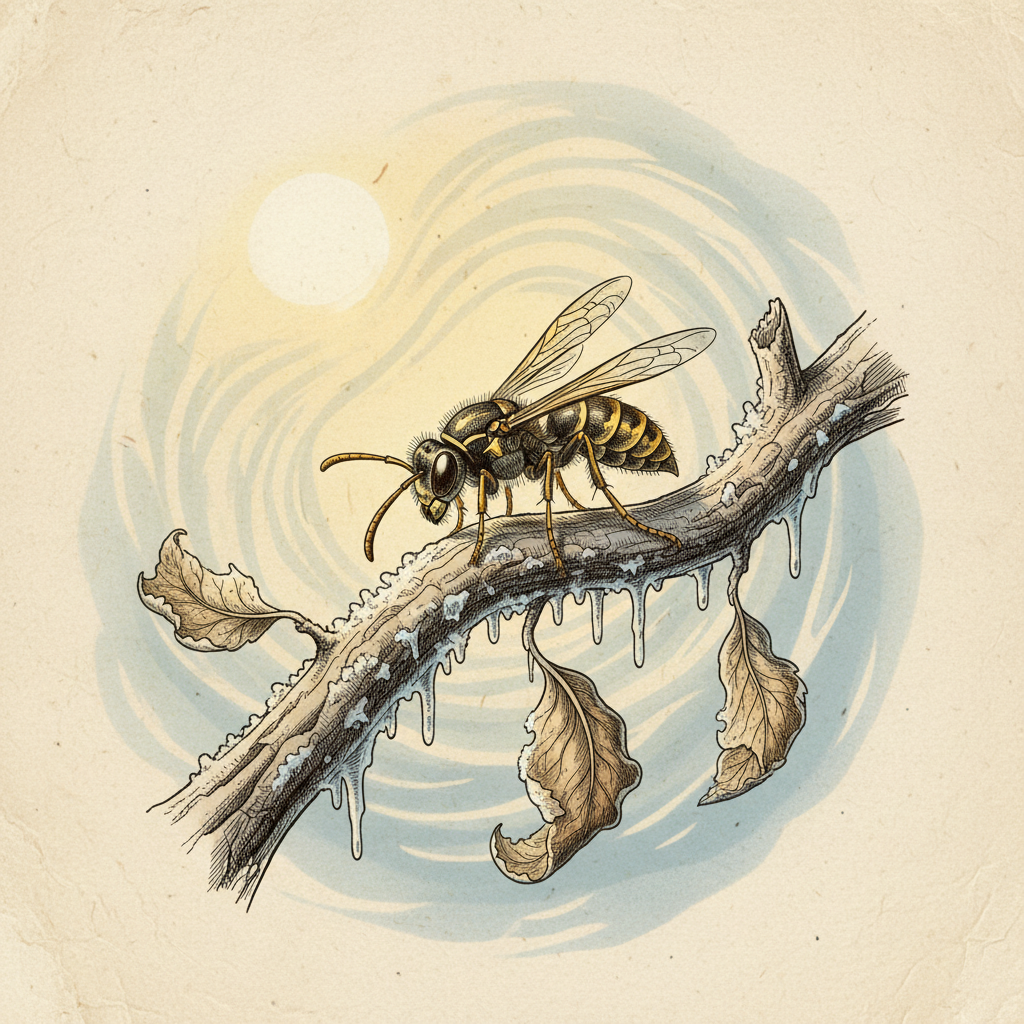
Vintage scientific botanical illustration of a wasp resting on a frosted wooden branch, detailed etching style, warm sunlight breaking through cold mist, parchment texture background
Made byBobr AI

Pre-Reading: Warmth & Revival

Before reading, consider this metaphor:

Think of a time you were so cold you couldn't move your fingers. How did it feel to finally get warm?

In religious terms, 'coldness' often represents a lack of faith or sin. 'Warmth' represents Grace. Keep this in mind.

Abstract artistic concept showing a transition from icy blue cracked frozen textures on the left to warm golden melting amber light on the right
Made byBobr AI

Context: Edward Taylor (1642–1729)

  • Puritan Minister: Emigrated to New England in 1668 to escape religious persecution. Served in Westfield, Massachusetts.
  • Private Poet: His poetry was not published during his lifetime. It was an act of private worship, not for public fame.
  • The 'Meditations': Written as preparation for the Lord's Supper. They are introspective, examining his own soul's state.
Oil painting style portrait of a Puritan minister from the 17th century sitting at a rough wooden desk writing on parchment by candlelight, austere room
Made byBobr AI

Poem & Glossary

Text

The Bear that breathes the Northern blast Did numb, Torpedo-like, a Wasp Whose stiffened limbs encramped, lay bathing In Sol's warm breath and shine as saving, Which with her hands she chafes and stands Rubbing her legs, shanks, thighs, and hands. Her petty toes, and fingers ends Nipped with this breath, she out extends Unto the sun, in great desire To warm her digits at that fire. Doth hold her temples in this state Where yet in him she doth personate Rational praise; and to near the sky Within her little ship doth fly, A velvet wasp, of petite flight And yet her humming is delightful. Lord, clear my misted sight that I May hence view thy Divinity, Some spark whereof thou up dost hasp Within this little downy Wasp...

Glossary

The Bear: The constellation Ursa Major, representing the cold North wind.

Torpedo: The electric ray fish, known for numbing its prey with a shock.

Sol: The Sun (Latin); symbolises God and His warming Grace.

Chafes: Rubs parts of the body together to generate warmth.

Shanks: The legs or lower limbs.

Petty: Small or little (derived from the French 'petit').

Personate: To represent, embody, or act out the role of.

Hasp: A metal fastener or latch; here, meaning to lock or secure something inside.

Made byBobr AI

Analysis: The Cold State (Stanza 1)

1. Personification: Taylor personifies the Cold as 'The Bear that breathes the Northern blast'. It is an active, aggressive force attempting to numb life, representing the hostility of the physical world.
2. Spiritual Implication: The cold represents the state of the human soul without God—numb, stiff, and paralyzed by sin ('encramped'). The soul is unable to act or praise until warmed.

Student Task

Identify three verbs Taylor uses to describe the Cold's actions in the first four lines. How do these verbs create a sense of vulnerability for the wasp (and the soul)?

Artistic illustration of a constellation bear blowing cold icy wind, dark blue and white tones, vintage engraving style
Made byBobr AI

Analysis: Revival by the Sun (Stanza 1 cont.)

1. Domestic Imagery: The wasp acts with human-like deliberation ('rubbing her legs', 'chafes her hands'). Words like 'velvet', 'petticoat', and 'satin' domesticate the insect, linking the natural world to human experience.
2. Rational Praise: Her grooming is an act of worship. By responding to the sun (God's grace) and caring for the body God gave her, she offers 'Rational Praise'—worship through being what she was created to be.

Student Task

Why does Taylor use fabric metaphors ('velvet helmet', 'satin')? How does this soft, luxurious imagery contrast with the earlier 'Northern blast'?

Macro close-up painting of a golden wasp grooming its antenae in bright sunlight, highly detailed, warm amber and gold tones
Made byBobr AI

Analysis: The Prayer (Stanza 2)

'Lord, clear my misted sight that I / May hence view thy Divinity'

1. The Shift: Taylor moves from observing the wasp (3rd person) to addressing God directly (2nd person). The wasp becomes an object lesson for his own soul.

2. The Lesson: If a small, simple wasp can contain a spark of divinity, how much more should the human soul? He asks for his 'misted sight' (sin/doubt) to be cleared so he can buzz with praise like the wasp.

Student Task

The poet refers to himself as an 'Other' to the wasp. Compare the wasp's reaction to the sun with the poet's desired reaction to God. What prevents the poet from reacting as naturally as the wasp?

Made byBobr AI

Consolidating Analysis: Independent Tasks

Writing Task 1: The Conceit

Write a paragraph explaining how Taylor uses the wasp as a 'Metaphysical Conceit'. How does the physical revival of the insect map onto the spiritual revival of the Puritan believer? Use evidence from both stanzas.

Key Vocabulary to use:

  • Metaphysical Conceit
  • Microcosm
  • Grace
  • Transformation

Writing Task 2: Critical Commentary

Select two lines from the poem that you find most effective in conveying the 'numbing' effect of cold. Analyze how the sound (alliteration, consonance) and rhythm reinforce the meaning.

Focus on:

  • Phonological effects (sound)
  • Rhythm and Pace
  • Visual Imagery
Made byBobr AI

Major Themes

Divine Grace: The sun warms the wasp freely. Grace is a gift from God, necessary for the soul's survival.

Human Frailty vs. God s Power: The wasp is helpless against the cold without the sun, just as humans are helpless against sin without God.

Nature as Teacher: Taylor uses the Book of Nature to understand the Book of Scripture. The smallest creature teaches a theological lesson.

Surreal illustration of a human hand reaching towards a glowing warm sun, with a small wasp resting on the finger, symbolic of grace
Made byBobr AI

Literary Techniques (AO2)

Metaphysical Conceit

An extended, elaborate metaphor comparing two unlike things: The Wasp's physical chilling/warming <-> The Soul's spiritual death/revival.

Diction (Choice of Words)

Use of 'diminutive' words (little, petty, small) and domestic/homespun words (rubbing, toes, petticoat). effects: Creates intimacy and highlights God's care for the small.

Structure & Form

Short lines mimicking the smallness of the wasp. Simple rhyme scheme reflecting the simplicity of the lesson.

Made byBobr AI

Possible AS Level Exam Questions

Option A: Theme Focus

Discuss the ways in which Taylor presents the relationship between the natural world and the spiritual world in 'Upon a Wasp Chilled with Cold'.

Option B: Detailed Analysis

Comment closely on the effects of the imagery and diction used in the poem.

Tip: Always link the 'Method' (Technique) to the 'Meaning' (Analysis).
Made byBobr AI

Essay Plan Scaffold (Option A)

THESIS: Taylor uses the wasp as a 'Type' or symbol to demonstrate how divine grace transforms the paralyzed human soul.

Point 1: The Initial State (Stanza 1). Analyze the cold/paralysis imagery. Method: Personification of 'Bear' and 'North'. Effect: Establishes human helplessness.

Point 2: The Transformation. Analyze the sun imagery. Method: Kinetic imagery (rubbing, chafing). Effect: Shows the active power of Grace.

Point 3: The Spiritual application. Analyze the final address to God. Method: Shift in tone to prayer. Effect: Confirms the poem is a devotional meditation.

Made byBobr AI
Bobr AI

DESIGNER-MADE
PRESENTATION,
GENERATED FROM
YOUR PROMPT

Create your own professional slide deck with real images, data charts, and unique design in under a minute.

Generate For Free

Analyzing 'Upon a Wasp Chilled with Cold' by Edward Taylor

A comprehensive CIE AS Level Literature guide to Edward Taylor's poem. Exploration of themes, metaphysical conceits, and spiritual metaphors.

Upon a Wasp Chilled with Cold

Edward Taylor | CIE AS Level Literature Analysis

Pre-Reading: Warmth & Revival

Before reading, consider this metaphor:

Think of a time you were so cold you couldn't move your fingers. How did it feel to finally get warm?

In religious terms, 'coldness' often represents a lack of faith or sin. 'Warmth' represents Grace. Keep this in mind.

Context: Edward Taylor (1642–1729)

Puritan Minister: Emigrated to New England in 1668 to escape religious persecution. Served in Westfield, Massachusetts.

Private Poet: His poetry was not published during his lifetime. It was an act of private worship, not for public fame.

The 'Meditations': Written as preparation for the Lord's Supper. They are introspective, examining his own soul's state.

The Bear that breathes the Northern blast Did numb, Torpedo-like, a Wasp Whose stiffened limbs encramped, lay bathing In Sol's warm breath and shine as saving, Which with her hands she chafes and stands Rubbing her legs, shanks, thighs, and hands. Her petty toes, and fingers ends Nipped with this breath, she out extends Unto the sun, in great desire To warm her digits at that fire.

Doth hold her temples in this state Where yet in him she doth personate Rational praise; and to near the sky Within her little ship doth fly, A velvet wasp, of petite flight And yet her humming is delightful. ... Lord, clear my misted sight that I May hence view thy Divinity, Some spark whereof thou up dost hasp Within this little downy Wasp...

(Selected excerpts for analysis)

The Bear that breathes the Northern blast Did numb, Torpedo-like, a Wasp Whose stiffened limbs encramped, lay bathing In Sol's warm breath and shine as saving, Which with her hands she chafes and stands Rubbing her legs, shanks, thighs, and hands. Her petty toes, and fingers ends Nipped with this breath, she out extends Unto the sun, in great desire To warm her digits at that fire. Doth hold her temples in this state Where yet in him she doth personate Rational praise; and to near the sky Within her little ship doth fly, A velvet wasp, of petite flight And yet her humming is delightful. Lord, clear my misted sight that I May hence view thy Divinity, Some spark whereof thou up dost hasp Within this little downy Wasp...

<p><strong>The Bear:</strong> The constellation Ursa Major, representing the cold North wind.</p> <p><strong>Torpedo:</strong> The electric ray fish, known for numbing its prey with a shock.</p> <p><strong>Sol:</strong> The Sun (Latin); symbolises God and His warming Grace.</p> <p><strong>Chafes:</strong> Rubs parts of the body together to generate warmth.</p> <p><strong>Shanks:</strong> The legs or lower limbs.</p> <p><strong>Petty:</strong> Small or little (derived from the French 'petit').</p> <p><strong>Personate:</strong> To represent, embody, or act out the role of.</p> <p><strong>Hasp:</strong> A metal fastener or latch; here, meaning to lock or secure something inside.</p>

Analysis: The Cold State (Stanza 1)

Taylor personifies the Cold as 'The Bear that breathes the Northern blast'. It is an active, aggressive force attempting to numb life, representing the hostility of the physical world.

The cold represents the state of the human soul without God—numb, stiff, and paralyzed by sin ('encramped'). The soul is unable to act or praise until warmed.

Identify three verbs Taylor uses to describe the Cold's actions in the first four lines. How do these verbs create a sense of vulnerability for the wasp (and the soul)?

Analysis: Revival by the Sun (Stanza 1 cont.)

The wasp acts with human-like deliberation ('rubbing her legs', 'chafes her hands'). Words like 'velvet', 'petticoat', and 'satin' domesticate the insect, linking the natural world to human experience.

Her grooming is an act of worship. By responding to the sun (God's grace) and caring for the body God gave her, she offers 'Rational Praise'—worship through being what she was created to be.

Why does Taylor use fabric metaphors ('velvet helmet', 'satin')? How does this soft, luxurious imagery contrast with the earlier 'Northern blast'?

Analysis: The Prayer (Stanza 2)

'Lord, clear my misted sight that I / May hence view thy Divinity'

Taylor moves from observing the wasp (3rd person) to addressing God directly (2nd person). The wasp becomes an object lesson for his own soul.

If a small, simple wasp can contain a spark of divinity, how much more should the human soul? He asks for his 'misted sight' (sin/doubt) to be cleared so he can buzz with praise like the wasp.

The poet refers to himself as an 'Other' to the wasp. Compare the wasp's reaction to the sun with the poet's desired reaction to God. What prevents the poet from reacting as naturally as the wasp?

Consolidating Analysis: Independent Tasks

Write a paragraph explaining how Taylor uses the wasp as a 'Metaphysical Conceit'. How does the physical revival of the insect map onto the spiritual revival of the Puritan believer? Use evidence from both stanzas.

Select two lines from the poem that you find most effective in conveying the 'numbing' effect of cold. Analyze how the sound (alliteration, consonance) and rhythm reinforce the meaning.

Major Themes

Divine Grace: The sun warms the wasp freely. Grace is a gift from God, necessary for the soul's survival.

Human Frailty vs. God s Power: The wasp is helpless against the cold without the sun, just as humans are helpless against sin without God.

Nature as Teacher: Taylor uses the Book of Nature to understand the Book of Scripture. The smallest creature teaches a theological lesson.

Literary Techniques (AO2)

Metaphysical Conceit

An extended, elaborate metaphor comparing two unlike things: The Wasp's physical chilling/warming <-> The Soul's spiritual death/revival.

Diction (Choice of Words)

Use of 'diminutive' words (little, petty, small) and domestic/homespun words (rubbing, toes, petticoat). effects: Creates intimacy and highlights God's care for the small.

Structure & Form

Short lines mimicking the smallness of the wasp. Simple rhyme scheme reflecting the simplicity of the lesson.

Possible AS Level Exam Questions

Option A: Theme Focus

Discuss the ways in which Taylor presents the relationship between the natural world and the spiritual world in 'Upon a Wasp Chilled with Cold'.

Option B: Detailed Analysis

Comment closely on the effects of the imagery and diction used in the poem.

Tip: Always link the 'Method' (Technique) to the 'Meaning' (Analysis).

Essay Plan Scaffold (Option A)

THESIS: Taylor uses the wasp as a 'Type' or symbol to demonstrate how divine grace transforms the paralyzed human soul.

Point 1: The Initial State (Stanza 1). Analyze the cold/paralysis imagery. Method: Personification of 'Bear' and 'North'. Effect: Establishes human helplessness.

Point 2: The Transformation. Analyze the sun imagery. Method: Kinetic imagery (rubbing, chafing). Effect: Shows the active power of Grace.

Point 3: The Spiritual application. Analyze the final address to God. Method: Shift in tone to prayer. Effect: Confirms the poem is a devotional meditation.

  • edward-taylor
  • as-level-literature
  • poetry-analysis
  • puritan-poetry
  • metaphysical-conceit
  • literary-devices
  • cie-english