




Made byBobr AI

Architectural Design Architecture Portfolio: Process & Form

Explore a comprehensive architecture portfolio covering spatial order, Michael Heizer's land art, environmental mapping, and urban morphology analysis.

#architecture-portfolio#spatial-investigation#site-analysis#urban-morphology#michael-heizer#architectural-design#design-process
Watch
Pitch
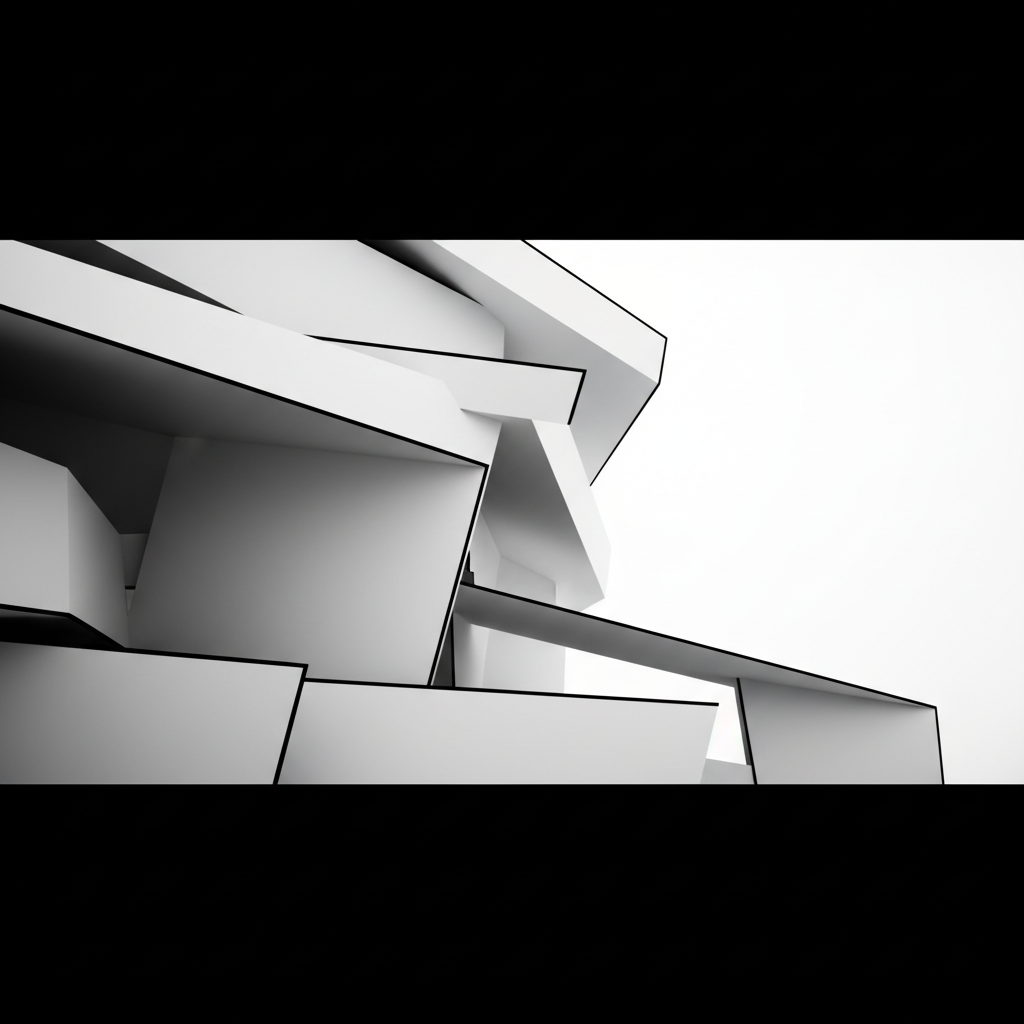
abstract monochrome architectural structure with dramatic lines and high contrast, minimalist, 8k resolution

SPATIAL INVESTIGATIONS: PROCESS & FORM

AD4623 Assessment 001 | Felix Adebayo

Made byBobr AI
clean minimal desk workspace with architectural tools, rolled blueprints, and a scale ruler, high key lighting

DESIGN NARRATIVE

This portfolio documents a progression from abstract structural studies to concrete site analysis. It explores the relationship between mass, void, and environmental context through iterative modeling, photography, and mapping.

1. Spatial Order & Grid Logic 2. Light, Shadow & Photography 3. Artist Research: Michael Heizer 4. Site Analysis: Context & Environment
Made byBobr AI

PHASE 01: SPATIAL ORDER

Exploration of grid logic utilizing planar materials. The objective was to establish structural coherence through folding procedures, interlocking mechanics, and recursive repetition, strictly avoiding adhesive connections to test inherent structural integrity.

architectural study model made of folded white paper and cardboard, abstract geometric shapes, studio lighting
close up of cardboard architectural model showing joint details and interlocks, minimalist
Made byBobr AI

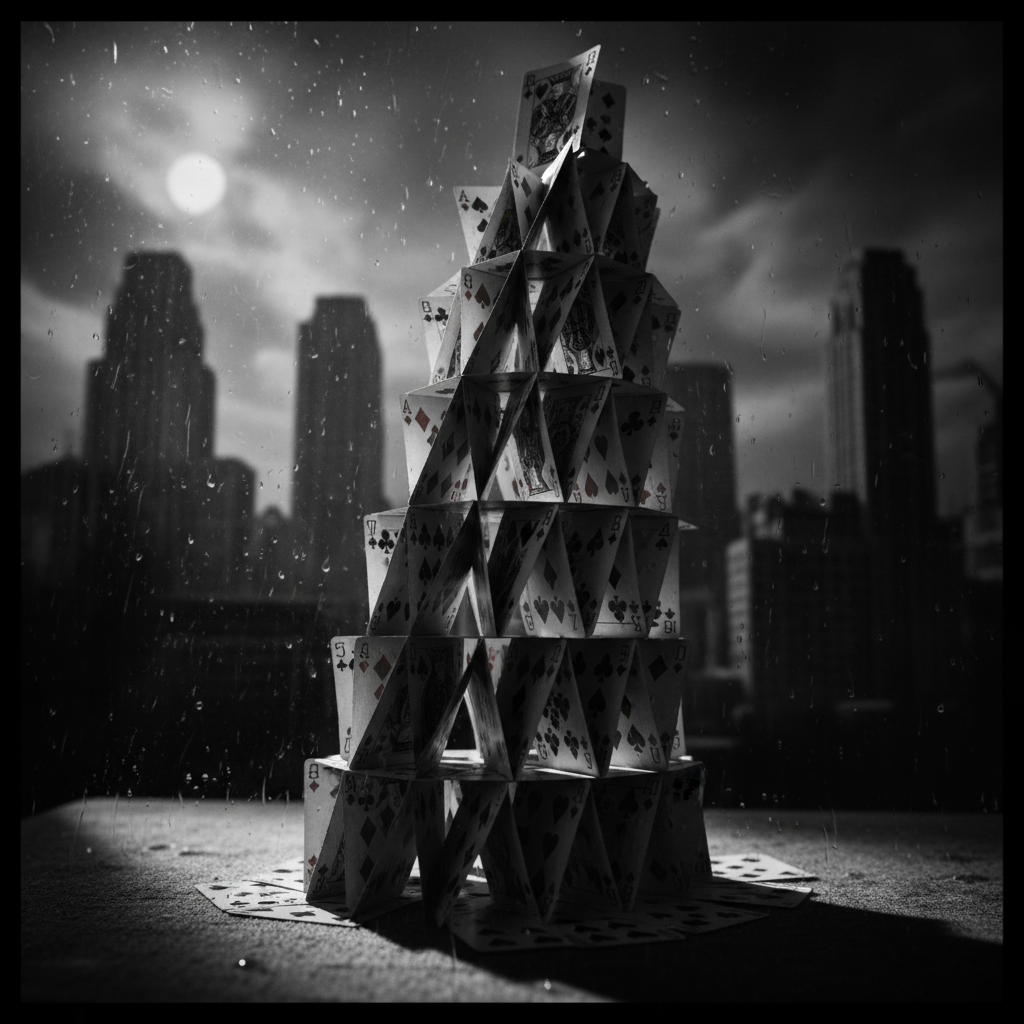
PHASE 02: PHOTOGRAPHY & LIGHT

  • Investigation of luminous flux and its role in manipulating formal perception.
  • Structural experimentation utilizing modular elements to test tensile limits.
  • High-contrast monochromatic photography employed to analyze the mass-void dialectic.
black and white artistic architectural photography of playing cards built into a tower structure, dramatic shadows, noir style
Made byBobr AI
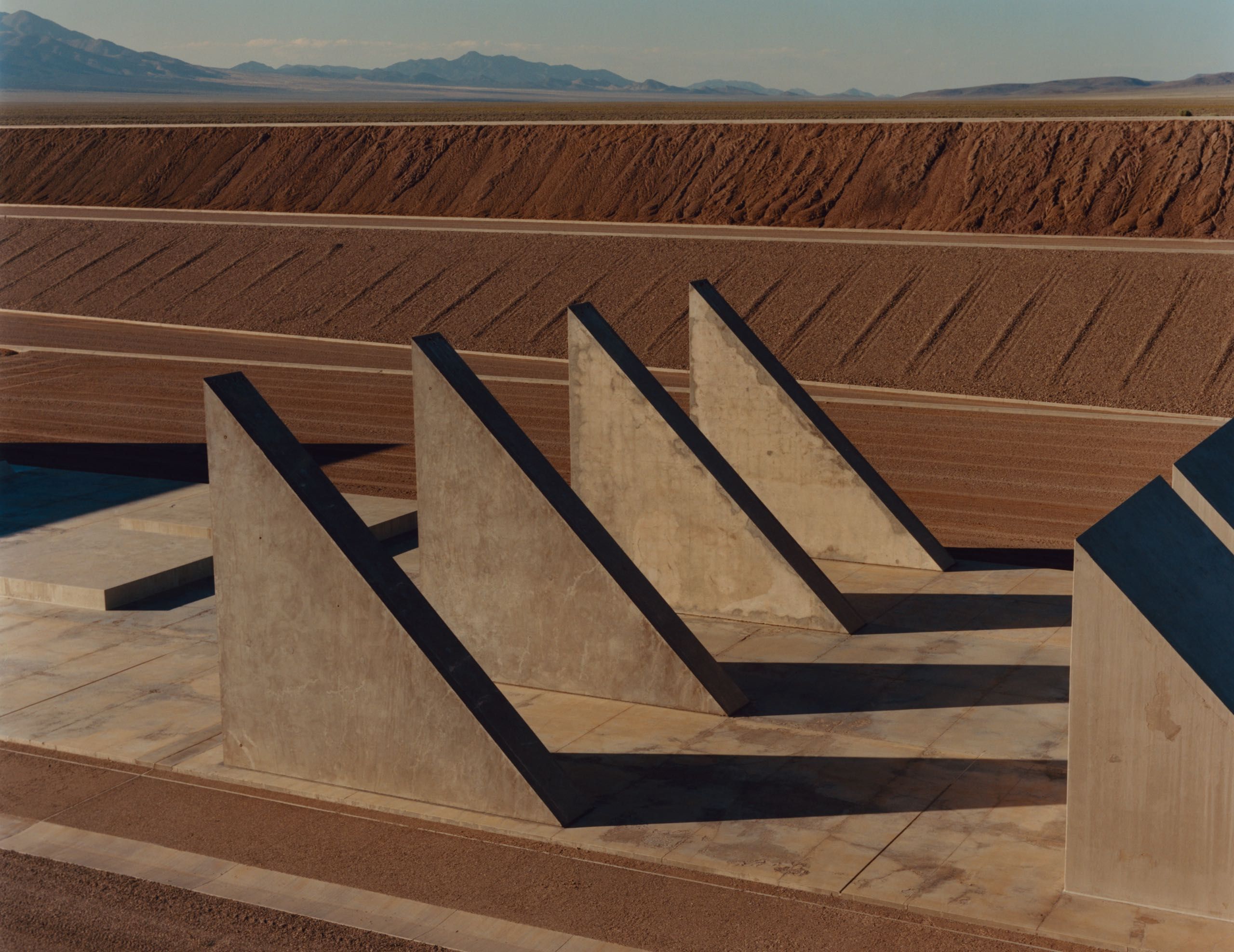
Michael Heizer City land art nevada desert monumental sculpture concrete earthworks

MICHAEL HEIZER: LAND ART

Heizer removes earth rather than adding to it. His work, such as 'Double Negative' and 'City', transforms excavation into sculpture. The absence of material becomes the form itself.

• Double Negative (1969): 240,000 tons of rock removed. • Munich Depression: A large conical pit challenging gallery traditions. • City (1970-2022): Monumental scale ancient ritualistic forms.
Made byBobr AI

ARCHITECTURAL IMPLICATIONS: MASS & VOID

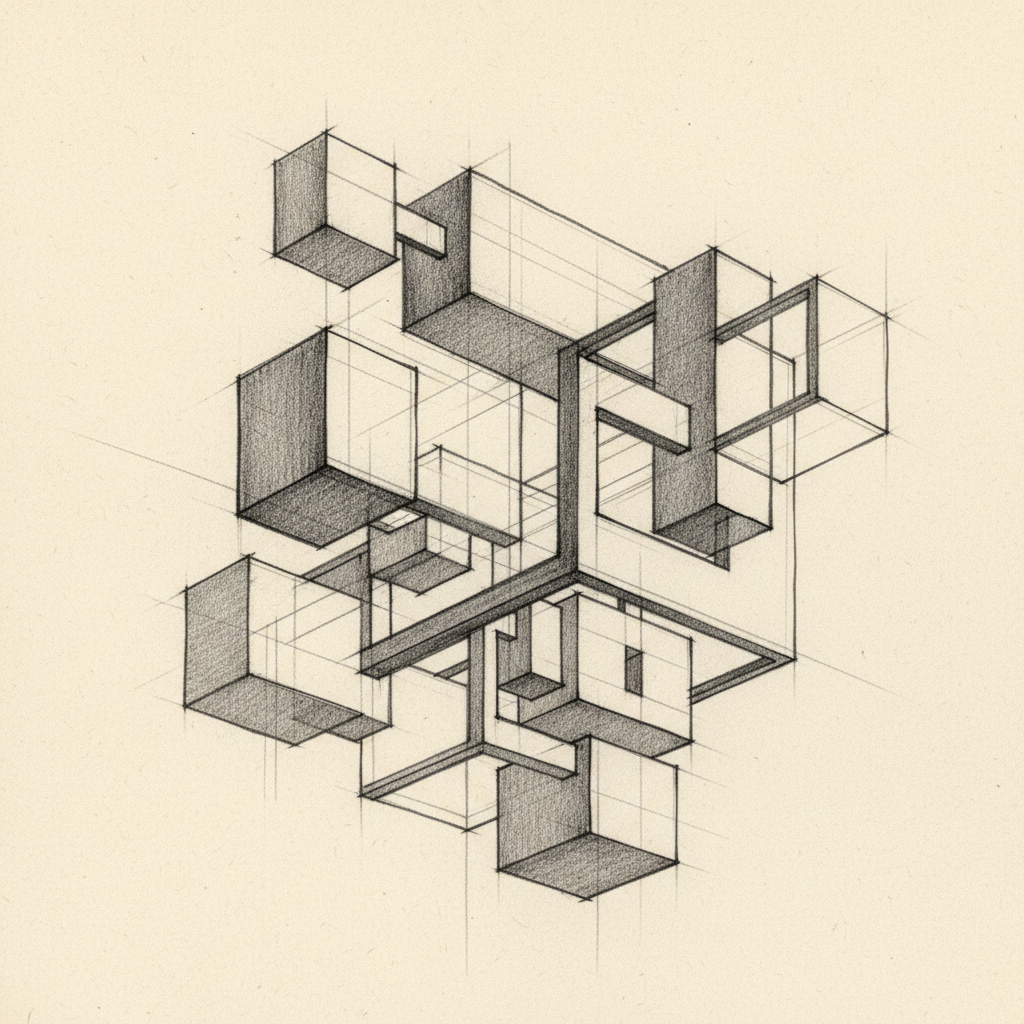
architectural concept sketch showing mass and void, pencil on paper, abstract geometry
Analyzing Heizer's "Double Negative" informs the spatial strategy for the current intervention. **Negative Space as Primary Generator** Rather than additive construction, the design explores subtraction—defining volume through the removal of material to create "absence as form." **Monumentality & Perception** Scale is manipulated to dictate user movement; vast voids create moments of pause, while compressed thresholds accelerate circulation. **Material Continuity** The link between geologic substrates and built form is emphasized, treating the site itself as the primary material.
Made byBobr AI

SITE CONTEXT

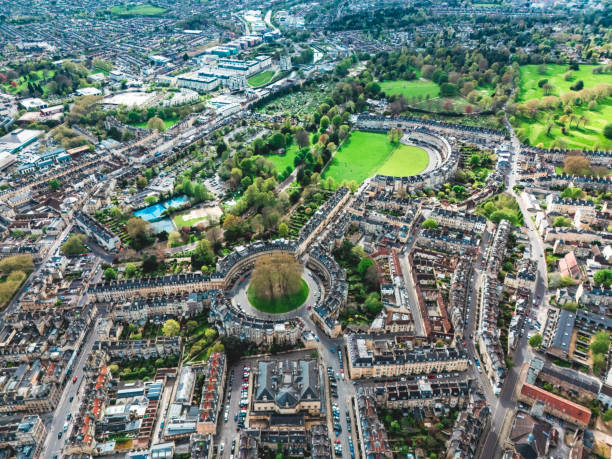
Analysis of Urban Morphology: Royal Crescent & Royal Well

Royal Crescent Bath UK aerial view map layout geometry

The site is characterized by the juxtaposition of the Royal Crescent's fluid, curvilinear geometry against the rigid, orthogonal urban fabric of the bus station precinct. This duality creates a complex circulation node requiring mediation.

Made byBobr AI

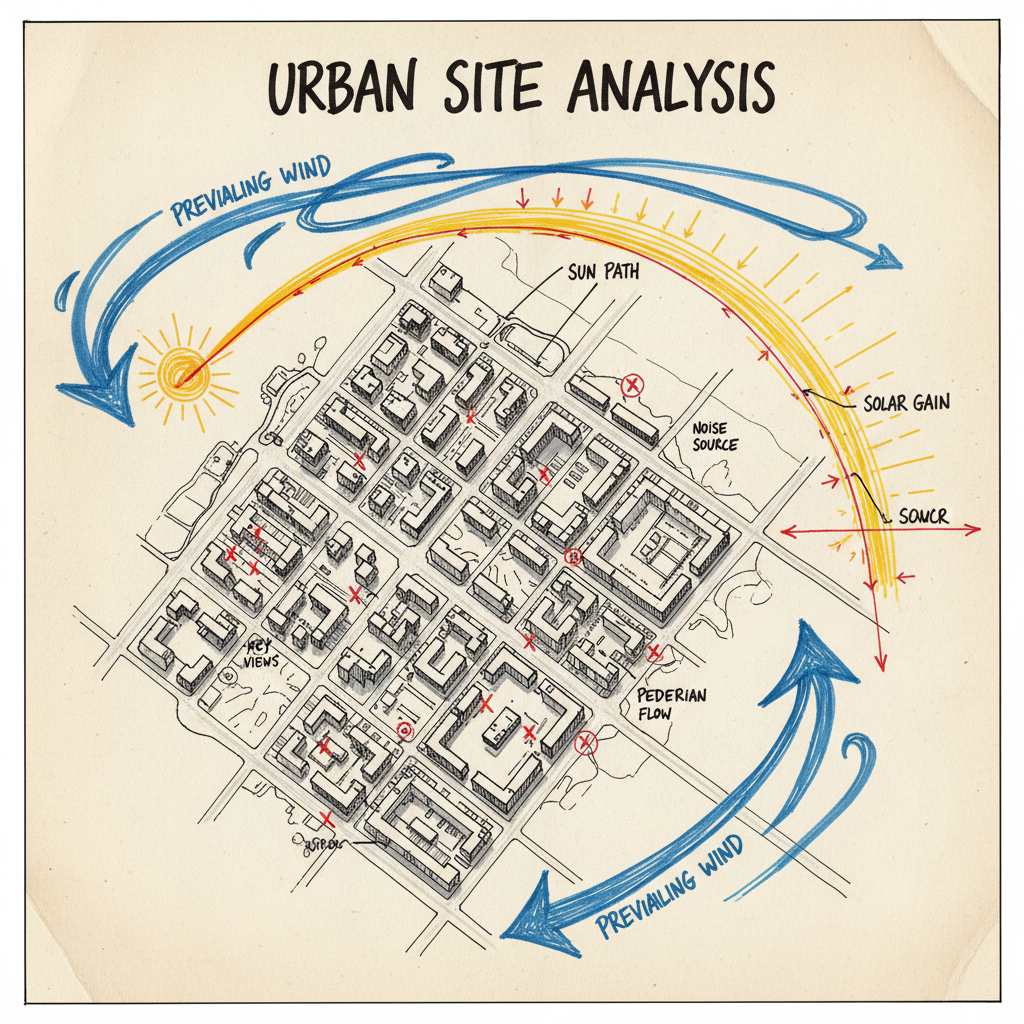
ENVIRONMENTAL MAPPING

WIND DIRECTION Prevailing winds are channeled through the crescent curve, creating venturi effects in the rigid urban corridors.

SOLAR PATH The south-facing crescent maximizes solar gain, while the northern access points remain in shadow, influencing pedestrian thermal comfort.

hand drawn site analysis map with arrows showing wind and sun path on an urban plan, markers and ink style
Made byBobr AI

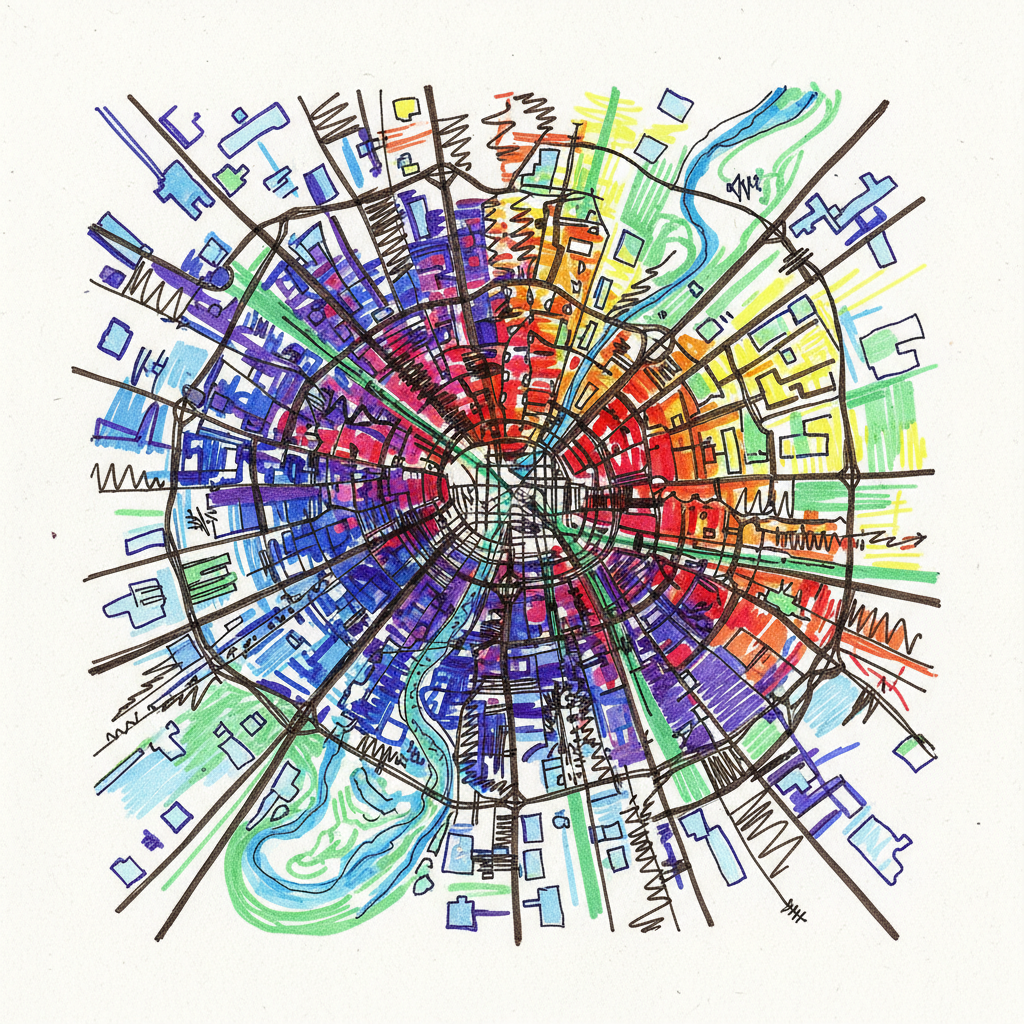
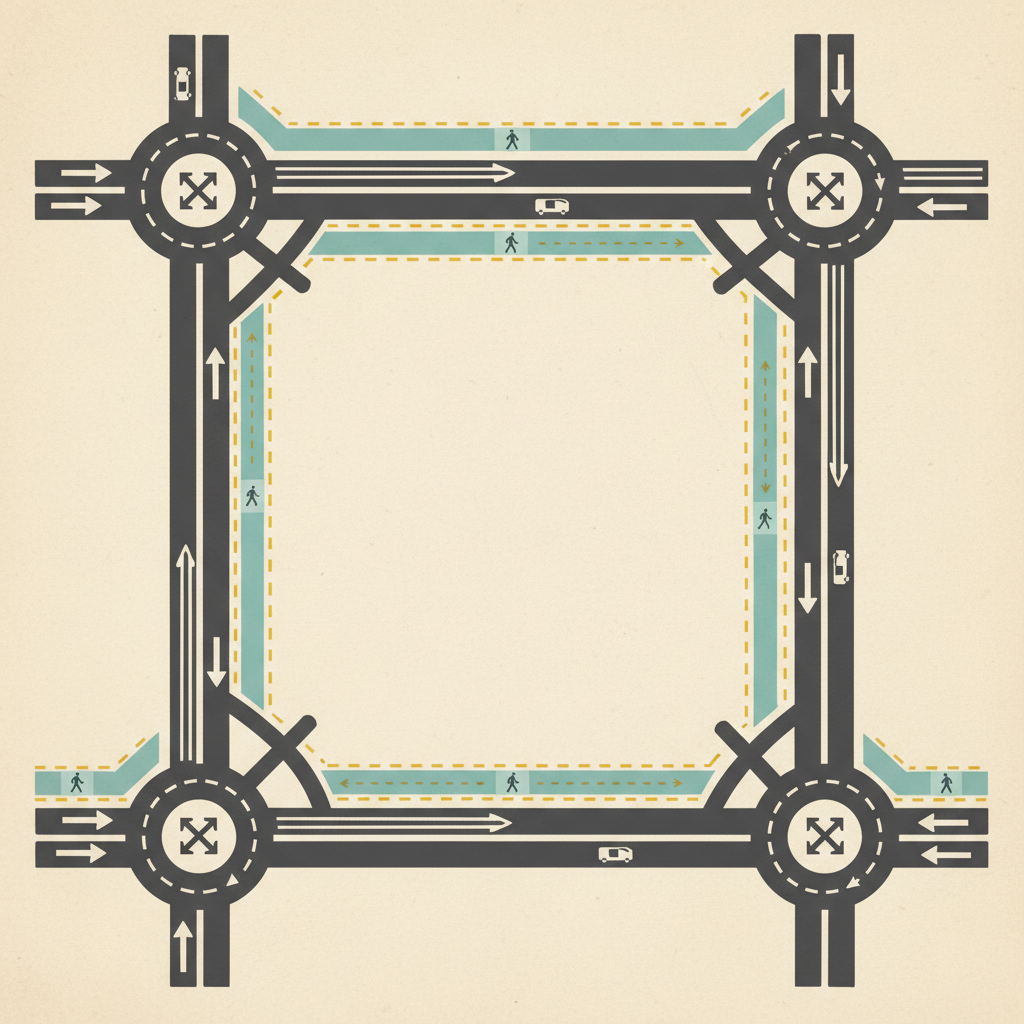
SENSORY & CIRCULATION MAPPING

Analysis of noise pollution (Red=High, Yellow=Low) and vehicular vs. pedestrian separation lanes.

hand drawn urban map using colored markers to show noise levels and traffic flow, abstractNoise Intensity
sketch of street arrows showing car direction and pedestrian separation lanes on a mapVehicular/Pedestrian Flow
Made byBobr AI
Final Synthesis

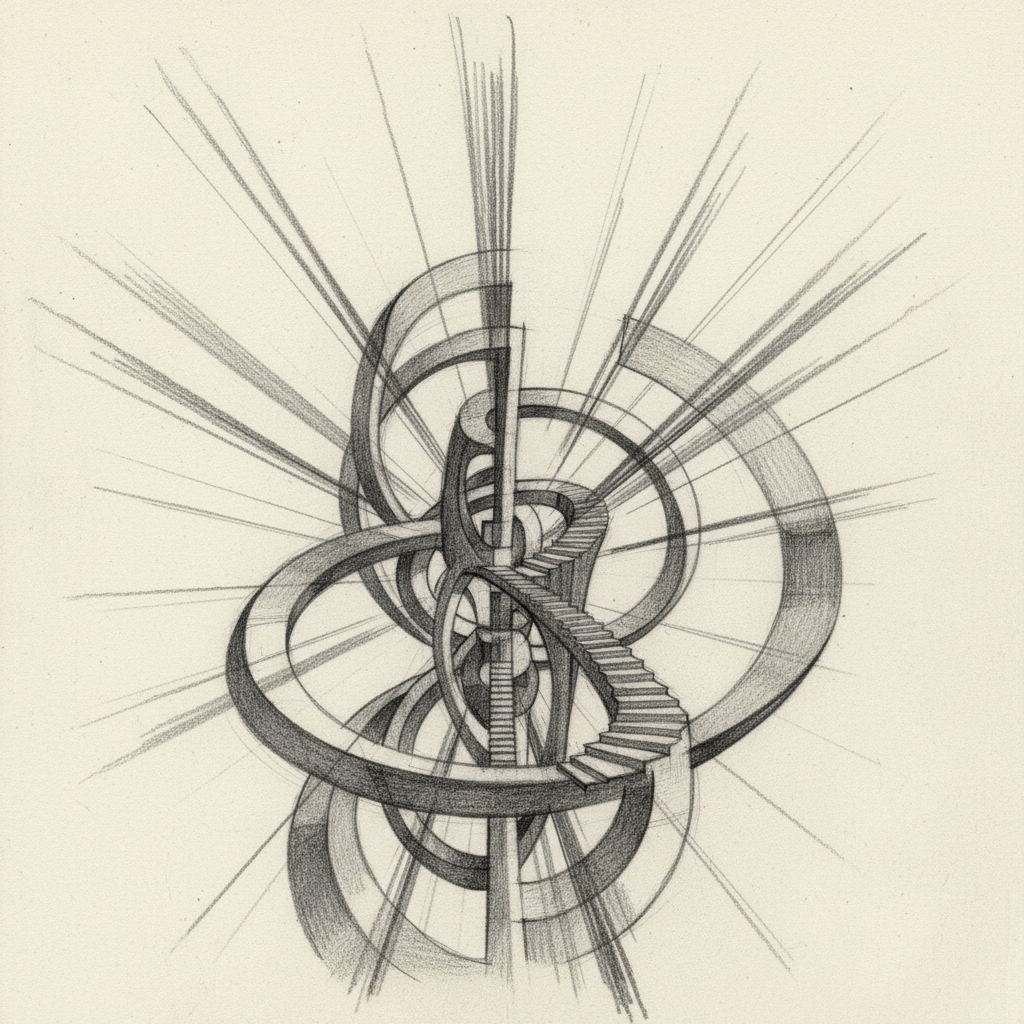
CONCEPT SYNTHESIS: FROM GRID TO FORM

Spatially integrating grid logic with site constraints creates a unified architectural language. 1. Mathematical Geometry Utilizing ruled surface structures to generate continuous spatial volumes that mediate between rigid boundaries. 2. Dynamics of Form Upward-thrusting tectonics articulate a "frozen kinetic energy," responding to the verticality of the urban context. 3. Circulation Strategy Radiating patterns organize the central mass, guiding pedestrian flow through intuitive spatial compression and release.
pencil sketch of abstract architectural form showing radiating lines and curved geometry, dynamic motion
Made byBobr AI

SYNTHESIS & CONCLUSION

The design research effectively bridges abstract material studies with concrete site analysis. By translating the spatial logic of the paper models into the landscape scale—informed by Heizer's subtractive methodology—a robust architectural language has emerged to address the complex circulation and environmental constraints of the site.

artistic architectural collage combining map lines, paper model textures and sunlight, abstract finale
Made byBobr AI
Bobr AI

DESIGNER-MADE
PRESENTATION,
GENERATED FROM
YOUR PROMPT

Create your own professional slide deck with real images, data charts, and unique design in under a minute.

Generate For Free

Architectural Design Architecture Portfolio: Process & Form

Explore a comprehensive architecture portfolio covering spatial order, Michael Heizer's land art, environmental mapping, and urban morphology analysis.

SPATIAL INVESTIGATIONS: PROCESS & FORM

AD4623 Assessment 001 | Felix Adebayo

DESIGN NARRATIVE

1. Spatial Order & Grid Logic 2. Light, Shadow & Photography 3. Artist Research: Michael Heizer 4. Site Analysis: Context & Environment

This portfolio documents a progression from abstract structural studies to concrete site analysis. It explores the relationship between mass, void, and environmental context through iterative modeling, photography, and mapping.

PHASE 01: SPATIAL ORDER

Exploration of grid logic utilizing planar materials. The objective was to establish structural coherence through folding procedures, interlocking mechanics, and recursive repetition, strictly avoiding adhesive connections to test inherent structural integrity.

PHASE 02: PHOTOGRAPHY & LIGHT

Investigation of luminous flux and its role in manipulating formal perception.

Structural experimentation utilizing modular elements to test tensile limits.

High-contrast monochromatic photography employed to analyze the mass-void dialectic.

MICHAEL HEIZER: LAND ART

Heizer removes earth rather than adding to it. His work, such as 'Double Negative' and 'City', transforms excavation into sculpture. The absence of material becomes the form itself.

• Double Negative (1969): 240,000 tons of rock removed. • Munich Depression: A large conical pit challenging gallery traditions. • City (1970-2022): Monumental scale ancient ritualistic forms.

ARCHITECTURAL IMPLICATIONS: MASS & VOID

Analyzing Heizer's "Double Negative" informs the spatial strategy for the current intervention. **Negative Space as Primary Generator** Rather than additive construction, the design explores subtraction—defining volume through the removal of material to create "absence as form." **Monumentality & Perception** Scale is manipulated to dictate user movement; vast voids create moments of pause, while compressed thresholds accelerate circulation. **Material Continuity** The link between geologic substrates and built form is emphasized, treating the site itself as the primary material.

SITE CONTEXT

Analysis of Urban Morphology: Royal Crescent & Royal Well

The site is characterized by the juxtaposition of the Royal Crescent's fluid, curvilinear geometry against the rigid, orthogonal urban fabric of the bus station precinct. This duality creates a complex circulation node requiring mediation.

ENVIRONMENTAL MAPPING

WIND DIRECTION Prevailing winds are channeled through the crescent curve, creating venturi effects in the rigid urban corridors.

SOLAR PATH The south-facing crescent maximizes solar gain, while the northern access points remain in shadow, influencing pedestrian thermal comfort.

SENSORY & CIRCULATION MAPPING

Analysis of noise pollution (Red=High, Yellow=Low) and vehicular vs. pedestrian separation lanes.

CONCEPT SYNTHESIS: FROM GRID TO FORM

Spatially integrating grid logic with site constraints creates a unified architectural language. 1. Mathematical Geometry Utilizing ruled surface structures to generate continuous spatial volumes that mediate between rigid boundaries. 2. Dynamics of Form Upward-thrusting tectonics articulate a "frozen kinetic energy," responding to the verticality of the urban context. 3. Circulation Strategy Radiating patterns organize the central mass, guiding pedestrian flow through intuitive spatial compression and release.

SYNTHESIS & CONCLUSION

The design research effectively bridges abstract material studies with concrete site analysis. By translating the spatial logic of the paper models into the landscape scale—informed by Heizer's subtractive methodology—a robust architectural language has emerged to address the complex circulation and environmental constraints of the site.

  • architecture-portfolio
  • spatial-investigation
  • site-analysis
  • urban-morphology
  • michael-heizer
  • architectural-design
  • design-process