






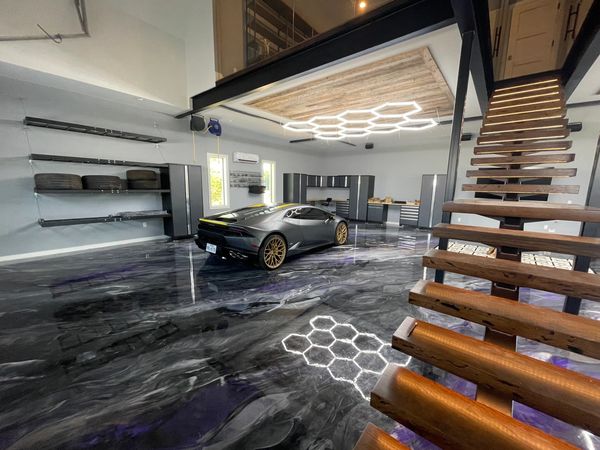










Master Professional Epoxy Flooring: Complete 2026 Course
Learn professional epoxy flooring techniques, from metallic and flake systems to surface preparation, material calculations, and building a client portfolio.
EPOXY FLOORING
PROFESSIONAL COURSE
Master Epoxy, Metallic & Flake Systems — From Prep to Finish
Metallic Epoxy
Epoxy Flakes
Calculations & Sample Boards
SOLID BASE CONTRACTOR AND EPOXY
Professional Training Program | 2026
COURSE OUTLINE
What You Will Learn in This Program
01
Introduction to Epoxy Flooring
Learn the chemistry, types of systems, and foundations of professional epoxy craftsmanship.
02
Metallic Epoxy Systems
Master unique pouring techniques and marble-like finishes for residential and commercial.
03
Epoxy Flake Systems
Broadcast techniques, scraping, and top-coats for durable anti-slip floors.
04
Surface Preparation
Grinding, crack repair, and moisture testing for a flawless permanent bond.
05
Coverage Calculations
Accurate measurement, material planning, and understanding exact mixing ratios.
06
Creating Sample Boards
Build an impressive portfolio of beautiful finishes to showcase effectively to clients.
SOLID BASE CONTRACTOR AND EPOXY
01
INTRODUCTION TO
EPOXY FLOORING
What is epoxy? Types, uses, and why it's the industry standard.
SOLID BASE CONTRACTOR AND EPOXY
MODULE 1
What is Epoxy Flooring?
Epoxy flooring is a surface coating system made from a combination of resin and hardener. When mixed, they chemically react to form a rigid plastic material that is strong, durable, and resistant to chemicals and wear.
Two-component system: Resin + Hardener
Creates a permanent, hard-wearing surface
Ideal for garages, warehouses, showrooms & more
Available in multiple systems and finishes
SOLID BASE CONTRACTOR AND EPOXY
MODULE 1
Types of Epoxy Systems
Understanding the different formulations and their applications.
01
100% Solids Epoxy
Highest durability, no solvents, used for heavy-duty floors.<br><br>Thickness: 10–20 mils.
02
Water-Based Epoxy
Easy application, low odor, great for residential.<br><br>Thickness: 3–5 mils.
03
Solvent-Based Epoxy
Deep penetration, strong adhesion, ideal for worn concrete.
04
Epoxy Mortar
Self-leveling, extreme durability, used for industrial settings.
SOLID BASE CONTRACTOR AND EPOXY
02
METALLIC EPOXY
SYSTEMS
Creating stunning 3D visual effects with metallic pigments and epoxy resin.
MODULE 02
SOLID BASE CONTRACTOR AND EPOXY
MODULE 2
What is Metallic Epoxy?
Metallic epoxy flooring uses specially formulated metallic pigments combined with clear or pigmented epoxy to create a unique, 3D-effect floor. No two floors are ever the same.
Uses metallic powder pigments mixed into epoxy
Creates lava-flow, cloud, and marble-like effects
Applied in 2–3 coats for depth and dimension
Extremely durable and UV-stable when top-coated
SOLID BASE CONTRACTOR AND EPOXY
MODULE 2
Metallic Epoxy Application Process
Follow these steps for a flawless metallic finish.
Surface Prep
Clean, grind, and profile the concrete
Prime Coat
Apply epoxy primer, let cure
Base Coat
Apply pigmented base coat
Metallic Layer
Mix metallic pigment into clear epoxy, apply and manipulate
Create Effects
Use tools (squeegees, acetone, air blowers) to create patterns
Top Coat
Apply clear polyurethane or polyaspartic sealer
SOLID BASE CONTRACTOR AND EPOXY
MODULE 2
Tools & Materials for Metallic Epoxy
MATERIALS
100% Solids Clear Epoxy (Part A + Part B)
Metallic Pigment Powders (various colors)
Epoxy Primer
Polyurethane or Polyaspartic Top Coat
Acetone (for effects)
Color base coat (optional)
TOOLS
Diamond grinder / shot blaster
Notched squeegee
Spiked roller
Heat gun / propane torch (for bubbles)
Leaf blower / air blower (for patterns)
Mixing paddle & drill
PPE: gloves, goggles, respirator
SOLID BASE CONTRACTOR AND EPOXY
03
MODULE 3
EPOXY FLAKE
SYSTEMS
Adding texture, color, and anti-slip properties with decorative vinyl flakes.
SOLID BASE CONTRACTOR AND EPOXY
MODULE 3
What is Epoxy Flake Flooring?
Epoxy flake flooring (also called chip flooring) involves broadcasting colored vinyl flakes into wet epoxy. It creates a decorative, durable, and slip-resistant surface.
Available in hundreds of color blends
Full broadcast or partial broadcast options
Hides imperfections in the substrate
Easy to clean, slip-resistant, durable
SOLID BASE CONTRACTOR AND EPOXY
MODULE 3
Flake Epoxy Application Process
A proven process for durable, beautiful chip floors.
Surface Preparation
Grind, clean, repair cracks and holes.
Primer Coat
Apply 100% solids epoxy primer, allow to cure.
Base Coat + Flake Broadcast
Apply pigmented epoxy base coat, immediately broadcast vinyl flakes to rejection (full or partial).
Scrape & Recoat
Scrape loose flakes, apply grout coat or second epoxy layer.
Top Coat / Sealer
Apply polyurethane or polyaspartic for UV protection and durability.
SOLID BASE CONTRACTOR AND EPOXY
MODULE 3
Flake Size Guide & Broadcast Methods
Flake Sizes Available
1/4 inch (6mm)
Most popular, great for full broadcast, smooth texture
1/8 inch (3mm)
Fine texture, elegant finish, commercial spaces
1 inch (25mm)
Bold look, dramatic, decorative feature areas
Mixed Blends
Combination of sizes for natural, organic look
Broadcast Methods
Full Broadcast (Rejection)
Flakes thrown to complete coverage, maximum texture and slip resistance, requires grout coat
Partial Broadcast
Light scatter of flakes, decorative accent, base color still visible
SOLID BASE CONTRACTOR AND EPOXY
04
SURFACE
PREPARATION
The foundation of every great epoxy floor — proper prep is everything.
SOLID BASE CONTRACTOR AND EPOXY
MODULE 4
Surface Preparation Methods
Choosing the right prep method determines adhesion and longevity.
Diamond Grinding
New concrete, smooth surfaces
CSP 2–3
Use planetary or single-disc grinder with diamond tooling
Coatings, laitance, high spots
Shot Blasting
Large commercial areas
CSP 3–5
Steel shot propelled at high speed etches the surface
Thick coatings, contamination
Acid Etching
Small residential projects, budgets
CSP 1–2
Muriatic or phosphoric acid applied, then neutralized
Surface laitance only
Not recommended for professional installs
SOLID BASE CONTRACTOR AND EPOXY
Professional Training Program | 2026
05
COVERAGE
CALCULATIONS
How to accurately estimate materials, coverage, and costs for any job.
SOLID BASE CONTRACTOR AND EPOXY
SOLID BASE CONTRACTOR AND EPOXY
MODULE 5
Flake & Metallic Material Calculations
Vinyl Flake Coverage
Metallic Pigment Coverage
SOLID BASE CONTRACTOR AND EPOXY
Calculations & Sample Boards | 2026
MODULE 5
Job Cost Estimating Worksheet
Use this framework to price every epoxy job accurately.
Material Cost Estimator
Labor & Pricing
SOLID BASE CONTRACTOR AND EPOXY
06
CREATING
SAMPLE BOARDS
Build your portfolio and sell clients on your work before the job begins.
SOLID BASE CONTRACTOR AND EPOXY
MODULE 6
Why Sample Boards Matter
Close More Sales
Show clients exactly what their floor will look like. Visual samples build confidence and help justify premium pricing.
Build Your Portfolio
Create a collection of boards showing every system — metallic, flakes, solid colors. Bring them to every estimate.
Practice Your Skills
Sample boards are the best way to practice techniques, test new colors, and refine your application before the real job.
Every contractor should have these sample boards:
Full broadcast flake board (standard blend)
Metallic single-color board (e.g., silver)
Solid color epoxy board
Partial broadcast flake board
Metallic dual-color blend (e.g., gold + black)
Terrazzo / custom blend board
SOLID BASE CONTRACTOR AND EPOXY
MODULE 6
How to Make a Sample Board
A simple process to create professional-grade display samples.
What You Need
12×12 inch (or 18×18) cement board or plywood
Sandpaper (80 grit) for prep
Epoxy primer (small amount)
Base coat epoxy (pigmented)
Metallic pigment OR vinyl flakes (depending on system)
Grout coat (for flake boards)
Polyurethane or polyaspartic top coat
Small foam roller, squeegee, mixing cups
Label/sticker for back: system name, colors used, date
Step-by-Step Process
Cut board to size, sand lightly, wipe clean
Apply thin epoxy primer coat — let cure 4–6 hours
Apply pigmented base coat with mini roller
broadcast flakes immediately, let cure, scrape, recoat
apply clear + metallic pigment, manipulate with notched squeegee or brush
Apply final top coat for gloss and protection
Label the back with: product brand, color name, batch info
Display in a portfolio case or frame
SOLID BASE CONTRACTOR AND EPOXY
MODULE 6
Sample Board Pro Tips
Expert advice to make your samples stand out.
01
Organize by System
Keep separate sample sets for: flake systems, metallic systems, and solid color epoxy. Label everything clearly.
02
Use a Portfolio Case
Invest in a professional display case or binder with slots. Present samples at every client meeting.
03
Show the Top Coat Difference
Make two versions of each sample: one with matte top coat and one with high-gloss. Clients love seeing the difference.
04
Add Color Names on the Back
Write the exact product, batch number, and color mix ratio. This lets you replicate it perfectly on the real job.
05
Refresh Your Samples Regularly
Update your portfolio with current trends. Outdated colors lose sales.
06
Use Samples to Upsell
Show premium metallic finishes next to standard flake to help clients upgrade and increase job value.
SOLID BASE CONTRACTOR AND EPOXY
Common Mistakes to Avoid
Learn from the field — avoid these costly errors on every job.
Mistake 1 — Skipping Moisture Testing
Moisture in concrete will cause delamination. Always test with a calcium chloride or RH test before applying any epoxy.
Mistake 2 — Insufficient Surface Prep
Epoxy only bonds to properly prepared concrete. Grinding/shot blasting is non-negotiable — never skip it.
Mistake 3 — Wrong Mix Ratio
Off-ratio epoxy will not cure properly. Always follow the manufacturer's mix ratio exactly. Use a kitchen scale.
Mistake 4 — Applying in Extreme Temperatures
Epoxy is temperature-sensitive. Ideal application range: 60–90°F (15–32°C). Cold slows cure, heat causes bubbles.
Mistake 5 — Not Enough Top Coat
One coat of sealer is rarely enough. Apply 2 coats of polyurethane or polyaspartic for long-term durability.
Mistake 6 — Rushing Between Coats
Always respect recoat windows. Too soon causes adhesion failure. Too late may require scuffing or grinding between coats.
SOLID BASE CONTRACTOR AND EPOXY
YOU'RE READY TO
BUILD YOUR BUSINESS
You now have the knowledge to install professional epoxy flooring systems — from surface prep to stunning metallic and flake finishes. Go practice, build your sample boards, and land your first clients.
Start Practicing
Build Your Portfolio
Get Your First Client
SOLID BASE CONTRACTOR AND EPOXY
Professional Training Program | 2026
Thank You — Now Go Build!
- epoxy-flooring
- contractor-training
- metallic-epoxy
- epoxy-flakes
- surface-preparation
- home-renovation
- construction-business