







Vitamin D Explained: 2024 Guidelines, Facts & Myths
Learn the essential facts about Vitamin D, 2024 health guidelines, daily recommendations, and who actually needs supplements for better bone health.
Vitamin D: The Sunshine Vitamin Explained
Understanding the 2024 Public Health Guidelines
What exactly is Vitamin D?
Despite its name, Vitamin D actually acts like a hormone in your body. It is essential for absorbing calcium and building strong bones. While we can get it from food, our bodies are designed to manufacture it through exposure to sunlight.
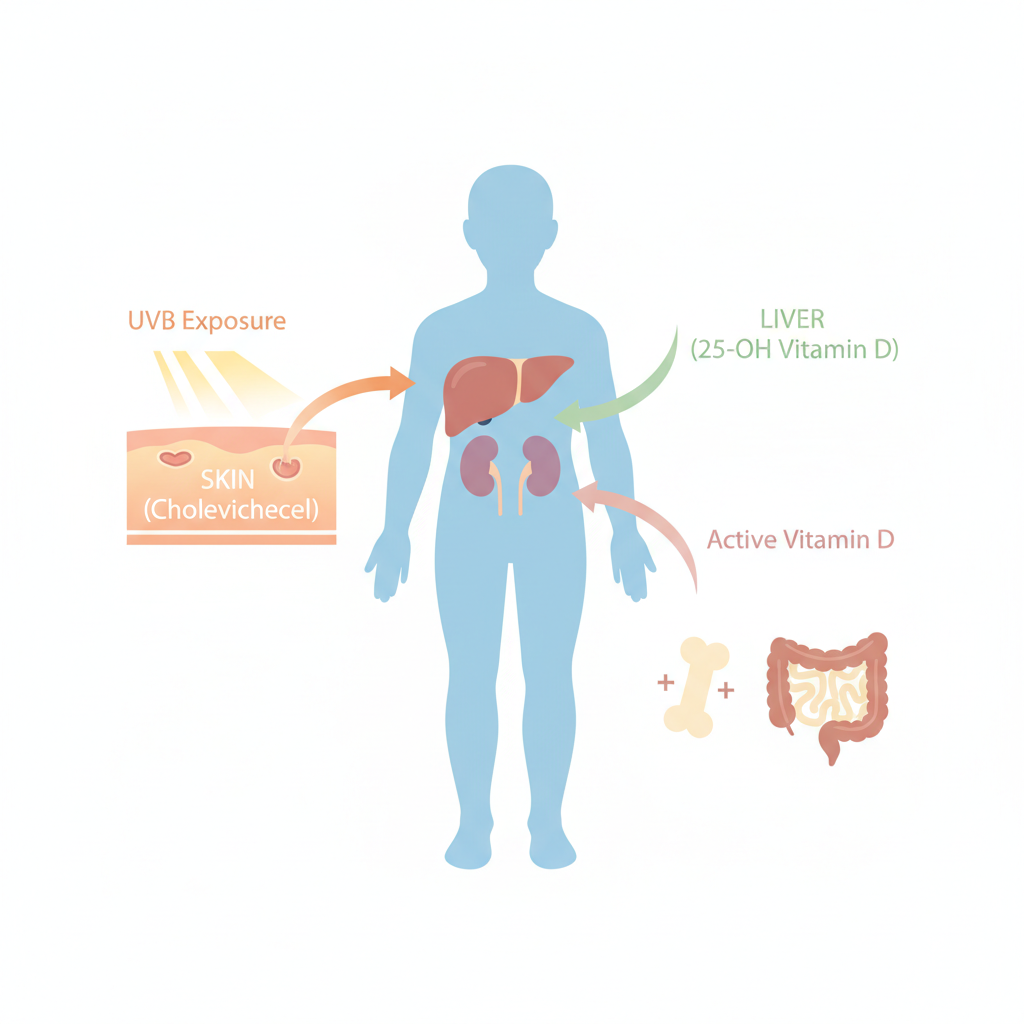
How Your Body Makes It
1. Sunlight (UVB rays) hits cholesterol in skin cells.
2. Energy synthesis creates Vitamin D3.
3. The Liver and Kidneys transform it into active usable hormones.
Sources: Sun vs. Food
Fatty Fish (Salmon, Tuna)<br>Fortified Milk & Juice<br>Egg Yolks<br>Mushrooms
Sunlight is the most potent source, but varies by season and latitude. Food sources are often necessary during winter months.
Daily Recommendations (2024 Guidelines)
For most healthy adults under 75, roughly 600 IU is sufficient. Higher doses are reserved for older populations to reduce mortality risk.
Who Actually Needs Supplements?
Children & Adolescents (Ages 1-18)
Pregnant People
Adults Age 75+
High-Risk Prediabetes
According to the 2024 Endocrine Society Guidelines, these groups benefit the most from empiric supplementation.
Myth Buster: Is More Better?
MYTH: "If a little is good, a massive dose must be great!"
FACT: Extremely high doses lack evidence of benefit and can be toxic. Daily lower-dose formulations are preferred over mega-doses.
The Truth About Blood Tests
No Routine Screening: Routine testing is NOT recommended for generally healthy adults.
Why? There is no universal agreement on the 'perfect' blood level for disease prevention in healthy people.
Focus on Intake: It's better to focus on diet and reasonable sun exposure than chasing a number.
How Much is Safe?
< 4,000 IU/Day
Doses under 4,000 IU are generally considered safe for most people. There is rarely a need to exceed this limit without a doctor's specific prescription.
The Bottom Line
Aim for a balanced diet and regular meals.
Most healthy adults need 600-800 IU daily.
Supplements are great for specific risk groups, but unnecessary for everyone.
- vitamin-d
- nutrition
- health-guidelines
- supplements
- wellness
- bones
- sunlight
- health-education