
Endocrine System Study Guide: Anatomy & Physiology II
Master the endocrine system with this comprehensive A&P II guide. Learn about hormones, the pituitary gland, RAAS, adrenal glands, and more.
The Endocrine System: Master Control
Anatomy & Physiology II • Exam Prep & Study Guide
System War: Nervous vs. Endocrine
<ul><li><strong>Nervous System:</strong> Wired (Neurons), Neurotransmitters, Fast response (ms), Short duration, Targets muscle/glands.</li><li><strong>Endocrine System:</strong> Wireless (Bloodstream), Hormones, Slow response (seconds to days), Long duration, Targets virtually all cells.</li></ul>
The 3 Classes & Mechanism of Action
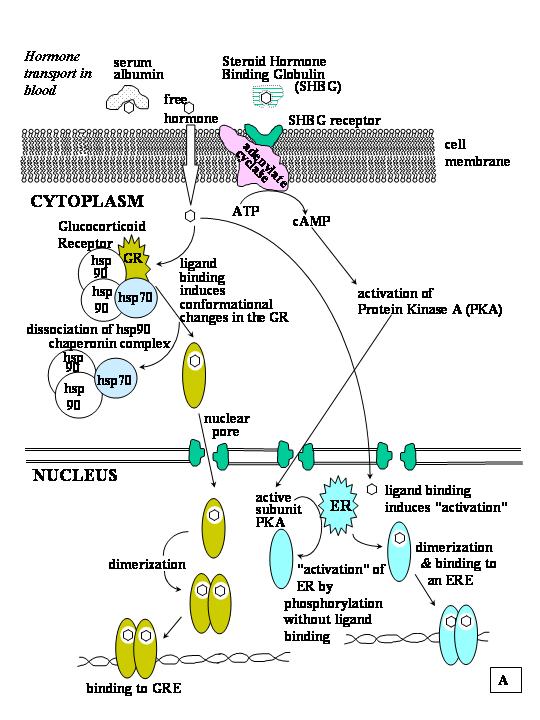
<strong>1. Steroids (Lipid Soluble):</strong><br>Made from Cholesterol (e.g., Testosterone, Cortisol).<br><em>Mechanism:</em> Slide right through the cell membrane -> Bind to receptor INSIDE nucleus -> Direct gene activation (New Protein).
<strong>2. Amino Acid / 3. Peptides (Water Soluble):</strong><br>Made from Protein (e.g., Insulin, Epinephrine).<br><em>Mechanism:</em> Cannot enter cell. Bind to surface receptor -> Activates G-Protein -> <strong>cAMP (Second Messenger)</strong> -> Cascade effect (Amplification).
The Boss & The Master Gland
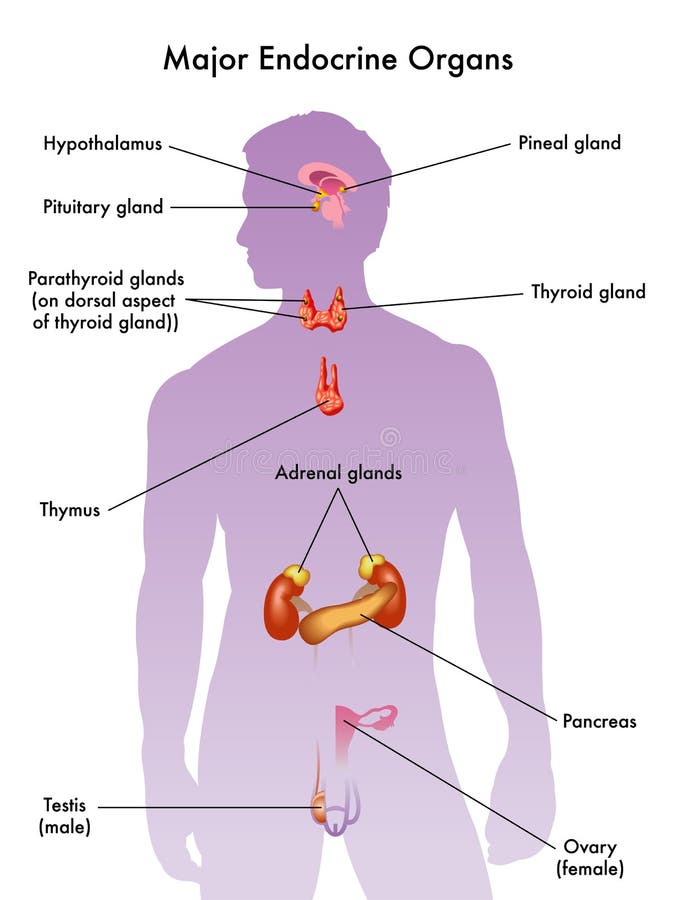
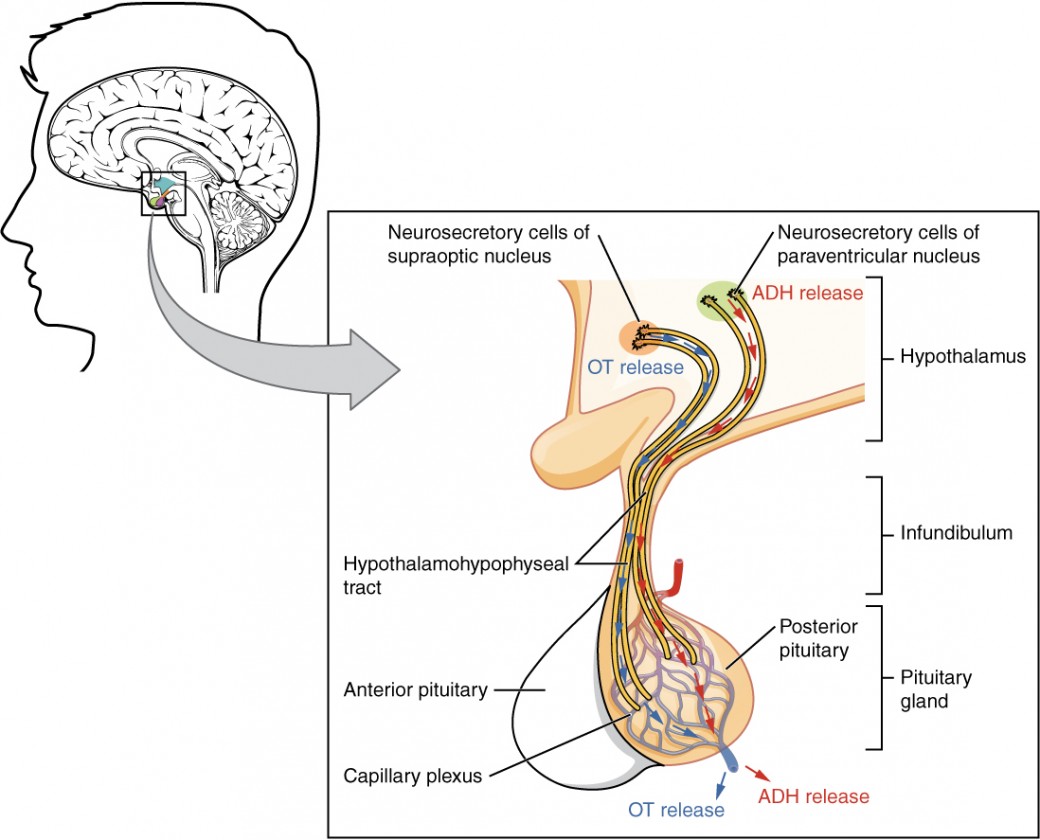
<strong>Hypothalamus (The Boss):</strong><br>Controls the Pituitary. Connects via Infundibulum.<br>Sends 'Releasing Hormones' (e.g., GHRH, TRH) to tell Anterior Pituitary what to do.
<strong>Anterior Pituitary (The Factory):</strong><br>Makes & Secretes 6 Hormones: GH, TSH, ACTH, FSH, LH, Prolactin.<br><br><strong>Posterior Pituitary (The Storage Unit):</strong><br>Does NOT make hormones. Stores/Releases Oxytocin & ADH made by Hypothalamus.
Metabolism & Calcium Regulation
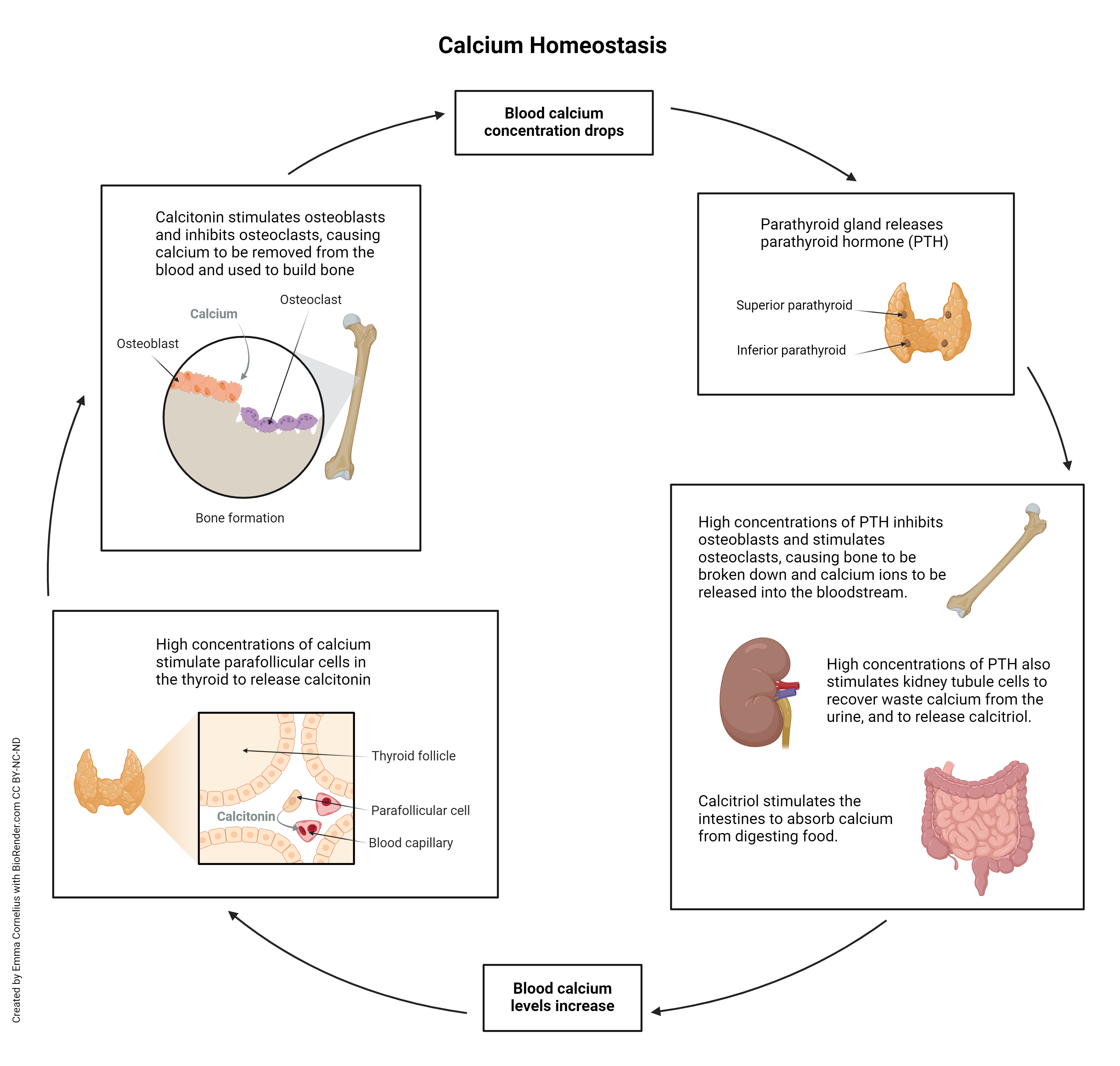
<h3 style='color:#e67e22;'>Thyroid Gland (Metabolism)</h3><ul><li><strong>T3/T4:</strong> Sets Basal Metabolic Rate (BMR). Requires Iodine.</li><li><strong>Stimulus:</strong> TSH from Pituitary.</li><li><strong>Calcitonin:</strong> Lowers blood Ca²⁺ (stores it in bone). 'Calci-tone-it-down'.</li></ul>
<h3 style='color:#8e44ad;'>Parathyroid Gland (Calcium)</h3><ul><li><strong>PTH (Parathyroid Hormone):</strong> The MVP of Calcium.</li><li><strong>Action:</strong> Raises blood Ca²⁺ when low.</li><li><strong>How?</strong> 1. Breaks bone (Osteoclasts). 2. Kidney reabsorption. 3. Vitamin D activation.</li></ul>
Adrenal Glands: Stress & Survival
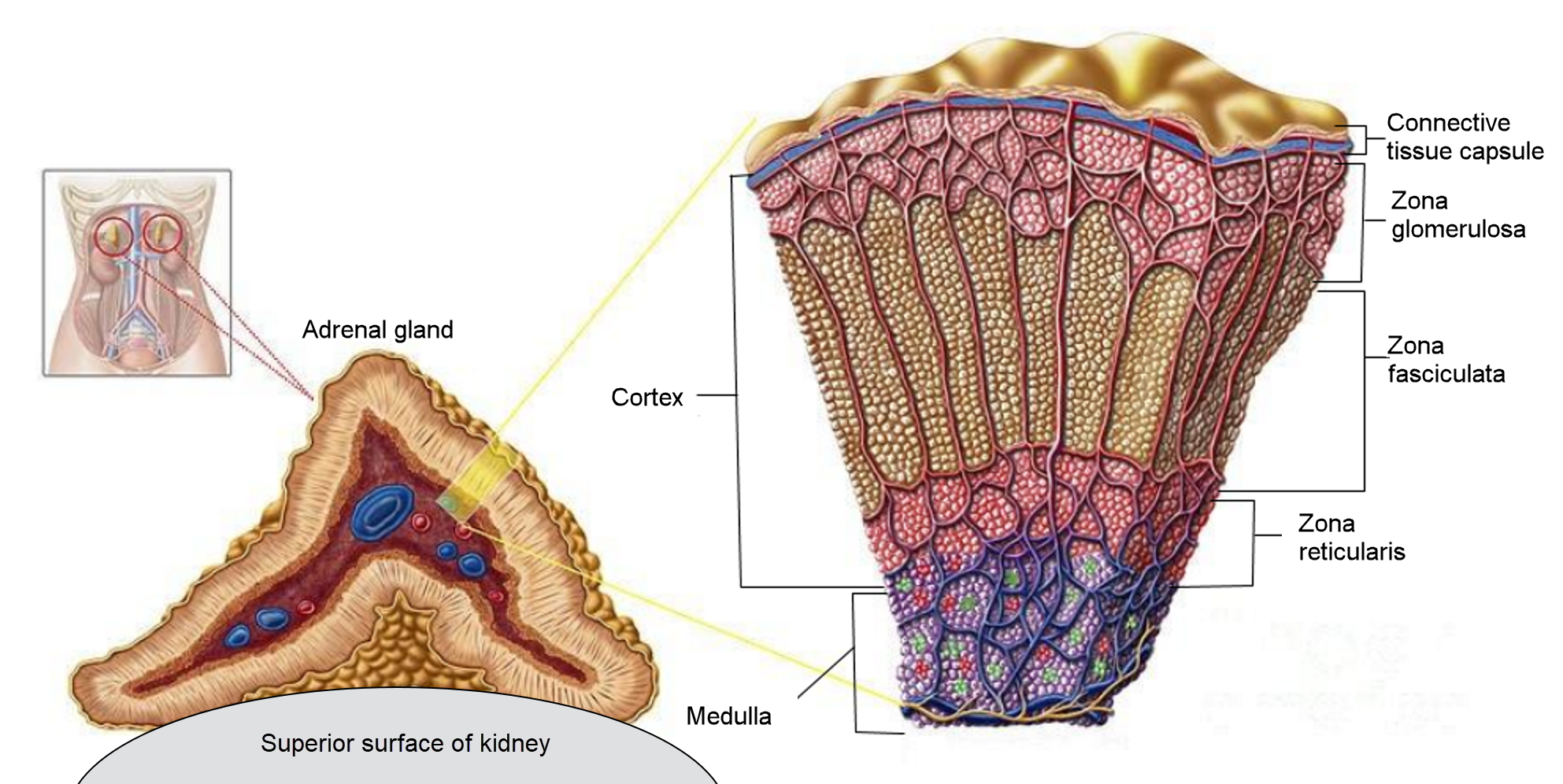
<strong>Adrenal Cortex (Outer): The 3 S's</strong><br>GFR Layers (outside in):<br>1. <strong>G</strong>lomerulosa -> <strong>Salt</strong> (Aldosterone).<br>2. <strong>F</strong>asciculata -> <strong>Sugar</strong> (Cortisol/Stress).<br>3. <strong>R</strong>eticularis -> <strong>Sex</strong> (Androgens).
<strong>Adrenal Medulla (Inner):</strong><br>Part of Sympathetic Nervous System.<br>Secretes Epinephrine (Adrenaline) & Norepinephrine (80/20 mix).<br><em>Function:</em> Fight or Flight (Increased HR, BP, Glucose).
Pancreas: Feast or Famine
<ul><li><strong>Beta Cells (Insulin):</strong> Released when glucose is HIGH. Opens cells to eat glucose (lowers blood sugar). <em>Anabolic.</em></li><li><strong>Alpha Cells (Glucagon):</strong> Released when glucose is LOW. Breaks down liver glycogen (Glucogenolysis). <em>Catabolic.</em></li><li><strong>Type 1 Diabetes:</strong> No Insulin. <strong>Type 2:</strong> Insulin Resistance.</li></ul>
Hard Concept Alert: Blood Pressure & Volume (RAAS)
<ol><li><strong>Stimulus:</strong> Low BP or Low Sodium.</li><li><strong>Kidney:</strong> Releases <strong>Renin</strong>.</li><li><strong>Liver:</strong> Renin converts Angiotensinogen -> Angiotensin I.</li><li><strong>Lungs:</strong> ACE Enzyme converts I -> <strong>Angiotensin II</strong>.</li><li><strong>Adrenal Cortex:</strong> Angiotensin II triggers <strong>Aldosterone</strong>.</li><li><strong>Result:</strong> Kidneys keep Na+ (and water follows). BP goes UP.</li></ol>
<strong>Don't forget ADH (Antidiuretic Hormone):</strong><br>From Posterior Pituitary. Triggered by high salt concentration. Opens water channels (aquaporins) to save water. Alcohol blocks ADH => Dehydration.
The Ultimate Cheat Sheet
<ul><li><strong>FLAT PEG (Anterior Pituitary):</strong><br><strong>F</strong>SH, <strong>L</strong>H, <strong>A</strong>CTH, <strong>T</strong>SH (Tropic - stimulate others)<br><strong>P</strong>rolactin, <strong>E</strong>ndorphins, <strong>G</strong>rowth Hormone (Direct action)</li><li><strong>Adrenal Cortex Layers:</strong> GFR = Salt, Sugar, Sex.</li><li><strong>Calcitonin:</strong> 'Tone it down' (Lowers blood calcium).</li><li><strong>Oxytocin:</strong> The 'Cuddle Chemical' (Birth, milk letdown, bonding).</li></ul>
<strong>Terms to Know:</strong><br>- <strong>Up-Regulation:</strong> Cell makes more receptors (more sensitive).<br>- <strong>Down-Regulation:</strong> Cell reduces receptors (less sensitive, e.g., drug tolerance).<br>- <strong>Half-life:</strong> Time for 50% of hormone to clear.<br>- <strong>Tropic Hormone:</strong> A hormone that targets another gland.
Review: Multiple Choice
<strong>1. Which hormone uses a Second Messenger (cAMP) system?</strong><br>A) Testosterone<br>B) Cortisol<br>C) Epinephrine<br>D) Estrogen<br><br><strong>2. Damage to the Parathyroid glands would cause:</strong><br>A) High metabolic rate<br>B) Muscle tetany (low calcium)<br>C) High blood sugar<br>D) Extreme water loss
<strong>3. Aldosterone targets the kidneys to retain:</strong><br>A) Potassium<br>B) Sodium<br>C) Glucose<br>D) Calcium<br><br><strong>4. Which is NOT produced by the Anterior Pituitary?</strong><br>A) Growth Hormone<br>B) TSH<br>C) ADH<br>D) Prolactin
Review: Short Answer & Practice
<strong>Q1:</strong> Explain why insulin cannot be taken orally as a pill (currently) and must be injected, based on its chemical class.
<strong>Q2:</strong> Trace the path of the 'Stress Response' (Alarm Phase) involving the Adrenal Medulla.
<strong>Q3:</strong> A patient has a tumor releasing excess ADH (SIADH). What happens to their blood volume and urine output?
Answer Key
<h3>MCQ Answers:</h3>1. <strong>C (Epinephrine)</strong> - It's protein/amino acid based, water soluble.<br>2. <strong>B (Muscle tetany)</strong> - No PTH = Hypocalcemia.<br>3. <strong>B (Sodium)</strong> - Water follows sodium.<br>4. <strong>C (ADH)</strong> - ADH is made in Hypothalamus, stored in Posterior.
<h3>Short Answer Model Responses:</h3><strong>A1:</strong> Insulin is a protein hormone. Digestion breaks proteins into amino acids, destroying the hormone before it enters the blood. Steroids (lipids) survive digestion better.<br><br><strong>A2:</strong> Stress -> Hypothalamus -> Sympathetic Nerves -> Adrenal Medulla -> Epinephrine/Norepinephrine -> Increased HR/BP.<br><br><strong>A3:</strong> Excess ADH leads to excessive water reabsorption. Blood volume INCREASES (high BP), Urine output DECREASES (concentrated).
- endocrine-system
- anatomy-and-physiology
- biology-study-guide
- hormones
- medical-education
- nursing-exam-prep
- pituitary-gland
- homeostasis