








Managing Conflicts of Interest: RG 181 Training Guide
Learn to manage financial conflicts of interest under the Corporations Act and ASIC RG 181 using the Objective Test, Control, Disclosure, and Avoidance.
Managing Conflicts of Interest: RG 181 Training
Practical guidance for complying with s912A(1)(aa) and maintaining market integrity.
Authority: Corporations Act 2001 | ASIC Regulatory Guide 181
Learning Objectives
Identify actual, potential, and perceived conflicts using the 'Objective Test'.
Apply RG 181 principles to manage conflicts via control, disclosure, or avoidance.
Understand your individual responsibility under the licensee's s912A obligation.
The Regulatory Foundation
Corporations Act s912A(1)(aa)
All AFS licensees must have 'adequate arrangements' for managing conflicts of interest. This is a strict liability offense—failure to comply puts the license at risk.
ASIC Regulatory Guide 181
Provides the 'how-to'. It dictates that arrangements must be proportionate to the scale and complexity of the business. It covers identifying, assessing, and managing conflicts.
The 'Admin Test' for Identification
A conflict exists if interests (financial, personal, or otherwise) could interfere with the proper performance of your duties.
Ask yourself: Would a reasonable person, knowing all the facts, think my judgment might be influenced?
It does not differ between 'actual', 'potential', or 'perceived' conflicts. If it looks wrong, it must be managed.
Scenario: Gifts & Entertainment
A product issuer offers to take your team to an exclusive suite at a major sporting event to discuss their new investment fund.
Is this a conflict? How should it be handled?
YES. This creates a potential obligation or bias. ACTION: 1. Check the Gift Policy (thresholds). 2. If accepted, it must be recorded in the Conflicts Register. 3. If the value is excessive, it must be declined to avoid perceived influence.
Common Business Conflicts (RG 181)
Vertical Integration
Recommending in-house products over external ones. Risk: Advice is driven by profit, not client's best interest.
Remuneration
Commission structures or bonuses that incentivize volume over quality of service (see Conflicted Remuneration).
Client vs Client
Allocating opportunities (e.g., IPO shares) to one preferred client at the expense of another.
The 'Adequate Arrangements' Framework
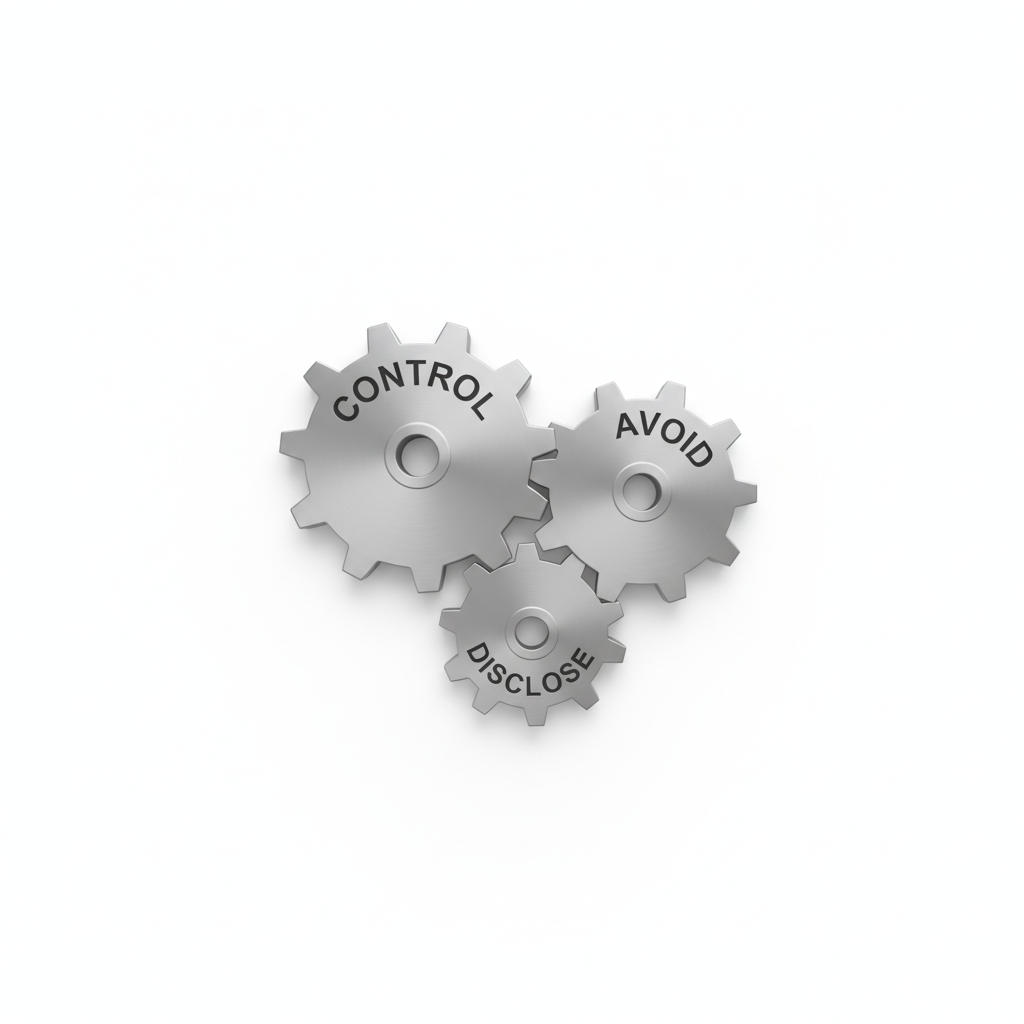
1. CONTROL
Use information barriers (Chinese Walls), segregation of duties, and access controls to physically stop the flow of conflicted information.
2. DISCLOSE
Provide clear, meaningful disclosure to the client. Note: RG 181.71 states disclosure alone is often insufficient for serious conflicts.
3. AVOID
If controls and disclosure cannot effectively manage the risk of harm, the conflict must be avoided entirely.
Strategy: When to AVOID
Some conflicts are too significant to be managed by disclosure.
If you cannot act with integrity and objectivity despite controls, you must decline the business.
Example: Acting for both a buyer and a seller in the same illiquid private transaction usually requires avoidance.
Reporting Constraints & Breaches
If you see a conflict being ignored, you must speak up.
1. Report to the Compliance Manager or via the Conflicts Register immediately.
2. Whistleblower protections apply under the Corporations Act for reporting misconduct.
3. Record-keeping is mandatory. Always document your assessment in writing.
Key Takeaways
Awareness: Always treat conflicts as a risk to the license and the client's trust.
Assessment: Use the 'Objective Test'. Perception matters as much as reality.
Action: Disclose, Control, or Avoid. Never ignore.
- compliance-training
- asic-rg181
- corporations-act
- financial-services
- australia
- ethics
- conflict-of-interest