




Measuring Modulus of Rigidity Using Maxwell’s Needle
Learn how to determine the Modulus of Rigidity (η) of a wire using Maxwell’s needle or Barton’s apparatus with static and dynamic methods.
Experiment No. 1: Modulus of Rigidity
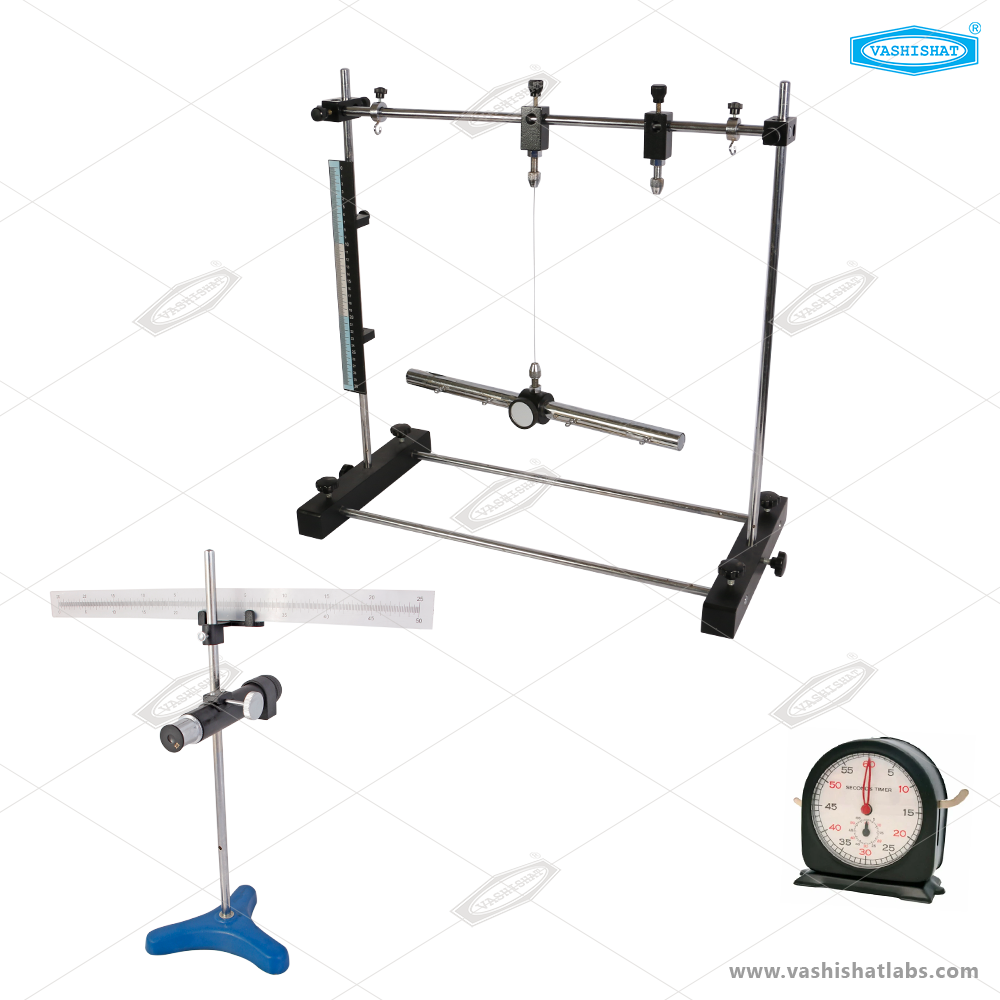
Using Maxwell’s Needle / Barton’s Apparatus
Objective
To determine the Modulus of Rigidity of a given wire by Static and Dynamic methods using Maxwell’s needle or Barton’s apparatus.
Apparatus Required
Maxwell’s Needle
Torsion Wire
Stopwatch & Meter Scale
Stand & Clamps
Theoretical Background
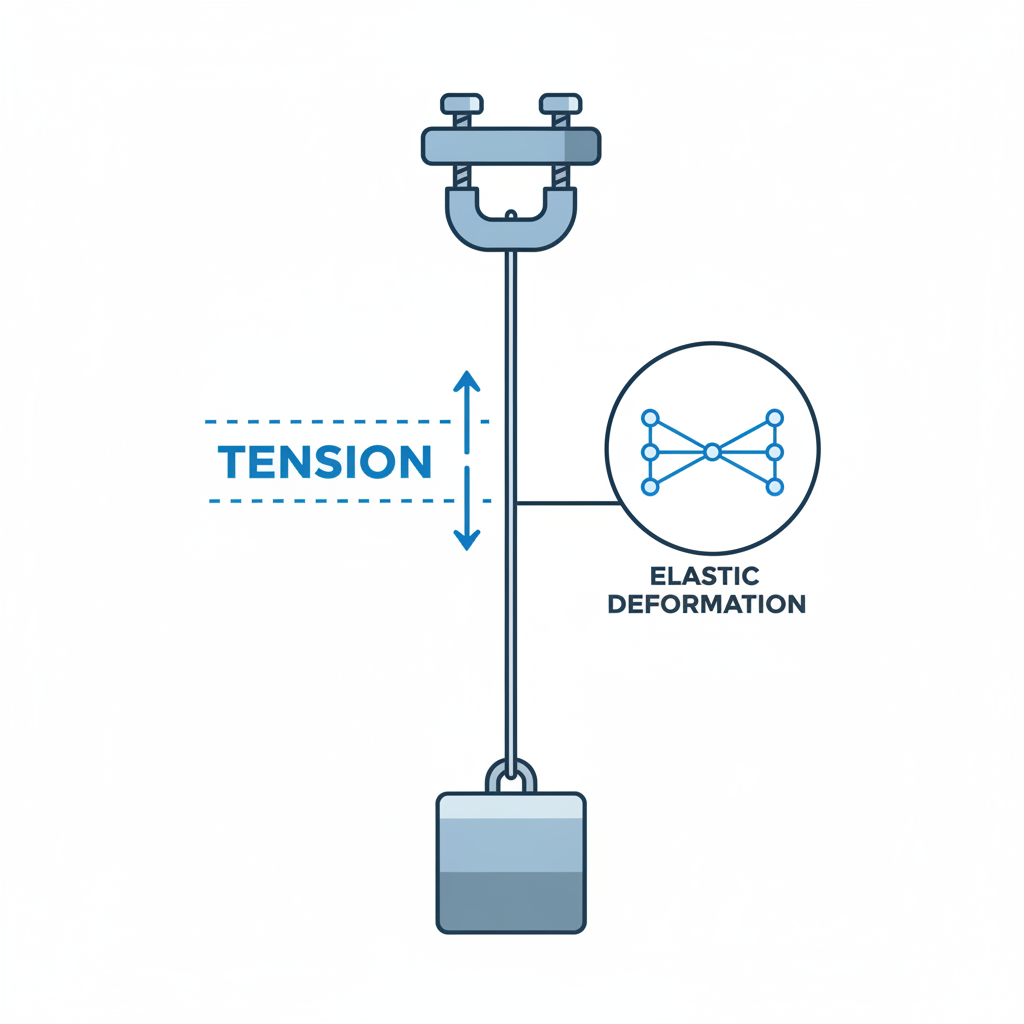
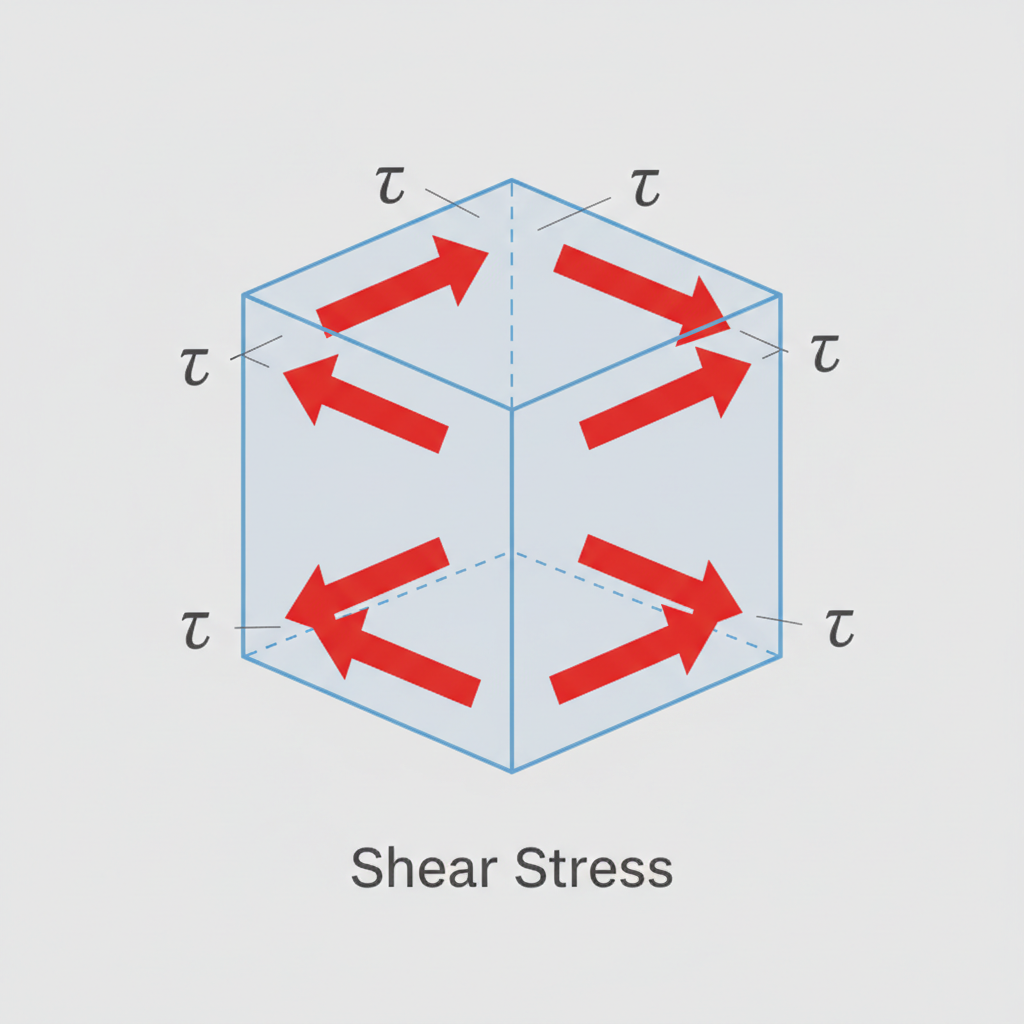
Modulus of Rigidity (η) is defined as the ratio of shear stress to shear strain within the elastic limit.
The Formula
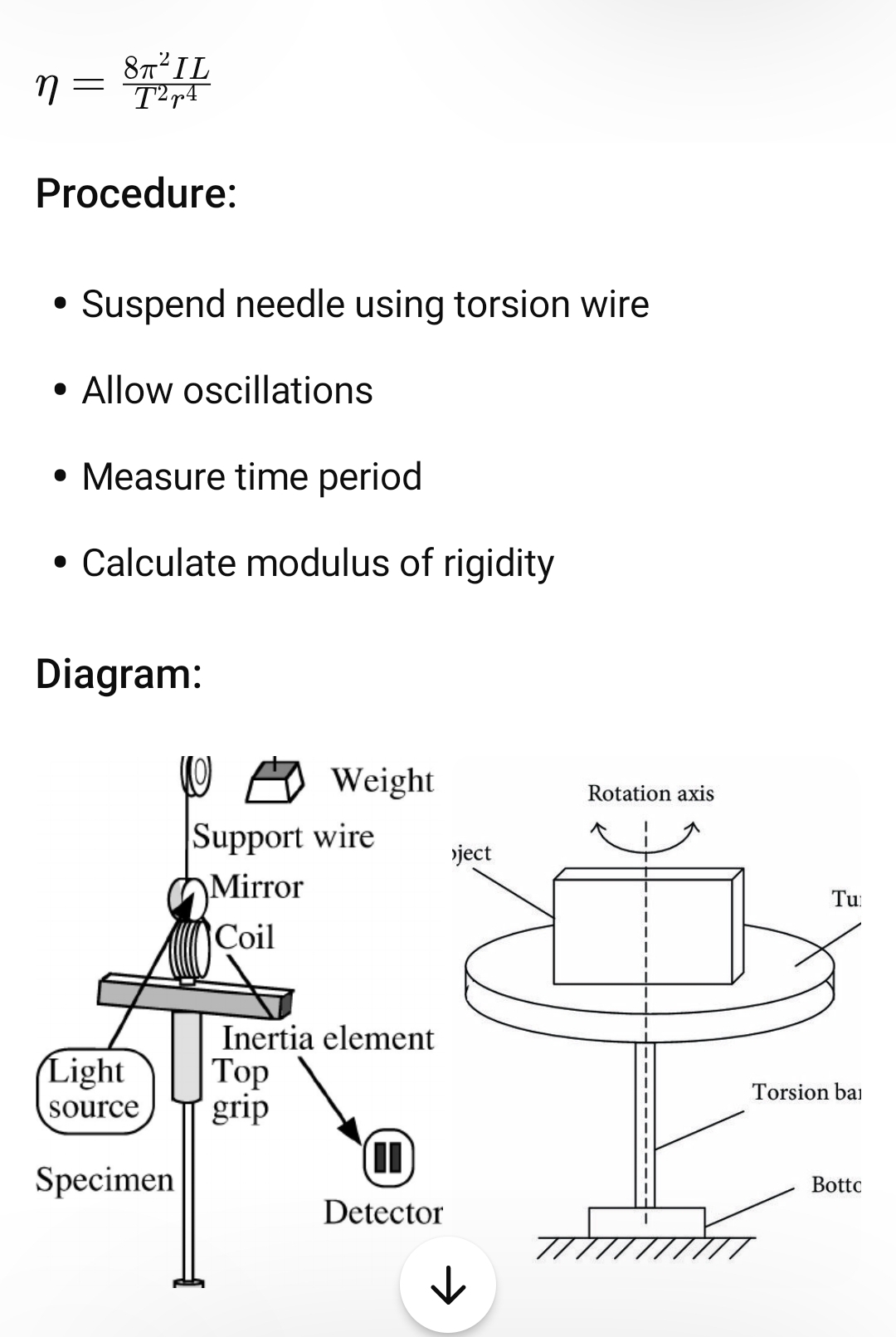
η = (8π² I L) / (T² r⁴)
I = Moment of Inertia
L = Length of the wire
T = Time period of oscillation
r = Radius of the wire
Experimental Diagram
Procedure Steps
1. Suspend the Maxwell's needle using the torsion wire.
2. Gently rotate the needle to allow torsional oscillations.
3. Measure the time period (T) for a fixed number of oscillations using a stopwatch.
4. Calculate the Modulus of Rigidity using the formula.
Key Concepts: Torsional Oscillation
When the needle acts as a torsional pendulum, the restoring torque is directly proportional to the angular displacement. The time signal period depends on the inertia of the system and the stiffness of the wire.
Result & Discussion
The time period of oscillation was observed to depend significantly on the distribution of mass in the system. As the mass moves further from the axis of rotation, the Moment of Inertia (I) increases, thereby increasing the Time period (T).
Conclusion
The Modulus of Rigidity of the given wire material has been successfully determined using the dynamic method with Maxwell's Needle. The experiment confirms the relationship between torsional stiffness and the wire's physical dimensions.
- physics-experiment
- modulus-of-rigidity
- maxwells-needle
- torsional-oscillation
- material-science
- engineering-physics
- lab-report