
How Tides Form: The Physics of Moon and Sun Gravity
Explore the science of tides, including the role of lunar gravity, solar influence, spring and neap tide cycles, and geographic factors like tidal ranges.
The Formation of Tides
Gravitational Interactions in the Earth-Moon-Sun System
What are Tides?
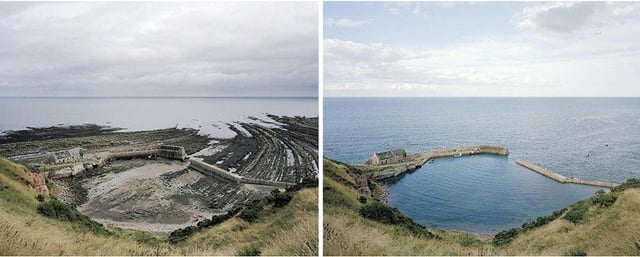
Tides are the periodic rise and fall of sea levels caused by the combined effects of gravitational forces exert by the Moon and the Sun.
Most coastal locations experience a 'semidiurnal' cycle: two high tides and two low tides roughly every 24 hours and 50 minutes.
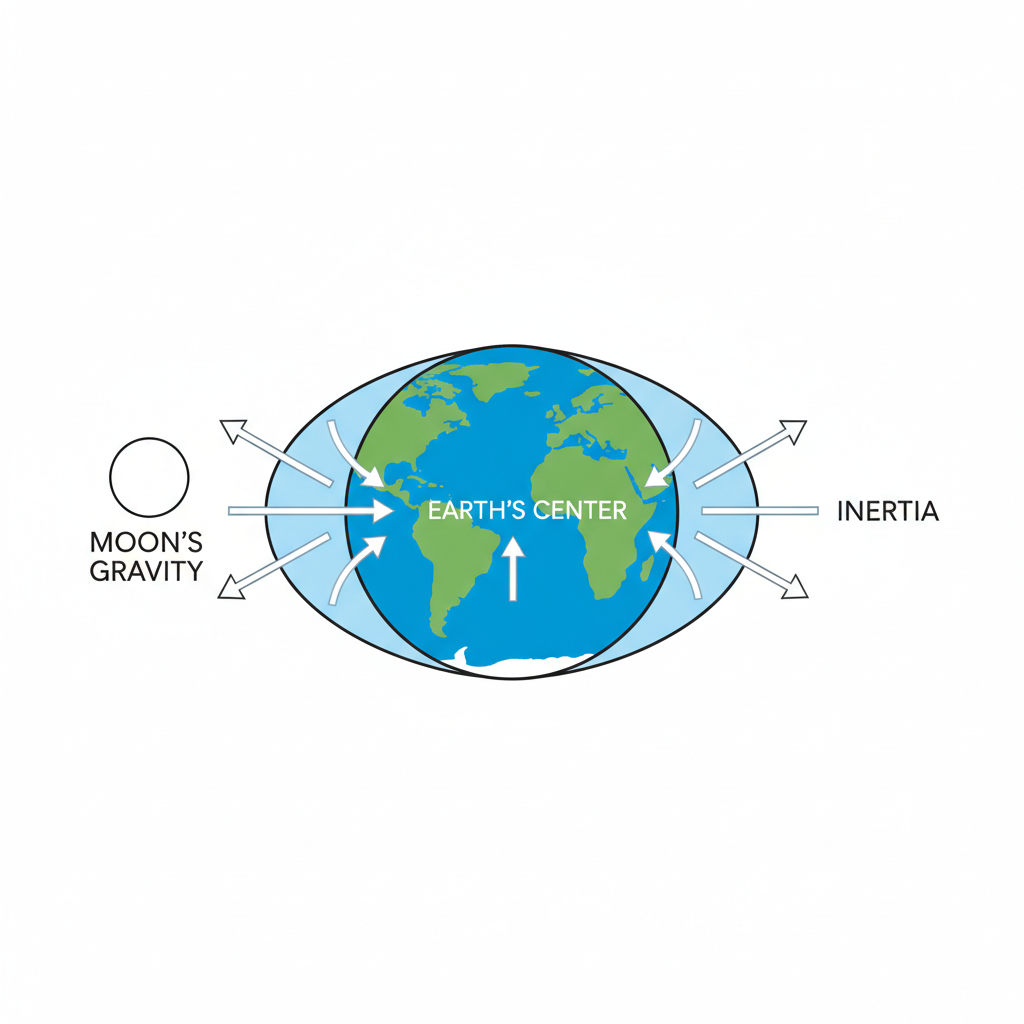
The Physics: Two Tidal Bulges
1. Gravitational Pull: The Moon pulls strongly on the water on the side of Earth facing it, creating the first high-tide bulge.
2. Inertia (Centrifugal Force): On the opposite side, the Earth is pulled away from the water. Inertia creates a second bulge facing away from the Moon.
Measured Tidal Height Over 24 Hours
A typical semi-diurnal pattern shows two periodic peaks and troughs.
The Sun's Influence
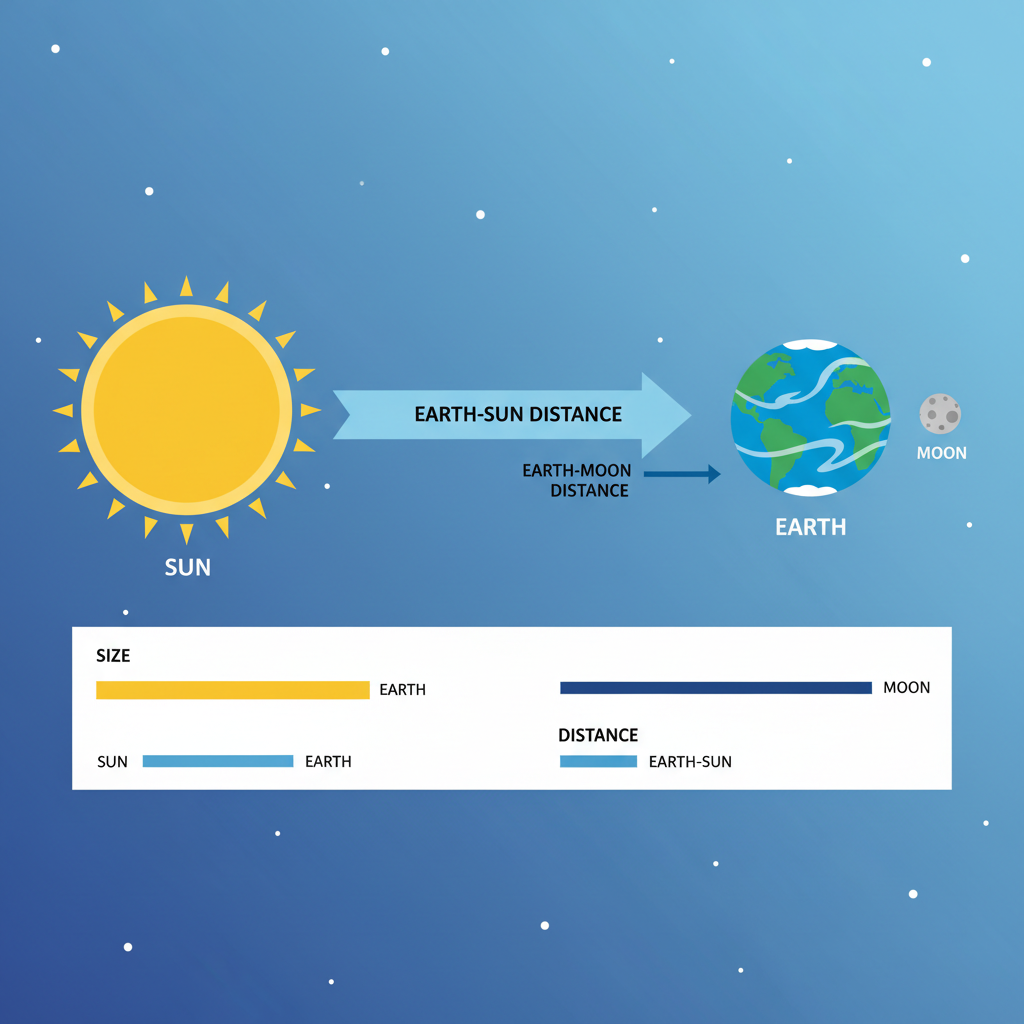
Although the Sun is 27 million times more massive than the Moon, it is 390 times further away. In tidal physics, distance is critical (tide-generating force drops by distance cubed!).
Solar tides are only ~46% as strong as Lunar tides.
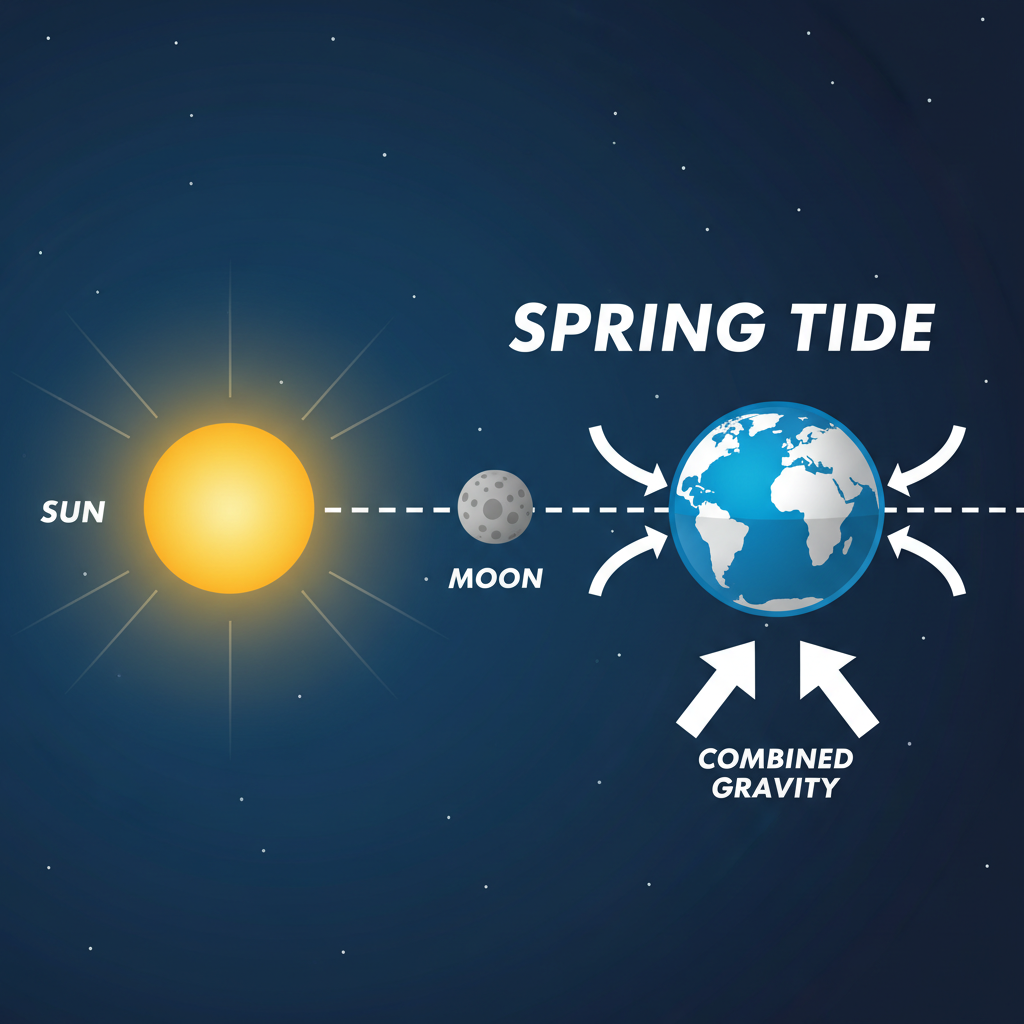
Spring Tides (Extreme Range)
Occur during New and Full Moons. The Sun, Moon, and Earth align in a straight line. Their gravitational forces combine (constructive interference), creating higher highs and lower lows.
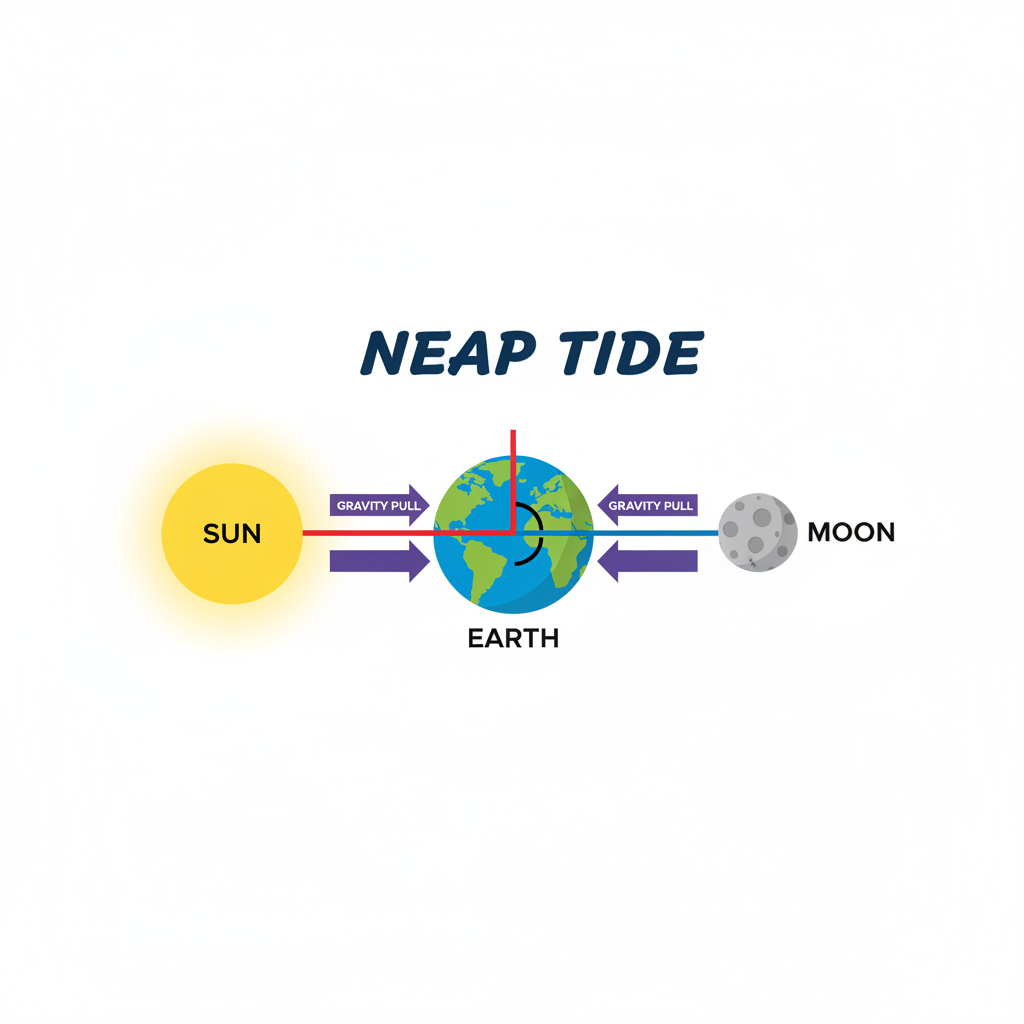
Neap Tides (Moderate Range)
Occur during First and Third Quarter Moons. The Sun and Moon are at a 90° angle. Solar gravity partially counteracts Lunar gravity (destructive interference), creating smaller tidal variations.
Comparison of Tidal Ranges (Meters)
Tidal range is the vertical difference between high tide and low tide. Spring tides maximize this range.
Geographic Factors
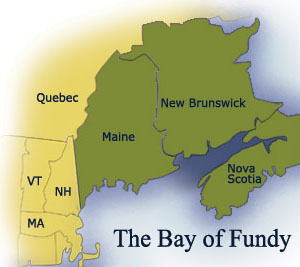
While the Moon provides the force, geography determines the intensity. Funnel-shaped bays can amplify tides dramatically.
The Bay of Fundy (Canada) holds the world record with a tidal range of up to 16 meters.
Key Takeaways
Tides are caused by the gravitational pull of the Moon and Sun combined with the Earth's rotation.
The Moon affects tides more than the Sun due to its proximity.
Spring Tides occur at Full/New Moons (max range); Neap Tides at Quarter Moons (min range).
- tides
- gravitation
- lunar-cycle
- earth-science
- physics
- oceanography
- spring-tides
- geography