




























Made byBobr AI

Improving Temperature Measurement Accuracy in Nursing

A quality improvement plan for medical-surgical nurses to enhance clinical accuracy in temperature measurement through staff education and standardized protocols.

#nursing-education#quality-improvement#clinical-accuracy#medical-surgical-nursing#vital-signs#healthcare-protocol
Icon

Implementation and Evaluation Plan:
Improving Temperature Measurement Accuracy

A Quality Improvement Initiative for Medical-Surgical Nurses

Presented by Mohamed Diallo

February 15, 2026

Made byBobr AI

The Challenge: Temperature Inaccuracy on Our Unit

Thermometer

The Clinical Problem

• Inconsistent temperature readings noted on the Medical-Surgical unit
• High reliance on peripheral thermometers which lack core accuracy
• Variability in measurement techniques among staff members
• Potential for delayed treatment of sepsis due to missed fevers
• Impact on patient outcomes and length of hospital stay
• Need for standardized measurement protocol identified by staff feedback

Clipboard

Unacceptable Variability

There is unacceptable variability in non-invasive temperature assessment methods.
(Allegaert et al., 2023)

Question

Clinical Question

"Will medical-surgical nurses who are educated on accurate temperature measurement demonstrate, on observational audit, accurate temperature taking?"

Made byBobr AI

Literature Review & Evidence - Part 1

Study 1

Systematic Review/Meta-Analysis

Niven et al. (2015)

Analyzed 8,682 patients demonstrating peripheral thermometers lack clinical accuracy.

Limits of agreement exceeded ±0.5°C with fever detection sensitivity at only 64%.

Although specificity was high (96%), use should be avoided when precise decisions are required.

Study 2

Staff Perceptions & Barriers

Qualitative Study

Identified professional barriers including substantial knowledge gaps and low motivation.

Highlighted resource issues such as heavy workloads and lack of standardized equipment.

Revealed significant staff confusion regarding guidelines and daily task prioritization.

Made byBobr AI
Main Icon

Literature Review & Evidence - Part 2

Continued evidence supporting the proposed practice change

Study 1

TAT Competency Study

Findings & Observations

Re-education improves accuracy/competency; TAT precise only with proper technique.

Significant improvement observed in pre- vs post-intervention scores.

Standardized device use is essential for clinical reliability.

Study 2

Technique & Variability

Allegaert et al. (2023)

Unacceptable variability identified in non-invasive temperature methods.

Systematic review highlights technique inconsistency; needs continuous staff re-education.

Inaccuracies negatively impact clinical workflows and cause treatment delays.

Made byBobr AI

The Educational Intervention: Strategy & Objectives

Intervention Strategy

Meeting

15-minute education sessions (1:1 or small groups)

Clipboard

Pre-test and post-test assessment methodology

Objectives

Learning Objectives

Thermometer

Objective 1: Demonstrates correct probe positioning.

Environment

Objective 2: Explains environmental factors affecting readings.

Success

Objective 3: Achieves ≥90% on post-test.

Made byBobr AI
Main Icon

Intervention: Competency & Assessment

Evaluating Knowledge and Actionable Skills

Questions

Sample Pre/Post Test Questions

Q1

What is the primary site for core temperature approximation?

Q2

How long should you wait to measure after a patient drinks cold liquids?

Q3

What is the proper positioning for an axillary probe?

Audit

Observational Audit

Utilize a standardized competency checklist during observational audits

Focus on clarity and evaluating accurate measurement techniques

Ensure the audit imparts actionable knowledge to all clinical staff

Made byBobr AI

Dissemination &
Implementation Strategy

Structured approaches to integrate and share new temperature measurement protocols across our healthcare unit.

Unit Updates

Share data in monthly staff and leadership meetings.

Policy Development

Draft new standardized measurement checklists.

Education

Integrate protocols into new hire nursing orientation.

Knowledge Sharing

Present at Hospital Evidence-Based Practice Committee.

Visual Communication

Digital cheat sheets and pocket guides.

Professional Growth

Poster presentation at regional nursing conference.

Made byBobr AI

Thank You!

Questions & Discussion

Email

m.diallo@nursing.org

LinkedIn

/in/mohamed-diallo

Implementation and Evaluation Plan: Improving Temperature Measurement Accuracy

Made byBobr AI

Dissemination & Implementation Plan

Icon

Unit-Level Meetings

Share project results directly with staff during regular unit meetings.

Icon

EBP Committee

Present findings to the Hospital Evidence-Based Practice Committee.

Icon

Nursing Conferences

Deliver visual poster presentations at internal and external conferences.

Icon

Policy Updates

Update and formalize unit practice policies based on accurate project data.

Icon

Digital Resources

Circulate standardized 'Best Practice' digital cheat sheets to all staff.

Icon

New Hire Orientation

Integrate new protocols directly into staff onboarding and long-term training.

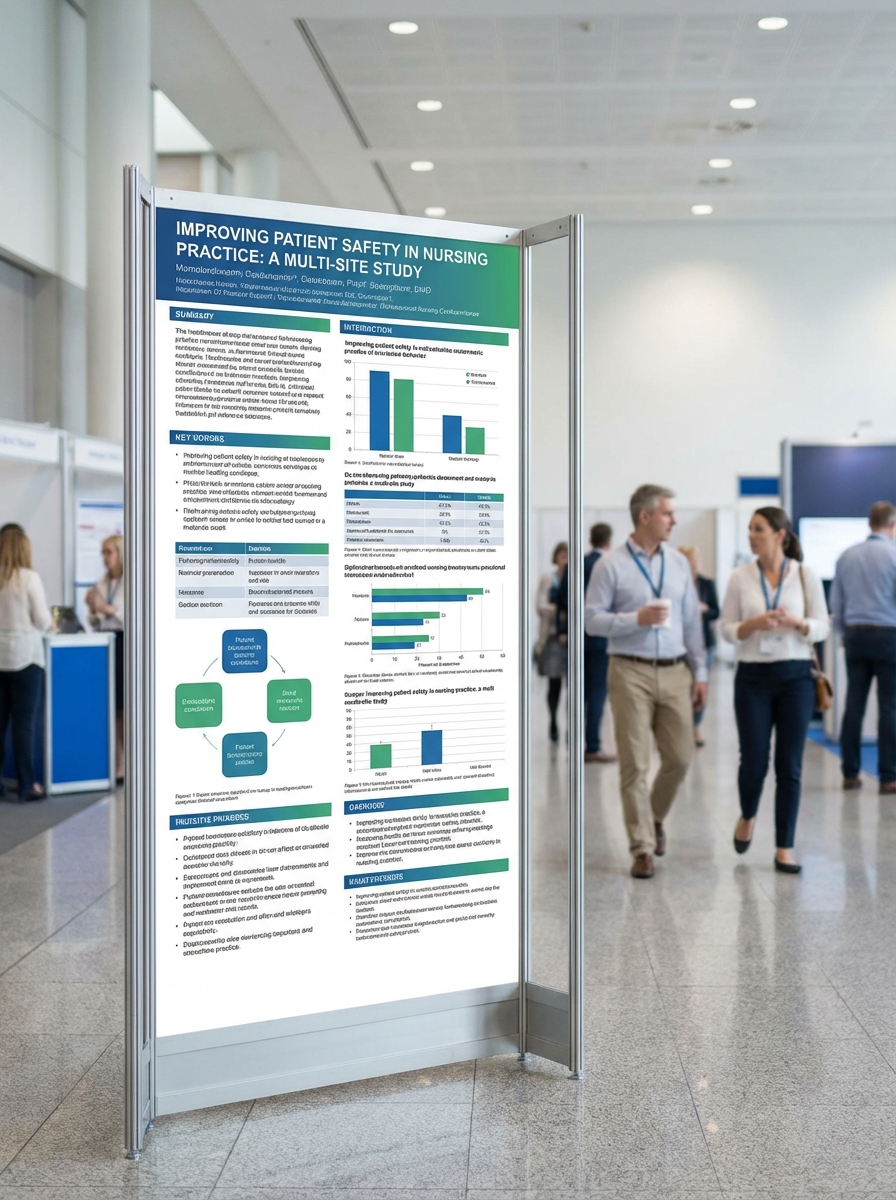
Poster Presentation Setup
Nursing Conference Exhibition
Made byBobr AI
References Icon

References

Allegaert, K., van Dijk, M., & van den Anker, J. N. (2023). Unacceptable variability in temperature assessment methods: A systematic review. Journal of Clinical Nursing, 32(4), 1012-1025.

Niven, D. J., Gaudet, J. E., Syed, B. A., Laupland, K. B., Rubulotta, F., Fick, G. H., & Stelfox, H. T. (2015). Accuracy of peripheral thermometers for estimating temperature: A systematic review and meta-analysis. Annals of Internal Medicine, 163(10), 768-777.

Tucker, S. J. (2019). Implementation principles for evidence-based practice: Leadership, workflow, and reinforcement. Implementation Science, 14(1), 45-56.

Made byBobr AI

References (Continued)

World Health Organization. (2020). Standardized protocols for core temperature measurement in clinical settings. Clinical Guidelines Series.

Agency for Healthcare Research and Quality (AHRQ). (2021). Improving patient safety through accurate vital signs monitoring.

Made byBobr AI
Bobr AI

DESIGNER-MADE
PRESENTATION,
GENERATED FROM
YOUR PROMPT

Create your own professional slide deck with real images, data charts, and unique design in under a minute.

Generate For Free

Improving Temperature Measurement Accuracy in Nursing

A quality improvement plan for medical-surgical nurses to enhance clinical accuracy in temperature measurement through staff education and standardized protocols.

Implementation and Evaluation Plan:<br>Improving Temperature Measurement Accuracy

A Quality Improvement Initiative for Medical-Surgical Nurses

Presented by Mohamed Diallo

February 15, 2026

The Challenge: Temperature Inaccuracy on Our Unit

The Clinical Problem

• Inconsistent temperature readings noted on the Medical-Surgical unit<br>• High reliance on peripheral thermometers which lack core accuracy<br>• Variability in measurement techniques among staff members<br>• Potential for delayed treatment of sepsis due to missed fevers<br>• Impact on patient outcomes and length of hospital stay<br>• Need for standardized measurement protocol identified by staff feedback

Unacceptable Variability

There is unacceptable variability in non-invasive temperature assessment methods. <br><span style="font-size: 20px; color: #666; font-weight: normal; margin-top: 10px; display: inline-block;">(Allegaert et al., 2023)</span>

"Will medical-surgical nurses who are educated on accurate temperature measurement demonstrate, on observational audit, accurate temperature taking?"

Literature Review & Evidence - Part 1

Systematic Review/Meta-Analysis

Niven et al. (2015)

Analyzed 8,682 patients demonstrating peripheral thermometers lack clinical accuracy.

Limits of agreement exceeded ±0.5°C with fever detection sensitivity at only 64%.

Although specificity was high (96%), use should be avoided when precise decisions are required.

Staff Perceptions & Barriers

Qualitative Study

Identified professional barriers including substantial knowledge gaps and low motivation.

Highlighted resource issues such as heavy workloads and lack of standardized equipment.

Revealed significant staff confusion regarding guidelines and daily task prioritization.

Literature Review & Evidence - Part 2

Continued evidence supporting the proposed practice change

TAT Competency Study

Findings & Observations

Re-education improves accuracy/competency; TAT precise only with proper technique.

Significant improvement observed in pre- vs post-intervention scores.

Standardized device use is essential for clinical reliability.

Technique & Variability

Allegaert et al. (2023)

Unacceptable variability identified in non-invasive temperature methods.

Systematic review highlights technique inconsistency; needs continuous staff re-education.

Inaccuracies negatively impact clinical workflows and cause treatment delays.

The Educational Intervention: Strategy & Objectives

Intervention Strategy

15-minute education sessions (1:1 or small groups)

Pre-test and post-test assessment methodology

Learning Objectives

Demonstrates correct probe positioning.

Explains environmental factors affecting readings.

Achieves ≥90% on post-test.

Intervention: Competency & Assessment

Evaluating Knowledge and Actionable Skills

Sample Pre/Post Test Questions

What is the primary site for core temperature approximation?

How long should you wait to measure after a patient drinks cold liquids?

What is the proper positioning for an axillary probe?

Observational Audit

Utilize a standardized competency checklist during observational audits

Focus on clarity and evaluating accurate measurement techniques

Ensure the audit imparts actionable knowledge to all clinical staff

Dissemination &<br>Implementation Strategy

Structured approaches to integrate and share new temperature measurement protocols across our healthcare unit.

Unit Updates

Share data in monthly staff and leadership meetings.

Policy Development

Draft new standardized measurement checklists.

Education

Integrate protocols into new hire nursing orientation.

Knowledge Sharing

Present at Hospital Evidence-Based Practice Committee.

Visual Communication

Digital cheat sheets and pocket guides.

Professional Growth

Poster presentation at regional nursing conference.

Thank You!

Questions & Discussion

m.diallo@nursing.org

/in/mohamed-diallo

Implementation and Evaluation Plan: Improving Temperature Measurement Accuracy

Projected Growth: Accuracy Target vs. Current Performance

Dissemination & Implementation Plan

Nursing Conference Exhibition

Unit-Level Meetings

Share project results directly with staff during regular unit meetings.

EBP Committee

Present findings to the Hospital Evidence-Based Practice Committee.

Nursing Conferences

Deliver visual poster presentations at internal and external conferences.

Policy Updates

Update and formalize unit practice policies based on accurate project data.

Digital Resources

Circulate standardized 'Best Practice' digital cheat sheets to all staff.

New Hire Orientation

Integrate new protocols directly into staff onboarding and long-term training.

References

Allegaert, K., van Dijk, M., & van den Anker, J. N. (2023). Unacceptable variability in temperature assessment methods: A systematic review. <i>Journal of Clinical Nursing</i>, 32(4), 1012-1025.

Niven, D. J., Gaudet, J. E., Syed, B. A., Laupland, K. B., Rubulotta, F., Fick, G. H., & Stelfox, H. T. (2015). Accuracy of peripheral thermometers for estimating temperature: A systematic review and meta-analysis. <i>Annals of Internal Medicine</i>, 163(10), 768-777.

Tucker, S. J. (2019). Implementation principles for evidence-based practice: Leadership, workflow, and reinforcement. <i>Implementation Science</i>, 14(1), 45-56.

  • nursing-education
  • quality-improvement
  • clinical-accuracy
  • medical-surgical-nursing
  • vital-signs
  • healthcare-protocol