




Made byBobr AI

Catalytic Potential of Cupin-Type Enzymes (Tm1010, Tm1459)

Exploration of metal-dependent activity in cupin enzymes for biocatalysis, focusing on Mn²⁺ vs Cu²⁺ in HNL reactions and oxidative cleavage.

#biocatalysis#enzymes#cupin-proteins#green-chemistry#biotechnology#tu-delft#metalloenzymes
Watch
Pitch
TU Delft Logo
MASTER THESIS DEFENCE | BIOCATALYSIS
Catalytic Potential of Tm1010, Tm1459, and GtHNL in Biocatalytic Reactions
Effects of Copper on Expression and Various Reactions
Mathijs Zoon
Student number: 5406889
Supervisors: U. Hanefeld, J. Berger | Faculty of Applied Sciences, TU Delft
April 2026
Faculty of Applied Sciences | Delft University of Technology
Made byBobr AI
TU Delft Logo
INTRODUCTION | BIOCATALYSIS
The World of Enzymes: Nature's Molecular Machines
Every second, thousands of chemical reactions occur in living cells — powered by proteins called ENZYMES.
Enzymes are biological catalysts that speed up reactions without being consumed
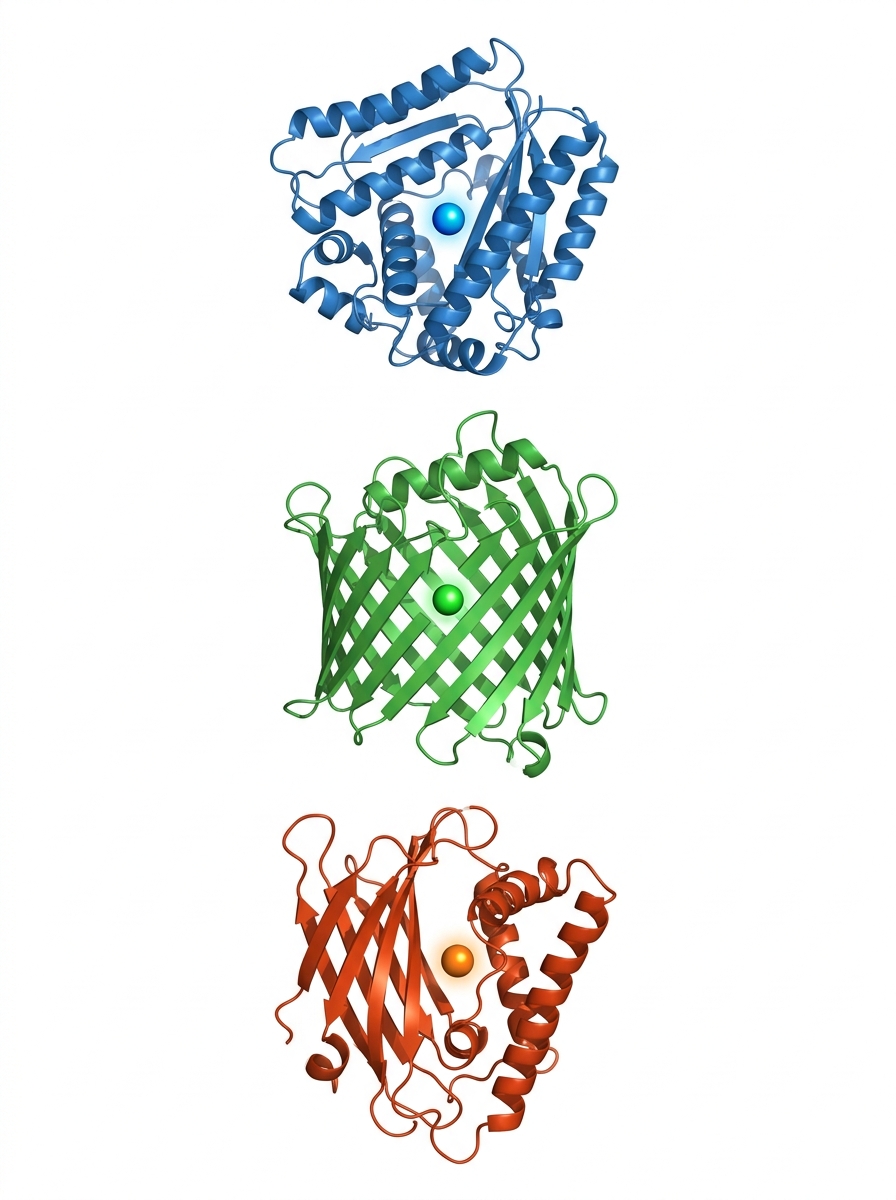
Cupin-type enzymes: a superfamily with a remarkable beta-barrel fold
Metal-dependent activity: manganese (Mn²⁺) and copper (Cu²⁺) as key cofactors
GtHNL-wt, Tm1010 & Tm1459: our three cupin heroes from this study
Why it matters
Enzymatic reactions occur under mild conditions — green chemistry for a sustainable future
Abstract rendering of protein structures
Tm1010
Tm1459
GtHNL-wt
Faculty of Applied Sciences | Delft University of Technology
Made byBobr AI
TU Delft Logo
Reactions & Research Question: Cu²⁺ vs Mn²⁺
What reactions do these enzymes catalyze?
✂️ HNL Activity
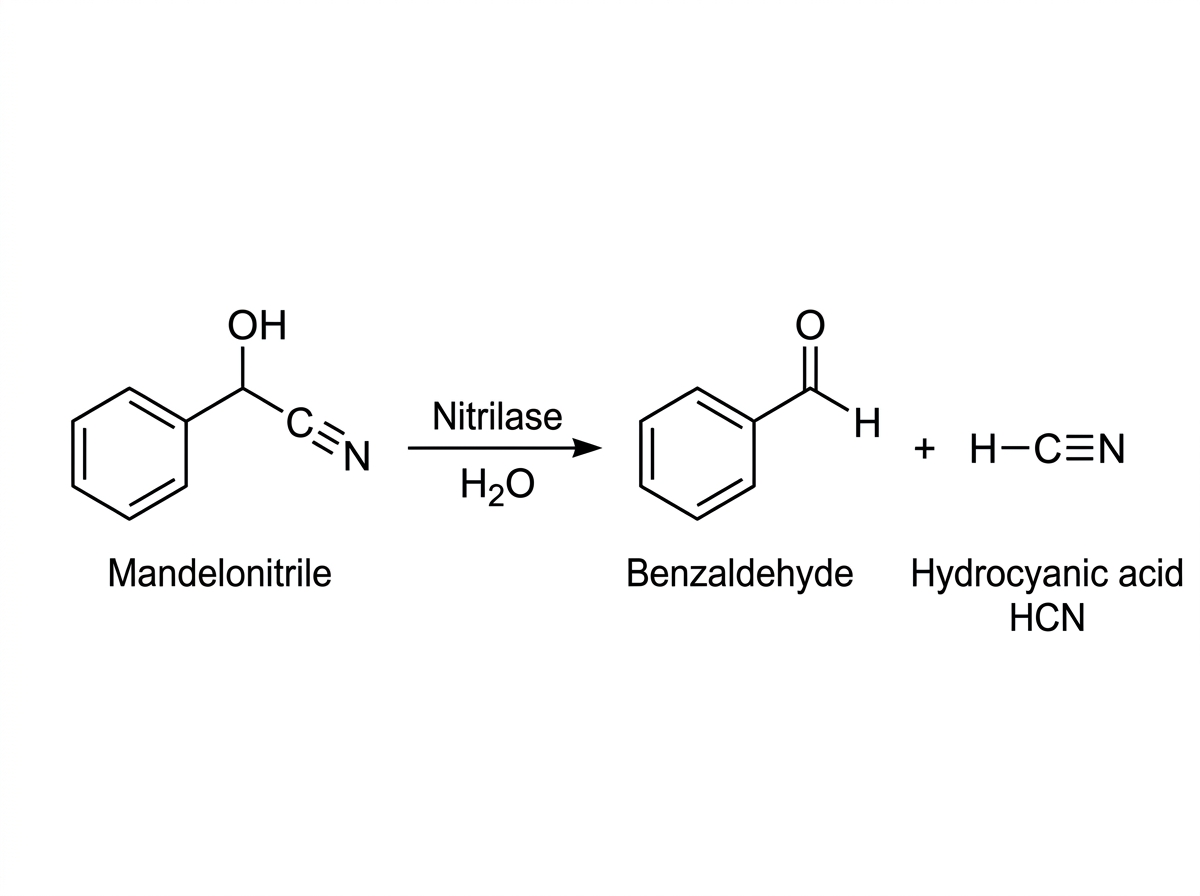
Cleavage of cyanohydrins to aldehyde + HCN
🔄 Oxidative Cleavage
Alkene → carbonyl compounds (with TBHP)
Nitroaldol (Henry)
C-C bond formation, β-nitro alcohols
🖇️ Michael Addition
Conjugate addition to α,β-unsaturated carbonyls
Feature Mn²⁺ Cu²⁺
Native cofactor ✓ Yes ✗ No
HNL activity High Reduced (4-10×)
Oxidative cleavage Up to 57% 12-14%
Non-native reactions Low Enhanced (nitroaldol 60-70%)
Binding specificity Defined Non-specific (>1 eq/monomer)
How does metal identity (Mn²⁺ vs Cu²⁺) and incorporation strategy affect the structural integrity and catalytic performance of Tm1010, Tm1459, and GtHNL-wt?
Motivated by: previous studies showing Tm1459 catalyzes oxidative cleavage (Hajnal et al. 2015) and copper-cupin systems enable non-native C-C bond forming reactions (Fujieda et al. 2020)
Faculty of Applied Sciences | Delft University of Technology
Made byBobr AI
TU Delft Logo
Methodology: How We Answer the Research Question
Each method was chosen to link enzyme structure to catalytic function
Structural Analysis
SEC-HPLC → oligomeric state
Native PAGE → confirm oligomers in solution
SDS-PAGE → purity check
Why: Understand if enzyme is structurally intact as dimer/tetramer
Metal Quantification: ICP-MS
Measures exact Cu²⁺/Mn²⁺ content per enzyme monomer
After PD10 desalting → only bound metal remains
Why: Know how many metal ions are actually incorporated
Binding Thermodynamics: ITC
Isothermal Titration Calorimetry configuration
Determines: N (stoichiometry), Ka, ΔH, ΔS
Why: Reveals if binding is specific (enthalpy) or non-specific (entropy)
Catalytic Activity Assays
HNL activity (UV, 280nm)
Oxidative cleavage (GC)
Reverse HNL (HPLC)
Nitroaldol Henry (chiral HPLC)
Michael addition (chiral HPLC)
Why: Directly answer the overall catalytic potential question
Structure Metal binding Catalytic output: a systematic approach to understanding metal-dependent biocatalysis
Faculty of Applied Sciences | Delft University of Technology
Made byBobr AI
TU Delft Logo
Two Strategies: Mn²⁺ vs Cu²⁺ Incorporation
Introduction — How We Make and Prepare the Enzymes
Strategy 1: Mn²⁺ Expression
1
Expression
with MnCl₂ (1mM) in E. coli
2
Cell Lysis & Purification
French Press + Heat shock
3
Quality Check
SDS-PAGE
4
DIALYSIS (66h, 20mM PDCA)
Removes ALL metals → apo enzyme
5
Metal Saturation
Incubate with 10× excess Cu²⁺ OR Mn²⁺
6
Desalting (PD10)
Removes unbound metal
Result
Well-characterized metal-loaded enzyme
VS
Dialysis
YES
|
NO
Metal Timing
Post-
expression
|
During
folding
Metal Control
High
(defined loading)
|
Low
(<1 eq/monomer)
Enzyme Yield
Lower
(more steps)
|
Higher
(fewer steps)
HNL Activity
Better
preserved
|
Reduced
Strategy 2: Cu²⁺ Expression
1
Expression
with CuCl₂ (1mM) in E. coli
2
Cell Lysis & Purification
French Press + Heat shock
3
Quality Check
SDS-PAGE
4
NO DIALYSIS NEEDED
5
Desalting (PD10)
Removes only unbound copper
Result
Copper incorporated during folding
💡
Both strategies were compared — Mn²⁺ expression + Cu²⁺ saturation was primarily used for reactions due to superior activity
Faculty of Applied Sciences | Delft University of Technology
Made byBobr AI
TU Delft Logo
RESULTS
Results: Expression & Purification
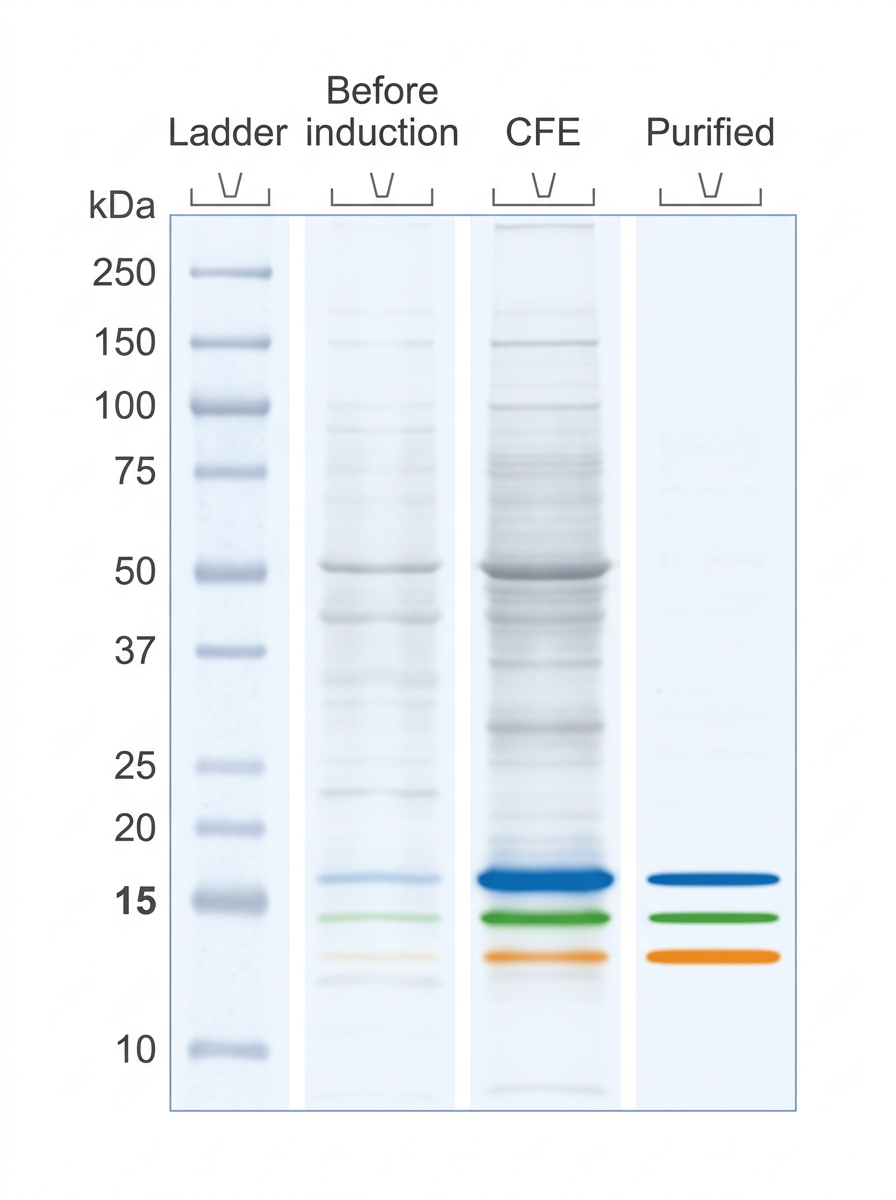
All three enzymes (GtHNL-wt, Tm1010, Tm1459) successfully expressed in E. coli
Protein bands visible after IPTG induction; absent before induction
French Press (FP) method yielded purer samples than Heat Shock (HS) alone
FP: less protein loss in pellet fractions
Target protein bands: ~15-16 kDa for Tm1459, ~15 kDa for Tm1010 & GtHNL-wt
Enzyme HS (mg/mL) FP (mg/mL) Cu-ex. (mg/mL)
GtHNL-wt 7.3 4.95 3.0
Tm1010 5.3 3.1 2.3
Tm1459 11.7 6.9 2.7
FP method selected for all subsequent copper expression experiments due to superior purity
SDS-PAGE Gel Schematic
Gel Schematic
Faculty of Applied Sciences | Delft University of Technology
Made byBobr AI
TU Delft Logo
RESULTS
Results: Dialysis & PD10 Desalting
DIALYSIS PURPOSE
Remove ALL metals from purified enzyme → create apo-enzyme.
66h at 4°C in 20mM PDCA buffer
PD10 PURPOSE
Remove unbound metals after Cu²⁺/Mn²⁺ saturation.
Apply 2.5mL → elute with 3.5mL buffer
Key Observations
Protein concentration decreases after each step (expected)
Dialysis ran 90h instead of 66h → extra dilution across membrane
PD10 introduces ~1.4× dilution (2.5mL in → 3.5mL out)
Concentration losses are in line with expectations
Enzyme Pre-dialysis (mg/mL) After dialysis (mg/mL) After PD10 (mg/mL)
GtHNL-wt 4.85 ~1.0 ~1.0
Tm1010 4.0 ~1.8 ~1.8
Tm1459 5.5 ~4.0 ~1.0
Protein Concentration Across Purification Steps
Chart
Concentration loss is expected and does not indicate enzyme degradation
Faculty of Applied Sciences | Delft University of Technology
Made byBobr AI
TU Delft Logo
RESULTS
Results: Structural Analysis — Oligomeric State
SEC-HPLC Results
Tm1010 (blue)
Apparent MW: 42.2 kDa | Monomer: 14.93 kDa
→ STABLE DIMER ✓
Tm1459 (green)
Apparent MW: 24.2 kDa | Monomer: 13.1 kDa
→ STABLE DIMER ✓
GtHNL-wt (amber)
Apparent MW: 19.0 kDa | Monomer: 14.29 kDa
→ PARTIAL DISSOCIATION ⚠️ (lower than expected for tetramer)
GtHNL-wt shows apparent instability under chromatographic conditions — dilution effects or protein-column interactions may cause dissociation. This may affect active site integrity.
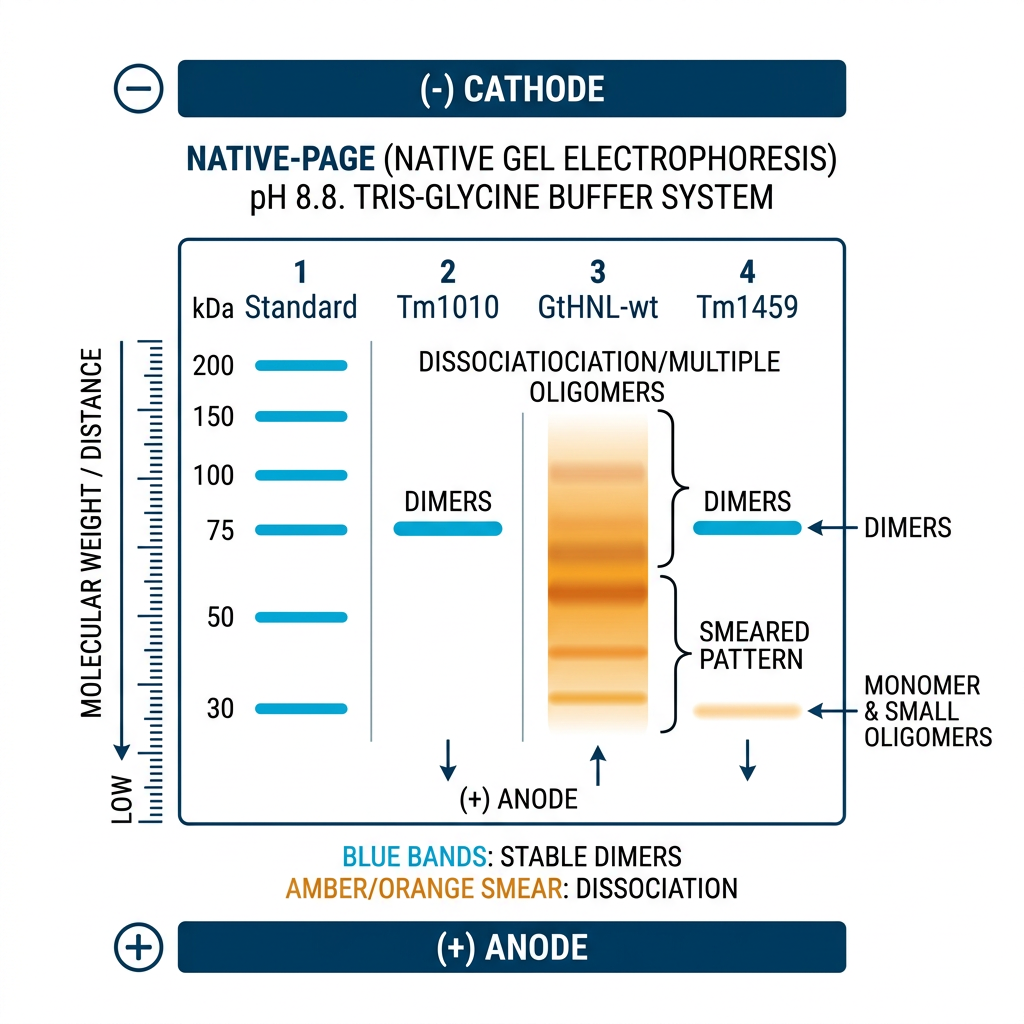
Native PAGE Confirmation
Native PAGE Gel Diagram
Native PAGE confirms oligomeric assemblies — but GtHNL-wt discrepancy with SEC suggests dynamic dissociation in dilute conditions.
Key finding: Tm1010 & Tm1459 = stable dimers | GtHNL-wt = reduced oligomeric stability → impacts catalytic performance
Faculty of Applied Sciences | Delft University of Technology
Made byBobr AI
RESULTS
Metal Binding — ICP-MS & ITC
TU Delft Logo
ICP-MS: Copper Loading (metal/enzyme ratio)
Chart
Insight: Cu-saturated enzymes bind > 1 eq per monomer → non-specific binding present. Cu-expressed enzymes show mainly high-affinity site binding.
ITC: Binding Thermodynamics Summary
Enzyme Metal N Kd Driving force
GtHNL-wt Cu²⁺ 4.47 ~14 μM Entropy (non-specific)
Tm1010 Cu²⁺ ~0 ~53 μM None (negligible)
Tm1459 Cu²⁺ 3.56 moderate Enthalpy (specific) ⭐
Tm1459 Mn²⁺ 2.60 ~6 μM Entropy (native cofactor) ⭐⭐
GtHNL-wt Mn²⁺ ~3-5 ~10 μM Entropy
Tm1010 Mn²⁺ <1 low None (negligible)
Tm1459
Most defined metal binding. Enthalpy-driven Cu²⁺, entropy-driven Mn²⁺. Clear metalloenzyme behavior.
GtHNL-wt
Moderate, largely non-specific binding for both metals. Multiple surface sites.
Tm1010
Weak, poorly defined interactions for both metals. Lacks functional metal-binding site.
Structural stability (dimer) correlates with better-defined metal binding → better catalysis
Faculty of Applied Sciences | Delft University of Technology
Slide 9
Made byBobr AI
Faculty of Applied Sciences | Delft University of Technology
TU Delft
RESULTS
Results: HNL Activity & Reverse HNL (Mandelonitrile Synthesis)

HNL Activity (Cleavage of Mandelonitrile → Benzaldehyde + HCN)

Reaction scheme
pH 5, 25°C, 280nm

Specific Activity (U/mg)

Key Insight:
Mn²⁺-expressed + Cu²⁺-saturated = 4-5× better than Cu²⁺-expressed
0.500
0.202
0.119
0.103
0.016
0.038
0.032
MeHNL
Control
Tm1459
Cu-sat
Tm1010
Cu-sat
GtHNL-wt
Cu-sat
Tm1459
Cu-expr
Tm1010
Cu-expr
GtHNL-wt
Cu-expr

Reverse HNL: Mandelonitrile Synthesis (Biphasic System)

FREE ENZYME

  • ~10-15% total conversion
  • ~50% ee (racemic = background reaction dominates at pH 7)
  • GtHNL-wt apo (Mn-expr):
    • 70% conversion
    • 55% ee

TEA BAG

(immobilized on Celite)
  • ~10% conversion
  • ~50% ee
Activity lost upon immobilization

SPIN REACTOR

  • ~10% conversion
Mass transfer limitations
CONCLUSION: Non-optimized pH (7.0 instead of acidic) leads to background reaction. No significant enzymatic stereocontrol observed in reverse HNL under these conditions.
Made byBobr AI
RESULTS
Results: Oxidative Cleavage (GC Analysis)
TU Delft Logo
α-Methylstyrene
+
TBHP
Enzyme, Mn²⁺
Acetophenone
+
Formaldehyde
Conditions: 50mM NaPi pH 7, 30°C, 20h, biphasic 1:9 organic:aqueous, detected by GC-FID
0
10
20
30
40
50
60
Conversion (%)
★ Tm1459 Mn²⁺-expressed
57% BENCHMARK
Buffer only
2.5%
Mn²⁺ in buffer
3%
Cu²⁺ in buffer
5%
Tm1459 CFE (Cu-expr)
13%
Tm1459 Cu-expressed
7%
Tm1459 dialysed
6%
Tm1459 Cu-saturated
4%
GtHNL-wt Cu-saturated
6%
GtHNL-wt Cu-expressed
15% Notable
Tm1010 Cu-saturated
5%
Tm1010 Cu-expressed
13% Notable
Mn²⁺ >> Cu²⁺
Tm1459-Mn²⁺: 57% vs Cu-sat: <6%
Expression timing matters
Cu-expressed > Cu post-purification
Controls: <5%
Activity is enzyme-dependent
Faculty of Applied Sciences | Delft University of Technology
Made byBobr AI
RESULTS
Non-Native Copper Reactions: Nitroaldol & Michael Addition
TU Delft Logo
Nitroaldol (Henry) Reaction
Benzaldehyde + Nitromethane [Cu²+-enzyme] β-nitro alcohol
Conditions MTBE/KPi pH 6, 30°C, 24h
Conversion & Enantioselectivity
System
Conversion (%)
ee / Selectivity
Blank copper
20%
50%
GtHNL-wt Cu-sat
68%
low ee
Tm1010 Cu-sat
65%
slight R
Tm1459 Cu-sat
61%
R-selective
1
Copper enzymes: 60-70% conversion ✓
2
Background Cu²+ reaction: ~20% (acting as Lewis acid)
3
Trade-off observed: Conversion vs enantioselectivity
Michael Addition
2-Azachalcone + Nitromethane [Cu²+-enzyme] product
Conditions pH 6.5, 20°C, 3h
Conversion & Enantioselectivity (Scale: 0-15%)
System
Conversion (%)
ee (%)
CuSO&sub4; only
12.2%
-
GtHNL-wt Cu-sat
5.6%
66%
GtHNL-wt + CuSO&sub4;
7.6%
drops
Tm1010 Cu-sat
4.4%
66%
Tm1459 Cu-sat
2.2%
55%
1
Low conversion (<8%): Shows a remarkably challenging reaction
2
Protein scaffold: Essential to enable stereocontrol (66% ee)
3
Pre-incorporated Cu²+: Found strictly essential for activity
Faculty of Applied Sciences | Delft University of Technology
Slide 12
Made byBobr AI
TU Delft Logo
CONCLUSIONS | RECOMMENDATIONS
Conclusions & Recommendations

What Did We Find?

1
Structural stability: Tm1010 & Tm1459 = stable dimers. GtHNL-wt = partial dissociation → impacts catalytic performance.
2
Metal binding: All enzymes bind Cu²⁺. Tm1459 shows most defined metal coordination. Tm1010 weakest binding.
3
Mn²⁺ preserves native HNL activity: Cu²⁺ expression reduces HNL activity 4-10×. Mn²⁺-expression + Cu²⁺-saturation = optimal strategy.
4
Oxidative cleavage: Tm1459-Mn²⁺ = 57% conversion (benchmark). Cu²⁺ generally reduces efficiency but timing of incorporation matters.
5
Nitroaldol (Henry): Cu²⁺-bound enzymes achieve 60-70% conversion. Significant Cu²⁺ background reaction (~20%). Low enantioselectivity.
6
Michael addition: Low conversion (<8%) across all systems. Protein scaffold enables moderate stereocontrol (up to 66% ee). Limited catalysis overall.
7
Overall: Cu²⁺ unlocks non-native reactivity. Mn²⁺ = superior for native enzymatic function. Performance governed by structure, metal identity, and incorporation.

Where to Go Next?

Optimize HNL conditions: Use acidic pH (3.5-5) for reverse HNL to minimize background reaction and improve ee.
Improve immobilization: Switch from Celite R-640 to R-633 (literature standard). Explore covalent immobilization to prevent leaching and deactivation.
Enhance enantioselectivity: Protein engineering / directed evolution of active site residues (e.g., C106L in Tm1459). Focus on substrate positioning.
ITC optimization: Improve Tm1010 binding experiments — signal quality was poor. Consider alternative buffer conditions.
Expand metal panel: Test other divalent metals (Co²⁺, Zn²⁺, Ni²⁺) to further explore the catalytic versatility of cupin enzymes.
Flow chemistry: Test Henry reaction in continuous flow with immobilized enzyme for improved process control.
Structural studies: X-ray crystallography of Cu²⁺-loaded variants to directly visualize non-specific binding sites.
Faculty of Applied Sciences | Delft University of Technology
Made byBobr AI
Thank You
Any Questions?
Mathijs Zoon
Master Thesis Biocatalysis | Student No: 5406889
Special thanks to U. Hanefeld, J. Berger, L. Koekkoek, M. Stampraat, S. Eustace, R. van Oosten, N. Karakitsou, and the entire BOC department
TU Delft Logo
Faculty of Applied Sciences | Biocatalysis Department | Delft University of Technology | April 2026
Made byBobr AI
Bobr AI

DESIGNER-MADE
PRESENTATION,
GENERATED FROM
YOUR PROMPT

Create your own professional slide deck with real images, data charts, and unique design in under a minute.

Generate For Free

Catalytic Potential of Cupin-Type Enzymes (Tm1010, Tm1459)

Exploration of metal-dependent activity in cupin enzymes for biocatalysis, focusing on Mn²⁺ vs Cu²⁺ in HNL reactions and oxidative cleavage.

MASTER THESIS DEFENCE | BIOCATALYSIS

Catalytic Potential of Tm1010, Tm1459, and GtHNL in Biocatalytic Reactions

Effects of Copper on Expression and Various Reactions

Mathijs Zoon

5406889

Supervisors: U. Hanefeld, J. Berger | Faculty of Applied Sciences, TU Delft

April 2026

Faculty of Applied Sciences | Delft University of Technology

INTRODUCTION | BIOCATALYSIS

The World of Enzymes: Nature's Molecular Machines

Enzymes are biological catalysts that speed up reactions without being consumed

Cupin-type enzymes: a superfamily with a remarkable beta-barrel fold

Metal-dependent activity: manganese (Mn²⁺) and copper (Cu²⁺) as key cofactors

GtHNL-wt, Tm1010 & Tm1459: our three cupin heroes from this study

Why it matters

Enzymatic reactions occur under mild conditions — green chemistry for a sustainable future

Tm1010

Tm1459

GtHNL-wt

Faculty of Applied Sciences | Delft University of Technology

Reactions & Research Question: Cu²⁺ vs Mn²⁺

HNL Activity

Cleavage of cyanohydrins to aldehyde + HCN

Oxidative Cleavage

Alkene → carbonyl compounds (with TBHP)

Nitroaldol (Henry)

C-C bond formation, β-nitro alcohols

Michael Addition

Conjugate addition to α,β-unsaturated carbonyls

How does metal identity (Mn²⁺ vs Cu²⁺) and incorporation strategy affect the structural integrity and catalytic performance of Tm1010, Tm1459, and GtHNL-wt?

Motivated by: previous studies showing Tm1459 catalyzes oxidative cleavage (Hajnal et al. 2015) and copper-cupin systems enable non-native C-C bond forming reactions (Fujieda et al. 2020)

Methodology: How We Answer the Research Question

Each method was chosen to link enzyme structure to catalytic function

Structural Analysis

Metal Quantification: ICP-MS

Binding Thermodynamics: ITC

Catalytic Activity Assays

Faculty of Applied Sciences | Delft University of Technology

Two Strategies: Mn²⁺ vs Cu²⁺ Incorporation

Introduction — How We Make and Prepare the Enzymes

Both strategies were compared — Mn²⁺ expression + Cu²⁺ saturation was primarily used for reactions due to superior activity

Faculty of Applied Sciences | Delft University of Technology

RESULTS

Results: Expression & Purification

All three enzymes (GtHNL-wt, Tm1010, Tm1459) successfully expressed in E. coli

Protein bands visible after IPTG induction; absent before induction

French Press (FP) method yielded purer samples than Heat Shock (HS) alone

FP: less protein loss in pellet fractions

Target protein bands: ~15-16 kDa for Tm1459, ~15 kDa for Tm1010 & GtHNL-wt

FP method selected for all subsequent copper expression experiments due to superior purity

Faculty of Applied Sciences | Delft University of Technology

RESULTS

Results: Dialysis & PD10 Desalting

Faculty of Applied Sciences | Delft University of Technology

RESULTS

Results: Structural Analysis — Oligomeric State

SEC-HPLC Results

Tm1010

Apparent MW: 42.2 kDa | Monomer: 14.93 kDa

→ STABLE DIMER ✓

Tm1459

Apparent MW: 24.2 kDa | Monomer: 13.1 kDa

→ STABLE DIMER ✓

GtHNL-wt

Apparent MW: 19.0 kDa | Monomer: 14.29 kDa

→ PARTIAL DISSOCIATION ⚠️ (lower than expected for tetramer)

GtHNL-wt shows apparent instability under chromatographic conditions — dilution effects or protein-column interactions may cause dissociation. This may affect active site integrity.

Native PAGE Confirmation

Native PAGE confirms oligomeric assemblies — but GtHNL-wt discrepancy with SEC suggests dynamic dissociation in dilute conditions.

Key finding: Tm1010 & Tm1459 = stable dimers | GtHNL-wt = reduced oligomeric stability → impacts catalytic performance

Faculty of Applied Sciences | Delft University of Technology

RESULTS

Metal Binding — ICP-MS & ITC

Tm1459

Most defined metal binding. Enthalpy-driven Cu²⁺, entropy-driven Mn²⁺. Clear metalloenzyme behavior.

GtHNL-wt

Moderate, largely non-specific binding for both metals. Multiple surface sites.

Tm1010

Weak, poorly defined interactions for both metals. Lacks functional metal-binding site.

Structural stability (dimer) correlates with better-defined metal binding → better catalysis

Faculty of Applied Sciences | Delft University of Technology

Slide 9

RESULTS

Results: HNL Activity & Reverse HNL (Mandelonitrile Synthesis)

Faculty of Applied Sciences | Delft University of Technology

RESULTS

Results: Oxidative Cleavage (GC Analysis)

Faculty of Applied Sciences | Delft University of Technology

RESULTS

Non-Native Copper Reactions: Nitroaldol & Michael Addition

Nitroaldol (Henry) Reaction

Michael Addition

Faculty of Applied Sciences | Delft University of Technology

Slide 12

Conclusions & Recommendations

CONCLUSIONS

RECOMMENDATIONS

What Did We Find?

Where to Go Next?

Structural stability:

Tm1010 & Tm1459 = stable dimers. GtHNL-wt = partial dissociation &rarr; impacts catalytic performance.

Metal binding:

All enzymes bind Cu²⁺. Tm1459 shows most defined metal coordination. Tm1010 weakest binding.

Mn²⁺ preserves native HNL activity:

Cu²⁺ expression reduces HNL activity 4-10&times;. Mn²⁺-expression + Cu²⁺-saturation = optimal strategy.

Oxidative cleavage:

Tm1459-Mn²⁺ = 57% conversion (benchmark). Cu²⁺ generally reduces efficiency but timing of incorporation matters.

Nitroaldol (Henry):

Cu²⁺-bound enzymes achieve 60-70% conversion. Significant Cu²⁺ background reaction (~20%). Low enantioselectivity.

Michael addition:

Low conversion (&lt;8%) across all systems. Protein scaffold enables moderate stereocontrol (up to 66% ee). Limited catalysis overall.

Overall:

Cu²⁺ unlocks non-native reactivity. Mn²⁺ = superior for native enzymatic function. Performance governed by structure, metal identity, and incorporation.

Optimize HNL conditions:

Use acidic pH (3.5-5) for reverse HNL to minimize background reaction and improve <i>ee</i>.

Improve immobilization:

Switch from Celite R-640 to R-633 (literature standard). Explore covalent immobilization to prevent leaching and deactivation.

Enhance enantioselectivity:

Protein engineering / directed evolution of active site residues (e.g., C106L in Tm1459). Focus on substrate positioning.

ITC optimization:

Improve Tm1010 binding experiments — signal quality was poor. Consider alternative buffer conditions.

Expand metal panel:

Test other divalent metals (Co²⁺, Zn²⁺, Ni²⁺) to further explore the catalytic versatility of cupin enzymes.

Flow chemistry:

Test Henry reaction in continuous flow with immobilized enzyme for improved process control.

Structural studies:

X-ray crystallography of Cu²⁺-loaded variants to directly visualize non-specific binding sites.

Faculty of Applied Sciences | Delft University of Technology

Thank You

Any Questions?

Mathijs Zoon

Master Thesis Biocatalysis | Student No: 5406889

Special thanks to U. Hanefeld, J. Berger, L. Koekkoek, M. Stampraat, S. Eustace, R. van Oosten, N. Karakitsou, and the entire BOC department

Faculty of Applied Sciences | Biocatalysis Department | Delft University of Technology | April 2026

  • biocatalysis
  • enzymes
  • cupin-proteins
  • green-chemistry
  • biotechnology
  • tu-delft
  • metalloenzymes