

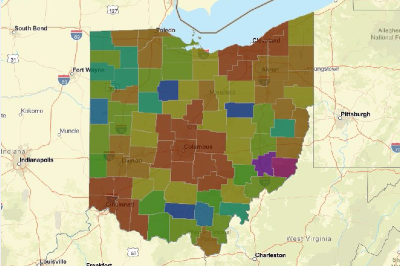





Ohio Education Funding: DeRolph Legacy & Voucher Rulings
A strategic overview of Ohio's education funding history, from the 1997 DeRolph ruling to the 2025 EdChoice voucher unconstitutionality case.
State of Education Funding 2026
Legal Landscapes: From DeRolph (1997) to the 2025 Voucher Ruling
Akron Public Schools | Strategic Overview
The Core Issue: Funding Dependencies
Historically, Ohio's education system relied heavily on local property taxes. This created a constitutional crisis where a student's educational opportunity was directly tied to the property wealth of their zip code, disadvantaging urban districts like Akron.
DeRolph v. State of Ohio (1997-2002)
1997
Ohio Supreme Court rules the funding system unconstitutional; excessive reliance on property tax.
2000-2002
Subsequent rulings reiterate the system's failure to provide a 'thorough and efficient' education.
2003
Court relinquishes jurisdiction. While the legal battle ended, the structural disparity remained.
Legacy of DeRolph: The Fair School Funding Plan
Decades after DeRolph, the legislature implemented the Fair School Funding Plan. It attempts to determine the actual 'Base Cost' of educating a student regardless of district wealth.
Shifts reliance away from local property values.
Calculates capacity to pay for each district (income + property wealth).
Gradual phase-in process aimed at fully funding the formula.
The New Challenge: EdChoice Expansion
While the funding formula improved, a parallel system expanded. The EdChoice voucher program began diverting state funds intended for public education to subsidize private school tuition.
By 2025, universal eligibility meant even high-income families already in private schools could access state dollars, significantly impacting the pool of resources available for public districts like APS.
Columbus City Schools v. State of Ohio (2025)
RULING: The Franklin County Court of Common Pleas declared the EdChoice voucher program unconstitutional.
The court found that funding a private system that can discriminate in admissions and is not subject to the same standards as public schools violates the 'common system' clause of the Ohio Constitution.
APS Role: Plaintiff in coalition with 250+ districts.
The Core Legal Debate
Public Districts (Plaintiffs)
The Constitution mandates a single 'common' system. Diverting funds to private entities that lack public oversight drains essential resources from the constitutionally mandated public system.
State of Ohio (Defense)
Parents have a right to choose the best educational setting for their child. State funding should follow the student, rather than being tied to a specific building or district monopoly.
Budget Implications for Akron Public Schools
Scenario A: Ruling Upheld
Immediate freeze on voucher expansion. Potential repatriation of millions in state aid back to the public formula foundation. Stabilizes long-term forecasting.
Scenario B: Ruling Overturned
Continued universal eligibility drains foundation funds. APS must rely more heavily on local levies, which historically fail or face resistance (echoing the DeRolph crisis).
Current Status: The Appeals Process (2026)
State of Ohio appealed the June 2025 ruling immediately.
Case currently pending in the Appellate Court. Expected to reach the Ohio Supreme Court by late 2026 or early 2027.
Current voucher payments continue under a 'stay' order during litigation.
What This Means for Stakeholders
For the Community
Awareness of how local tax dollars are utilized. Support for legislative advocacy that prioritizes public school stability.
For APS Administration
Continued fiscal caution. Preparing contingencies for both the upholding or overturning of the 2025 ruling.
- ohio-education
- school-funding
- derolph-v-state
- edchoice-vouchers
- akron-public-schools
- educational-policy
- legal-ruling