
India-Pakistan Partition: History and Conflict Roots
Explore the history of the 1947 Partition, the Kashmir conflict, the birth of Bangladesh, and the ongoing geopolitical tensions between India and Pakistan.
Partition and Conflict
India, Pakistan, and the Roots of Ongoing Tension
Introduction: The End of an Era
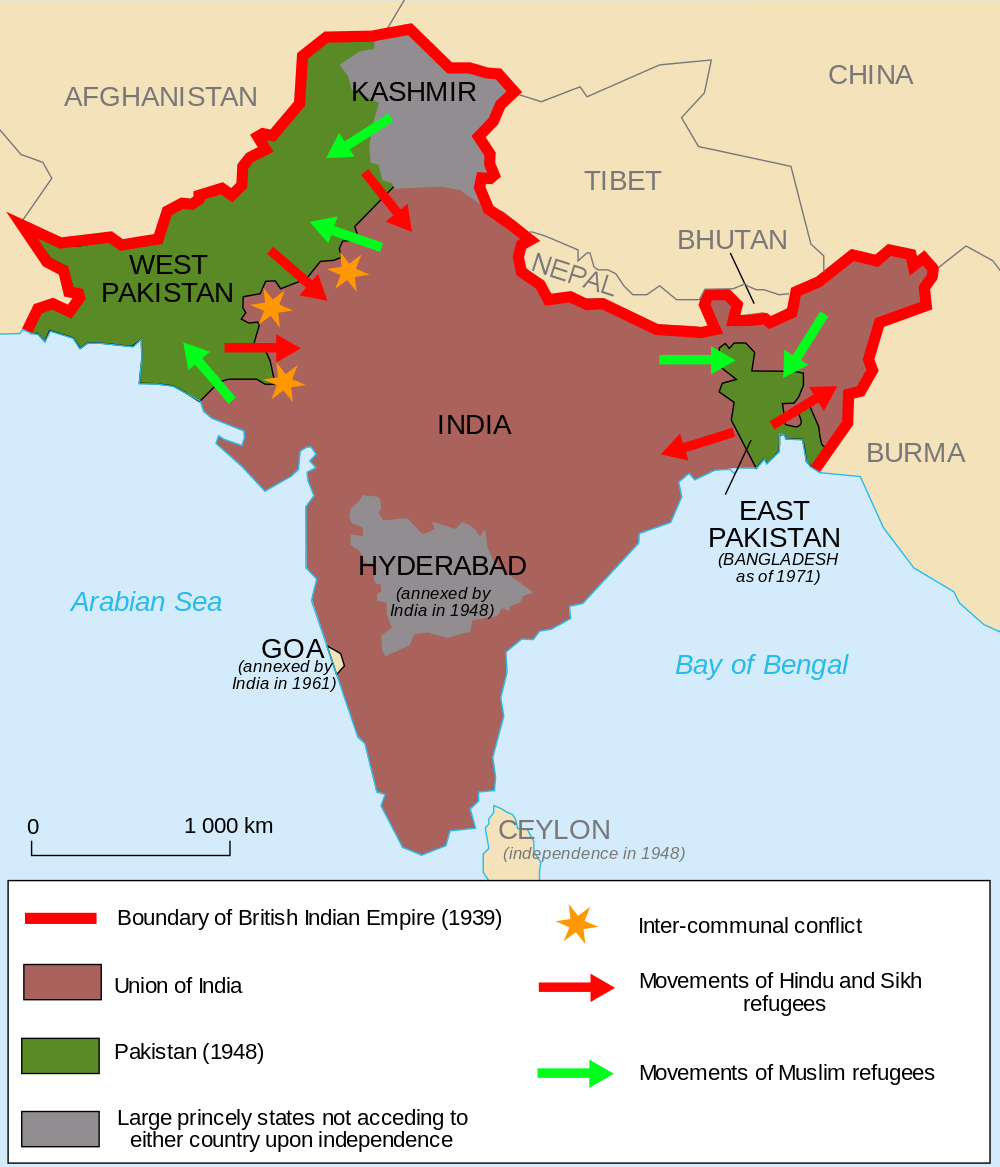
<ul><li style="margin-bottom:15px;"><strong>August 1947</strong>: British rule in India ended</li><li style="margin-bottom:15px;"><strong>Division</strong>: Split into Hindu-majority India and Muslim-majority Pakistan</li><li style="margin-bottom:15px;"><strong>Human Cost</strong>: 'Partition' uprooted millions across borders</li><li style="margin-bottom:15px;"><strong>Legacy</strong>: Created a geopolitical fault line that remains active today</li></ul>
Historical Roots: The Two-Nation Theory
Religious identity emerged as the primary basis for 20th-century nationalism
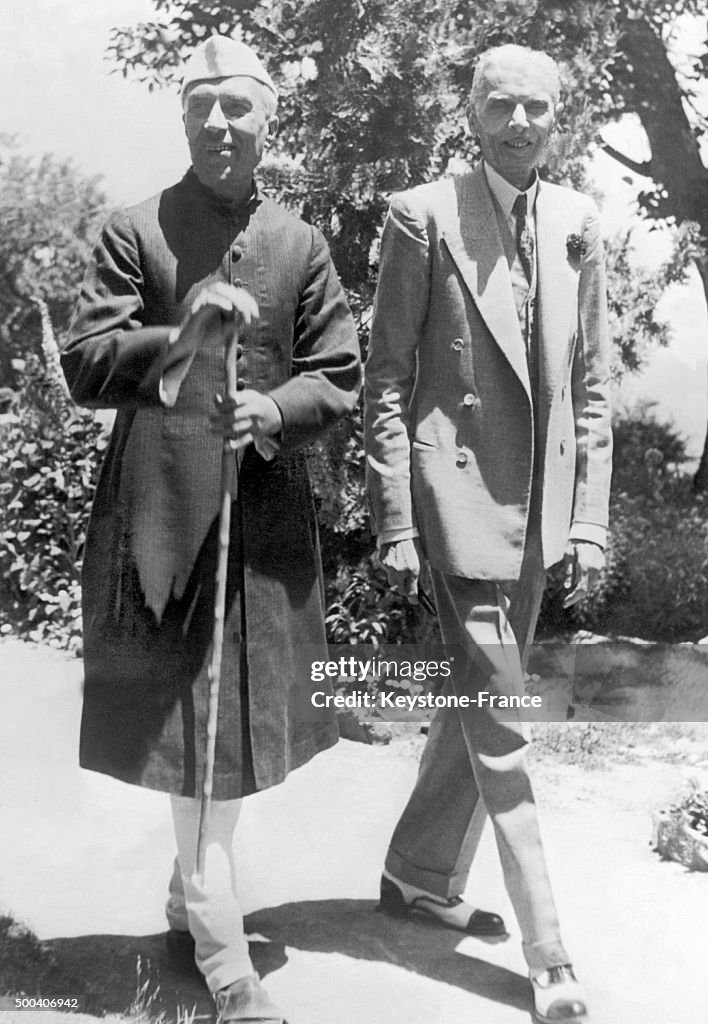
Muslim League (Jinnah) argued Muslims and Hindus were distinct nations
Indian National Congress (Gandhi/Nehru) pushed for a unified, secular India
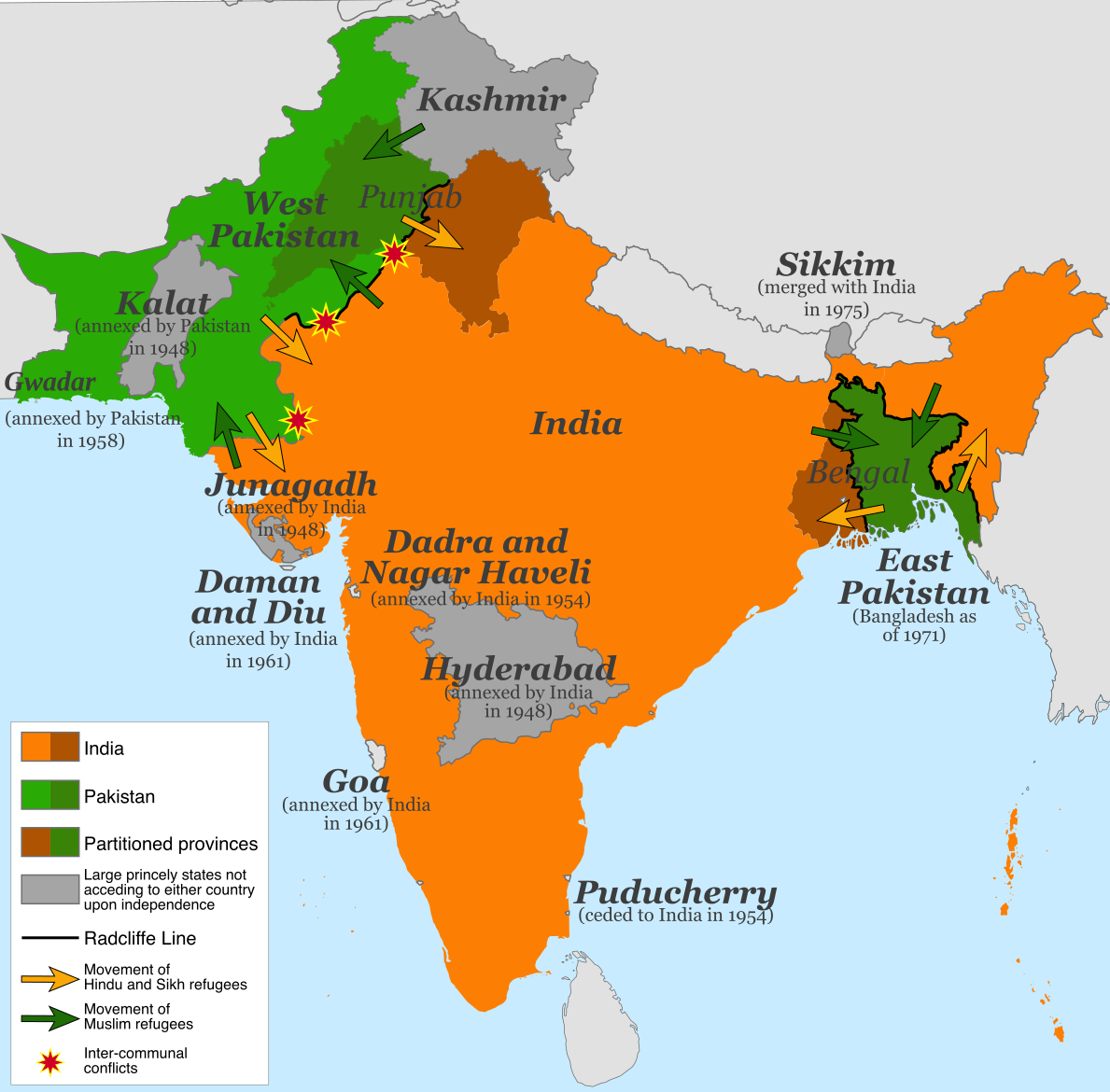
1947: Drawing the Radcliffe Line
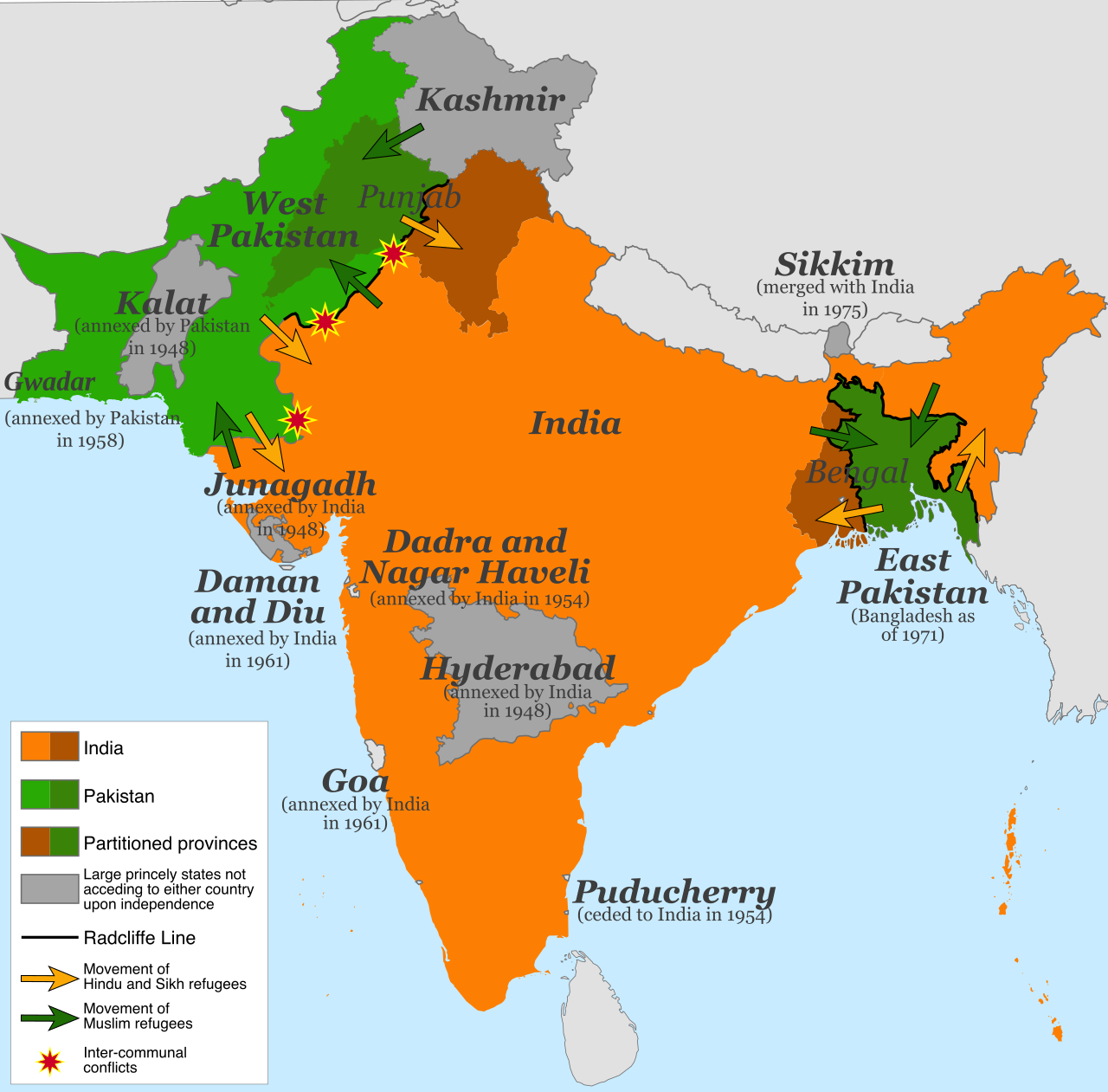
<ul><li>British lawyer Cyril Radcliffe had only 5 weeks to draw the border</li><li>The line cut through villages, canals, and communities in Punjab and Bengal</li><li>Boundaries were published August 17 (two days after independence), causing panic</li></ul>
The Human Cost: Migration & Violence
Partition triggered one of the largest mass migrations in human history. Estimates suggest roughly 15 million people crossed borders, while communal violence claimed up to 2 million lives.
The Kashmir Conflict (1947-Present)
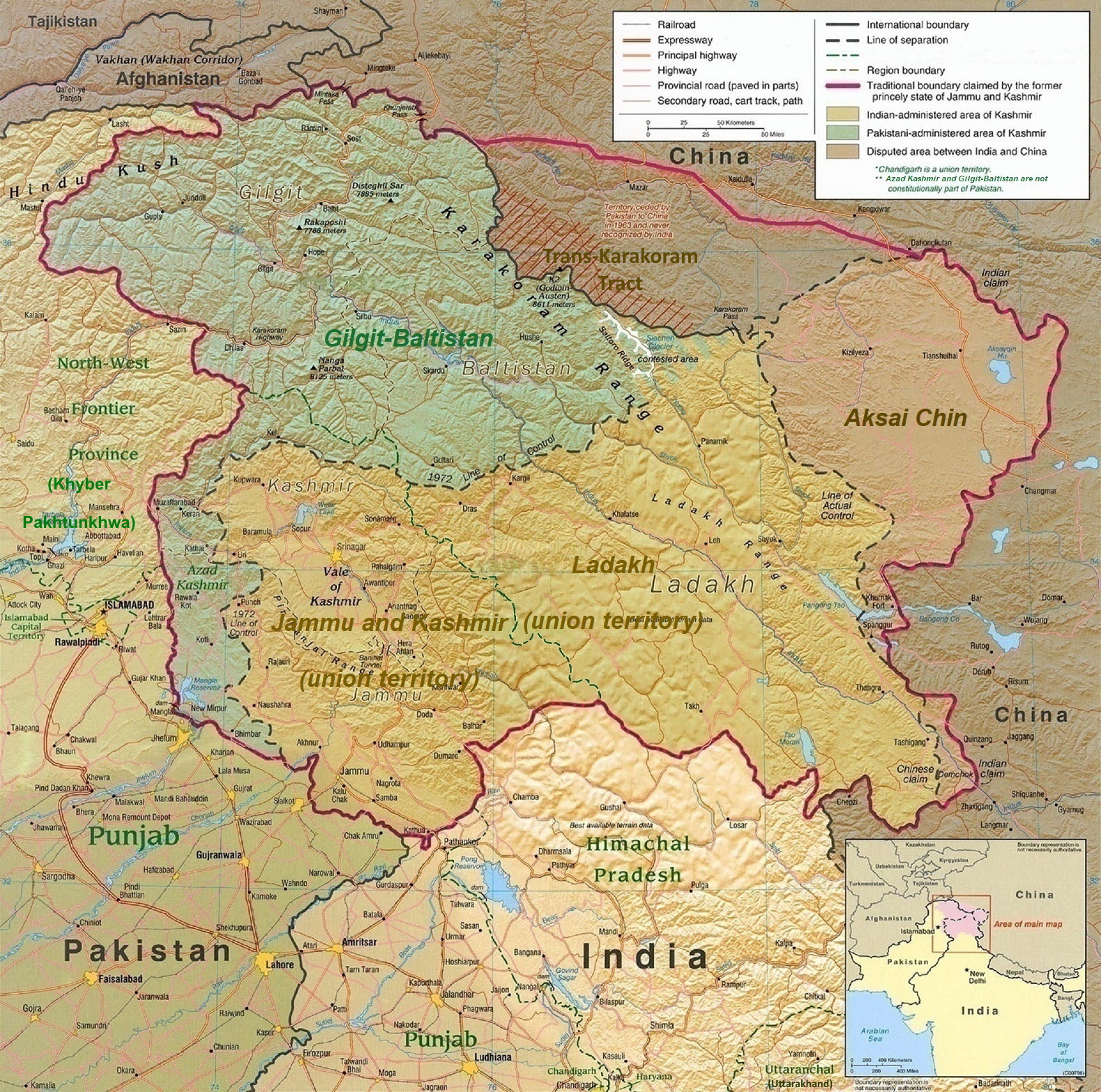
The princely state of Jammu & Kashmir had a Muslim majority but a Hindu ruler (Maharaja Hari Singh). Caught between acceding to India or Pakistan, a tribal invasion and subsequent war in 1947 led to a de facto partition of the region along the 'Line of Control' (LoC).
Waters and Wars: 1960s
1960 Indus Waters Treaty: Mediated by the World Bank, this allocated water rights between the two nations. It remains one of the few successful agreements.
1965 War: Pakistan launched 'Operation Gibraltar' to infiltrate Kashmir. India responded by crossing the international border toward Lahore.
1971: The Birth of Bangladesh
Pakistan was geographically divided into West and East Pakistan (separated by 1,000 miles of Indian territory). Cultural and political suppression in the East led to a liberation war. India intervened in 1971 to support Bengali independence, resulting in a decisive victory and the creation of Bangladesh.
Nuclear Standoff & Kargil (1998-1999)
1998: Both nations conducted nuclear tests, fundamentally changing the security dynamics of South Asia.
1999: Despite a peace declaration, Pakistani troops occupied high-altitude positions in Kargil. The conflict remained limited but tense due to the nuclear backdrop.
Today's Impact and Status
Geopolitical
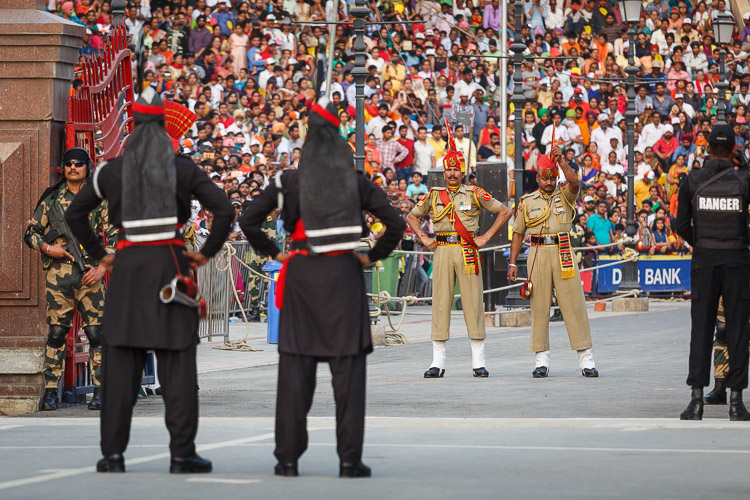
Heavy militarization of borders, periodic skirmishes, and stalled SAARC regional cooperation.
Cultural
Shared music, food, and language persist, though visa restrictions limit people-to-people contact.
Conclusion
The Partition of 1947 was not just a historical event, but the beginning of an enduring rivalry. While the borders are fixed on maps, the political and human consequences continue to shape the destiny of South Asia.
- india-pakistan
- 1947-partition
- kashmir-conflict
- south-asian-history
- geopolitics
- radcliffe-line
- nuclear-standoff