

Made byBobr AI

Oral Health Management of Patients at Risk of MRONJ

Clinical guidelines for dental management of patients at risk of Medication-Related Osteonecrosis of the Jaw (MRONJ), covering risk factors and protocols.

#dental-guidelines#mronj#bisphosphonates#oral-surgery#dentistry#osteonecrosis#patient-safety
Watch
Pitch
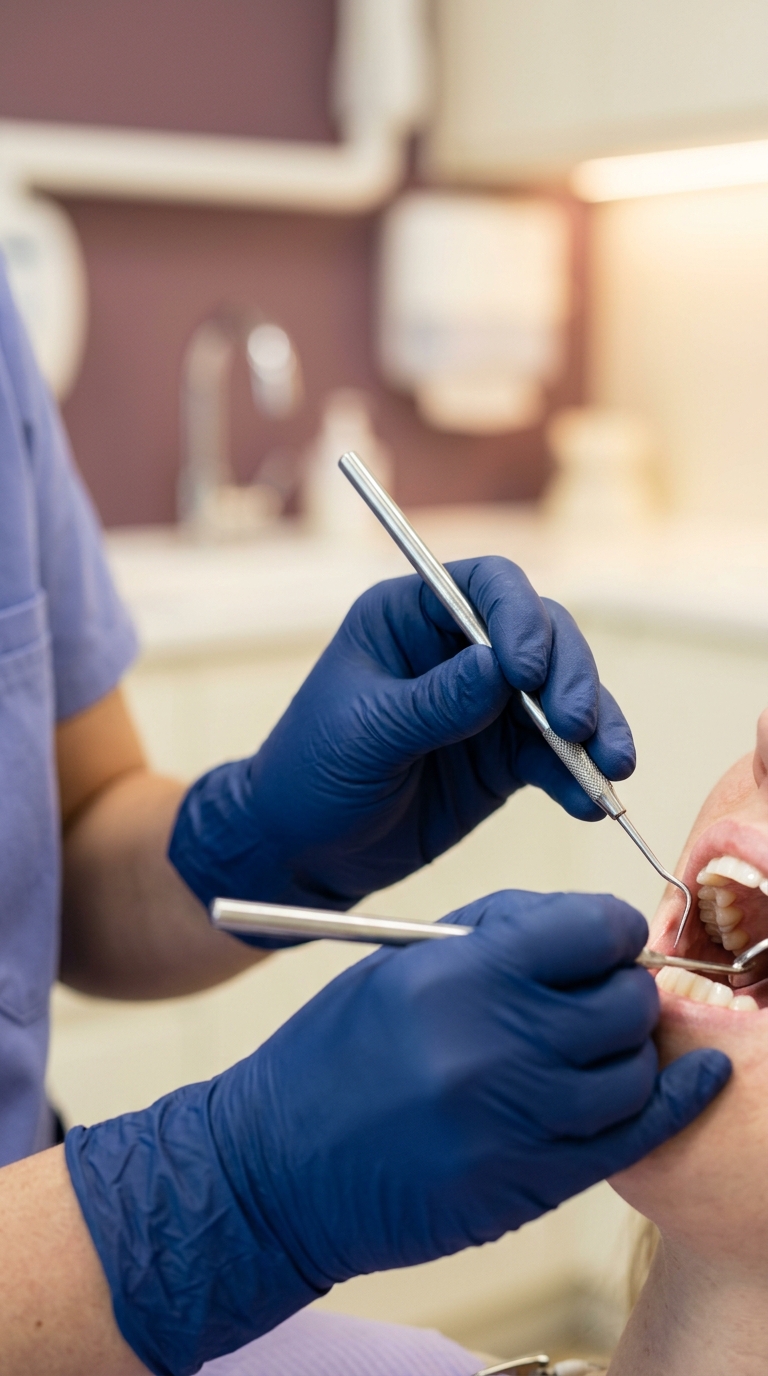
Dental Professional Close-up

Oral Health Management of Patients at Risk of MRONJ

Classification of Patient Risk & Clinical Management Guidelines

Made byBobr AI

MRONJ Risk Factors

Underlying Medical Condition

Cancer patients are at higher risk than osteoporosis patients.

Duration of Drug Therapy

Risk increases with cumulative bisphosphonate dose; >4 years = higher risk.

Dentoalveolar Surgery

Tooth extraction is the most common precipitating event (2.9% in cancer patients).

Concurrent Medications

Systemic glucocorticoids combined with bisphosphonates increase risk.

Dental Trauma & Infection

Ill-fitting dentures and untreated periodontal disease increase risk.

Dental Implants

Avoid implant placement in high-dose cancer patients; low but present risk in osteoporosis patients.

Made byBobr AI

Assessing Patient Risk

Allocate patients to a risk category based on medical condition, drug type, duration, and complicating factors.

Low Risk

  • Osteoporosis/non-malignant bone disease treated with oral bisphosphonates < 5 years, NOT on systemic glucocorticoids
  • Quarterly/yearly IV bisphosphonate infusions < 5 years, NOT on systemic glucocorticoids
  • Denosumab for osteoporosis, NOT on systemic glucocorticoids

Higher Risk

  • Bisphosphonates (oral or IV) > 5 years
  • Bisphosphonates or denosumab + concurrent systemic glucocorticoids
  • Anti-resorptive or anti-angiogenic drugs for cancer management
  • Previous diagnosis of MRONJ

Patients who have taken bisphosphonates at any time in the past should be assessed as if still taking the drug.

Made byBobr AI
Dental Consultation

Initial Management: Getting Patients Dentally Fit

Before commencing drug therapy — aim to get the patient as dentally fit as feasible, prioritising preventive care.

1
Advise on MRONJ Risk: Emphasise it is small; do not discourage medication.
2
Preventive Advice: Promote healthy diet, excellent oral hygiene, fluoride use, smoking cessation, limiting alcohol, & regular dental checks.
3
Obtain Radiographs: Essential for identifying hidden infection and underlying pathology.
4
Proactive Treatment: Extract teeth of poor prognosis without delay and adjust any ill-fitting dentures.
5
Fluoride Therapy: Consider high fluoride toothpaste prescription for patients at elevated risk.
6
Specialist Referral: Consult oral surgery or special care dentistry for complex/cancer patients.
Made byBobr AI

Continuing Management: Low Risk vs Higher Risk Patients

Low Risk Patients

  • Carry out ALL routine dental treatment as normal
  • If extraction needed: discuss risks & benefits, obtain valid consent, proceed as clinically indicated
  • Do NOT prescribe antibiotic prophylaxis to reduce MRONJ risk
  • Review healing at 8 weeks — if socket unhealed, refer to oral surgery specialist
  • Report suspected MRONJ via MHRA Yellow Card Scheme

Higher Risk Patients

  • Carry out most routine dental treatment as normal
  • Explore ALL alternatives before extraction (consider retaining roots if no infection present)
  • If extraction is necessary: discuss risks/benefits fully, obtain valid consent, proceed carefully
  • Do NOT prescribe antibiotic prophylaxis specifically for MRONJ
  • Review healing at 8 weeks — refer to specialist if MRONJ suspected
  • Consider consulting oral surgery / special care dentistry specialist for cancer patients
If MRONJ is confirmed, the oral surgery specialist will notify the patient's GP and the prescribing physician.
Made byBobr AI
Bobr AI

DESIGNER-MADE
PRESENTATION,
GENERATED FROM
YOUR PROMPT

Create your own professional slide deck with real images, data charts, and unique design in under a minute.

Generate For Free

Oral Health Management of Patients at Risk of MRONJ

Clinical guidelines for dental management of patients at risk of Medication-Related Osteonecrosis of the Jaw (MRONJ), covering risk factors and protocols.

Oral Health Management of Patients at Risk of MRONJ

Classification of Patient Risk & Clinical Management Guidelines

MRONJ Risk Factors

Underlying Medical Condition

Cancer patients are at higher risk than osteoporosis patients.

Duration of Drug Therapy

Risk increases with cumulative bisphosphonate dose; >4 years = higher risk.

Dentoalveolar Surgery

Tooth extraction is the most common precipitating event (2.9% in cancer patients).

Concurrent Medications

Systemic glucocorticoids combined with bisphosphonates increase risk.

Dental Trauma & Infection

Ill-fitting dentures and untreated periodontal disease increase risk.

Dental Implants

Avoid implant placement in high-dose cancer patients; low but present risk in osteoporosis patients.

Assessing Patient Risk

Allocate patients to a risk category based on medical condition, drug type, duration, and complicating factors.

Low Risk

Osteoporosis/non-malignant bone disease treated with oral bisphosphonates < 5 years, NOT on systemic glucocorticoids

Quarterly/yearly IV bisphosphonate infusions < 5 years, NOT on systemic glucocorticoids

Denosumab for osteoporosis, NOT on systemic glucocorticoids

Higher Risk

Bisphosphonates (oral or IV) > 5 years

Bisphosphonates or denosumab + concurrent systemic glucocorticoids

Anti-resorptive or anti-angiogenic drugs for cancer management

Previous diagnosis of MRONJ

Patients who have taken bisphosphonates at any time in the past should be assessed as if still taking the drug.

Initial Management: Getting Patients Dentally Fit

Before commencing drug therapy — aim to get the patient as dentally fit as feasible, prioritising preventive care.

Advise on MRONJ Risk:

Emphasise it is small; do not discourage medication.

Preventive Advice:

Promote healthy diet, excellent oral hygiene, fluoride use, smoking cessation, limiting alcohol, & regular dental checks.

Obtain Radiographs:

Essential for identifying hidden infection and underlying pathology.

Proactive Treatment:

Extract teeth of poor prognosis without delay and adjust any ill-fitting dentures.

Fluoride Therapy:

Consider high fluoride toothpaste prescription for patients at elevated risk.

Specialist Referral:

Consult oral surgery or special care dentistry for complex/cancer patients.

Continuing Management: Low Risk vs Higher Risk Patients

Low Risk Patients

Carry out <strong>ALL</strong> routine dental treatment as normal

If extraction needed: discuss risks &amp; benefits, obtain valid consent, proceed as clinically indicated

<strong>Do NOT</strong> prescribe antibiotic prophylaxis to reduce MRONJ risk

Review healing at 8 weeks — if socket unhealed, refer to oral surgery specialist

Report suspected MRONJ via MHRA Yellow Card Scheme

Higher Risk Patients

Carry out most routine dental treatment as normal

Explore <strong>ALL</strong> alternatives before extraction (consider retaining roots if no infection present)

If extraction is necessary: discuss risks/benefits fully, obtain valid consent, proceed carefully

<strong>Do NOT</strong> prescribe antibiotic prophylaxis specifically for MRONJ

Review healing at 8 weeks — refer to specialist if MRONJ suspected

Consider consulting oral surgery / special care dentistry specialist for cancer patients

If MRONJ is confirmed, the oral surgery specialist will notify the patient's GP and the prescribing physician.

  • dental-guidelines
  • mronj
  • bisphosphonates
  • oral-surgery
  • dentistry
  • osteonecrosis
  • patient-safety