
Made byBobr AI

5 Core Pillars of Realism Tattooing & Drawing Fundamentals

Master the 5 pillars of realism tattooing: academic drawing, light and shadow, value scales, depth, and texture for professional tattoo artists.

#tattoo-art#realism-tattooing#drawing-fundamentals#art-education#portrait-tattoo#value-scale#shading-techniques
Watch
Pitch
FOUNDATIONS OF REALISM TATTOOING
Drawing
Fundamentals
The 5 Core Pillars for Realism Artists
Academic Drawing · Light & Shadow · Value Scale · Depth & Form · Texture
Made byBobr AI
01 / 05
01
Academic Drawing Techniques
Learning the traditional fundamentals of drawing before moving into realism.
■
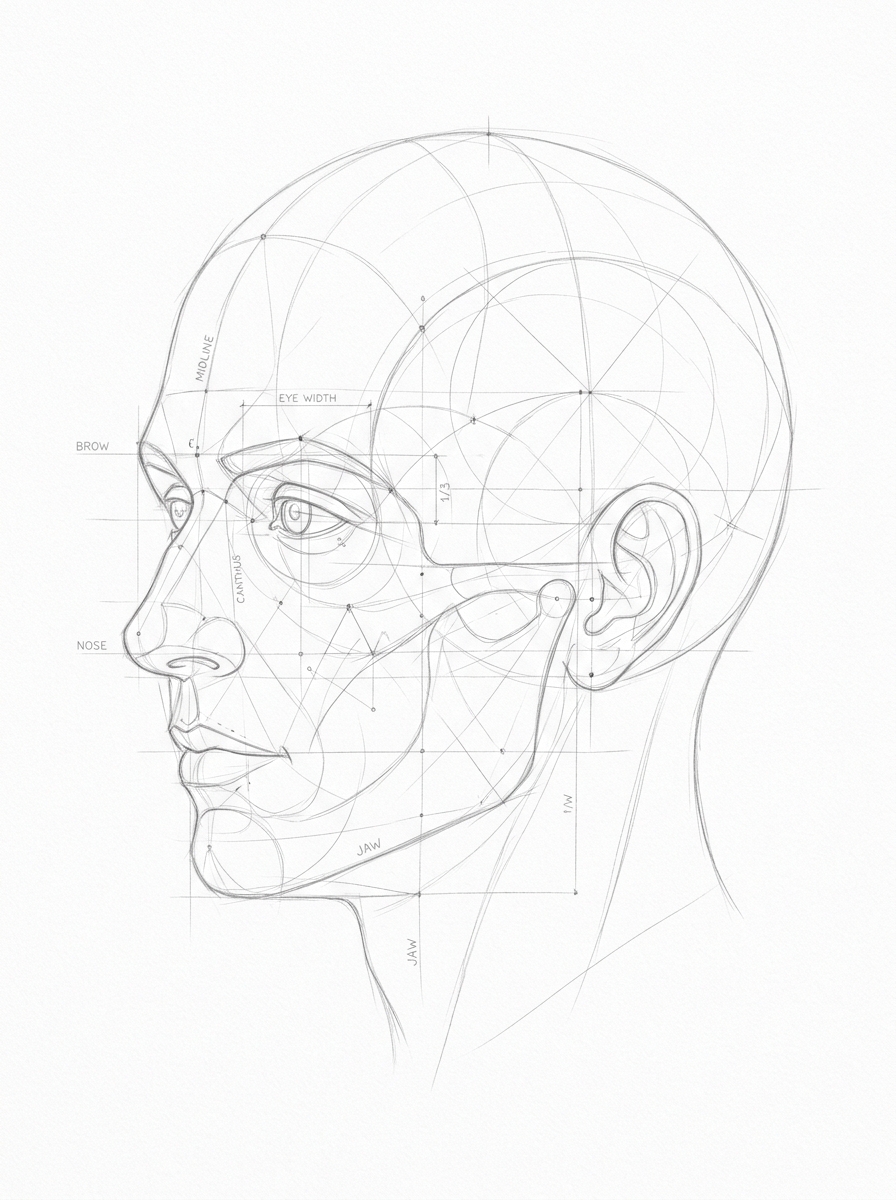
Understanding proportions and anatomy
■
Drawing accurate shapes and forms
■
Learning perspective and construction
■
Developing observation skills
■
Converting complex subjects into simple shapes
Example: Learning to draw a human face accurately before attempting realistic portrait tattoos.
Made byBobr AI
02 / 05
02
Light and Shadow Theory
Understanding how light interacts with objects and creates shadows.
■
How light falls on different surfaces
■
Identifying highlights, midtones, and shadows
■
Understanding cast shadows and form shadows
■
Recognizing light direction and intensity
Example: Understanding why one side of a nose is bright while the other side appears darker.
Made byBobr AI
03 / 05
03
Value Scale
Learning to control different levels of darkness and brightness.
■
White represents the lightest value
■
Black represents the darkest value
■
Grey tones create transitions between them
■
Understanding contrast and tonal relationships
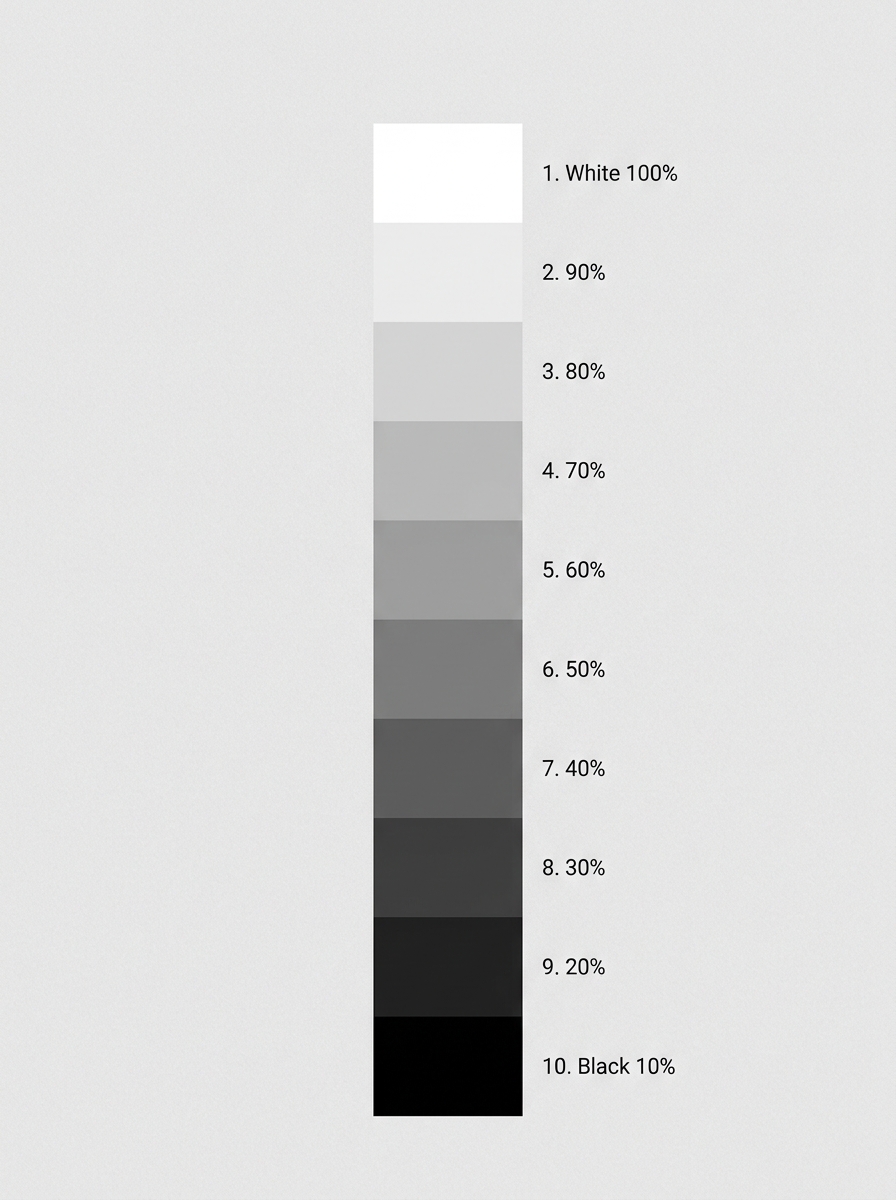
Example: Practicing a 10-step value scale from white to black to develop better control over black and grey tattooing.
Made byBobr AI
04 / 05
04
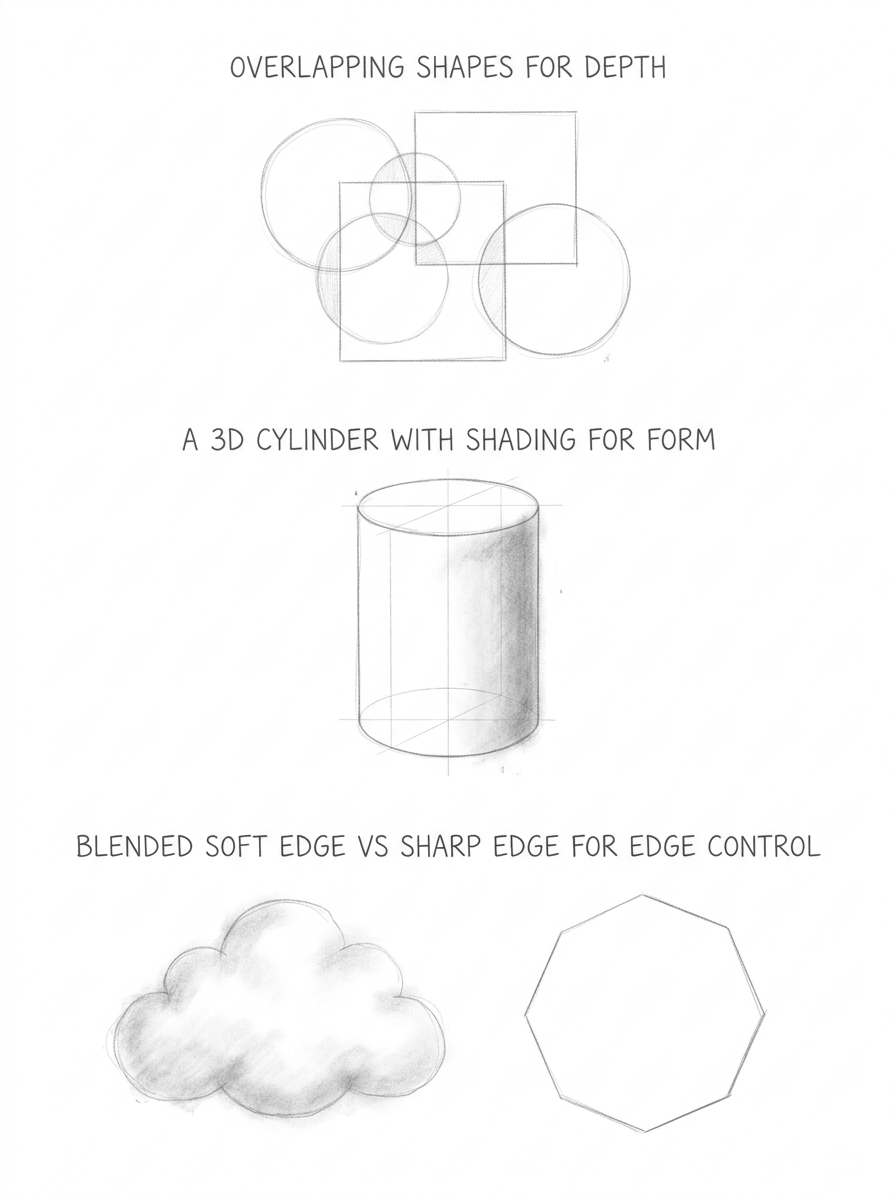
Depth, Form & Edge Control
Making drawings look three-dimensional instead of flat.
■
Depth — Creating the illusion of distance
■
Form — Making objects appear three-dimensional
■
Edge Control — Understanding sharp, soft, and lost edges
Example: A sharp edge makes a subject appear defined, while a soft edge helps create smooth transitions and realistic shadows.
Made byBobr AI
05 / 05
05
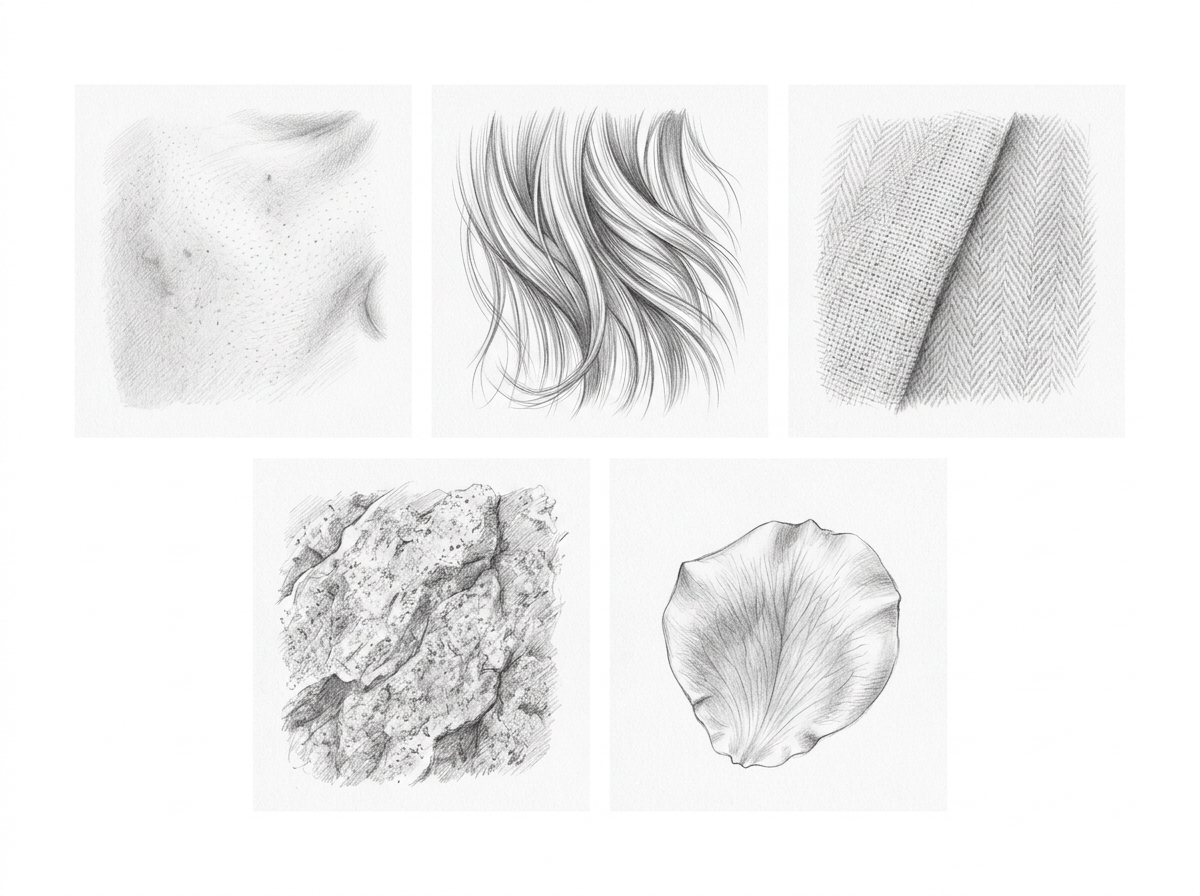
Texture Studies
Learning to represent different surface qualities through drawing.
■
Skin texture
■
Hair texture
■
Fabric texture
■
Metal and stone textures
■
Organic textures such as flowers and animals
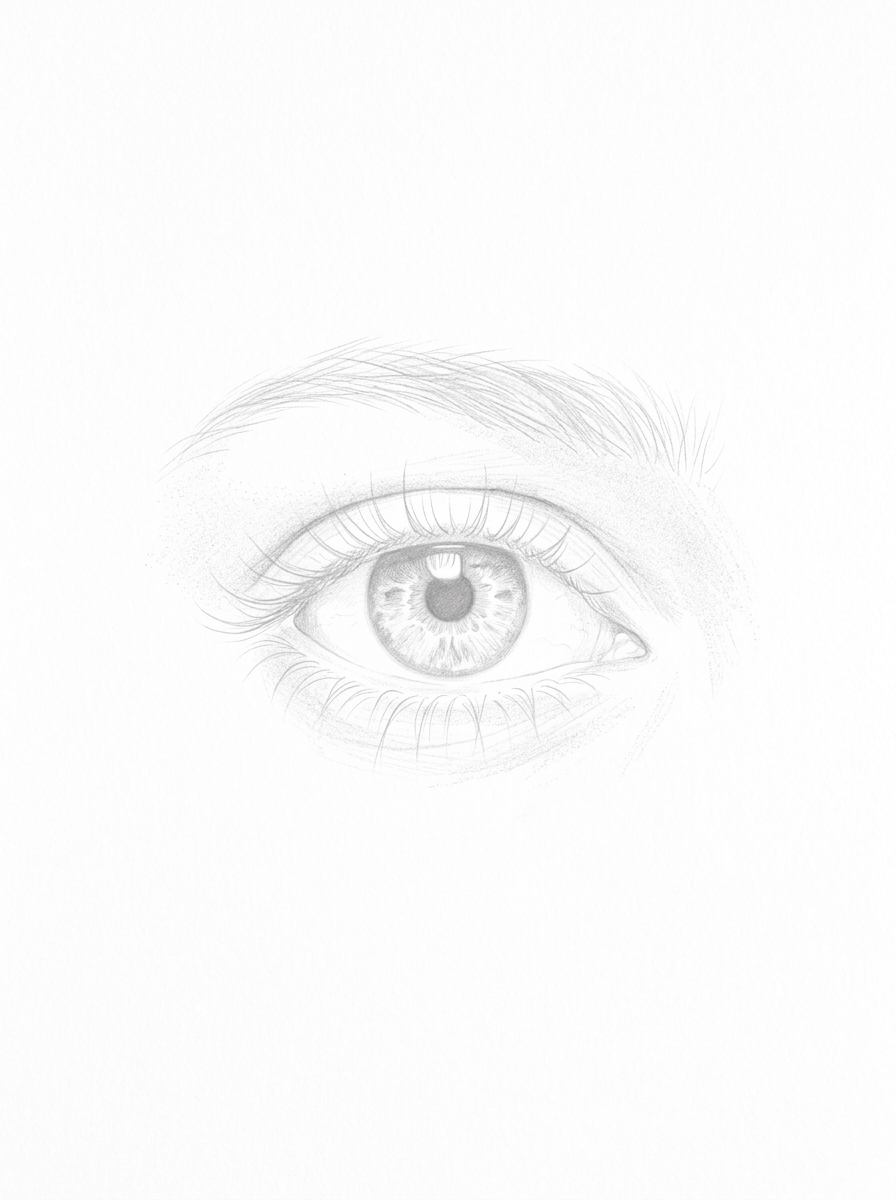
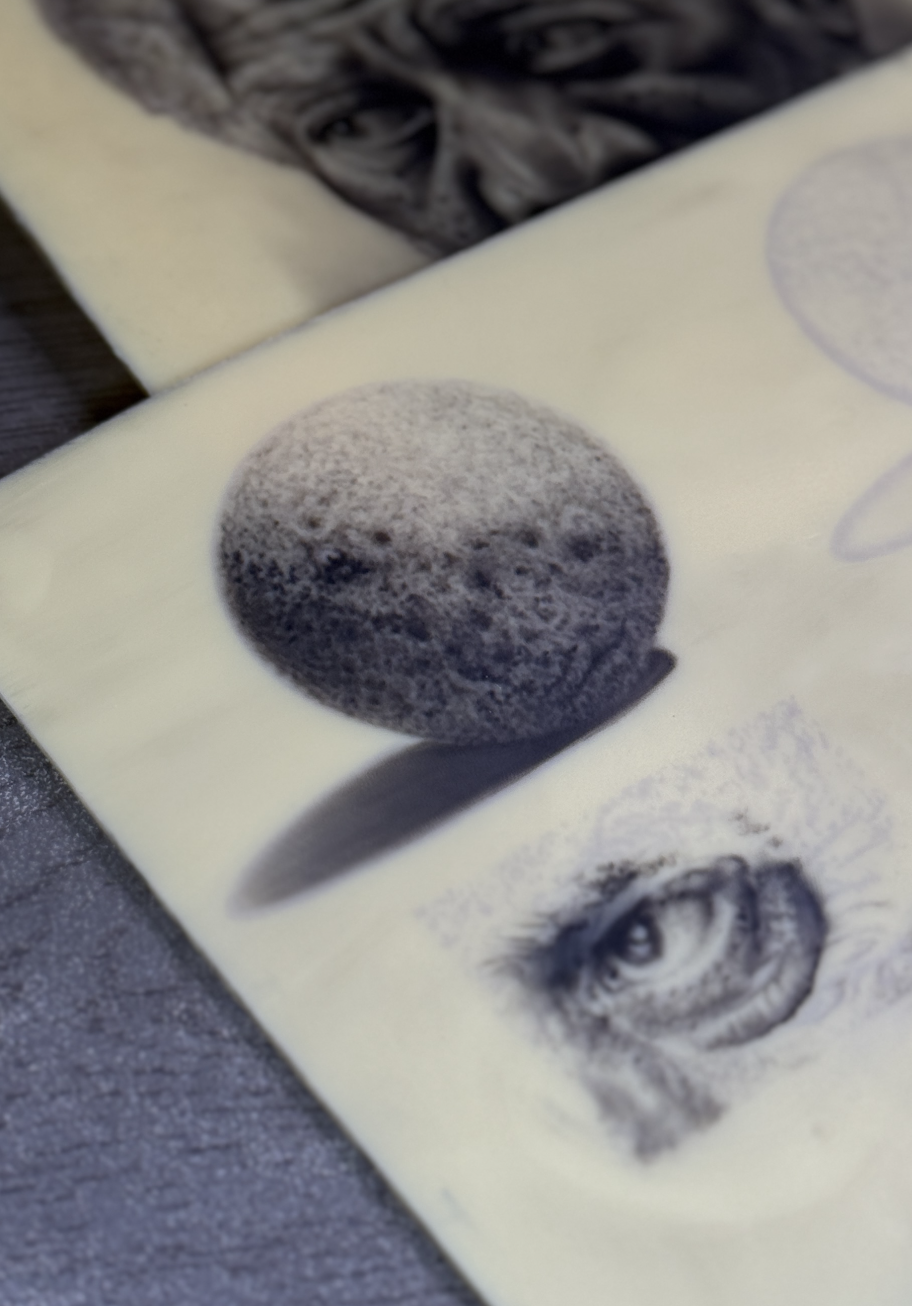
Example: Understanding how to draw individual hair strands, skin pores, or the rough surface of stone without making everything look the same.
Made byBobr AI
How These 5 Topics Connect to Realism Tattooing
Drawing Skill → Application in Tattooing
Drawing Skill
Application in Tattooing
Academic Drawing
Accurate composition and proportions
Light & Shadow
Realistic lighting
Value Scale
Black and grey tonal control
Depth & Form
Three-dimensional appearance
Texture Studies
Realistic surface details
Made byBobr AI
THE MAIN OBJECTIVE
"Train the artist to understand what they are drawing — not simply copy an image."
True realism begins with seeing, not tracing.
① Academic Drawing
② Light & Shadow
③ Value Scale
④ Depth & Form
⑤ Texture Studies
Kaal-Chakkra Tattoo Academy
Made byBobr AI
Bobr AI

DESIGNER-MADE
PRESENTATION,
GENERATED FROM
YOUR PROMPT

Create your own professional slide deck with real images, data charts, and unique design in under a minute.

Generate For Free

5 Core Pillars of Realism Tattooing & Drawing Fundamentals

Master the 5 pillars of realism tattooing: academic drawing, light and shadow, value scales, depth, and texture for professional tattoo artists.

FOUNDATIONS OF REALISM TATTOOING

Drawing

Fundamentals

The 5 Core Pillars for Realism Artists

Academic Drawing · Light & Shadow · Value Scale · Depth & Form · Texture

01 / 05

01

Academic Drawing Techniques

Learning the traditional fundamentals of drawing before moving into realism.

Understanding proportions and anatomy

Drawing accurate shapes and forms

Learning perspective and construction

Developing observation skills

Converting complex subjects into simple shapes

Example:

Learning to draw a human face accurately before attempting realistic portrait tattoos.

02 / 05

Light and Shadow Theory

Understanding how light interacts with objects and creates shadows.

How light falls on different surfaces

Identifying highlights, midtones, and shadows

Understanding cast shadows and form shadows

Recognizing light direction and intensity

Understanding why one side of a nose is bright while the other side appears darker.

03 / 05

03

Value Scale

Learning to control different levels of darkness and brightness.

White represents the lightest value

Black represents the darkest value

Grey tones create transitions between them

Understanding contrast and tonal relationships

Example:

Practicing a 10-step value scale from white to black to develop better control over black and grey tattooing.

04 / 05

04

Depth, Form & Edge Control

Making drawings look three-dimensional instead of flat.

<span style="font-weight: 700;">Depth</span> — Creating the illusion of distance

<span style="font-weight: 700;">Form</span> — Making objects appear three-dimensional

<span style="font-weight: 700;">Edge Control</span> — Understanding sharp, soft, and lost edges

<span style="font-weight: 700;">Example: </span><span style="font-style: italic;">A sharp edge makes a subject appear defined, while a soft edge helps create smooth transitions and realistic shadows.</span>

05 / 05

05

Texture Studies

Learning to represent different surface qualities through drawing.

Skin texture

Hair texture

Fabric texture

Metal and stone textures

Organic textures such as flowers and animals

Understanding how to draw individual hair strands, skin pores, or the rough surface of stone without making everything look the same.

How These 5 Topics Connect to Realism Tattooing

Drawing Skill → Application in Tattooing

Drawing Skill

Application in Tattooing

Academic Drawing

Accurate composition and proportions

Light & Shadow

Realistic lighting

Value Scale

Black and grey tonal control

Depth & Form

Three-dimensional appearance

Texture Studies

Realistic surface details

THE MAIN OBJECTIVE

"Train the artist to understand what they are drawing — not simply copy an image."

True realism begins with seeing, not tracing.

Academic Drawing

Light & Shadow

Value Scale

Depth & Form

Texture Studies

Kaal-Chakkra Tattoo Academy