
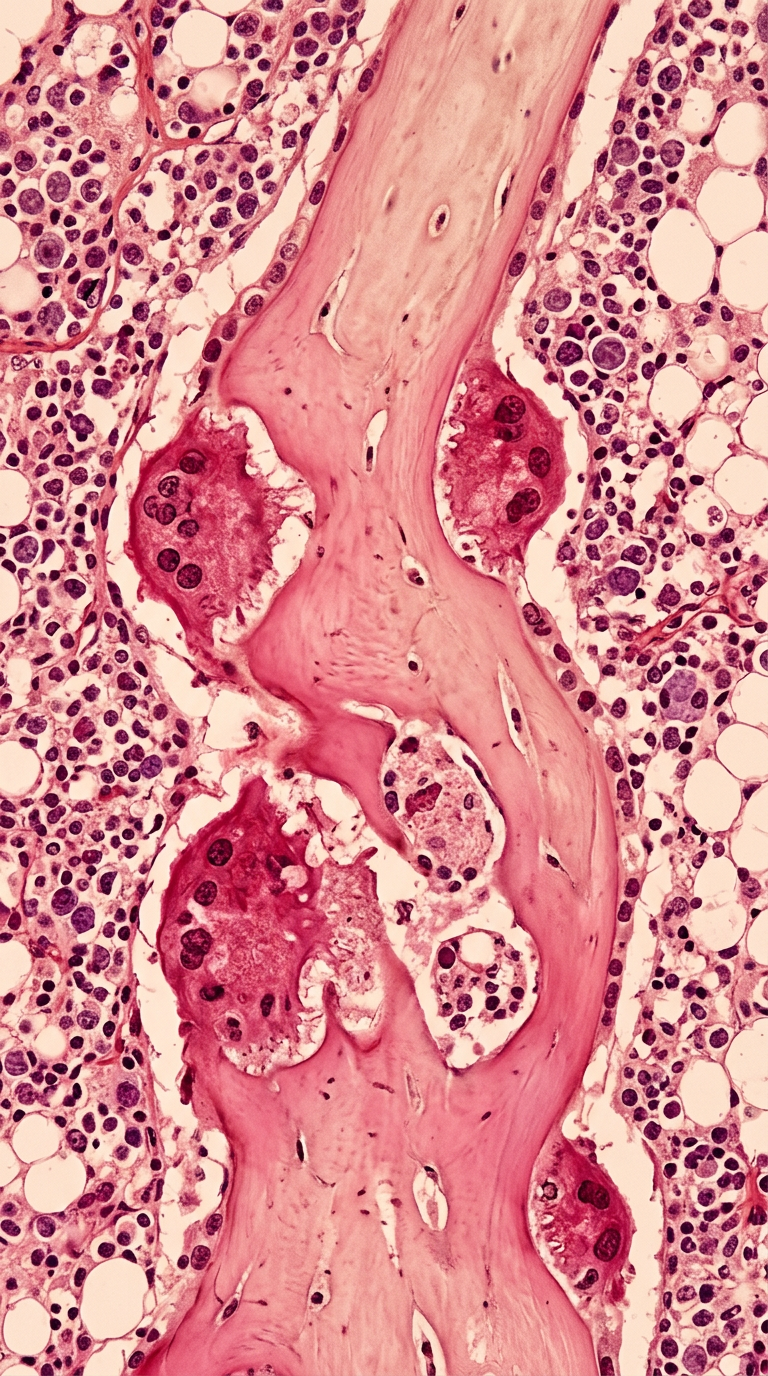
MRONJ Clinical Guidance for Dental Management
Comprehensive clinical guidance on managing patients at risk of Medication-Related Osteonecrosis of the Jaw (MRONJ). Covers risk assessment and treatment.
MRONJ
Medication-Related Osteonecrosis of the Jaw
Oral Health Management of Patients at Risk
Based on SDCEP Clinical Guidance | Scottish Dental Clinical Effectiveness Programme
Presentation Overview
What is MRONJ?
Causative Medications
Risk Factors & Patient Classification
Incidence & Epidemiology
Initial & Continuing Management
Key Clinical Recommendations
What is MRONJ?
Exposed bone (or bone probeable through fistula) in the maxillofacial region persisting >8 weeks in patients treated with anti-resorptive or anti-angiogenic drugs, with no history of jaw radiation or metastatic disease to the jaw.
Presentation
Exposed bone, delayed healing after extraction, pain, soft tissue swelling, numbness/paraesthesia, altered sensation. Some patients asymptomatic.
Pathophysiology
Multi-factorial: Suppressed bone turnover, inhibited angiogenesis, soft tissue toxicity, inflammation/infection, genetic & immunological elements.
Key Distinction
MRONJ is an adverse drug effect — dental treatment does not cause it, though invasive procedures can trigger it.
Causative Medications
Anti-resorptive and anti-angiogenic drugs associated with MRONJ
Anti-Resorptive Drugs
Bisphosphonates (inhibit osteoclasts):
Alendronic acid
(Fosamax®, Fosavance®)
Ibandronic acid
(Bonviva®)
Risedronate
(Actonel®)
Pamidronate disodium
(Aredia®)
Zoledronic acid
(Aclasta®, Zometa®)
Sodium clodronate
(Bonefos®)
osteoporosis, Paget's disease, cancer bone metastases
Denosumab (RANKL inhibitor)
(Prolia®, Xgeva®)
Effect wanes within 9 months of stopping
Anti-Angiogenic Drugs
Bevacizumab
(Avastin®)
Sunitinib
(Sutent®)
Aflibercept
(Zaltrap®)
Used in cancer treatment to restrict tumour vascularisation.
Risk of MRONJ increases when combined with anti-resorptive drugs.
Bisphosphonates remain in bone for years (alendronate half-life ~10 years)
Incidence & Epidemiology
Cancer Patients
~1%
1 in 100 patients
Range: 0–2.3% • Up to 100x greater risk vs placebo
2.9%
Osteoporosis Patients
0.01–0.1%
1 in 1,000 to 1 in 10,000 patients
General incidence is 1–10 per 10,000
0.15%
~60% of MRONJ cases had recent tooth extraction
Prostate cancer & multiple myeloma patients at higher end of risk range
Bevacizumab alone: ~0.2% risk (20 per 10,000)
Risk increases when anti-angiogenic + anti-resorptive drugs combined
Do NOT discourage patients from taking their medication — benefits outweigh the small MRONJ risk
Risk Factors & Classification
How to assess patient MRONJ risk
Key Risk Factors
Underlying medical condition (cancer > osteoporosis)
Type of drug (IV bisphosphonate > oral; denosumab)
Duration of therapy (>5 years = higher risk)
Concurrent systemic glucocorticoids
Dentoalveolar surgery / bone-impacting procedures
Mucosal trauma (ill-fitting dentures)
Periodontal disease / dental infection
Previous MRONJ episode
LOW RISK
Osteoporosis/non-malignant bone disease, bisphosphonates <5 years, NO glucocorticoids
Denosumab for osteoporosis, NO glucocorticoids
HIGHER RISK
Cancer patients on any anti-resorptive or anti-angiogenic drug
Bisphosphonates >5 years (any indication)
Any anti-resorptive + concurrent glucocorticoids
Previous MRONJ diagnosis
Past bisphosphonate users still assigned to risk group as if currently taking. Denosumab effect persists 9 months post-cessation.
Initial Management of Patients at Risk
What to do when a patient starts anti-resorptive or anti-angiogenic therapy
Based on SDCEP Clinical Guidance | Scottish Dental Clinical Effectiveness Programme
1
Assess & Record Risk
<p style="margin: 0 0 15px 0;">Identify drug type, duration, concurrent glucocorticoids.</p><p style="margin: 0 0 15px 0;">Assign <strong style="color: #6B3F6E;">LOW</strong> or <strong style="color: #6B3F6E;">HIGHER</strong> risk.</p><p style="margin: 0;">Record in clinical notes.</p>
2
Inform the Patient
<p style="margin: 0 0 15px 0;">Explain small but real MRONJ risk.</p><p style="margin: 0 0 15px 0;">Emphasise: do <strong style="color: #6B3F6E;">NOT</strong> stop medication. Drug holidays <strong style="color: #6B3F6E;">NOT</strong> recommended.</p><p style="margin: 0;">Record that advice was given.</p>
3
Optimise Oral Health<br><span style="font-size:20px; font-weight:400; font-family:'Source Sans Pro', sans-serif; color:#4A2A4C;">(Dental Fitness)</span>
<ul style="margin: 0; padding-left: 20px; display: flex; flex-direction: column; gap: 12px;"><li style="padding-left: 5px; line-height: 1.3;">Extract teeth of poor prognosis</li><li style="padding-left: 5px; line-height: 1.3;">Treat periodontal disease / infection</li><li style="padding-left: 5px; line-height: 1.3;">Adjust ill-fitting dentures</li><li style="padding-left: 5px; line-height: 1.3;">Appropriate radiographs</li><li style="padding-left: 5px; line-height: 1.3;">Consider high fluoride toothpaste</li><li style="padding-left: 5px; line-height: 1.3;"><strong style="color: #6B3F6E;">Cancer patients:</strong> ideally complete dental treatment BEFORE drug therapy starts</li></ul>
4
Preventive Advice
<ul style="margin: 0; padding-left: 20px; display: flex; flex-direction: column; gap: 12px;"><li style="padding-left: 5px; line-height: 1.3;">Excellent oral hygiene</li><li style="padding-left: 5px; line-height: 1.3;">Healthy diet, reduce sugar</li><li style="padding-left: 5px; line-height: 1.3;">Fluoride toothpaste + mouthwash</li><li style="padding-left: 5px; line-height: 1.3;">Stop smoking, limit alcohol</li><li style="padding-left: 5px; line-height: 1.3;">Regular dental checks</li><li style="padding-left: 5px; line-height: 1.3;">Report: exposed bone, loose teeth, pain, swelling, tingling/numbness</li></ul>
Continuing Management: Low Risk Patients
Routine dental treatment proceeds as normal. Straightforward extractions <b>CAN</b> be performed in primary care.
If extraction or bone-impacting procedure needed:
<b>Discuss risks & benefits</b> → obtain valid consent
<b>Proceed with treatment</b> as clinically indicated
<span style="color: #D69CAE; font-weight: 600;">Do NOT prescribe</span> antibiotic or antiseptic prophylaxis (no evidence of benefit for MRONJ prevention)
<b>Advise patient to contact practice</b> if experiencing unexpected pain, tingling, numbness, altered sensation, or swelling
Key Warning: 8-Week Review
Review healing strictly at <b>8 weeks</b>
If socket not healed at 8 weeks → <b>suspect MRONJ</b> → refer to oral surgery / specialist
Spontaneous MRONJ Suspected?
→ <b>Refer immediately</b> to oral surgery / special care dentistry specialist
Report suspected cases to MHRA Scheme
www.yellowcard.mhra.gov.uk
Continuing Management: Higher Risk Patients
Most routine dental treatment continues as normal.
Adopt a MORE CONSERVATIVE approach before bone-impacting procedures.
STAGE 1
Explore ALL alternatives first
Can the tooth be retained (e.g. root retention in absence of infection)?
Consider endodontic therapy, periodontal treatment, coronectomy
Consult oral surgery/special care dentistry specialist for medically complex patients
STAGE 2
If extraction is the ONLY option
Discuss risks & benefits → valid consent
Proceed as clinically indicated
Do NOT prescribe antibiotic/antiseptic prophylaxis
Advise patient: report unexpected pain, tingling, numbness, swelling
8-Week Review
Review healing at 8 weeks
No healing at 8 weeks → refer to oral surgery specialist
Medically complex/cancer patients: Consider specialist consultation for clinical assessment & treatment planning.
If spontaneous MRONJ suspected: → Refer immediately
Report to MHRA Yellow Card Scheme
Key Clinical Recommendations
Always take a thorough medical history — ask specifically about anti-resorptive and anti-angiogenic drugs, past and present.
Assign and record risk level (LOW or HIGHER) for every patient on these medications.
Routine dental treatment proceeds normally for ALL patients at risk — do not withhold care.
Low risk: extractions in primary care are appropriate. Higher risk: explore all alternatives first.
Do NOT prescribe antibiotic/antiseptic prophylaxis specifically to prevent MRONJ — no evidence of benefit.
Review healing at 8 weeks post-extraction. Refer to oral surgery/special care dentistry specialist if MRONJ suspected.
🦷
📋
✅
⚠️
🚫
🔍
Do not discourage patients from taking anti-resorptive or anti-angiogenic medication. Benefits far outweigh the small risk of MRONJ.
Source: SDCEP Guidance, March 2017 (Reviewed and extant March 2024)
- mronj
- dentistry
- oral-surgery
- bisphosphonates
- clinical-guidance
- oral-health
- osteonecrosis