


The Future of Wheelchair Tech: Innovation and Accessibility
Explore the evolution of wheelchair technology, from smart AI-powered chairs to brainwave control, and the social challenges of healthcare accessibility.
The Future of<br>Wheelchair Technology
Changing Lives Through Innovation
Presented by [Your Name]
TECHNOLOGY & SOCIETY PRESENTATION
02
Why Wheelchair Technology Matters
Imagine not being able to use your legs. How would you go to school, work, or spend time with friends?
For millions of people with disabilities, wheelchairs are more than just a way to get around — they are the key to independence, participation, and dignity (Lancioni et al., 2024).
70 Million+
people worldwide need a wheelchair
Independence
employment, education & community
Dignity
more than mobility — a human right
03
Technology & Society: The Big Picture
Wheelchair technology shows how science and society work together to solve real problems.
Not everyone who needs an advanced wheelchair can get one.
Sometimes, the latest technology is only available to those who can afford it or have the right insurance (Elhady et al., 2023).
Technology
Society
Wheelchair
Innovation
Access to technology is also a question of social justice.
A Brief History of Wheelchair Technology
1500s
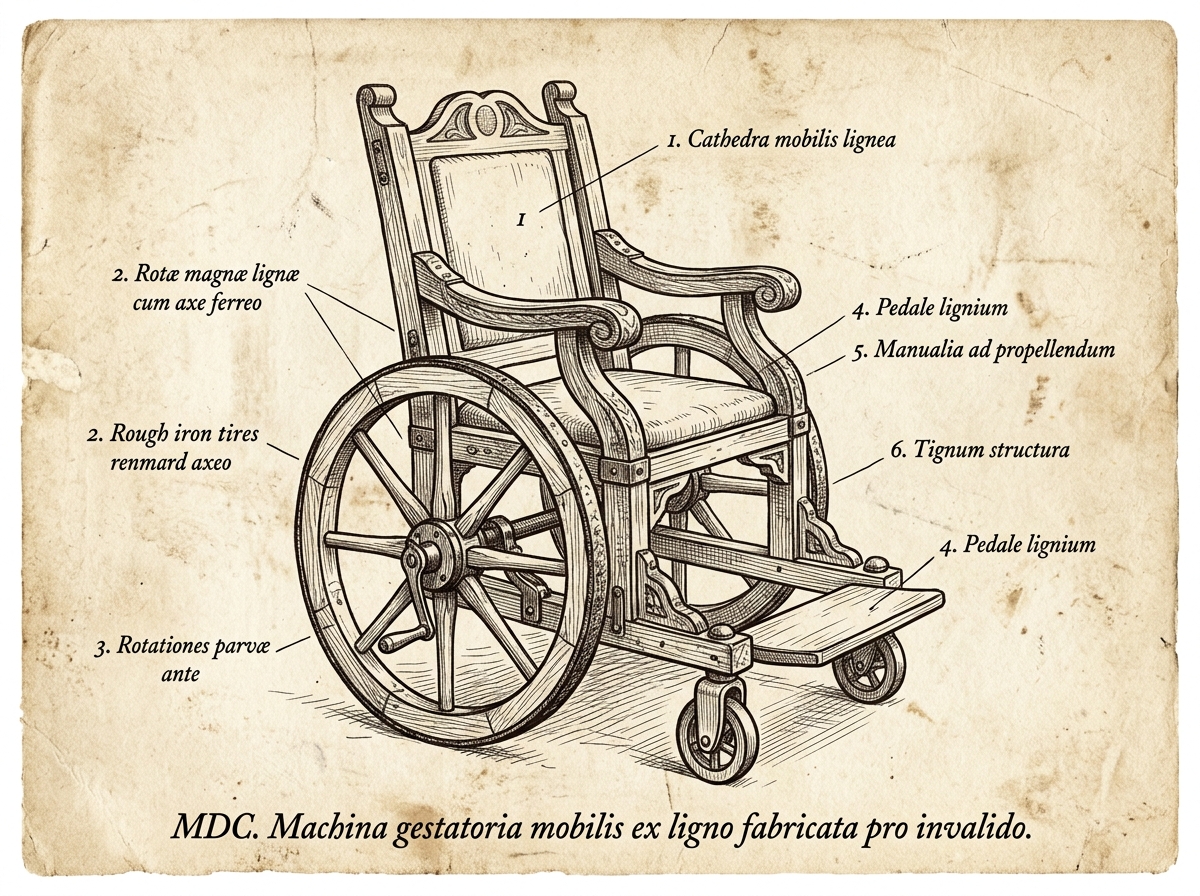
King Philip II of Spain — earliest known wheelchair
1930s
First folding wheelchair invented by Everest & Jennings (EBSCO, n.d.)
1940s-50s
Powered wheelchairs developed for WWII veterans (Elhady et al., 2023)
1990s
Lightweight materials, custom designs
2020s
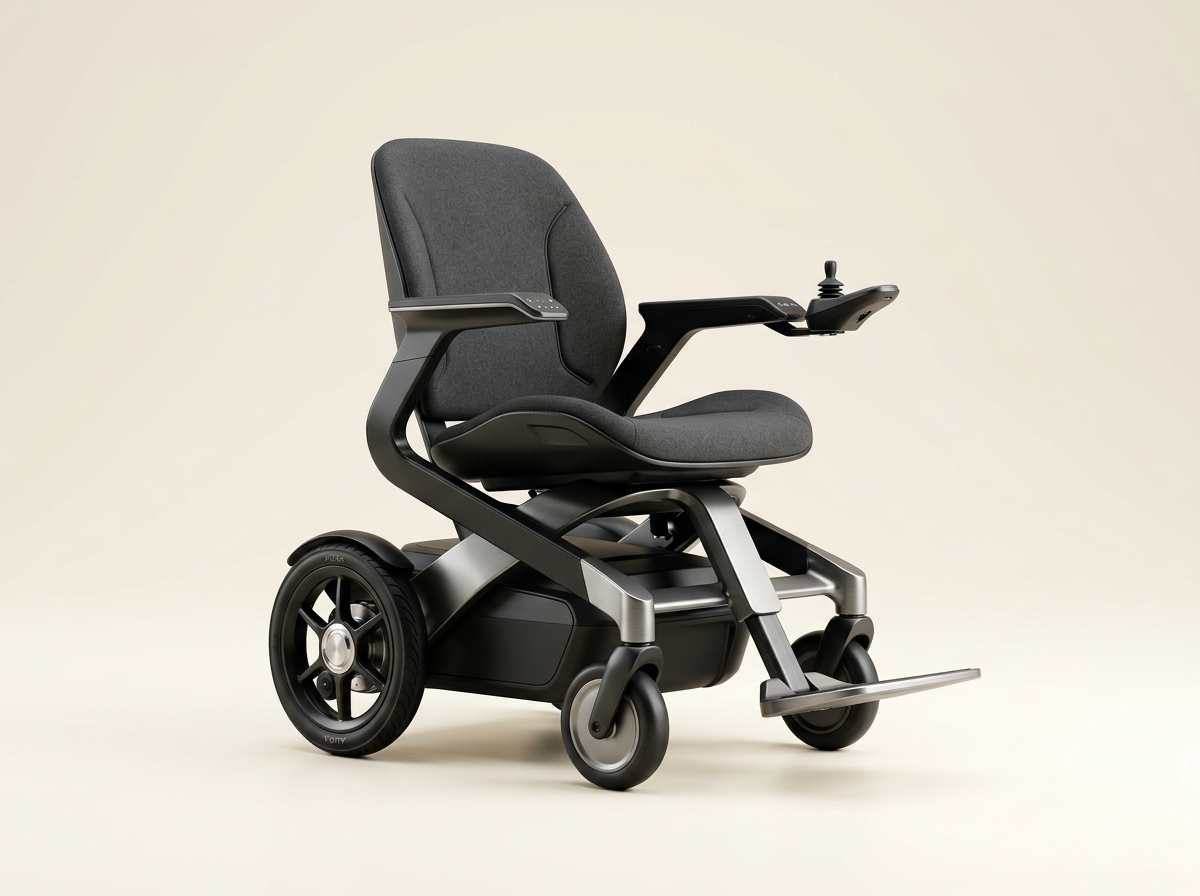
Smart, AI-powered, sensor-based chairs (Elhady et al., 2023)
05
Voice Control
Operated by voice commands or eye movements
Smart Home Sync
Controls doors, lights, and appliances
Stair Climbing
Navigates stairs and uneven terrain
AI Sensors
Obstacle detection and auto-navigation
Tilt & Reach
Adjusts to help users access shelves and surfaces
(Lancioni et al., 2024)
The future of wheelchair technology is here — and it's changing everything.
06
The Cutting Edge: What's Next?
Self-Driving Wheelchairs
AI-powered chairs that navigate buildings independently using GPS and sensors (Lancioni et al., 2024)
Brainwave Control
Prototype chairs steered entirely by the user's thoughts — no hands needed (Elhady et al., 2023)
3D-Printed Custom Chairs
Affordable, perfectly fitted wheelchairs printed on demand for any body type (Lancioni et al., 2024; Elhady et al., 2023)
07
Why Access Still Matters: Challenges
High Cost
The most advanced wheelchairs cost $20,000–$50,000+. Most insurance won't cover them.
Insurance Gaps
Coverage rules are confusing and often exclude the latest technology.
The Digital Divide
Only wealthy people may benefit from cutting-edge innovation, leaving others behind (Elhady et al., 2023).
"Technology without access is just inequality in disguise."
Slide 08
Comparing Countries: The U.S. vs. Sweden
United States
Access depends on insurance or personal finances
Wide variation in quality of care
Latest technology often unaffordable
Inequality in access persists (Borg et al., 2011)
Sweden
Government provides wheelchairs through public health system
Based on the principle of assistive technology as a human right
Modern, high-quality devices for all citizens
No one left behind (Borg et al., 2011)
The difference isn't just geography — it's a reflection of values and policy choices.
09
Laws & Policies: Making a Difference
The <strong>Americans with Disabilities Act (ADA)</strong> requires public spaces to be fully accessible for wheelchair users.
Medicaid & Medicare
Help cover some wheelchair types, but rules are complex and rarely cover cutting-edge technology.
(Di Nuovo, 2023)
Expert Recommendations
More funding
Simplified insurance rules
User & caregiver training
Treat access as a human right
(Elhady et al., 2023; Borg et al., 2011)
Strong policy
greater access
more lives changed.
10
The Future: Opportunities & Big Questions
Safer
AI navigation protects users in complex environments
More Affordable
3D printing and mass production reduce costs
More Inclusive
Universal design principles ensure no one is left behind (Lancioni et al., 2024)
How do we pay for these advances?
How do we make sure they reach everyone?
What kind of society do we want to build?
The technology is ready. The question is: are we?
11
Real Stories: The Human Side
I never thought I'd be able to go hiking with my friends until I got my all-terrain wheelchair. Now, I feel like nothing can stop me.
— Wheelchair user, shared via assistive technology community forum
Stories like this remind us that wheelchair technology isn't just about machines — it's about giving people freedom, dignity, and the chance to fully participate in life.
Conclusion
Why This Matters
Wheelchair technology is about more than machines. It's about creating an inclusive society where everyone has the tools they need to live life to the fullest. The future is bright — but only if we work to make it fair and accessible for all.
Innovation is accelerating
Access must be equitable
Policy shapes reality
Brighter<br>Future
(Lancioni et al., 2024)
13
Let's Discuss!
If you could invent any new feature for a wheelchair, what would it be — and how would it make life better for people with disabilities?
Do you think access to advanced wheelchair technology should be a human right? Why or why not?
Share your thoughts — every idea matters.
References
Borg, J., Larsson, S., & Östergren, P.-O. (2011). The right to assistive technology: For whom, for what, and by whom? <i>Disability and Rehabilitation: Assistive Technology, 6</i>(2), 108–112.
Di Nuovo, A. (2023). How can biomedical engineers help empower individuals with intellectual disabilities? The potential benefits and challenges of AI technologies to support inclusivity. <i>IEEE Journal of Translational Engineering in Health and Medicine</i>.
EBSCO. (n.d.). Assistive and adaptive technology. <i>EBSCO Research Starters: Health & Medicine</i>.
Elhady, M. T., Zayed, K. N., & Almulhim, A. (2023). Assistive technology for people with disabilities: A review and analysis of the literature. <i>Healthcare, 13</i>(13), 1580.
Lancioni, G. E., Singh, N. N., O'Reilly, M. F., Sigafoos, J., & Didden, R. (2024). Recent advancements in adaptive technology for individuals with disabilities. <i>Disability and Rehabilitation: Assistive Technology</i>.
All sources cited in APA 7th Edition format.
- wheelchair-technology
- assistive-tech
- innovation
- accessibility
- disability-rights
- ai
- healthcare-policy