




Rome Open City Film Critique: Italian Neorealism Analysis
A critical analysis of Roberto Rossellini’s Rome Open City (1945). Explore Italian Neorealism, feminist critiques, and the film's historical context.
FILM CRITIQUE
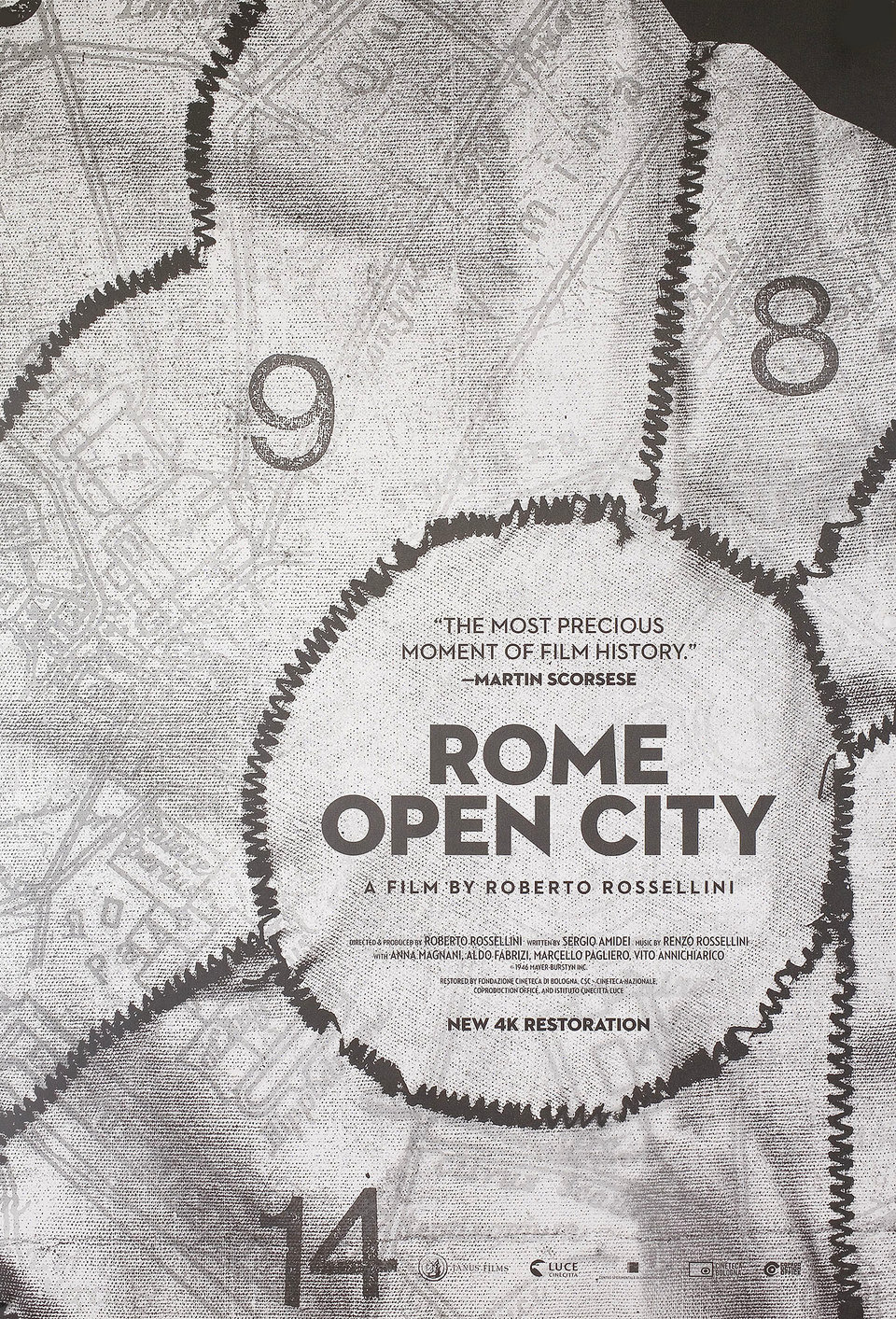
ROME OPEN CITY
Roma, Città Aperta (1945)
Directed by Roberto Rossellini
A Critical Analysis
Presented by
Josh, Audrey & Matt
2026
BACKGROUND & CONTEXT
A Post-War Masterpiece
Released
September 1945
Genre
Italian Neorealist War Drama
Setting
Nazi-occupied Rome, 1944
Awards
Palme d'Or, Cannes 1946
Oscar Nomination
Best Adapted Screenplay
The Film at a Glance
Shot in the rubble of post-liberation Rome just months after WWII ended, Rome Open City was made under extreme conditions — scarce film stock, no studio budget, and a city still scarred by occupation. Rossellini blended documentary realism with melodrama to tell the story of communist partisans and Catholic priests united against Nazi oppression.
The film launched Italian Neorealism onto the world stage.
CINEMATIC CRITIQUE
Neorealism & Style
How Rossellini Broke the Rules
Location Shooting
Shot on actual Rome streets amid rubble, Rossellini rejected studio sets. The city itself becomes a character — raw, wounded, and authentic.
Non-Professional Actors
Mixed professional stars (Magnani, Fabrizi) with real Roman citizens. This created an unpolished, documentary-like texture that felt unlike anything audiences had seen.
Mixed Film Stocks
Using scavenged Ferrania and Agfa film stocks processed inconsistently, Rossellini accidentally created a visual roughness that amplified the film's gritty realism.
"The image of reality that Rossellini presents is one of extraordinary density — a fact image rather than an interpretation."
— André Bazin
CRITICAL ANALYSIS
Gender & Political Critique
What the film reveals — and conceals
Feminist Critique
Pina is defined entirely by her relationship to men — her fiancé, her son, her priest
Her death, while iconic, serves the male narrative of resistance rather than her own agency
Marina and Ingrid are punished for seeking independence from men — coded as villains
Women's political experiences remain unexamined; they exist as symbols, not subjects
Political Critique
Italian fascists are notably absent — the film rehabilitates Italian identity by focusing blame on Nazis
The communist-Catholic alliance is idealized, glossing over real postwar ideological tensions
Don Pietro's martyrdom borrows from religious iconography, framing resistance as sainthood
The film's 'happy ending' myth denies the complexity of Italian collaboration
Praised as liberation cinema — yet critics argue it sanitizes Italian complicity.
SCENE ANALYSIS
The Death of Pina
One of Cinema's Most Iconic Moments — and Its Contradictions
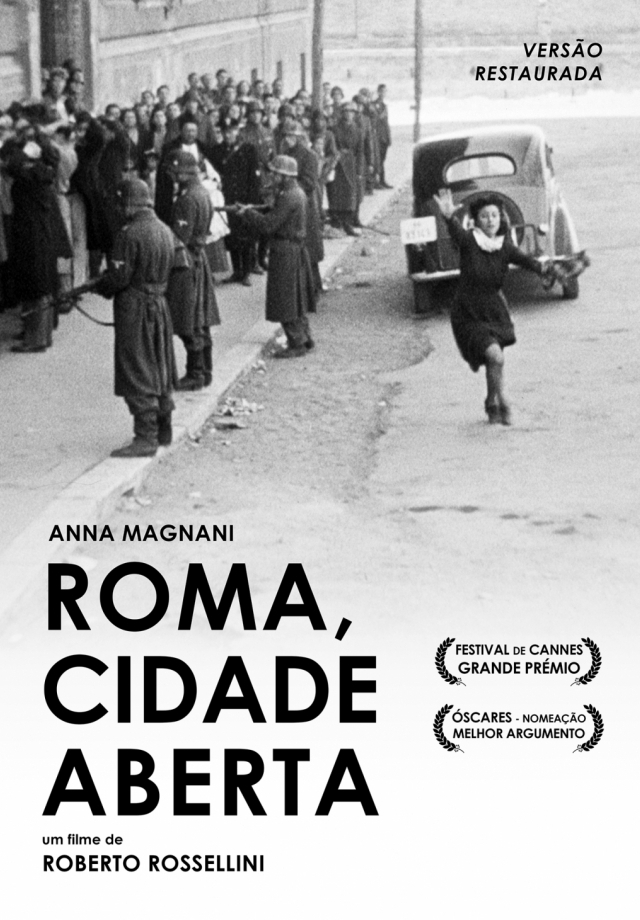
In the film's most devastating sequence, Pina (Anna Magnani) breaks through a Nazi cordon and chases the truck carrying her arrested fiancé Francesco — only to be gunned down in the street. Don Pietro rushes to cradle her body in a pose deliberately echoing Michelangelo's Pietà.
The Pietà composition elevates Pina's death into Catholic martyrdom — aestheticizing violence against a woman
Her agency is stripped: she dies not as a resistance fighter, but as a grieving fiancée
The scene is undeniably powerful — yet its emotional impact serves to center Don Pietro's arc, not Pina's
https://www.youtube.com/watch?v=_L8ZqgtYvwM
WATCH THE SCENE ON YOUTUBE
YouTube: 'Rome, Open City — Death of Pina' (Runtime: ~0:50)
CLASS DISCUSSION
Questions to Consider
Think critically — then share your perspective
Rossellini deliberately omits Italian fascists from the narrative. What does this absence say about the film's ideological agenda?
Pina is the film's most memorable character, yet she dies halfway through. How does her death serve — or undermine — the story's message about resistance?
The film unites a communist and a Catholic priest as resistance heroes. Is this alliance a genuine celebration of solidarity, or a politically convenient myth?
How does Rossellini's use of non-professional actors and location shooting affect your experience of the film as a viewer? Does it feel like truth?
Marina is punished for her independence and desire for material comfort. What does the film suggest about women who refuse traditional roles?
Can a film be both a masterpiece of cinema and ethically problematic in its representations? Does Rome Open City pass that test?
Interactive: Students respond, then class discusses as a group.
BIBLIOGRAPHY
Works Cited
Bazin, André. "An Aesthetic of Reality: Neorealism." What Is Cinema? Vol. II. Trans. Hugh Gray. University of California Press, 1971.
Bondanella, Peter. Italian Cinema: From Neorealism to the Present. Continuum, 2001.
Bruno, Giuliana. "Neorealism and the Female Body in Rome, Open City." Framework: The Journal of Cinema and Media, vol. 42, 2001, pp. 14–25.
Forgacs, David. Rome Open City (Roma città aperta). BFI Film Stars. British Film Institute, 2000.
Marcus, Millicent. Italian Film in the Light of Neorealism. Princeton University Press, 1986.
Rossellini, Roberto, director. Rome, Open City (Roma, città aperta). Excelsa Film, 1945.
Wagstaff, Christopher. Italian Neorealist Cinema: An Aesthetic Approach. University of Toronto Press, 2007.
"Rome, Open City." Rotten Tomatoes, www.rottentomatoes.com/m/rome_open_city. Accessed 14 Apr. 2026.
"Rome, Open City (1945)." IMDb, www.imdb.com/title/tt0038890/. Accessed 14 Apr. 2026.
Presentation by Josh, Audrey & Matt — Film Critique, 2026
- film-critique
- italian-neorealism
- roberto-rossellini
- cinema-studies
- rome-open-city
- film-analysis
- history-of-cinema