


Greek–Turkish Relations Analysis (2003–2026)
A deep dive into Geopolitical tensions between Greece and Turkey during the Erdoğan era, covering the Cyprus problem, maritime disputes, and NATO dynamics.
GREEK–TURKISH<br/>RELATIONS
During Erdoğan's Rule
2003 – 2026
Geopolitical Analysis
NATO ALLIES | RIVAL CLAIMS | DIPLOMATIC TENSIONS
OVERVIEW
Erdoğan's Era & the Greek–Turkish Relationship
2003
Erdoğan becomes Prime Minister
2004
EU accession talks begin
2011
Arab Spring shifts regional dynamics
2016
Failed coup — Turkey turns inward
2019
Turkey-Libya maritime deal signed
2020
Peak military tensions in Aegean
2023
Athens Decl. / Erdoğan visits Athens
2026
Ongoing dialogue with persistent disputes
NATO Alliance
Both countries are key NATO members in the strategic Eastern Mediterranean, binding them as nominal allies despite deep-seated regional rivalries.
Territorial Disputes
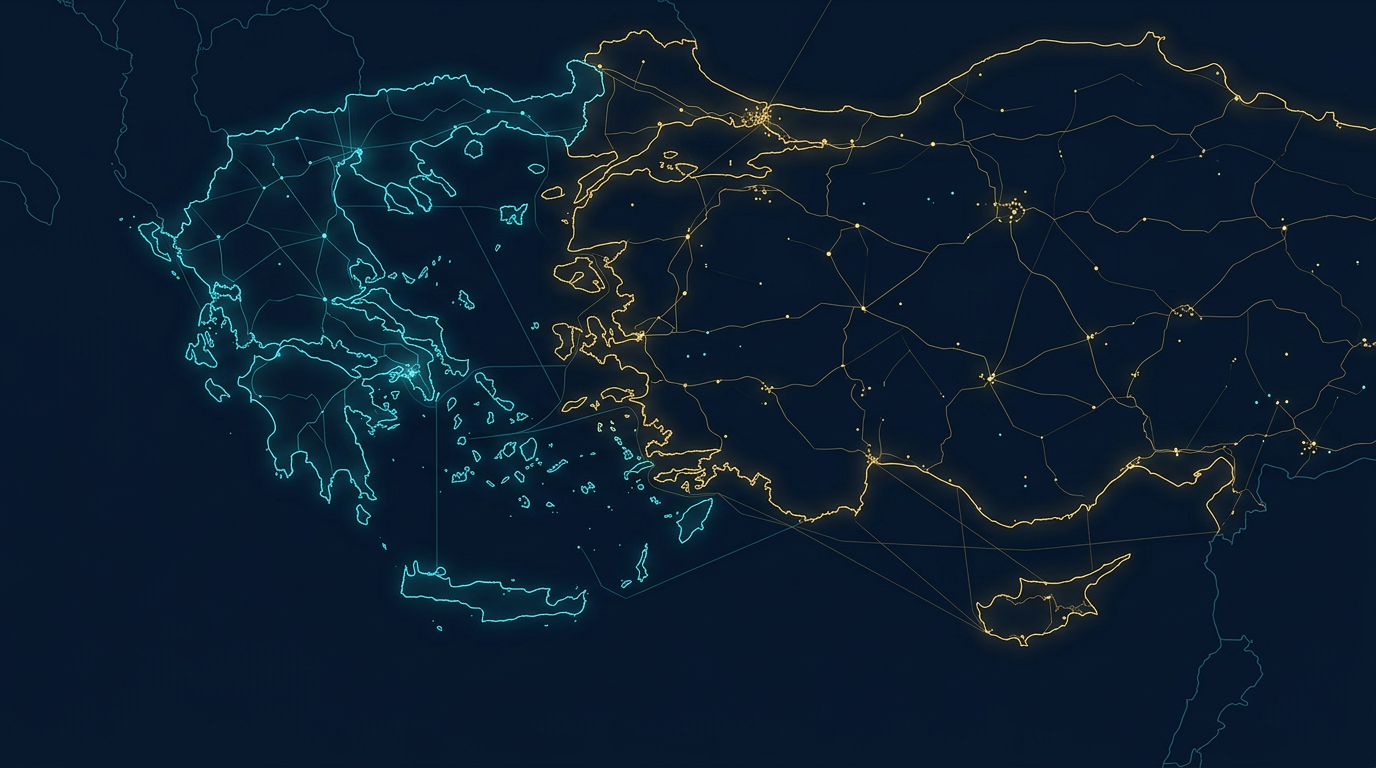
Long-standing, unresolved conflicts over the Aegean Sea maritime boundaries, overlapping Exclusive Economic Zones, and the divided island of Cyprus.
Cyclical Diplomacy
Decades define a volatile pattern: severe military escalation followed by periods of rapid rapprochement and exploratory talks without permanent resolution.
Core Territorial Disputes
The Aegean Sea
Continental shelf delimitation
Airspace & FIR (Flight Information Region) disputes
Militarization of Greek islands
Turkey challenges Treaty of Lausanne (1923)
Eastern Mediterranean EEZ
Competing Exclusive Economic Zone claims
Natural gas exploration rights
November 2019: Turkey–Libya maritime deal (ignoring Crete)
Oruç Reis research vessel standoff (2020)
February 2026: Turkey objects to Greece–Chevron gas deal
Cyprus
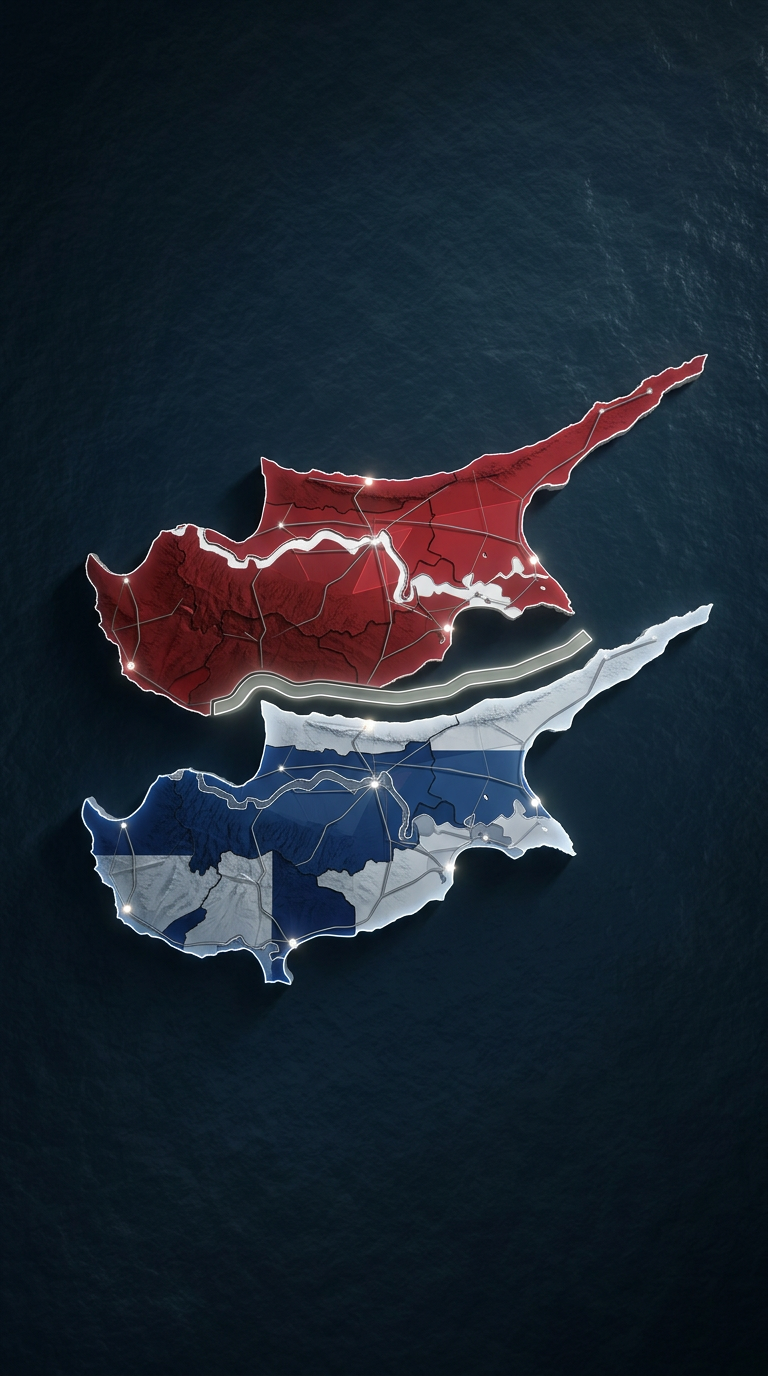
Divided since Turkish military intervention in 1974
Turkey supports two-state solution
Greece/EU support federal reunification
2025: New conciliatory Turkish Cypriot leader elected
Ongoing UN-mediated negotiations
PEAK TENSIONS
2020–2022
ESCALATION & BRINKMANSHIP | DIPLOMATIC CRISIS
March 2020
Greek coastguard vessels rammed by Turkish coastguard
May 2020
Turkish fighters harass Greek defense minister's helicopter
Summer 2020
Turkish & Greek warships face off — longest standoff since 1974
July 2020
Oruç Reis deployed 6.5 nautical miles from Kastellorizo
October 2020
Germany brokers resumption of talks — Turkey withdraws days later
2022
8,880 Turkish airspace violations of Greek airspace (Jan–Oct alone)
Sept 2022
Erdoğan threatens Greece: "We can come suddenly one night"
"When the time comes, we can come suddenly one night."
— Erdoğan, September 2022
8,880
Airspace violations<br>in 2022 alone
SINCE 1974
Closest the region came to<br>military conflict
The Cyprus<br>Problem
Background
Island divided since 1974 Turkish military intervention
Turkey's position
Advocates for a two-state solution / recognition of Turkish Republic of Northern Cyprus (TRNC)
Greece/EU position
Federal reunification under a bi-zonal, bi-communal federation
Turkey is the only country that recognizes TRNC
Recent Developments
Oct 2025:
Tufan Erhürman wins Turkish Cypriot election (more conciliatory than predecessor)
Nov 2025:
Greek & Turkish Cypriot leaders meet in UN buffer zone, pledge UN-mediated talks
2024:
Over 1 million crossings recorded across the Green Line
Progress remains slow — Turkey still insists on two-state framework
Geopolitical Deep Dive
CYPRUS REMAINS THE MOST INTRACTABLE ISSUE IN GREEK–TURKISH RELATIONS
DIPLOMATIC BREAKTHROUGHS
& RAPPROCHEMENT
2023 Earthquake Diplomacy
After the devastating February 2023 earthquakes in Turkey, Greece sent immediate humanitarian aid. This "seismic diplomacy" opened diplomatic channels.
Sept 2023: UN General Assembly
Erdoğan and Greek PM Mitsotakis held direct bilateral talks on the sidelines of the UN General Assembly in New York — a watershed moment.
Dec 2023: Athens Declaration
Historic visit — Erdoğan visits Athens. Both leaders sign the "Athens Declaration" committing to good neighborly relations. 15 bilateral accords signed.
Feb 2026: Mitsotakis visits Ankara
Greek PM visits Ankara to sustain dialogue. Erdoğan states disputes are "complicated but not unsolvable."
"The issues are complicated, but not unsolvable." — Erdoğan, 2026
Domestic Politics & Strategic Calculations
GEOPOLITICAL DRIVERS
Erdoğan's Domestic Motivations
Nationalist base consolidation ahead of elections
Deflecting attention from Turkey's economic crises (inflation, lira collapse)
Post-2016 coup: hardened nationalist-Islamist ideology
"Blue Homeland" (Mavi Vatan) doctrine —
assertive maritime expansionism
Using Greece as a foil to project strength domestically
Strategic Factors
Turkey's isolation after 2018: strained EU and US relations
Growing Greece–Israel–Cyprus energy & defense axis (seen as anti-Turkey)
Turkey's leverage: NATO member with second-largest army in the alliance
Tension as bargaining chip in EU accession and weapons deals
Migration weaponization:
March 2020, Turkey opened borders to migrants pressuring Greece and EU
Tensions are not accidental — they serve political and strategic purposes
Public Opinion
What Do Greeks & Turks Think?
Preference for Dialogue
Despite escalations, majorities in BOTH countries prefer <strong style="color: #FFF;">non-violent conflict resolution</strong> over military action.
Asymmetric Awareness
Turkey's presence in Greek public discourse is FAR stronger than Greece's presence in Turkish media. Greeks think about Turkey <strong style="color: #FFF;">more than Turks think about Greece</strong>.
Role of Religion
<strong style="color: #FFF;">Religiosity</strong> plays a meaningful role in shaping negative attitudes toward the other country — particularly on the Turkish side.
Skepticism of Neutrality
Both populations fear international mediators favor the other side — <strong style="color: #FFF;">mutual distrust</strong> of third-party arbitration.
Both publics want peace — but distrust each other's intentions and fear being disadvantaged in any deal.
THE NATO PARADOX
Allies on Paper, Rivals in Practice
GREECE'S PERSPECTIVE
Seeks EU & international law framework
Demands respect for Lausanne Treaty
Supports federal Cyprus solution
Fears Turkish expansionist policies
TURKEY'S PERSPECTIVE
Rejects current maritime boundaries
Demands revision of Lausanne Treaty
Seeks recognition of TRNC
Pushes 'Blue Homeland' doctrine
SHARED REALITIES
NATO membership commitments
Black Sea & Russia containment
Trade & regional tourism ties
Preference for non-military resolution
NATO'S LIMITATIONS
The alliance lacks structured mechanisms to discipline member states in bilateral conflicts, rendering its standard deterrence protocols ineffective.
U.S. BALANCING ACT
Washington continues to urge both allies to de-escalate without officially taking a definitive stance, ensuring broader cohesion remains intact.
NATO keeps them at the same table — but cannot resolve what divides them
OUTLOOK
Can Relations Stabilize?
OPTIMISTIC PATH
Sustained dialogue, confidence-building measures, EEZ delimitation treaty, Cyprus federal deal — possible but requires major political will on both sides.
STATUS QUO PATH
Continued cycle of escalation-and-rapprochement. Neither war nor peace. Managed tensions as a permanent feature of bilateral relations.
PESSIMISTIC PATH
Domestic political pressures in Turkey, economic crisis nationalism, new military incident in Aegean could derail dialogue and push toward open confrontation.
Key Structural Obstacles
Deep historical mistrust (Ottoman legacy, 1974 Cyprus)
Domestic political incentives favor tension over resolution
No international arbitration mechanism both sides accept
Erdoğan's ideological commitment to "Blue Homeland" doctrine
EU accession stalled — removing a key incentive for Turkey
Dialogue continues — but the structural roots of conflict remain unresolved.
- geopolitics
- international-relations
- greece-turkey
- nato
- cyprus-problem
- political-science
- foreign-policy