
Complete Guide to Gum Health, Tooth Decay & Dental Hygiene
Explore a professional guide to oral health. Learn about gingivitis, periodontitis stages, tooth decay prevention, and dental hygiene treatment options.
Your Oral Health Journey
A Patient Guide to Gum Health, Tooth Decay & Dental Hygiene
Dental Hygiene Patient Education
Sources: Cleveland Clinic • Mayo Clinic • NIDCR • NIH
Title Slide
Table of Contents
Periodontium
Gingivitis
Periodontitis Overview
Periodontitis – Stages
Periodontitis – Grades
Diagnosis
Treatment
Prognosis
Tooth Decay Process
Root Caries
Dentin Hypersensitivity
Xerostomia
Dental Hygiene Appointments
Radiographs
Tooth Brushing
Interdental Cleaning
Preventive Agents
References
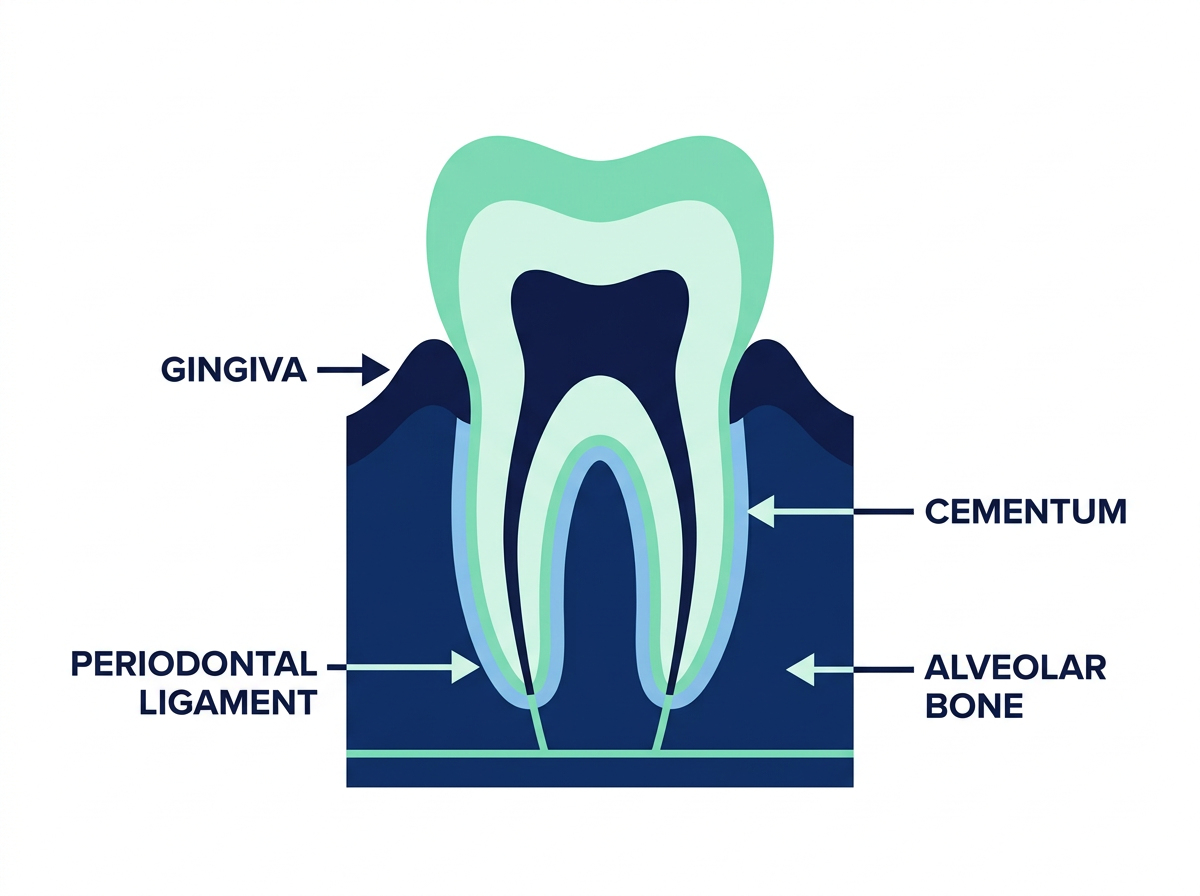
The Periodontium
The Support System for Your Teeth
Gingiva (Gums)
The pink tissue that surrounds and protects your teeth
Periodontal Ligament
Tiny fibers that act like shock absorbers, holding your tooth in place
Alveolar Bone
The jawbone that anchors your teeth
Cementum
A thin layer covering the tooth root, where fibers attach
Source: ncbi.nlm.nih.gov/books/NBK570604
Gingivitis
Early Gum Disease — 100% Reversible!
What Is It?
Signs to Watch For
How to Fix It
Source: my.clevelandclinic.org
Periodontitis
When Gum Disease Gets Serious
Periodontitis is advanced gum disease that damages the bone and tissue holding your teeth in place.
Pockets form between teeth and gums — bacteria go deeper.
Bone loss begins — this is <strong style="color: #c62828;">NOT reversible</strong>.
Risk factors: smoking, diabetes, poor brushing, genetics.
Unlike gingivitis, periodontitis cannot be fully reversed — but it CAN be managed!
Healthy Gum
Tight gum, no pocket
Gingivitis
Red swollen gum, shallow pocket
Periodontitis
Deep pocket, bone loss visible
Source: mayoclinic.org
Periodontitis – Stages
How severe is the disease?
Stage I
Initial
Mild bone loss
Pocket depth up to 4mm
Teeth are stable
Think: "Early warning signs"
Stage II
Moderate
More bone loss
Pockets up to 5mm
Some complexity in treatment
Think: "Gum disease is progressing"
Stage III
Severe
Significant bone loss
Pockets deeper than 6mm
Possible tooth mobility
Think: "Teeth may be at risk"
Stage IV
Advanced
Major bone loss
Tooth loss may occur
Chewing affected
Think: "Urgent treatment needed"
Increasing Severity →
Source: cdha.org – ABCs of Periodontitis
Periodontitis – Grades
How fast is the disease progressing?
Disease progresses slowly
No significant changes over 5 years
Low-risk lifestyle (non-smoker, no diabetes)
Less aggressive treatment needed
Disease progresses at a moderate pace
Some risk factors present
Response to treatment is expected
Disease progresses QUICKLY
Major risk factors: smoking, diabetes, genetics
Younger patients with lots of damage
Needs aggressive, frequent treatment
Your stage + grade guide your personalized treatment plan!
Source: cdha.org – ABCs of Periodontitis
Diagnosing Gum Disease
What does your hygienist look for?
Pocket Probing
Visual Exam
X-Rays
Diagnosis requires BOTH a clinical exam AND X-rays for accuracy
Source: cdha.org
Treating Gum Disease
What your dental hygienist does to help
D1110: Regular Cleaning (Prophylaxis)
Routine cleaning for healthy gums — removes plaque and tartar above the gumline
D4346: Periodontal Scaling
Deep cleaning for moderate gum pockets (4mm+) — removes bacteria below the gumline
D4341: Scaling & Root Planing
A thorough deep clean for active gum disease — smooths the root surface so gums can reattach
D4910: Periodontal Maintenance
Follow-up cleaning every 3–4 months to keep gum disease under control
Local anesthetic may be used for comfort
Most patients need 2 visits for deep cleaning
Nearly 50% of U.S. adults over 30 have some form of gum disease
With treatment and good home care, gum disease can be managed!
Source: my.clevelandclinic.org/health/articles/dental-hygienist
Prognosis
What does the future look like for your teeth?
Prognosis = your expected outcome based on current health, habits, and treatment
Better Prognosis
Good oral hygiene habits
Non-smoker
Controlled diabetes
Regular dental visits
Early diagnosis and treatment
Younger age
Poorer Prognosis
Smoking (increases risk 3x)
Uncontrolled diabetes
Poor oral hygiene
Missing dental appointments
Advanced bone loss
Tooth mobility
Good
Fair
Poor
Questionable
Hopeless
Many risk factors are in YOUR control!
Source: my.clevelandclinic.org/health/articles/prognosis
How Tooth Decay Happens
A step-by-step look inside your tooth
White Spot
Minerals begin to leave the tooth — a chalky white spot appears. This can still be REVERSED!
Enamel Decay
The hard outer layer (enamel) starts to break down. A small hole may form.
Dentin Decay
Decay reaches the softer layer under enamel. Teeth become sensitive to cold, sweet, or hot.
Pulp Damage
The nerve inside the tooth is affected. Pain and swelling may occur.
Abscess
Infection spreads. A painful abscess (pus pocket) can form at the root.
💡 Early decay CAN be reversed with fluoride and good brushing — don't wait!
Source: nidcr.nih.gov
Root Caries
Decay on the root of your tooth
Source: newmouth.com/oral-health/root-decay
Dentin Hypersensitivity
Why do your teeth hurt from hot, cold, or sweets?
Sensitivity happens when the inner layer of your tooth (dentin) becomes exposed.
Why It Happens
Common Triggers
How to Manage It
Sensitivity affects up to 74% of people at some point in their life!
Source: hopkinsmedicine.org | osmosis.org
Xerostomia
Dry Mouth — More Than Just Being Thirsty
Xerostomia = the feeling that your mouth is too dry. Saliva is essential for oral health!
What Causes Dry Mouth?
Symptoms:
Why It Matters for Your Teeth
Saliva neutralizes acid, washes away bacteria, and protects your teeth. Without enough saliva:
Tips to Help
Source: osmosis.org
Types of Dental Hygiene Appointments
What type of cleaning do YOU need?
D1110: Adult Prophylaxis
Routine Cleaning
Patients with healthy gums
Removal of plaque and tartar above the gumline, polishing
Every 6 months
"This is your standard 'regular cleaning'"
D4346: Periodontal Scaling
Moderate Deep Clean
Patients with inflamed gums and pockets 4mm+
Scaling below the gumline in targeted areas
As needed based on inflammation
D4341: Scaling & Root Planing
Full Deep Clean
Patients with active periodontal disease
Deep cleaning of roots below gumline to remove bacteria and smooth root surfaces. Usually done with numbing gel/anesthetic.
Initial treatment, then maintenance
D4910: Periodontal Maintenance
Perio Maintenance
Patients who have been treated for gum disease
Specialized cleaning every 3–4 months to keep disease controlled
Every 3–4 months (not 6 months)
Source: dentalecostsmile.com | todaysrdh.com
Dental X-Rays
Seeing What the Eye Can't
Bitewing X-Rays
Shows the upper and lower back teeth together
Finding cavities between teeth, early bone loss
Taken every 6–18 months depending on your risk
Periapical X-Rays
Shows the whole tooth from crown to root tip
Detecting infections, abscesses, deep bone loss
Gives the full picture of each tooth
Full Mouth Series
A complete set of 18–20 images of all teeth
New patients and those with advanced gum disease
X-rays help us detect problems BEFORE they become painful or expensive to treat!
Detect bone loss from gum disease early
Find cavities hiding between teeth
Monitor jawbone changes over time
Identify infections and abscesses
Modern digital X-rays use up to 80% LESS radiation than traditional film. One dental X-ray = about the same radiation as eating a banana!
Source: thewdentalgroup.com | my.clevelandclinic.org
Tooth Brushing
How to brush for the best results
The Modified Bass Technique
Place bristles at a 45° angle to your gumline
Use short, gentle back-and-forth strokes — 15 seconds per area
Brush all surfaces: outer, inner, and chewing surfaces
Manual Toothbrush
Works well with proper technique
Affordable and accessible
Good for all ages
Requires correct angle and pressure
Tip: Use SOFT bristles only — medium/hard bristles damage gums!
Electric Toothbrush
Removes up to 21% more plaque
Built-in timer (2 minutes)
Less technique-dependent — great for beginners
Helpful for people with limited dexterity
Tip: Let the brush do the work — don't scrub!
⏱ Brush 2 minutes, twice a day, every day!
Source: mouthhealthy.org | denpedia.com
Cleaning Between Your Teeth
Brushing only cleans 60% of your tooth surfaces — don't forget the spaces between!
Traditional Floss
Tight spaces between teeth
Removes plaque and food between contacts
Wrap 18 inches around fingers, slide gently in a C-shape around each tooth, go just below the gumline.
Tip: Floss BEFORE brushing for best results
Interdental Brushes
Larger spaces, bridges, implants, braces
MORE effective than floss at reducing gum inflammation (research shows!)
Choose the right size (ask your hygienist), gently insert between teeth without forcing.
Tip: Most effective for patients with gum disease
Water Flosser / Oral Irrigator
Braces, implants, dry mouth, limited dexterity
Removes 2x more plaque than brushing alone
Aim jet at gumline, trace along all teeth.
Tip: Great alternative if traditional flossing is difficult
🎯 The BEST interdental tool is the one you will ACTUALLY use consistently!
Source: pmc.ncbi.nlm.nih.gov | gumdiseaseguide.org
Preventive Agents
Tools to protect your teeth
Fluoride
Strengthens tooth enamel
Found in toothpaste and water
Reverses early decay (CDC)
Fluoride Varnish
Painted directly on in office
Protects for months
Great for high-risk patients
Nano-Hydroxyapatite
Natural mineral alternative
Repairs enamel cracks
Comparable effectiveness
Xylitol
Natural sugar substitute
Blocks cavity-causing bacteria
Use in sugar-free gum/mints
Dental Sealants
Protective coating on molars
Fills deep grooves
Prevents back tooth cavities
References
Sources used in this presentation
Thank you for taking the time to learn about your oral health! 😊
- dental-hygiene
- gum-disease
- periodontitis
- tooth-decay
- oral-health
- patient-education
- dentistry