




































Interactive Geospatial Intelligence: Querying the Earth
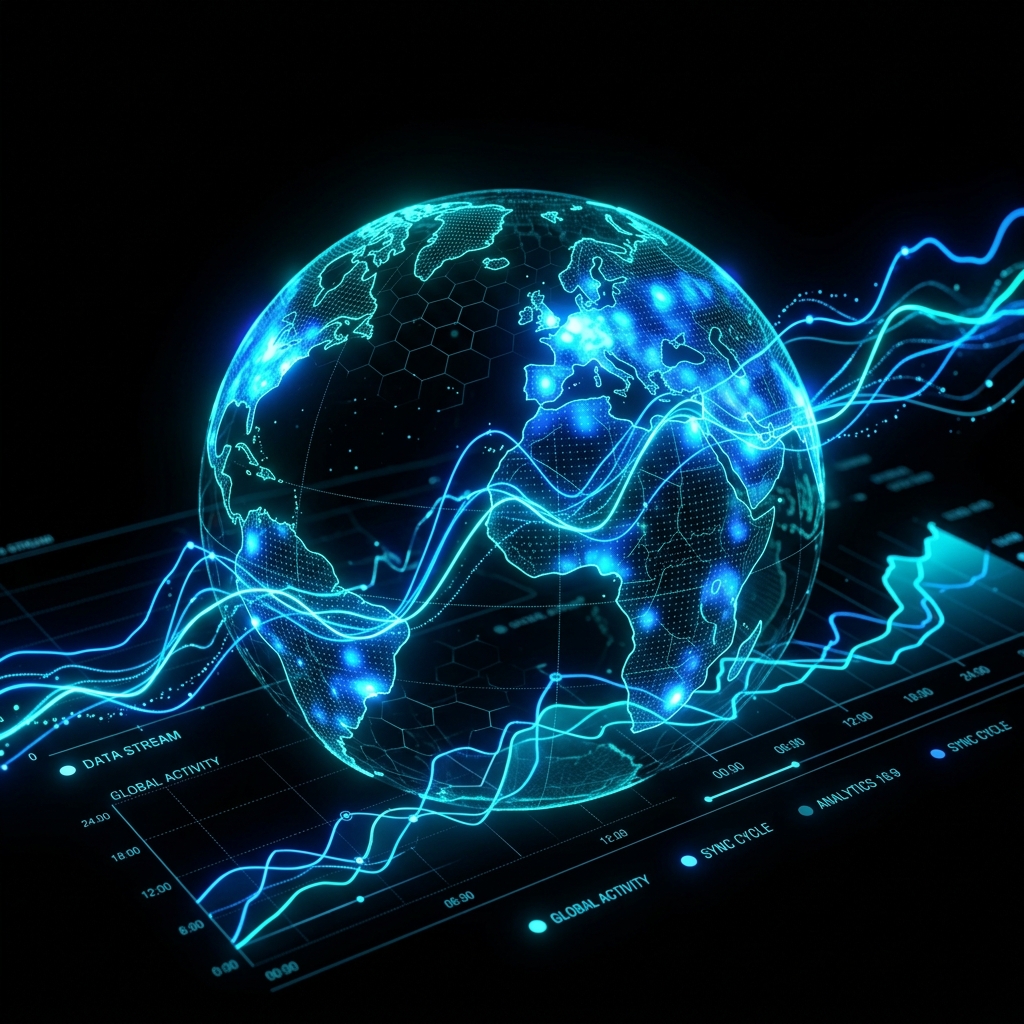
Explore how modern geospatial systems use AI and ML to turn planet-scale satellite imagery into real-time, searchable data for economic and activity tracking.
Interactive<br>Geospatial Intelligence
How modern systems turn imagery into real-time answers
SECTION 1 — HOOK
The Real Problem
Too much imagery
Too little time
Manual analysis doesn't scale
SECTION 1 — HOOK
What's Changed Recently
Before
More data.<br>Same slow analysis.
Now
Interactive systems.<br>Real-time answers.
ANALYSIS
INTERACTION
SECTION 1 — HOOK
The New Paradigm
You don't analyse imagery anymore.
You query it.
DRAW
SEARCH
REFINE
SECTION 2 — THE CORE IDEA
What Enables This
3 building blocks
Tiling
Break imagery into manageable chunks at scale
Feature Extraction
Teach machines to understand what they see
Similarity Search
Find matching patterns at speed
SECTION 2 — THE CORE IDEA
The Mental Model
Google for pixels.
Drawing / Example
System
Similar pixels everywhere
SECTION 2 — THE CORE IDEA
CAPABILITY SPOTLIGHT #1
Real-Time Feature Extraction
Turn imagery → structured data instantly
Extract buildings, roads, features automatically
Works at planetary scale
Structured output from raw pixels
Example
AI-powered semantic 3D mapping of the entire Earth
SECTION 3 — PLAYER SPOTLIGHTS
CAPABILITY SPOTLIGHT #2
All-Weather, Always-On Sensing
See what others can't
<strong>SAR</strong> = Synthetic Aperture Radar (not optical)
Penetrates clouds, works at night
Persistent coverage regardless of conditions
Example
World's largest SAR satellite constellation
SECTION 3 — PLAYER SPOTLIGHTS
CAPABILITY SPOTLIGHT #3
Large-Scale Geospatial ML Platforms
Run models across the planet
Execute ML pipelines across massive global datasets
Time-series analysis across months/years
Global coverage, cloud-native
Example
Planetary-scale geospatial analytics platform
SECTION 3 — PLAYER SPOTLIGHTS
CAPABILITY SPOTLIGHT #4
Economic & Activity Detection<br>from Space
Infer behaviour, not just objects
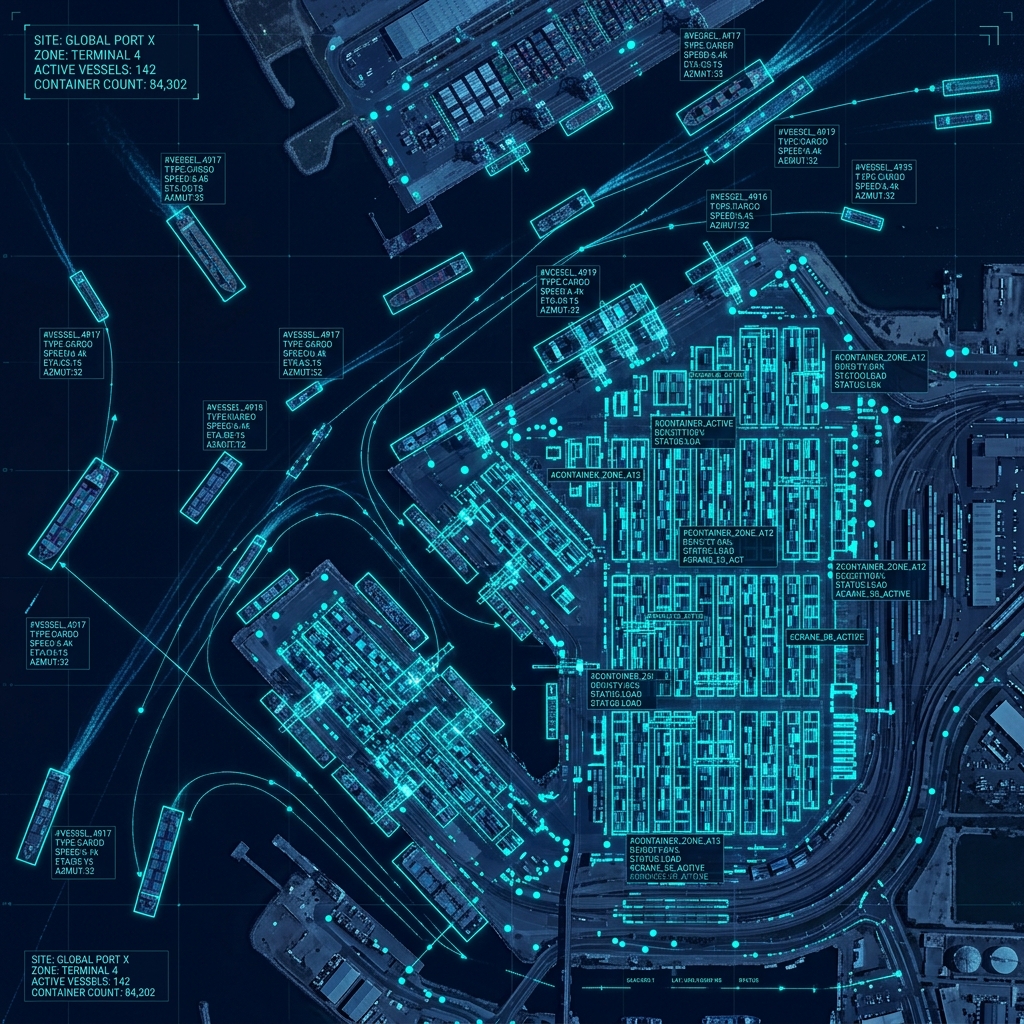
<b style="color: white; font-weight: 600;">Detect cars in parking lots</b> → measure retail activity
<b style="color: white; font-weight: 600;">Count ships in ports</b> → track trade flows
<b style="color: white; font-weight: 600;">Read economic patterns from orbit</b>
Geospatial analytics for economic intelligence
SECTION 3 — PLAYER SPOTLIGHTS
CAPABILITY SPOTLIGHT 5 — THE UPGRADE
Multi-Sensor Intelligence
Fusion of different data types
Radio frequency RF signals from space
Combined with optical imagery
Detect what you cannot see, only hear
Multi-layer intelligence fusion
Example
RF signal geolocation plus imagery fusion
SECTION 3 PLAYER SPOTLIGHTS
Shared Architecture Pattern
Every major geospatial intelligence platform does this:
INGEST
Massive data intake
TILE
Break into manageable chunks
EXTRACT
Run feature models
STORE
Fast-access vector storage
QUERY
Real-time retrieval
This is a data engineering problem as much as an AI problem.
SECTION 4 — WHAT THEY HAVE IN COMMON
The Real Innovation
It's not the models.
PRECOMPUTATION
Do the heavy work ahead of time
SMART STORAGE
Structure data for instant retrieval
FAST RETRIEVAL
Sub-second query at global scale
SECTION 4 — WHAT THEY HAVE IN COMMON
Minimal System You Could Build
A modular, composable pipeline — starting today
SECTION 5 — HOW YOU WOULD BUILD THIS
Modular. Composable. Buildable now.
STORE
Cloud-Optimized<br>GeoTIFF (COG) on S3
TILE
Slice into<br>XYZ tiles
EXTRACT
Run model -><br>generate embeddings
INDEX
Store vectors<br>in FAISS
QUERY
Expose via<br>REST API
You don't need satellites<br>to innovate here.
Use open imagery
Build small prototypes
Focus on interaction
The opportunity is in UX + systems, not just data.
SECTION 5 — FINAL THOUGHT
- geospatial-intelligence
- satellite-imagery
- machine-learning
- sar-radar
- data-engineering
- ai
- remote-sensing