










Tennis Performance Analysis: Physiology & Strength Training
Explore the physiological demands of tennis, including muscle fiber analysis, energy systems, injury prevention, and periodized off-season training programs.
Sport Performance Analysis: Tennis
Advanced Performance Analysis
Senyla Bastian
North Carolina State University
Course Name
Professor Name
April 17, 2026
Sport Overview & Performance Demands
Tennis is classified as an intermittent, high-intensity sport characterized by repeated bouts of explosive activity interspersed with short recovery periods (Kovacs, 2007).
Average point duration: 4–10 seconds, with 20–25 seconds rest between points (Fernandez-Fernandez et al., 2009)
Match duration variability (1–5+ hours) introduces metabolic and neuromuscular fatigue challenges (Kovacs, 2007)
Key Performance Characteristics
Anaerobic power (serve, acceleration)
Change of direction speed (COD)
Reactive agility
Muscular endurance
Neuromuscular coordination
Energy system efficiency & recovery capacity
💡 Critical Insight: Tennis requires simultaneous development of power and fatigue resistance, making it physiologically complex (McArdle et al., 2015).
Muscle Fiber Type Analysis
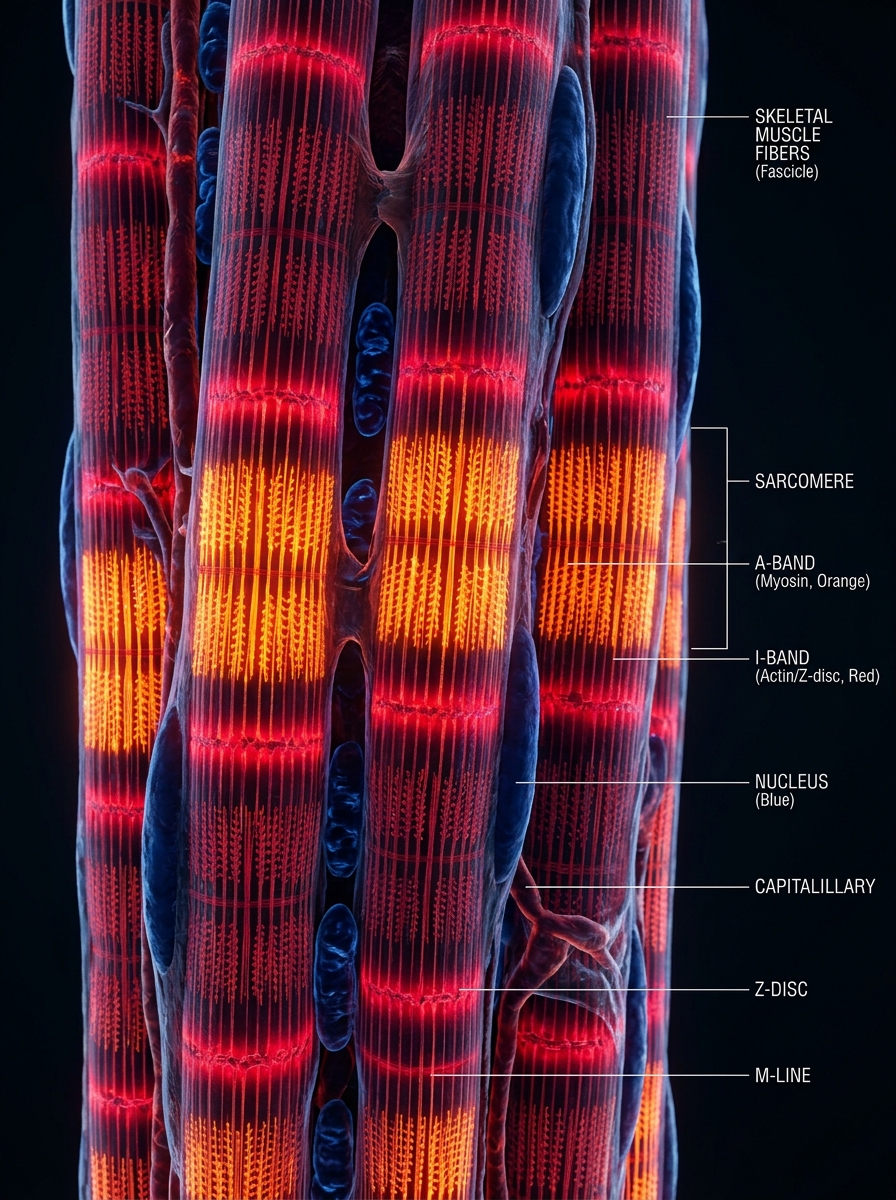
Tennis performance is predominantly dependent on Type IIx and Type IIa fibers (McArdle et al., 2015)
Maximal explosive force — serves, first-step acceleration
Repeated high-intensity efforts with some fatigue resistance
Recovery between points, sustaining performance across long matches
High reliance on rate of force development (RFD) → Type II dominance (Baechle & Earle, 2008)
Repeated sprint ability requires fiber-type adaptability (IIx → IIa shift) (Kovacs, 2007)
👉 Conclusion: Tennis athletes require a mixed fiber profile, but fast-twitch fibers are functionally dominant (McArdle et al., 2015)
Energy System Contribution
Tennis involves all three energy systems, but in a structured hierarchy (McArdle et al., 2015)
1. ATP-PC System (Primary)
0–10 seconds
2. Anaerobic Glycolytic System (Secondary)
3. Oxidative System (Supportive but Critical)
The oxidative system indirectly enhances performance by improving phosphocreatine resynthesis, allowing repeated ATP-PC output (Baechle & Earle, 2008).
Nutritional Strategy (Pregame Meal)
Recommended Meal (2–4 hours pre-match)
Physiological Rationale
💡 Key Concept: Glycogen depletion is a limiting factor in late-match performance decline (McArdle et al., 2015)
Position/Play Style Energy Differences
Although tennis lacks fixed positions, playing styles significantly alter physiological demands (Kovacs, 2007)
Baseline Players
Longer rallies → increased reliance on:
Glycolytic system
Oxidative system
Greater aerobic endurance requirement
Serve-and-Volley Players
Shorter points → heavy reliance on:
ATP-PC system
Neuromuscular explosiveness
All-Court Players
Require energy system versatility
Must efficiently transition between all three systems
👉 Insight: Training must be individualized based on tactical style (Roetert & Ellenbecker, 2007)
Common Injuries & Biomechanical Causes
Lateral Epicondylitis (Tennis Elbow)
Repetitive wrist extension + eccentric loading (Kibler & Safran, 2005)
Rotator Cuff Tendinopathy
High-velocity overhead serving → shoulder impingement (Kibler & Safran, 2005)
Ankle Sprains
Rapid deceleration & lateral cutting (Roetert & Ellenbecker, 2007)
Patellar Tendinopathy
Repetitive jumping, lunging, and braking forces (Kibler & Safran, 2005)
💡 Advanced Insight: Most tennis injuries are overuse injuries driven by asymmetrical loading patterns (Kibler & Safran, 2005)
Resistance Training Program
Scientific Breakdown (Baechle & Earle, 2008)
Increase rate of force development (RFD) (Baechle & Earle, 2008)
Improve unilateral strength (Roetert & Ellenbecker, 2007)
Enhance rotational power (Kovacs, 2007)
Build injury resilience (Kibler & Safran, 2005)
Bulgarian split squats, trap bar deadlifts
Landmine press, pull-ups
Rotational med-ball throws, anti-rotation holds
3–4 days/week (periodized)
Power/plyometrics → Compound strength → Accessory → Core/stability
3–5 reps (high velocity)
4–8 reps (moderate-heavy)
8–15 reps
3–5 sets depending on phase
Power: 2–3 min | Strength: 1–2 min | Endurance: 30–60 sec
One-Week Off-Season Program (Periodized)
Lower Body Strength + Power
Trap bar deadlifts
Box jumps
Split squats
Upper Body + Core
Pull-ups
Landmine press
Rotational core work
Active Recovery
Mobility
Low-intensity aerobic work
Speed & Agility
Sprint intervals
Ladder drills
COD drills
Total Body Strength
Compound lifts
Stability work
Conditioning
Interval training
(Simulating match play)
Rest
Full rest day
Program Rationale
Targets all physiological systems
Balances neuromuscular development + recovery
Mimics match-specific energy demands
References
Baechle, T. R., & Earle, R. W. (2008). Essentials of strength training and conditioning. Human Kinetics.
Fernandez-Fernandez, J., Mendez-Villanueva, A., & Pluim, B. M. (2009). Intensity of tennis match play. British Journal of Sports Medicine, 43(11), 787–792.
Kovacs, M. S. (2007). Tennis physiology: Training the competitive athlete. Sports Medicine, 37(3), 189–198.
McArdle, W. D., Katch, F. I., & Katch, V. L. (2015). Exercise physiology: Nutrition, energy, and human performance (8th ed.). Wolters Kluwer.
APA 7th Edition
References (continued)
American College of Sports Medicine. (2021). ACSM's guidelines for exercise testing and prescription (11th ed.). Wolters Kluwer.
Kibler, W. B., & Safran, M. R. (2005). Tennis injuries. In D. J. Caine & N. Maffulli (Eds.), Epidemiology of pediatric sports injuries: Racquet sports (pp. 120–137). Karger.
Reid, M., & Kovacs, M. (2010). The use of training periodization in professional tennis. Journal of Sports Sciences, 28(11), 1199–1207.
Roetert, E. P., & Ellenbecker, T. S. (2007). Complete conditioning for tennis. Human Kinetics.
APA 7th Edition
- tennis-performance
- sports-science
- strength-and-conditioning
- athletic-training
- exercise-physiology
- tennis-elbow
- periodization