




Made byBobr AI

Sciatica: Causes, Symptoms, and Treatment Guide

Learn about sciatica, including the pathophysiology of spinal nerve root inflammation, common causes like herniated discs, diagnosis, and treatment options.

#sciatica#spinal-health#herniated-disc#neurology#physical-therapy#nerve-pain#medical-education

SCIATICA

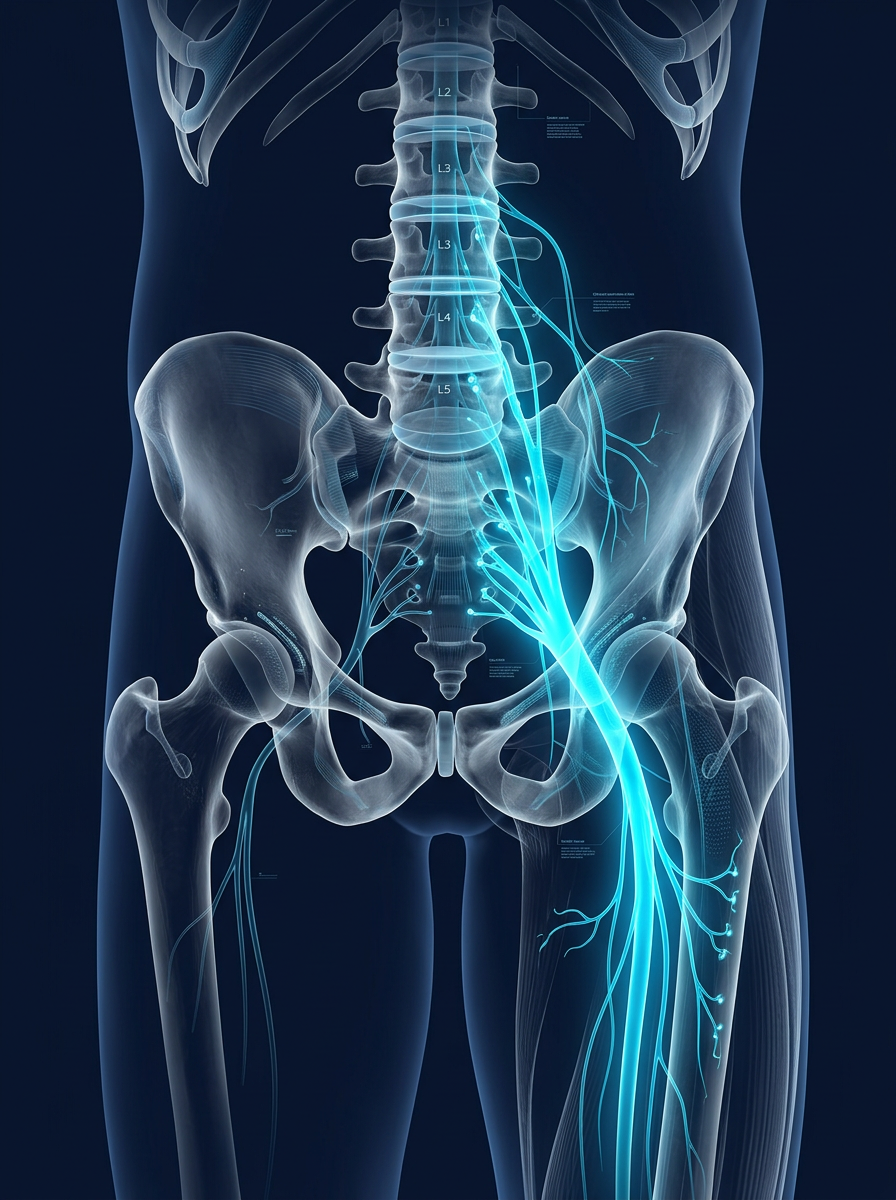
Understanding Inflammation of Spinal Nerve Roots

Anatomy of Sciatica
Made byBobr AI
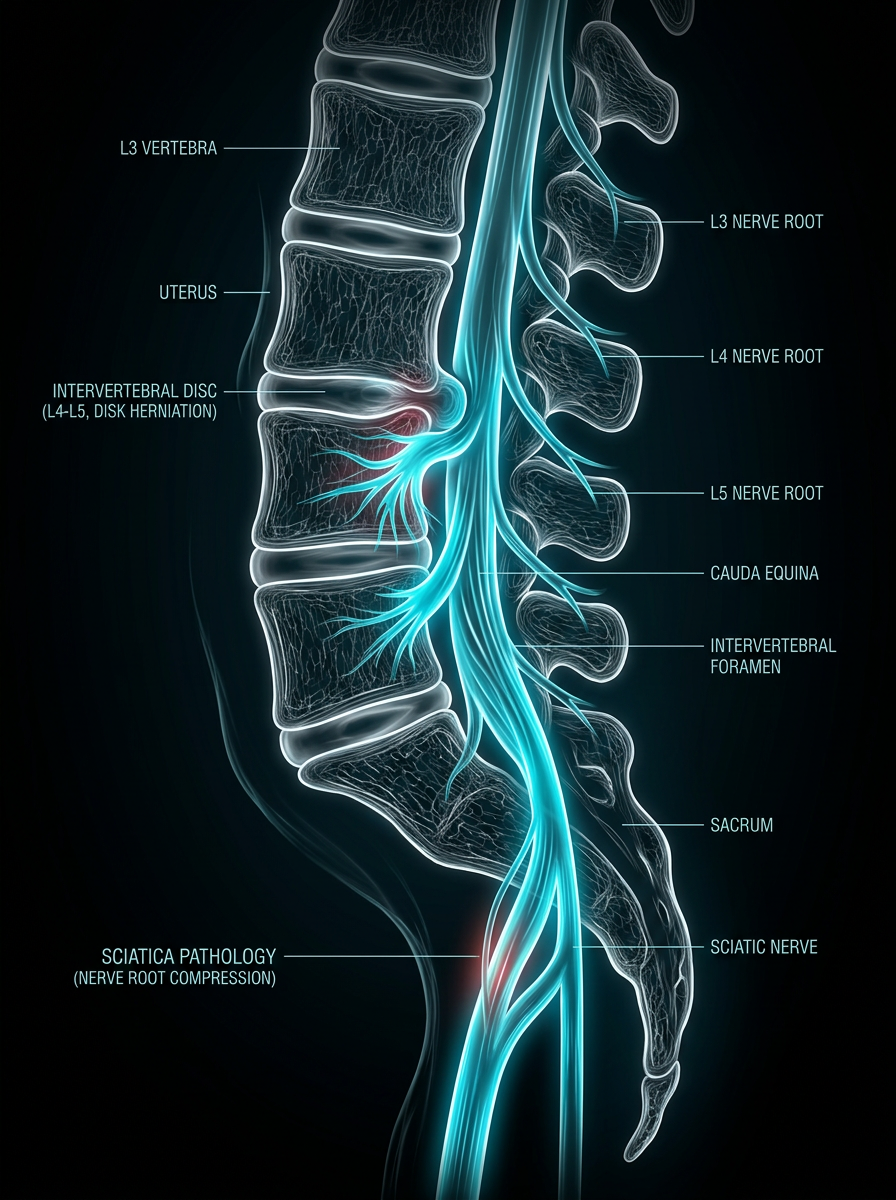
Spinal Anatomy

DEFINITION & PATHOPHYSIOLOGY

What is Sciatica?

  • Inflammation or irritation of the spinal nerve root
  • Nerve root = initial segment branching off the spinal cord
  • Exits via intervertebral foramen
  • Transmits sensory (touch, pain, temp) AND motor signals
  • "-itis" suffix = inflammation is a KEY component
  • Distinguished from simple mechanical compression
Made byBobr AI
ETIOLOGY

Common Causes & Biological Mechanisms

Disc Icon

Herniated Disc

Soft gelatinous core protrudes through fibrous ring → direct pressure on nerve root.

01
Bone Icon

Osteophytes (Bone Spurs)

From osteoarthritis → cartilage wears out → new bone formation → narrowing of openings → nerve root compression.

02
Inflammation Icon

Inflammatory Response

Herniated disc releases chemical irritants and pro-inflammatory cytokines → swelling, pain, irritation of nerve root.

03
Made byBobr AI

SYMPTOMS

Lumbar Spine (Lower Back)

  • Shooting/burning pain from lower back → buttock → leg
  • Paresthesia: tingling, numbness, "goosebumps"
  • Muscle weakness in lower extremities

Cervical Spine (Neck)

  • Pain/tingling/numbness: neck → shoulder → arm → hand
  • Weakness in arm/hand muscles
DIAGNOSIS

How is it Diagnosed?

Step 1: Neurological Examination

Deep tendon reflexes, muscle strength, sensory perception, dermatomes

Step 2: MRI (Magnetic Resonance Imaging)

Detailed soft tissue view, herniated discs, compressed nerve roots, inflammatory changes

MRI Icon
Made byBobr AI
CONCLUSION

Key Takeaways

Sciatica is a common neurological condition caused by inflammation and compression of spinal nerve roots.

Etiology

Linked to disc herniation and osteophytes, leading to mechanical pressure and inflammatory response using.

Clinical Presentation

Symptoms include sharp pain, paraesthesia, and muscle weakness, varying by the affected spinal level.

Medication

Medications

Anti-inflammatories, NSAIDs, and muscle relaxants to manage acute pain.

Physical Therapy

Physical Therapy

Guided exercises to improve posture, flexibility, and core strength.

Surgery

Surgical Intervention

Microdiscectomy or laminectomy for severe, persistent cases.

Understanding biological mechanisms is crucial for accurate diagnosis and effective treatment.

Made byBobr AI
Bobr AI

DESIGNER-MADE
PRESENTATION,
GENERATED FROM
YOUR PROMPT

Create your own professional slide deck with real images, data charts, and unique design in under a minute.

Generate For Free

Sciatica: Causes, Symptoms, and Treatment Guide

Learn about sciatica, including the pathophysiology of spinal nerve root inflammation, common causes like herniated discs, diagnosis, and treatment options.

SCIATICA

Understanding Inflammation of Spinal Nerve Roots

DEFINITION & PATHOPHYSIOLOGY

What is Sciatica?

ETIOLOGY

Common Causes & Biological Mechanisms

Herniated Disc

Soft gelatinous core protrudes through fibrous ring → direct pressure on nerve root.

Osteophytes (Bone Spurs)

From osteoarthritis → cartilage wears out → new bone formation → narrowing of openings → nerve root compression.

Inflammatory Response

Herniated disc releases chemical irritants and pro-inflammatory cytokines → swelling, pain, irritation of nerve root.

SYMPTOMS

Lumbar Spine (Lower Back)

Shooting/burning pain from lower back → buttock → leg

Paresthesia: tingling, numbness, "goosebumps"

Muscle weakness in lower extremities

Cervical Spine (Neck)

Pain/tingling/numbness: neck → shoulder → arm → hand

Weakness in arm/hand muscles

DIAGNOSIS

How is it Diagnosed?

Step 1: Neurological Examination

Deep tendon reflexes, muscle strength, sensory perception, dermatomes

Step 2: MRI (Magnetic Resonance Imaging)

Detailed soft tissue view, herniated discs, compressed nerve roots, inflammatory changes

CONCLUSION

Key Takeaways

Sciatica is a common neurological condition caused by inflammation and compression of spinal nerve roots.

Linked to disc herniation and osteophytes, leading to mechanical pressure and inflammatory response using.

Symptoms include sharp pain, paraesthesia, and muscle weakness, varying by the affected spinal level.

Medications

Anti-inflammatories, NSAIDs, and muscle relaxants to manage acute pain.

Physical Therapy

Guided exercises to improve posture, flexibility, and core strength.

Surgical Intervention

Microdiscectomy or laminectomy for severe, persistent cases.

Understanding biological mechanisms is crucial for accurate diagnosis and effective treatment.

  • sciatica
  • spinal-health
  • herniated-disc
  • neurology
  • physical-therapy
  • nerve-pain
  • medical-education