




Made byBobr AI

Raman Spectroscopy of Graphene: Principles and Analysis

Explore how Raman spectroscopy analyzes graphene properties, including G, D, and 2D peaks, electron-phonon coupling, doping, and lattice strain.

#graphene#raman-spectroscopy#nanotechnology#material-science#physics#spectroscopy-analysis#electron-phonon-coupling
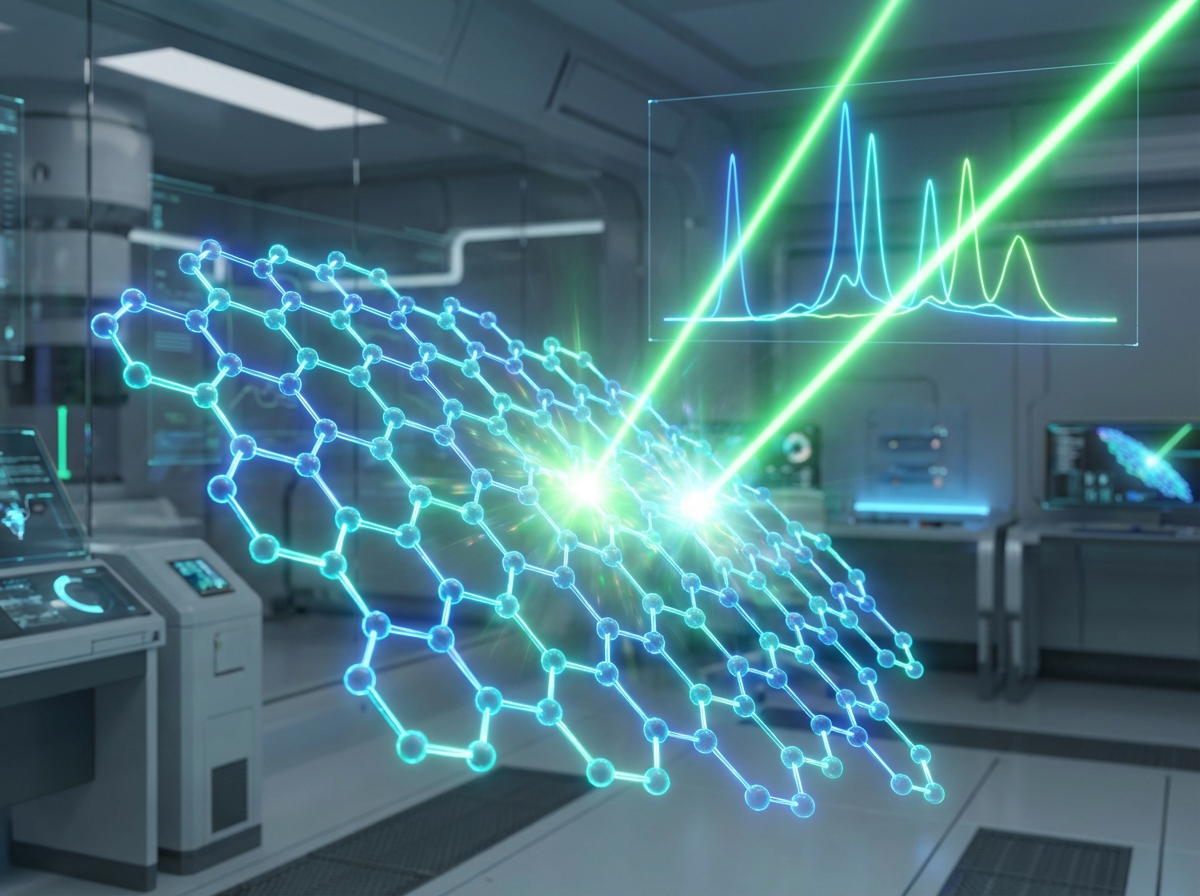
Graphene Lattice

Raman Spectroscopy of Graphene

A Versatile Tool for Studying the Properties of Graphene

Presented by

Andrea C. Ferrari Denis M. Basko
v.1.0 // GRAPHENE-SPECTROSCOPY
Made byBobr AI
Background
RAMAN SPECTROSCOPY // MOD.02 // SCATTERING

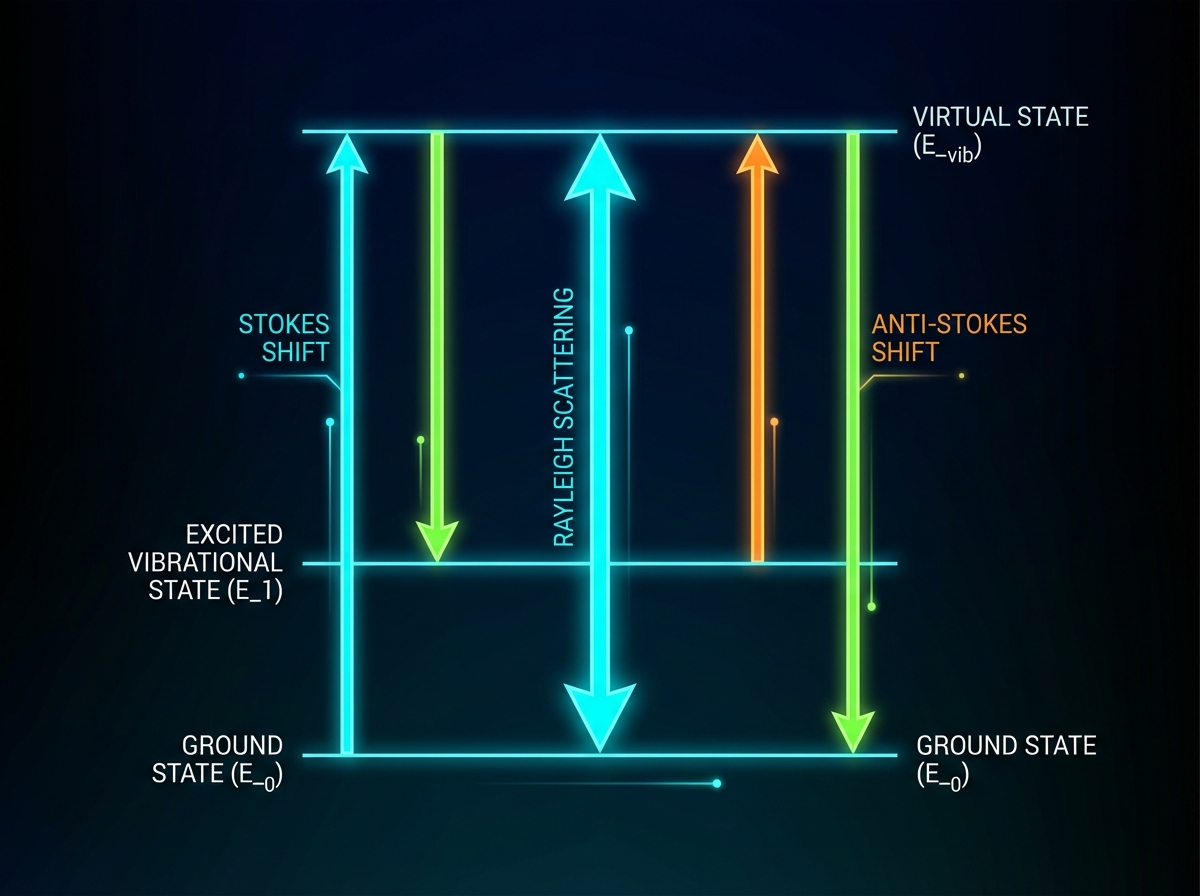
Principles of Raman Scattering

Inelastic scattering of photons by phonons involving energy exchange.
Stokes Process Photon loses energy to a phonon (creation). Scattered light has lower frequency.
Anti-Stokes Process Photon gains energy from a phonon (annihilation). Scattered light has higher frequency.
Rayleigh Scattering Elastic scattering with no energy change. Used to image flakes and identify layers.
Raman Scattering Diagram
Fig 1.1: Energy Level Transitions
Made byBobr AI
Background
RAMAN SPECTROSCOPY // GRAPHENE PHYSICS

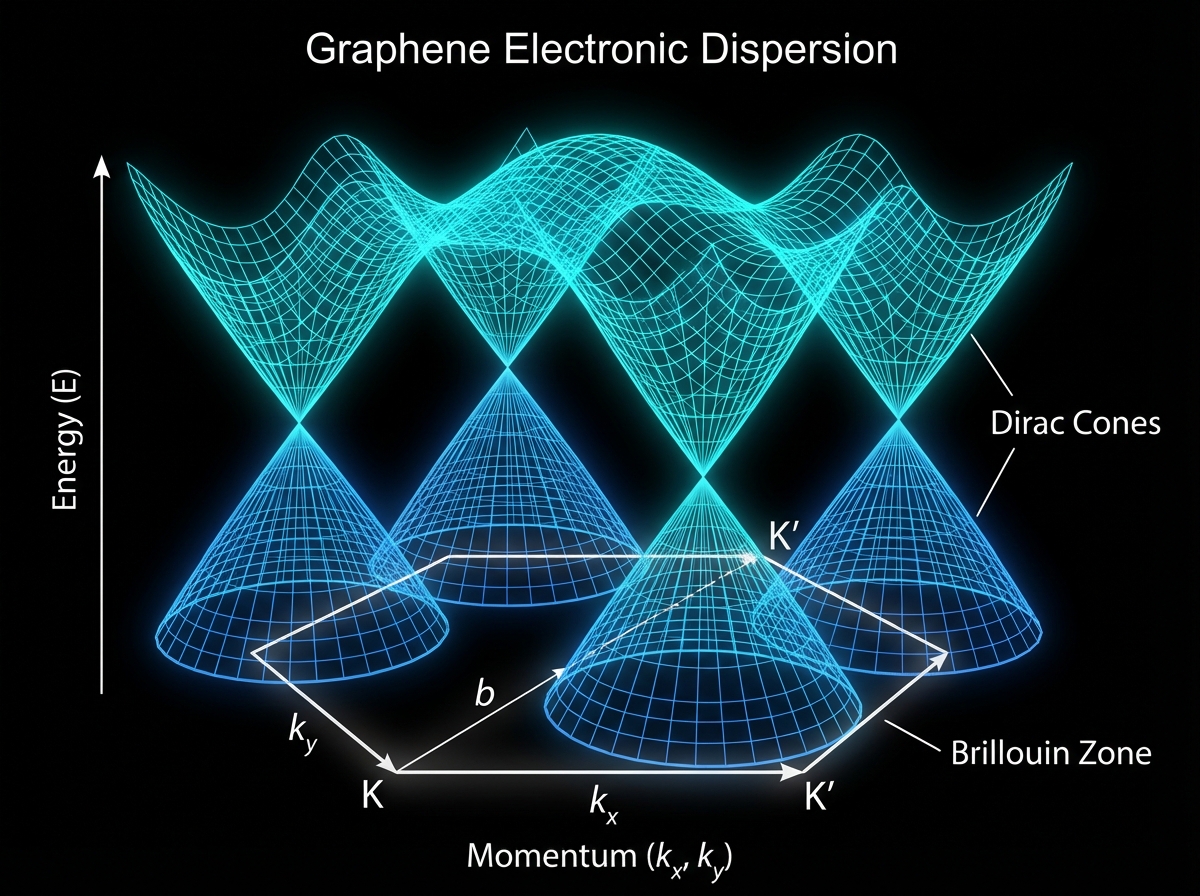
Raman Selection Rules & Resonance

Fundamental Selection Rule

Only phonons near Γ (q ≈ 0) are measured in first-order scattering.

Graphene Special Case

Linear gapless dispersion implies resonances for any laser energy (ωL).

Multi-phonon Process

Combination of phonons with opposite wavevectors (q + (-q) = 0).

Double & Triple Resonance

Key mechanisms determining Raman intensities.

Dirac Cones Diagram
Electronic dispersion and resonance mechanisms in Graphene Brillouin Zone
Made byBobr AI
Background

Understanding the Raman Spectrum of Graphene

Key Signatures: G, D, and 2D Peaks

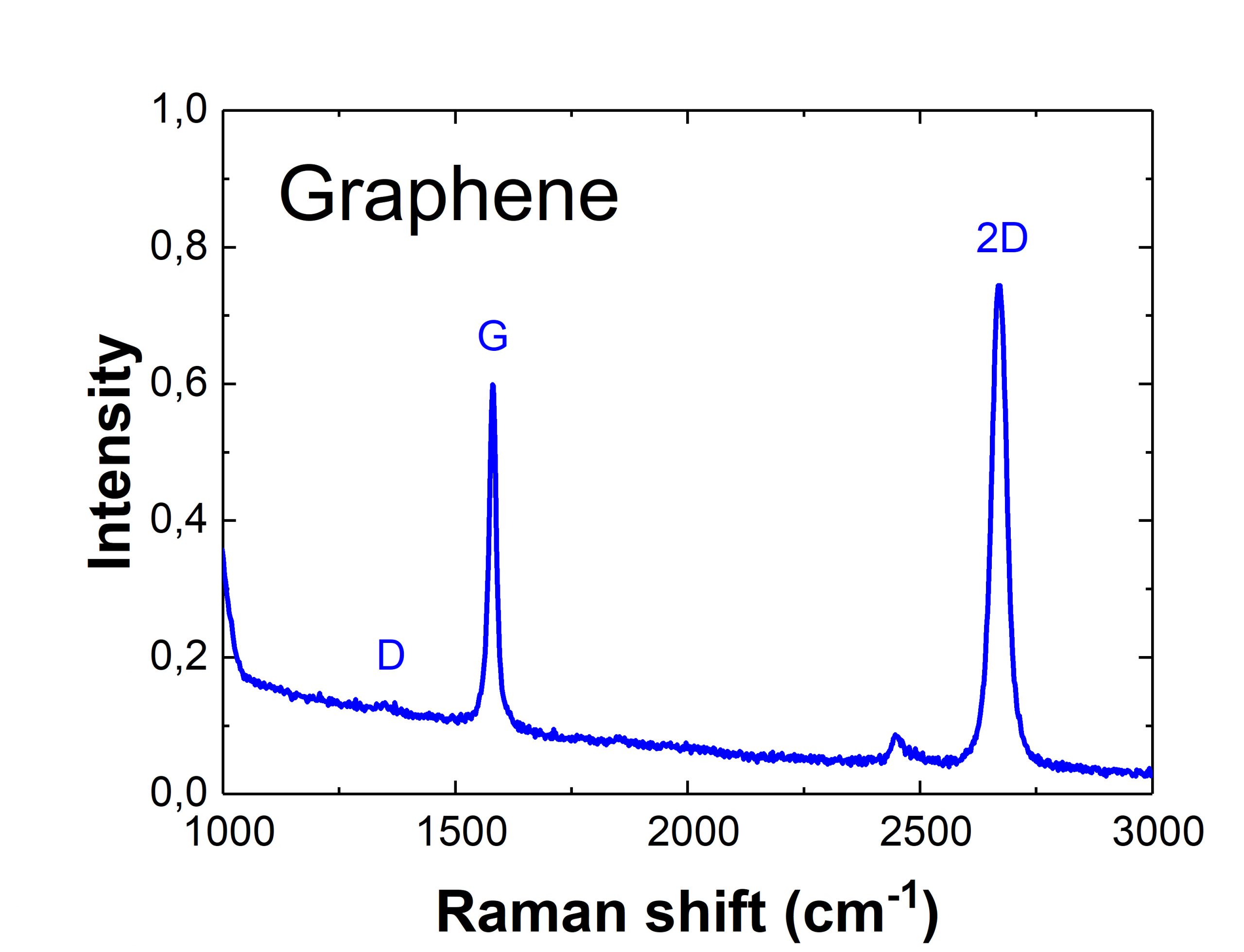
G Peak (~1580 cm⁻¹)

High-frequency E2g optical phonon; present in all sp² carbons. Represents the primary in-plane vibration mode.

D Peak (~1350 cm⁻¹)

Breathing mode of sp² rings; strictly requires defects for activation. Indicator of lattice disorder.

2D Peak (~2700 cm⁻¹)

D-peak overtone; present in pristine graphene. Its shape and position are highly sensitive to layer number.

D' Peak (~1620 cm⁻¹) & Others

Secondary defect-induced features like D+D' appear in highly disordered samples.

Raman Spectrum Plot
Typical Single-Layer Graphene
Figure 1: Characteristic Peaks in Graphene Spectrum
NANOTECH // RAMAN // ANALYTICS
Made byBobr AI
Background
PHYSICS // ELECTRONS // PHONONS
DATA_VISUALIZATION_MODE

Kohn Anomalies and Electron-Phonon Coupling

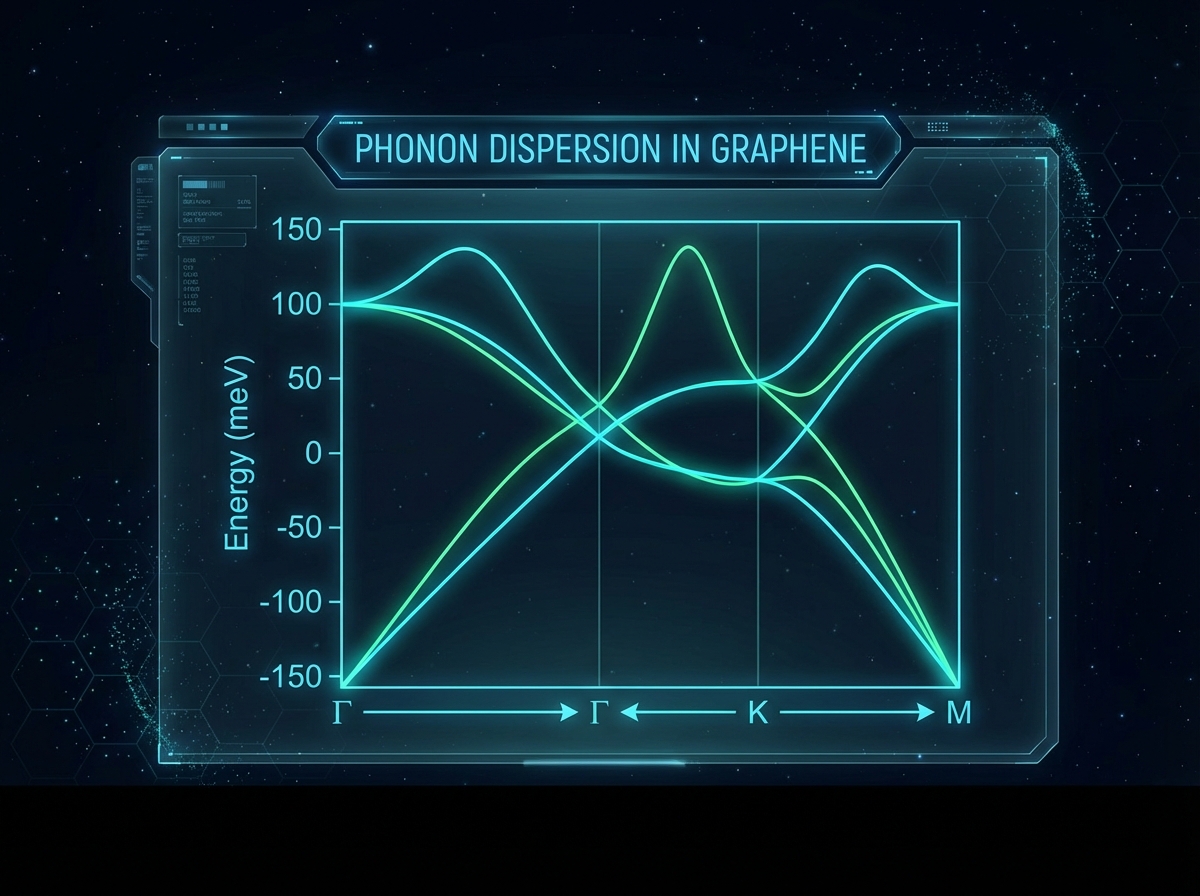
Kohn Anomaly (KA): Anomalous phonon dispersion occurring due to sudden changes in electronic screening.

Significant KAs occur at Γ and K points in graphene.

Results in strong dispersion of the D peak with excitation energy (~50 cm⁻¹/eV).

Renormalization of phonons depends on doping and magnetic fields.

Phonon Dispersion Curve

FIG 2.4: PHONON DISPERSION // Γ-K ANOMALIES

GRAPHENE SPECTROSCOPY | SLIDE 04
Made byBobr AI
EXTERNAL FACTORS // 04

Probing Doping and Strain

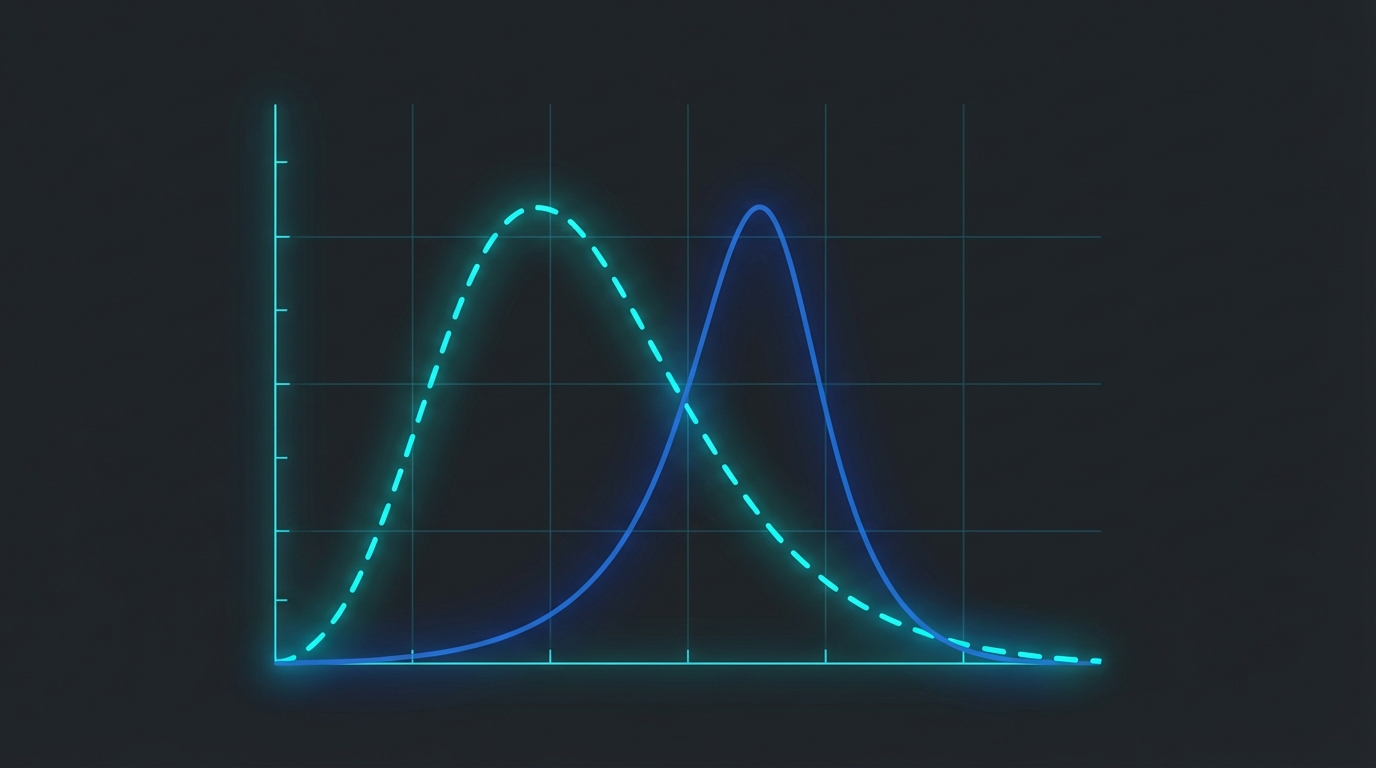
Effect of Doping

  • Induces blue shift and narrowing of the G peak.
  • Suppression of 2D intensity due to Pauli blocking.
Doping Spectrum
Blue Shift

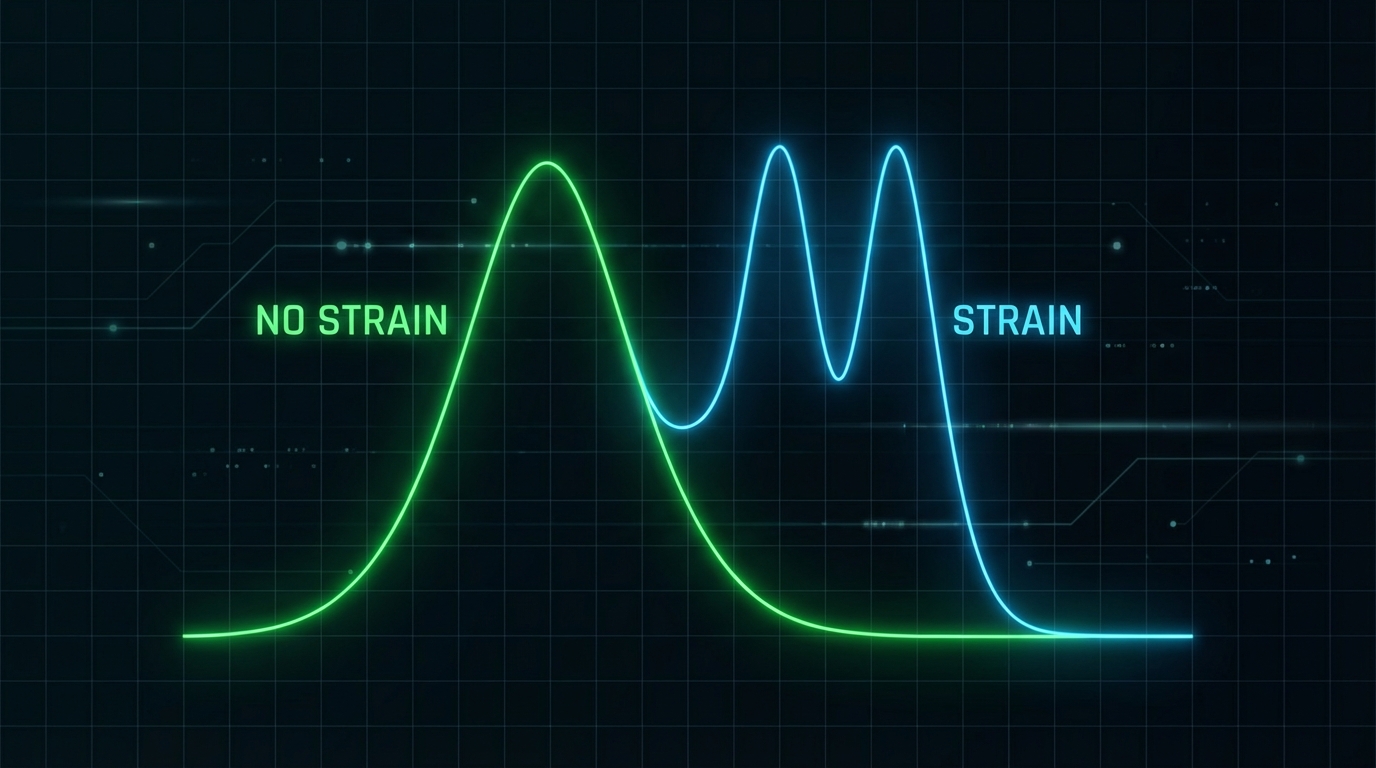
Uniaxial Strain

  • Splits the doubly degenerate G peak into G+ and G- components.
  • Can determine crystallographic orientation and measure Grüneisen parameters.
Strain Splitting
Peak Splitting

Polarization dependence: I(2D) depends on the angle between the polarizer and analyzer.

RAMAN SPECTROSCOPY // GRAPHENE PROPERTIES
Made byBobr AI
Background

Conclusion: Raman as a Versatile Tool

Characterization Powerhouse

Non-destructive, fast, and powerful characterization technique for material analysis.

Quantifiable Insights

Precise quantification of layer number, doping levels, defect density, strain, and thermal properties.

Exploring Fundamental Physics

Enables study of electron-phonon interactions, Kohn anomalies, and Landau levels in magnetic fields.

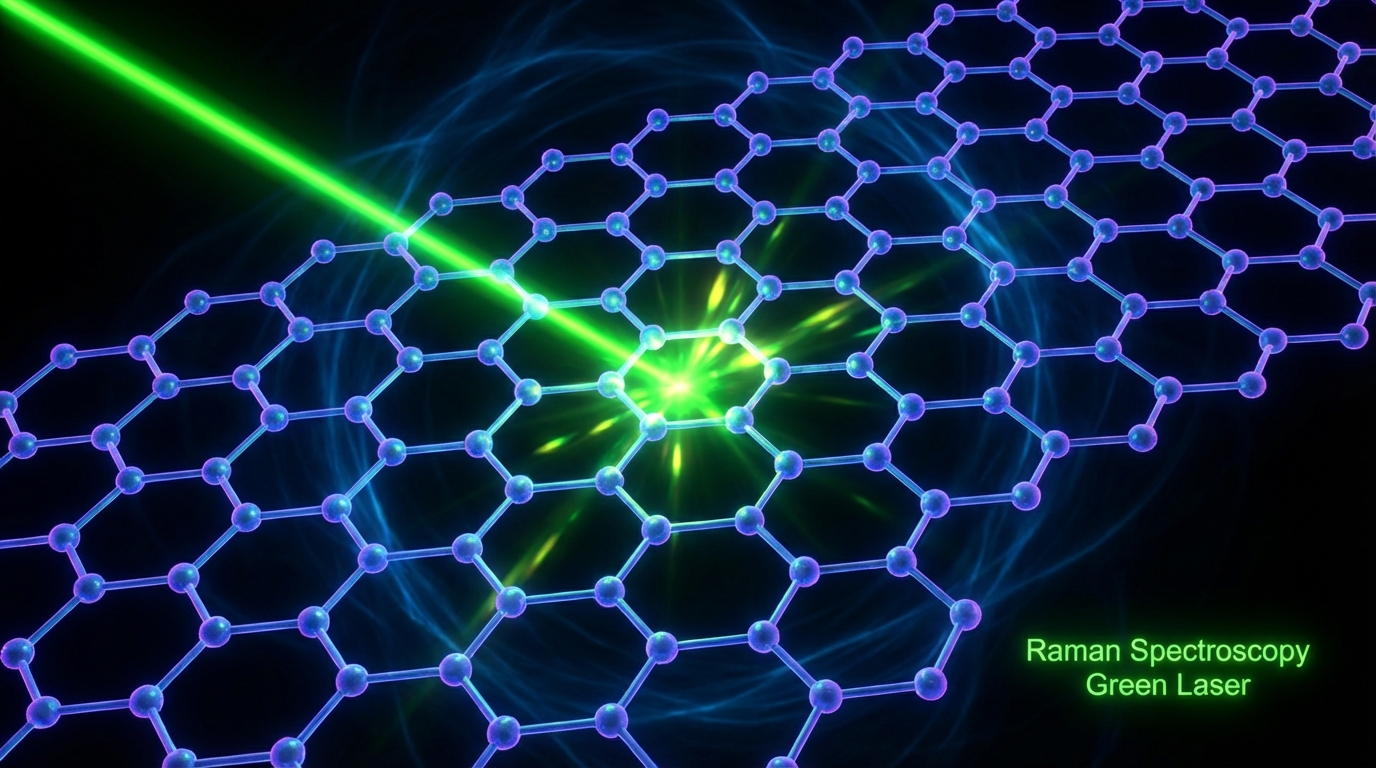
Graphene Raman Visualization
Summary
Structure • Spectrum • Laser
Final Analysis // Graphene
Made byBobr AI
Bobr AI

DESIGNER-MADE
PRESENTATION,
GENERATED FROM
YOUR PROMPT

Create your own professional slide deck with real images, data charts, and unique design in under a minute.

Generate For Free

Raman Spectroscopy of Graphene: Principles and Analysis

Explore how Raman spectroscopy analyzes graphene properties, including G, D, and 2D peaks, electron-phonon coupling, doping, and lattice strain.

Raman Spectroscopy of Graphene

A Versatile Tool for Studying the Properties of Graphene

Andrea C. Ferrari

Denis M. Basko

Principles of Raman Scattering

Inelastic scattering of photons by phonons involving energy exchange.

Stokes Process

Photon loses energy to a phonon (creation). Scattered light has lower frequency.

Anti-Stokes Process

Photon gains energy from a phonon (annihilation). Scattered light has higher frequency.

Rayleigh Scattering

Elastic scattering with no energy change. Used to image flakes and identify layers.

Raman Selection Rules & Resonance

Understanding the Raman Spectrum of Graphene

Key Signatures: G, D, and 2D Peaks

G Peak (~1580 cm⁻¹)

High-frequency E2g optical phonon; present in all sp² carbons. Represents the primary in-plane vibration mode.

D Peak (~1350 cm⁻¹)

Breathing mode of sp² rings; strictly requires defects for activation. Indicator of lattice disorder.

2D Peak (~2700 cm⁻¹)

D-peak overtone; present in pristine graphene. Its shape and position are highly sensitive to layer number.

D' Peak (~1620 cm⁻¹) & Others

Secondary defect-induced features like D+D' appear in highly disordered samples.

NANOTECH // RAMAN // ANALYTICS

Kohn Anomalies and Electron-Phonon Coupling

Anomalous phonon dispersion occurring due to sudden changes in electronic screening.

Results in strong dispersion of the D peak with excitation energy (~50 cm⁻¹/eV).

Renormalization of phonons depends on doping and magnetic fields.

Probing Doping and Strain

Conclusion: Raman as a Versatile Tool

Characterization Powerhouse

Non-destructive, fast, and powerful characterization technique for material analysis.

Quantifiable Insights

Precise quantification of layer number, doping levels, defect density, strain, and thermal properties.

Exploring Fundamental Physics

Enables study of electron-phonon interactions, Kohn anomalies, and Landau levels in magnetic fields.

  • graphene
  • raman-spectroscopy
  • nanotechnology
  • material-science
  • physics
  • spectroscopy-analysis
  • electron-phonon-coupling