











Made byBobr AI

Frozen Shoulder Case Study: Holistic Physiotherapy Treatment

Explore a comprehensive physiotherapy case study on Frozen Shoulder (Adhesive Capsulitis) using the ICF model, including assessment and SMART treatment goals.

#physiotherapy#case-study#frozen-shoulder#adhesive-capsulitis#rehabilitation#icf-model#clinical-reasoning#physical-therapy
Watch
Pitch

CASE STUDY _ WEEK 5 Frozen Shoulder (Adhesive Capsulitis)

Laisve, Cristina Morillo

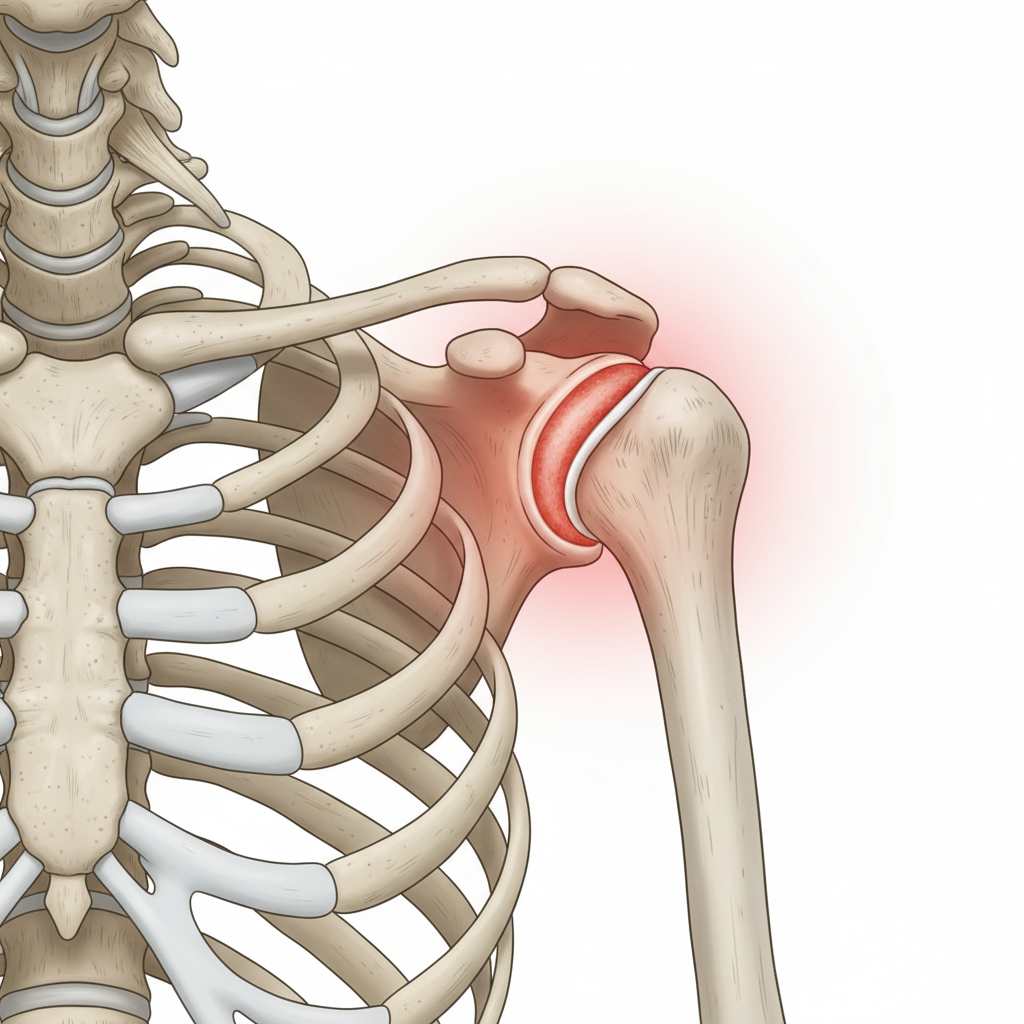
A clean medical illustration of the human shoulder joint (humerus and scapula), anatomical style, photorealistic, with the shoulder joint capsule area highlighted in a soft glowing red to indicate inflammation, white background.
Made byBobr AI

ICF Model Overview

• International Classification of Functioning (ICF)
• Health condition (Disorder/Disease)
• Body functions & structures (Impairments)
• Activities (Limitations)
• Participation (Restrictions)
• Environmental & Personal factors
Made byBobr AI

ICF: Health Condition

• Frozen Shoulder (Adhesive Capsulitis)
• Post-traumatic onset after a fall
• Right shoulder affected
• X-ray: no abnormalities (fractures ruled out)
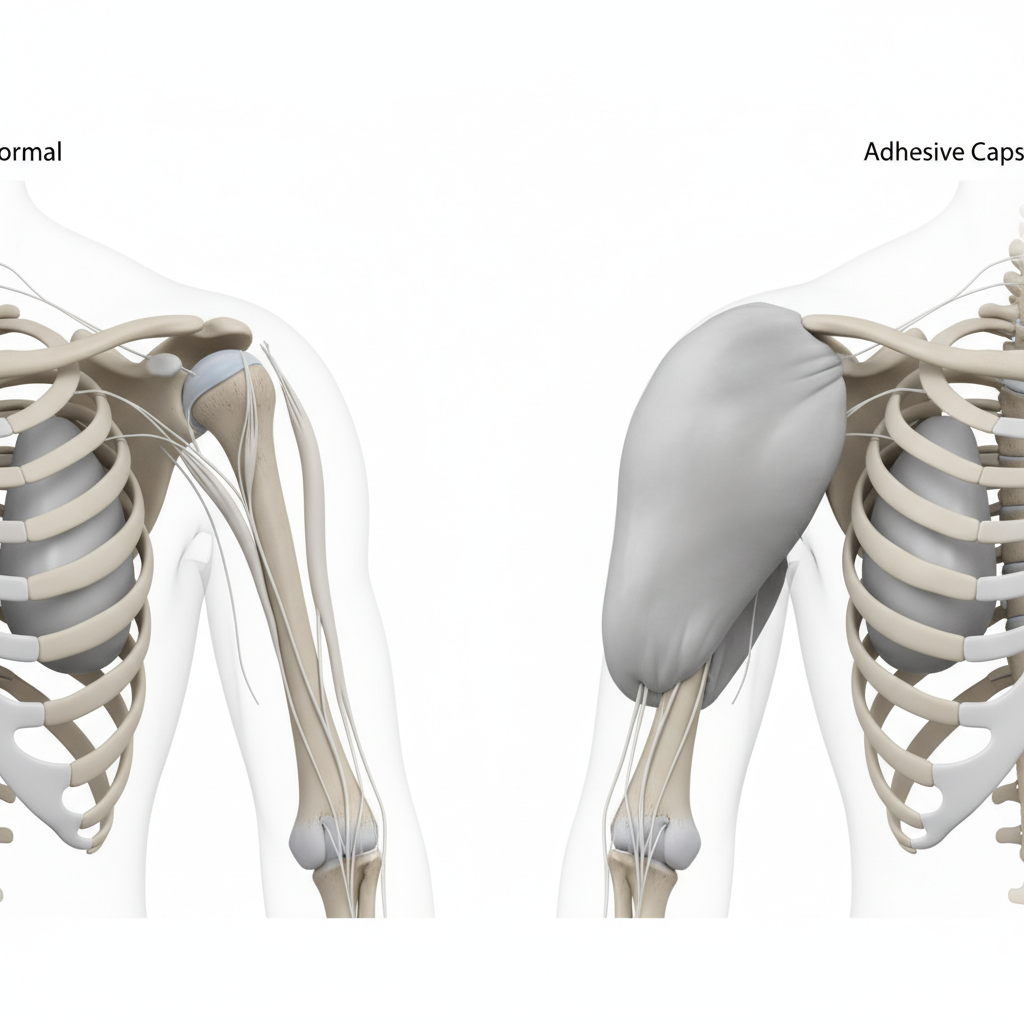
A comparison medical illustration showing a normal shoulder joint on the left and a frozen shoulder led Adhesive Capsulitis on the right with a thickened, tight gray-white joint capsule, 3d render style, clean background.
Made byBobr AI

ICF: Body Functions & Structures

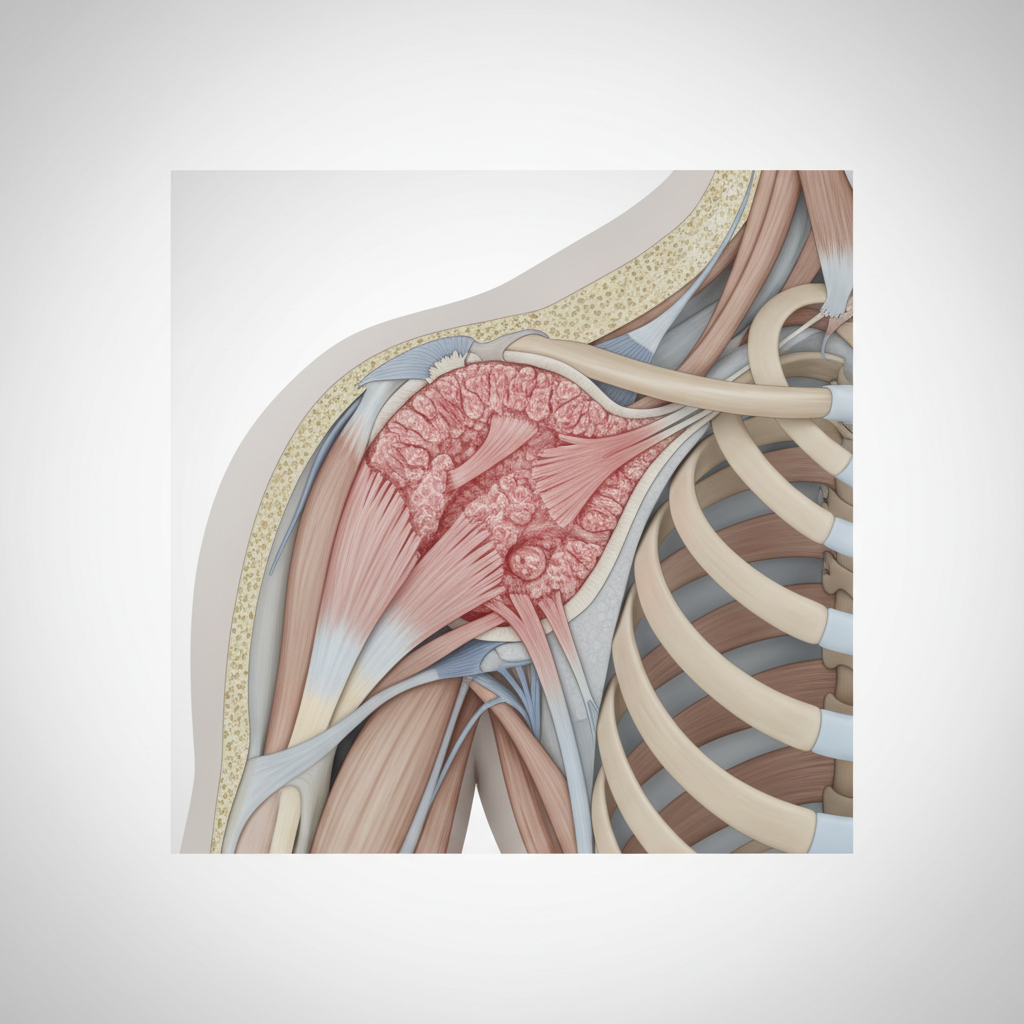
An anatomical illustration focusing on the shoulder glenohumeral joint capsule, with the capsule highlighted in reddish textures to show inflammation and fibrosis, detailed biological diagram.
• Impairments:
• Shoulder and upper arm pain
• Progressive stiffness
• Reduced AROM and PROM
• Capsular tightness
• Secondary muscle weakness
• Night pain and sleep disturbance
Made byBobr AI

ICF: Activity Limitations

• Difficulties with:
• Dressing (upper body)
• Reaching overhead
• Washing hair
• Lifting objects
• Performing basic ADLs
An older woman attempting to put on a cardigan or reach for an overhead shelf, wincing slightly in discomfort holding her shoulder, photorealistic style, soft indoor lighting.
Made byBobr AI

ICF: Participation Restrictions

• Reduced independence
• Limitations in household tasks (cleaning, cooking)
• Reduced participation in recreational activities
• Decreased quality of life due to functional loss
A woman in a home environment standing in a kitchen looking at a task she cannot perform due to arm pain, pensive and frustrated expression, realistic style.
Made byBobr AI

ICF: Contextual Factors

Environmental Factors
• Access to healthcare (Facilitator)
• Night pain and bed positioning (Barrier)
• Home layout requiring overhead reach (Barrier)
Personal Factors
• Age: 63 years
• Female
• Widow
• Possible fear of movement (Fear-avoidance)
A clean biopsychosocial model diagram showing three overlapping circles labeled Biological, Psychological, and Social facilitating holistic healthcare, medical blue and teal colors.
Made byBobr AI

Patient Information

• 63-year-old female
• Widow
• Right arm affected
• Mechanism: Fell while walking her dog
• Symptoms present for 3 weeks
An older woman walking a dog outdoors on a peaceful path, viewed from behind or side, portraying an active person before an injury, photorealistic.
Made byBobr AI

Anamnesis / Subjective Assessment

• Increasing shoulder and upper arm pain
• Progressive shoulder stiffness
• Pain aggravated by overhead activities
• Restricted ADLs
• Significant night pain when lying in bed
A patient sitting up in bed at night in a dimly lit blue-tinted room, holding her shoulder in pain, indicating sleep disturbance, photorealistic.
Made byBobr AI

Screening for Red Flags

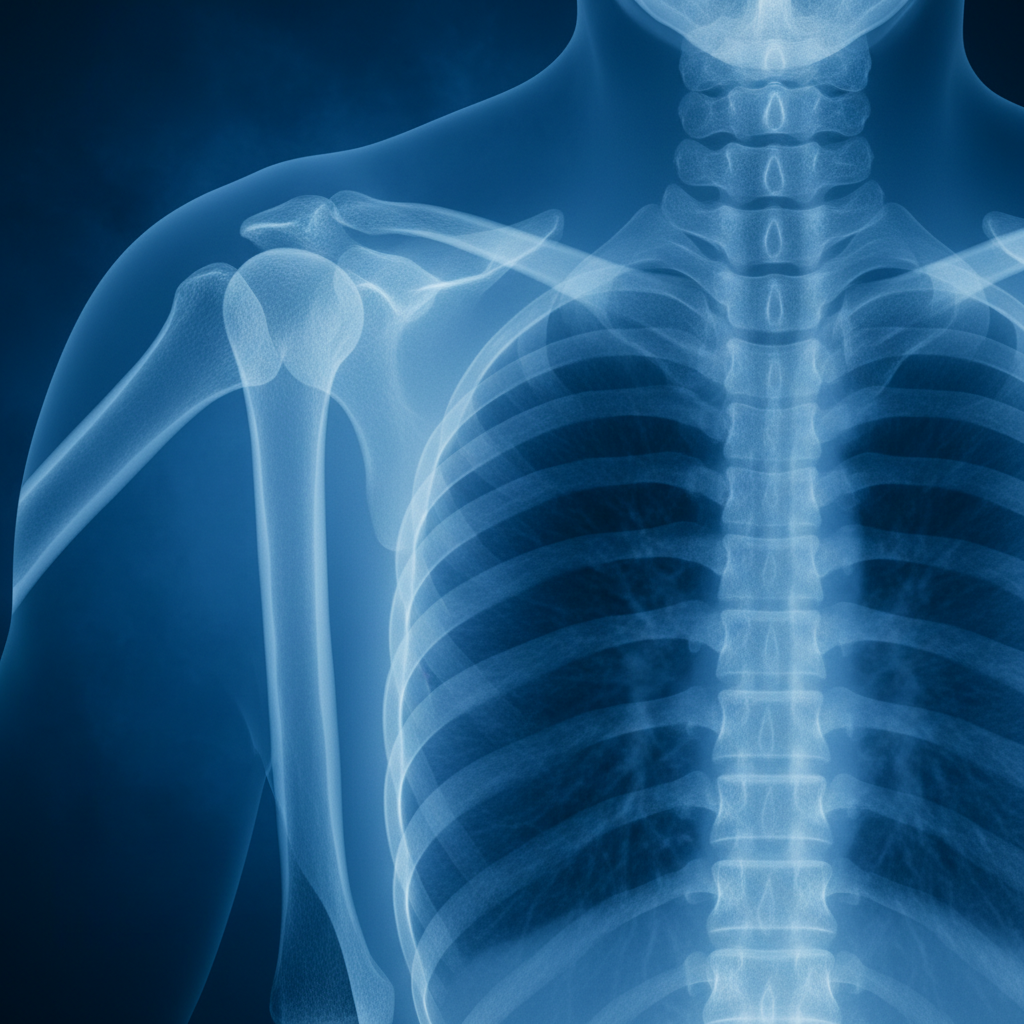
A high-quality medical X-ray image of a normal healthy shoulder joint, posterior-anterior view, showing correct alignment of the humerus and glenoid, blue backlight.
• No fracture or dislocation (X-ray confirmed normal)
• No neurological symptoms (e.g., numbness, tingling)
• No systemic symptoms (fever, night sweats, unexplained weight loss)
Conclusion: Safe to proceed with physiotherapy
Made byBobr AI

Clinical Reasoning: Hypothesis

• Post-traumatic shoulder condition
• Pain combined with global stiffness
• Loss of active and passive ROM in multiple planes
• Presentation consistent with Frozen Shoulder
A conceptual medical illustration of a clinical pathway or flowchart, showing steps from Assessment to Hypothesis to Diagnosis, clean vector style on white background.
Made byBobr AI

Physical Assessment

• NPRS: Pain scale (0–10)
• AROM and PROM assessment (goniometry)
• Functional movements: Hand-to-neck, Hand-to-scapula
• Isometric strength testing (as tolerated)
A physiotherapist gently assessing a patient's shoulder range of motion in a clinic, professional setting, the patient is an older woman, physio is supportive.
Made byBobr AI

Expected Findings

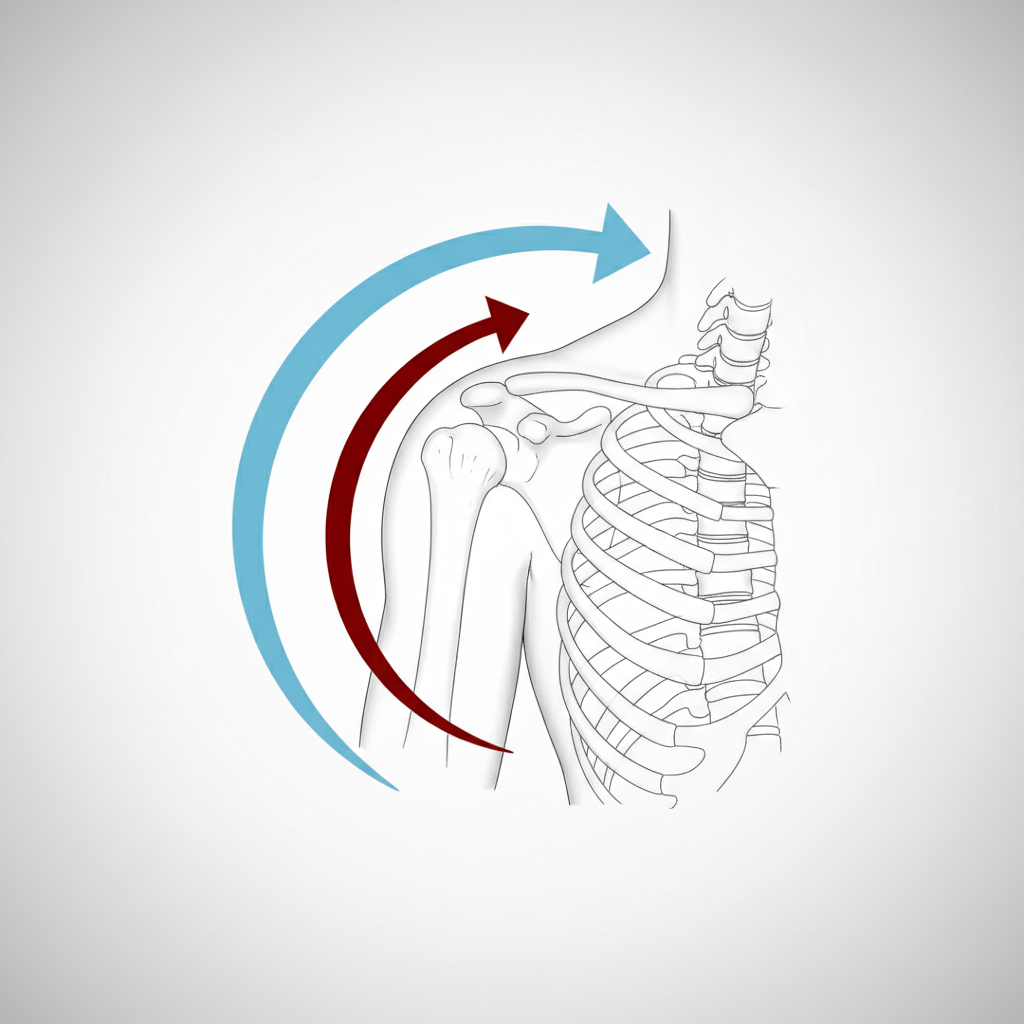
A diagram comparing a normal shoulder's full range of motion arc versus the restricted short arc of a frozen shoulder, schematic medical illustration, clear labels.
• Marked reduction of AROM and PROM
• Capsular pattern limitation:
External Rotation > Abduction > Internal Rotation
• Pain at end range of motion
• Muscle weakness due to pain inhibition
Made byBobr AI

Possible Diagnosis

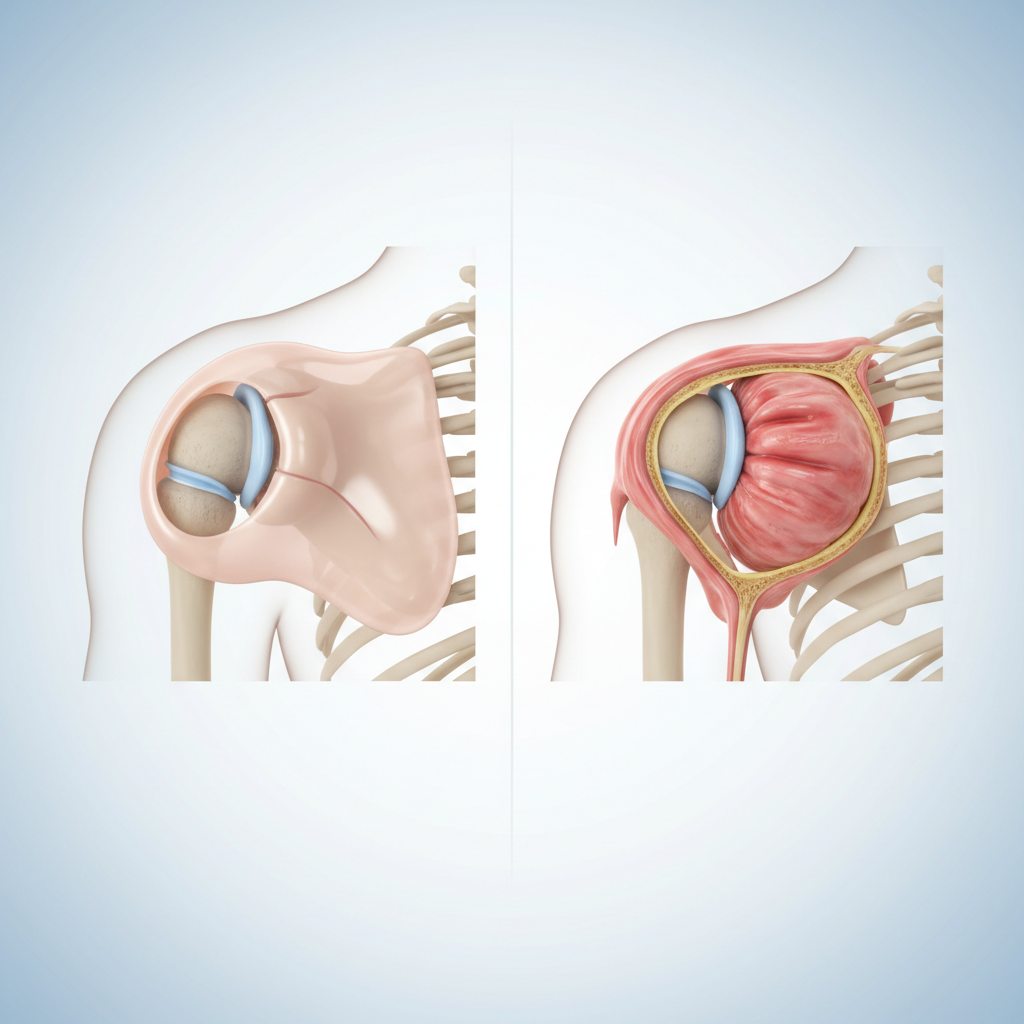
Frozen Shoulder (Adhesive Capsulitis)

• Structural damage (fracture/tear) ruled out by imaging and assessment.
• Diagnosis is clinical, based on global restriction and history.
Side-by-side medical comparison render. Left: Normal healthy shoulder joint capsule. Right: Frozen shoulder capsule, shrunken and inflamed. Labels 'Normal' and 'Frozen Shoulder'.
Made byBobr AI

Treatment Goals (SMART)

Short-term (0–6 weeks):
• Reduce pain intensity
• Improve sleep quality
• Maintain existing ROM
• Patient education on prognosis
Long-term (6+ weeks):
• Restore functional ROM
• Improve shoulder strength
• Return to full independence in ADLs
A graphic design representing SMART goals logic (Specific, Measurable, Achievable, Relevant, Time-bound) using iconography and text placeholders, clean corporate medical style.
Made byBobr AI

Treatment Options

• Patient education and reassurance (Key)
• Pain management strategies
• Joint mobilisations (Low grade)
• Gentle stretching exercises
• Progressive strengthening (later stage)
• Home exercise programme compliance
A patient performed a gentle wall-walking shoulder exercise, looking focused, wearing comfortable clothing, in a bright physiotherapy space.
Made byBobr AI

Conclusion

• Post-fall shoulder pain and stiffness
• Structure intact (normal X-ray)
• Presentation consistent with Frozen Shoulder
• ICF model supports holistic assessment
• Structured physiotherapy is essential for recovery
An abstract medical illustration symbolizing recovery and healing, gentle curves ascending, soft blue and green colors, clean and hopeful.
Made byBobr AI
A minimalist medical background, very soft focus, white and light teal with subtle anatomical line drawings faded in the background.

Thank you for your attention

Any questions?

Made byBobr AI
Bobr AI

DESIGNER-MADE
PRESENTATION,
GENERATED FROM
YOUR PROMPT

Create your own professional slide deck with real images, data charts, and unique design in under a minute.

Generate For Free

Frozen Shoulder Case Study: Holistic Physiotherapy Treatment

Explore a comprehensive physiotherapy case study on Frozen Shoulder (Adhesive Capsulitis) using the ICF model, including assessment and SMART treatment goals.

CASE STUDY _ WEEK 5 Frozen Shoulder (Adhesive Capsulitis)

Laisve, Cristina Morillo

ICF Model Overview

• International Classification of Functioning (ICF)<br>• Health condition (Disorder/Disease)<br>• Body functions & structures (Impairments)<br>• Activities (Limitations)<br>• Participation (Restrictions)<br>• Environmental & Personal factors

ICF: Health Condition

• Frozen Shoulder (Adhesive Capsulitis)<br>• Post-traumatic onset after a fall<br>• Right shoulder affected<br>• X-ray: no abnormalities (fractures ruled out)

ICF: Body Functions & Structures

• Impairments:<br>• Shoulder and upper arm pain<br>• Progressive stiffness<br>• Reduced AROM and PROM<br>• Capsular tightness<br>• Secondary muscle weakness<br>• Night pain and sleep disturbance

ICF: Activity Limitations

• Difficulties with:<br>• Dressing (upper body)<br>• Reaching overhead<br>• Washing hair<br>• Lifting objects<br>• Performing basic ADLs

ICF: Participation Restrictions

• Reduced independence<br>• Limitations in household tasks (cleaning, cooking)<br>• Reduced participation in recreational activities<br>• Decreased quality of life due to functional loss

ICF: Contextual Factors

<strong>Environmental Factors</strong><br>• Access to healthcare (Facilitator)<br>• Night pain and bed positioning (Barrier)<br>• Home layout requiring overhead reach (Barrier)

<strong>Personal Factors</strong><br>• Age: 63 years<br>• Female<br>• Widow<br>• Possible fear of movement (Fear-avoidance)

Patient Information

• 63-year-old female<br>• Widow<br>• Right arm affected<br>• Mechanism: Fell while walking her dog<br>• Symptoms present for 3 weeks

Anamnesis / Subjective Assessment

• Increasing shoulder and upper arm pain<br>• Progressive shoulder stiffness<br>• Pain aggravated by overhead activities<br>• Restricted ADLs<br>• Significant night pain when lying in bed

Screening for Red Flags

• No fracture or dislocation (X-ray confirmed normal)<br>• No neurological symptoms (e.g., numbness, tingling)<br>• No systemic symptoms (fever, night sweats, unexplained weight loss)<br>• <strong>Conclusion:</strong> Safe to proceed with physiotherapy

Clinical Reasoning: Hypothesis

• Post-traumatic shoulder condition<br>• Pain combined with global stiffness<br>• Loss of active and passive ROM in multiple planes<br>• Presentation consistent with Frozen Shoulder

Physical Assessment

• NPRS: Pain scale (0–10)<br>• AROM and PROM assessment (goniometry)<br>• Functional movements: Hand-to-neck, Hand-to-scapula<br>• Isometric strength testing (as tolerated)

Expected Findings

• Marked reduction of AROM and PROM<br>• Capsular pattern limitation:<br> External Rotation > Abduction > Internal Rotation<br>• Pain at end range of motion<br>• Muscle weakness due to pain inhibition

Possible Diagnosis

<strong>Frozen Shoulder (Adhesive Capsulitis)</strong><br><br>• Structural damage (fracture/tear) ruled out by imaging and assessment.<br>• Diagnosis is clinical, based on global restriction and history.

Treatment Goals (SMART)

<strong>Short-term (0–6 weeks):</strong><br>• Reduce pain intensity<br>• Improve sleep quality<br>• Maintain existing ROM<br>• Patient education on prognosis

<strong>Long-term (6+ weeks):</strong><br>• Restore functional ROM<br>• Improve shoulder strength<br>• Return to full independence in ADLs

Treatment Options

• Patient education and reassurance (Key)<br>• Pain management strategies<br>• Joint mobilisations (Low grade)<br>• Gentle stretching exercises<br>• Progressive strengthening (later stage)<br>• Home exercise programme compliance

Conclusion

• Post-fall shoulder pain and stiffness<br>• Structure intact (normal X-ray)<br>• Presentation consistent with Frozen Shoulder<br>• ICF model supports holistic assessment<br>• Structured physiotherapy is essential for recovery

Thank you for your attention

Any questions?

  • physiotherapy
  • case-study
  • frozen-shoulder
  • adhesive-capsulitis
  • rehabilitation
  • icf-model
  • clinical-reasoning
  • physical-therapy