



Made byBobr AI

Maximal Independent Set: A Bio-Inspired Distributed Algorithm

Learn how fruit fly biology inspires solutions for Maximal Independent Set (MIS) in distributed systems to avoid interference and manage decentralization.

#maximal-independent-set#distributed-computing#algorithm#bio-inspired#symmetry-breaking#parallel-computing#network-topology
Watch
Pitch

Maximal Independent Set

A Biological Solution to a Distributed Computing Problem

Yaman Dahle, Leen Hassan

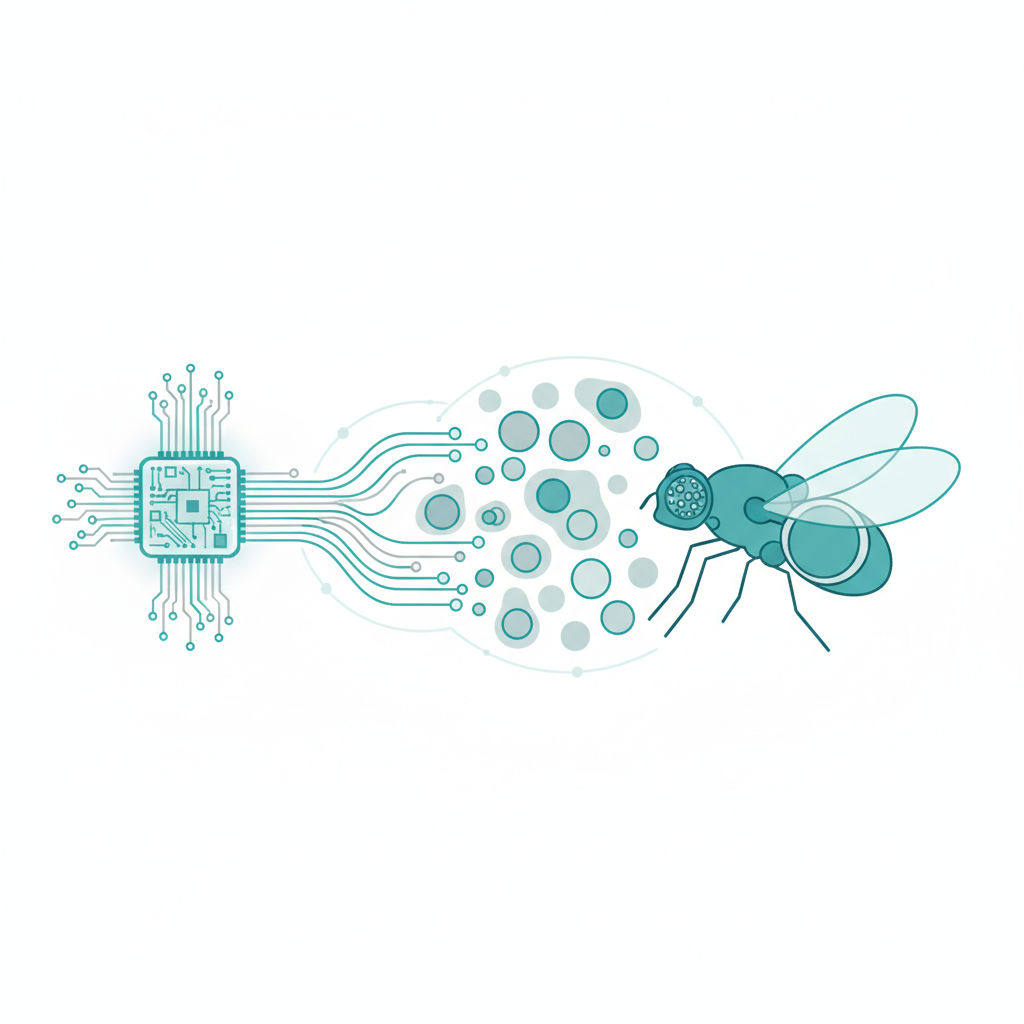
An abstract illustration combining a digital neural network with biological cellular structures, connecting a computer chip to a fruit fly, minimalist style on white background, teal and soft grey colors
Made byBobr AI

Why MIS Matters?

Decentralization & Autonomy

In real-world systems like Wi-Fi networks and sensor arrays, there is no central 'boss'. MIS allows systems to organize themselves and choose leaders automatically without a central controller.

Avoiding Interference

MIS ensures critical units (like routers) are spaced out. This prevents signal conflicts, noise, and interference while ensuring every node is still covered by a leader.

Isometric illustration of three wireless routers emitting signal waves that do not overlap, creating a clean coverage pattern without interference, clean vector style
Made byBobr AI

Informal Problem Definition

We consider a distributed system where processors solve a task jointly. Each processor communicates only with its immediate neighbors and has zero global knowledge of the network topology.

THE GOAL: Select a subset of processors such that no two neighbors are selected, but every processor is either selected or next to one that is.

3D render of a network of glowing blue cubes connected by lines in a dark space, representing a distributed computer network, technology monitoring style
Made byBobr AI

Formal Definition: MIS

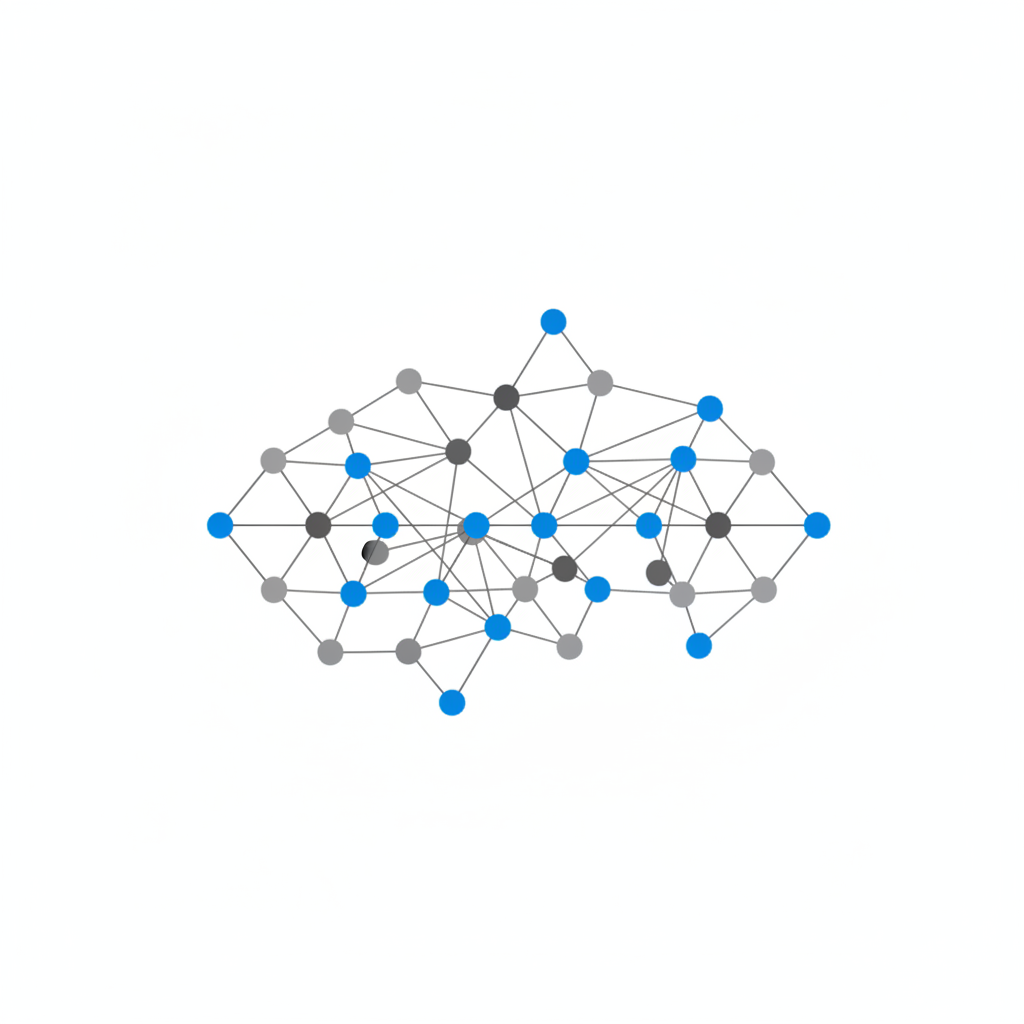
1. Independence

No two nodes in the selected set A are directly connected. We want leaders to be spaced out.

2. Maximality

Every node in the network is either in set A itself, or directly connected to a node in A. No one is left uncovered.

Diagram of a graph network with some nodes highlighted blue (selected) and others grey, showing that no blue nodes touch each other, scientific diagram style on white background
Made byBobr AI

The Limitation of "Greedy" Algorithms

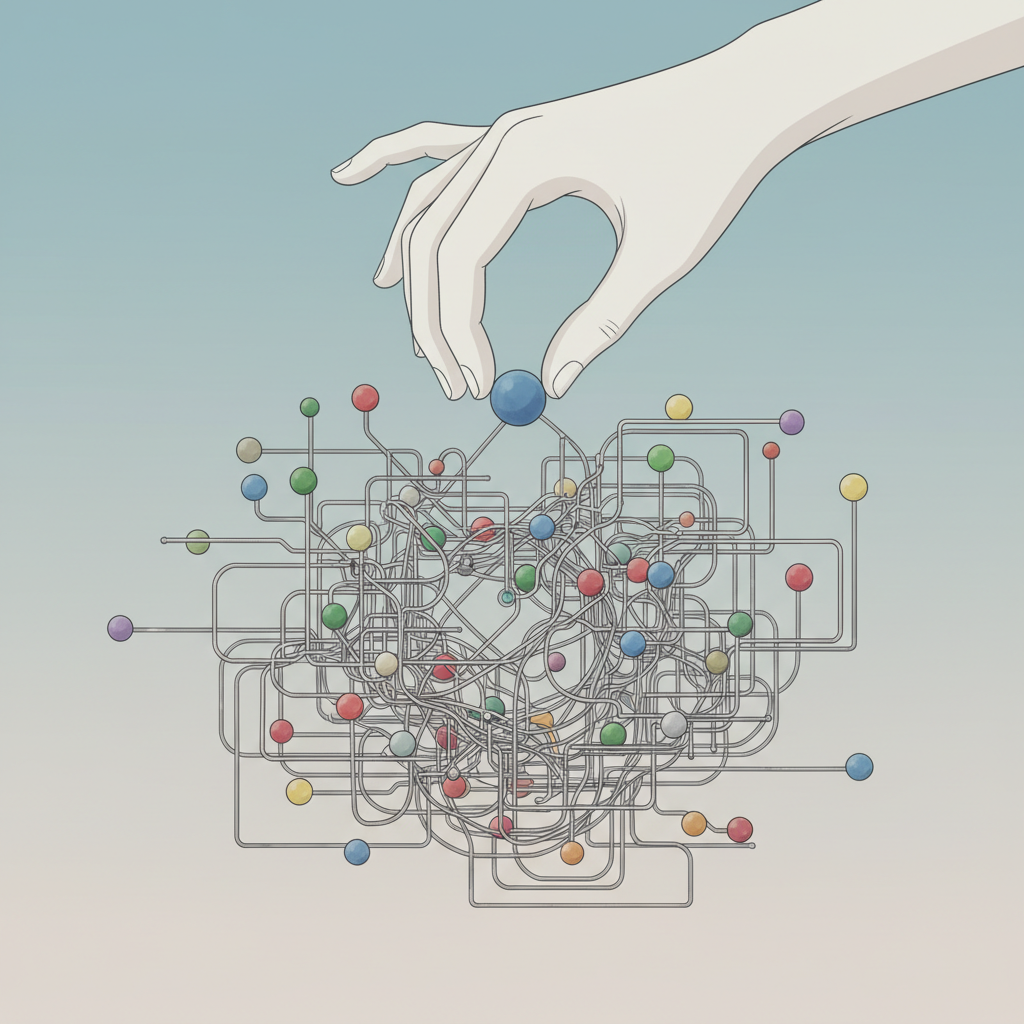
Pick a node -> Add to Set A Remove its neighbors Repeat until graph is empty

CRITICAL FLAW: This approach is SEQUENTIAL. It requires a central coordinator to pick nodes one by one. In a massive distributed network, we need Parallelism.

An illustration of a giant hand picking marbles one by one from a complex tangle of wires, symbolizing a slow manual process, minimalism
Made byBobr AI

The Symmetry Breaking Challenge

The Scenario

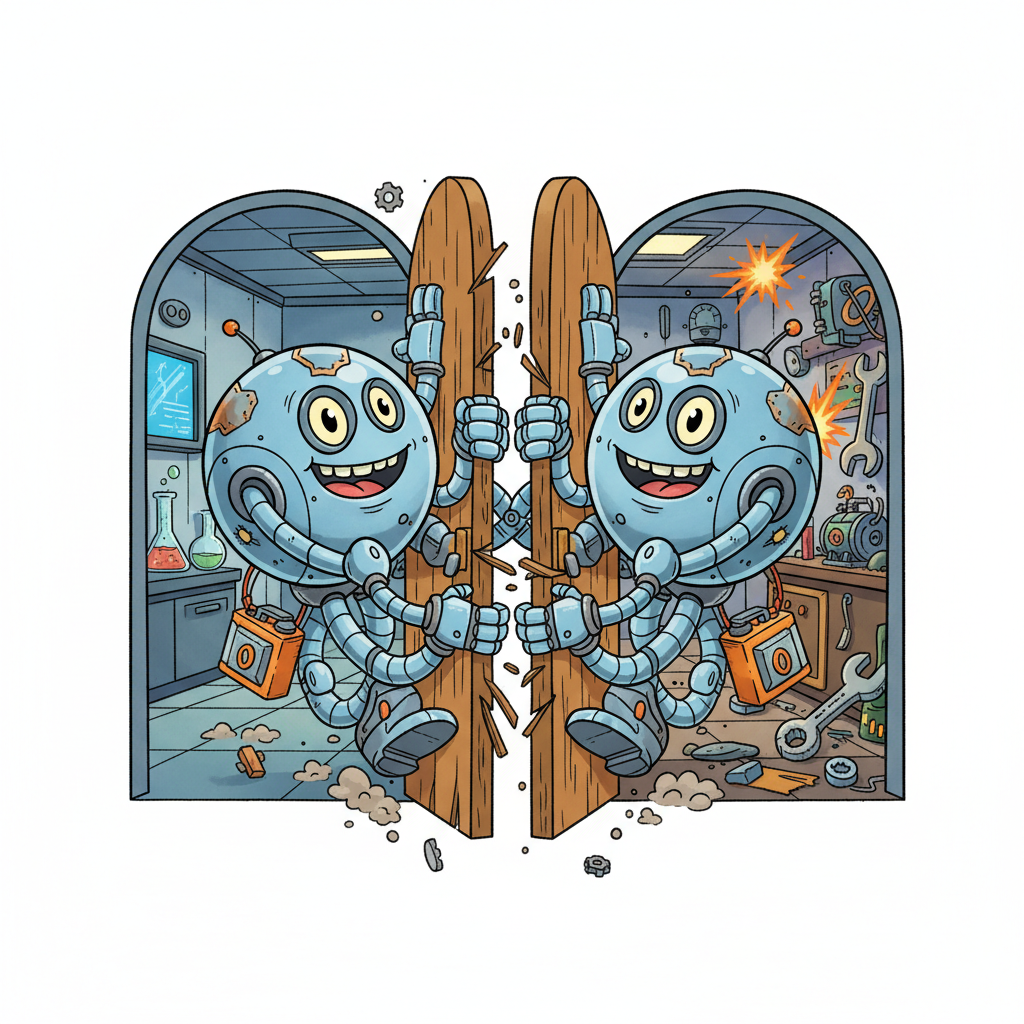
Imagine all nodes are identical. They run the same code and wake up at the same time. If Node A says 'I'll join', Node B does too.

Result: Deterministic decisions lead to DEADLOCKS.

Cartoon illustration of two identical robots trying to walk through a single door at the exact same time and getting stuck, funny style, symmetry concept
Made byBobr AI

The Biological Inspiration

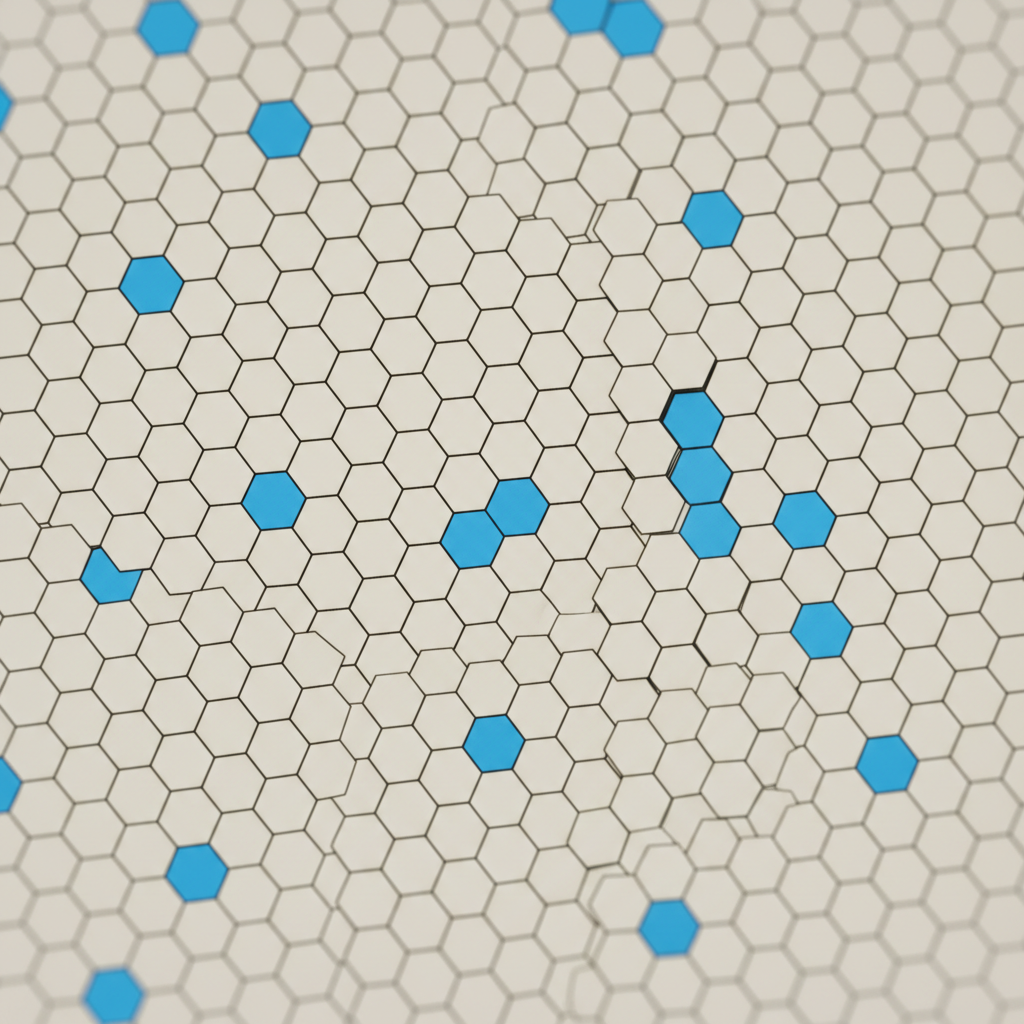
During the development of the fruit fly, groups of identical cells must decide which will become sensory organs (SOPs).

The Dilemma: Any cell is capable of being a leader, but nature dictates that neighboring cells cannot both be selected. A perfect pattern must emerge without a central brain controlling the cells.

Microscopic view of a hexagonal grid of cells where some are highlighted blue in a spaced-out pattern, clean scientific illustration, medical textbook style
Made byBobr AI

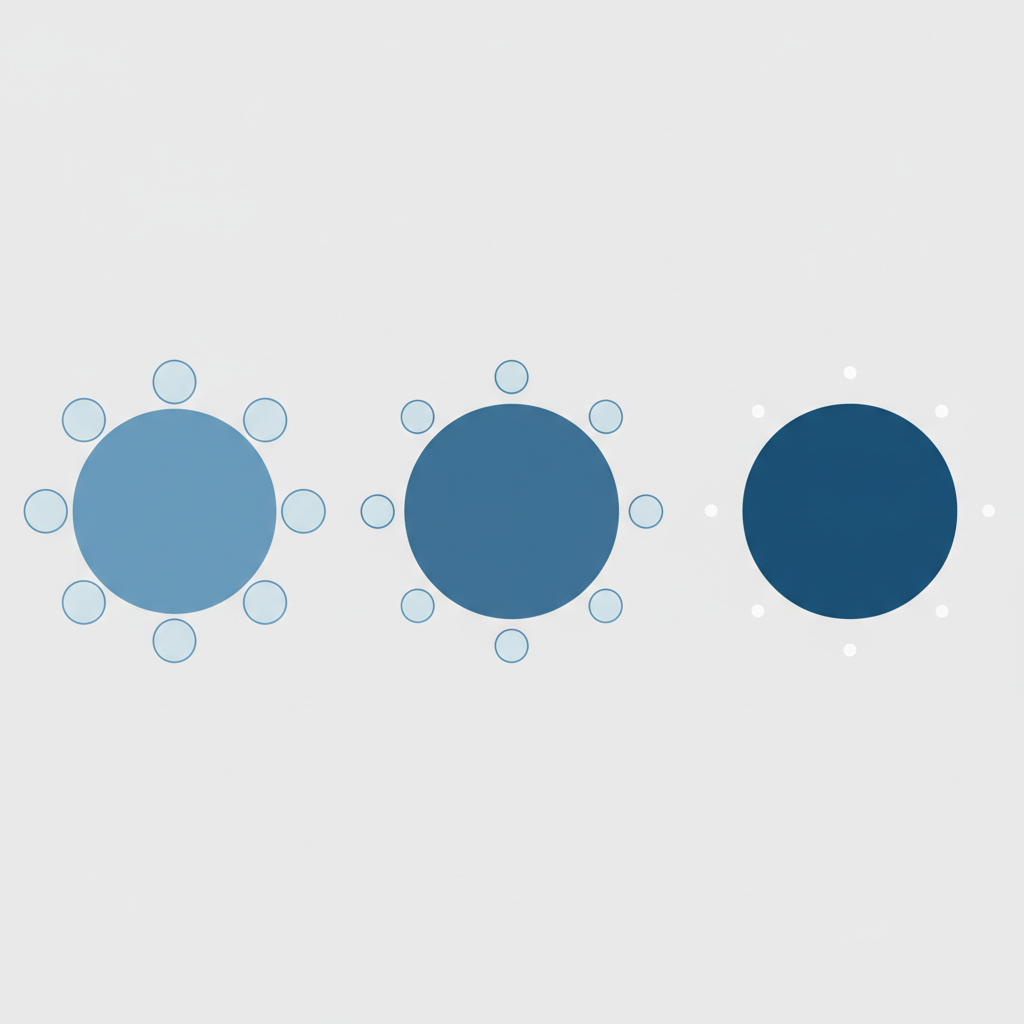
How Nature Breaks Symmetry

1. Uniform Start: All cells start in the same state.
2. Random Differences: Tiny random molecular fluctuations occur.
3. Inhibition: A cell slightly ahead inhibits its neighbors.
4. Amplification: Leader gets stronger, neighbors get quieter. Result: Single SOP selected.
A sequence of 3 circles growing in size while surrounding circles shrink, illustrating the concept of 'Lateral Inhibition' in biology, minimal vector style
Made byBobr AI

Translation: From Biology to Code

  • Nodes = Cells
  • Probabilistic Logic creates the 'Random Molecular Differences'
  • Message Passing handles the 'Lateral Inhibition'

Key Takeaway: We replace deterministic rules with probabilistic ones to mimic nature's noise.

Double helix DNA strand merging into computer binary code (0s and 1s), conceptual illustration of bioinformatics, cyan, blue and white colors
Made byBobr AI

Key Insight: The Rate Change

Classical algorithms assume nodes know their neighbor count (degree). Biology assumes ignorance. By exponentially increasing the probability of broadcasting over time, we avoid collisions early on.

Chart
Made byBobr AI

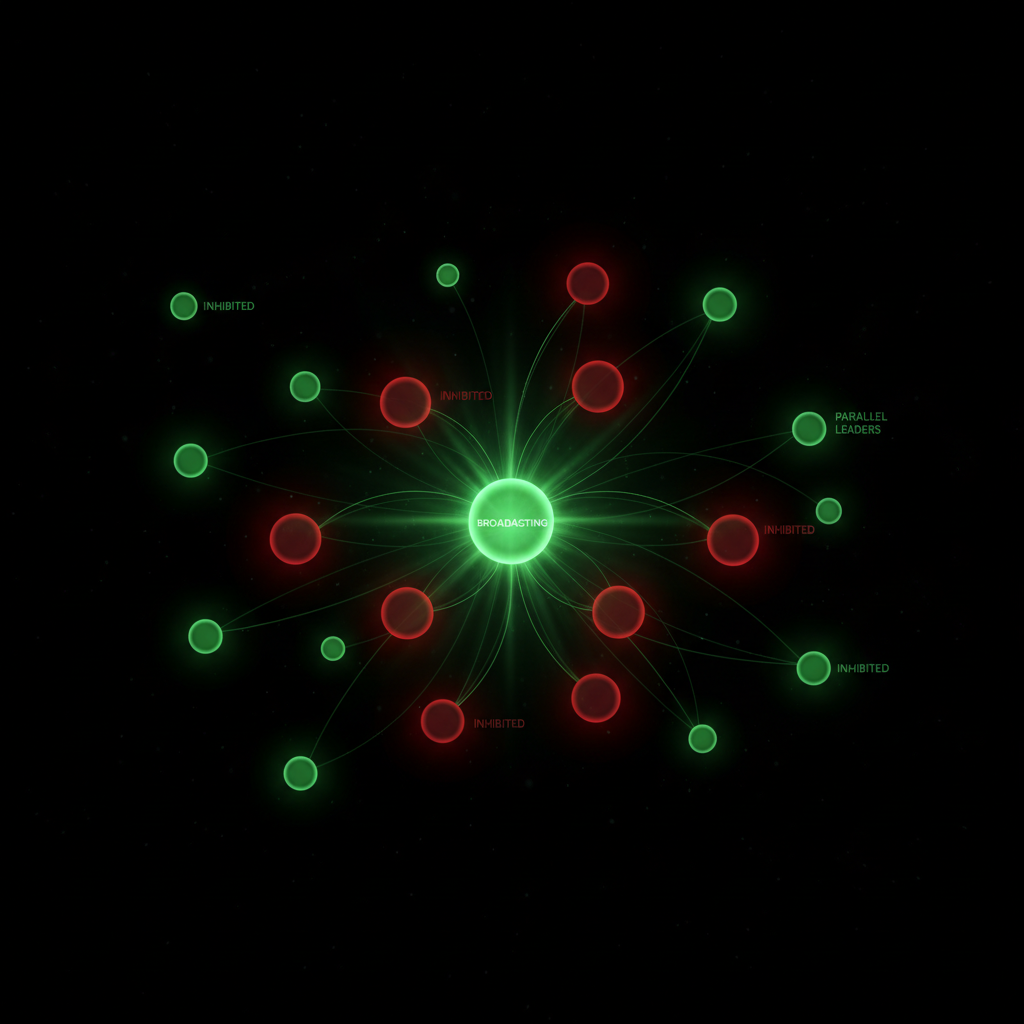
Algorithm in Action

1. BROADCAST

A node wakes up based on its probability and signals 'BEEP!'

2. INHIBIT

Neighbors hear the beep and must stay quiet (drop out of contention).

3. PARALLELISM

Distant nodes can become leaders simultaneously. This allows the system to scale massively.

Network diagram on dark background: A central green node glowing brightly (broadcasting), immediately connected nodes turned slightly red (inhibited), and far away nodes also glowing green (parallel leaders).
Made byBobr AI
Bobr AI

DESIGNER-MADE
PRESENTATION,
GENERATED FROM
YOUR PROMPT

Create your own professional slide deck with real images, data charts, and unique design in under a minute.

Generate For Free

Maximal Independent Set: A Bio-Inspired Distributed Algorithm

Learn how fruit fly biology inspires solutions for Maximal Independent Set (MIS) in distributed systems to avoid interference and manage decentralization.

Maximal Independent Set

A Biological Solution to a Distributed Computing Problem

Yaman Dahle, Leen Hassan

Why MIS Matters?

Decentralization & Autonomy

In real-world systems like Wi-Fi networks and sensor arrays, there is no central 'boss'. MIS allows systems to organize themselves and choose leaders automatically without a central controller.

Avoiding Interference

MIS ensures critical units (like routers) are spaced out. This prevents signal conflicts, noise, and interference while ensuring every node is still covered by a leader.

Informal Problem Definition

We consider a distributed system where processors solve a task jointly. Each processor communicates only with its immediate neighbors and has zero global knowledge of the network topology.

THE GOAL: Select a subset of processors such that no two neighbors are selected, but every processor is either selected or next to one that is.

Formal Definition: MIS

1. Independence

No two nodes in the selected set A are directly connected. We want leaders to be spaced out.

2. Maximality

Every node in the network is either in set A itself, or directly connected to a node in A. No one is left uncovered.

The Limitation of "Greedy" Algorithms

Pick a node -> Add to Set A Remove its neighbors Repeat until graph is empty

CRITICAL FLAW: This approach is SEQUENTIAL. It requires a central coordinator to pick nodes one by one. In a massive distributed network, we need Parallelism.

The Symmetry Breaking Challenge

The Scenario

Imagine all nodes are identical. They run the same code and wake up at the same time. If Node A says 'I'll join', Node B does too.

Result: Deterministic decisions lead to DEADLOCKS.

The Biological Inspiration

During the development of the fruit fly, groups of identical cells must decide which will become sensory organs (SOPs).

The Dilemma: Any cell is capable of being a leader, but nature dictates that neighboring cells cannot both be selected. A perfect pattern must emerge without a central brain controlling the cells.

How Nature Breaks Symmetry

1. Uniform Start: All cells start in the same state.

2. Random Differences: Tiny random molecular fluctuations occur.

3. Inhibition: A cell slightly ahead inhibits its neighbors.

4. Amplification: Leader gets stronger, neighbors get quieter. Result: Single SOP selected.

Translation: From Biology to Code

Nodes = Cells

Probabilistic Logic creates the 'Random Molecular Differences'

Message Passing handles the 'Lateral Inhibition'

Key Takeaway: We replace deterministic rules with probabilistic ones to mimic nature's noise.

Key Insight: The Rate Change

Classical algorithms assume nodes know their neighbor count (degree). Biology assumes ignorance. By exponentially increasing the probability of broadcasting over time, we avoid collisions early on.

Algorithm in Action

1. BROADCAST

A node wakes up based on its probability and signals 'BEEP!'

2. INHIBIT

Neighbors hear the beep and must stay quiet (drop out of contention).

3. PARALLELISM

Distant nodes can become leaders simultaneously. This allows the system to scale massively.

  • maximal-independent-set
  • distributed-computing
  • algorithm
  • bio-inspired
  • symmetry-breaking
  • parallel-computing
  • network-topology