




Understanding Magnetism: Poles, Fields, and Applications
Learn how magnets work, from magnetic poles and field lines to real-world uses in compasses, electromagnets, and household appliances.
Understanding Magnetism
From Basic Poles to Daily Applications
Physics Holiday Homework | 2026
How Magnets Work: The Poles
Every magnet, regardless of its shape, has two distinct ends called poles: the North Pole (N) and the South Pole (S). You can never isolate a single pole; if you break a magnet in half, you simply create two smaller magnets, each with its own North and South pole. These poles are the regions where the magnetic force is strongest.
Magnetic Field Lines
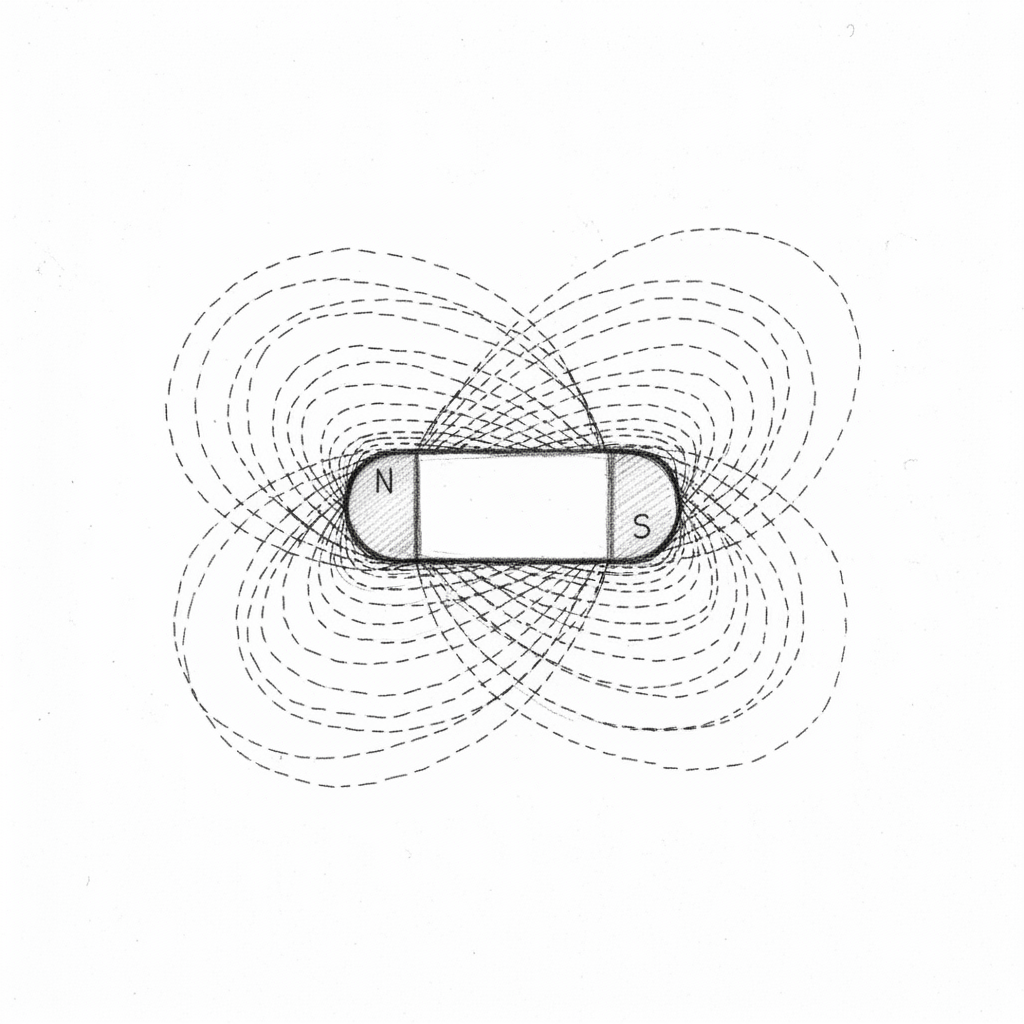
Magnetic forces operate closer to the magnet through invisible pathways called field lines. These lines always exit from the North pole and curve around to enter the South pole. The density of these lines indicates the strength of the magnetic field—the closer the lines, the stronger the force.
Attraction and Repulsion
The fundamental rule of magnetism is: Like poles repel, opposite poles attract.
North + North = Repulsion (Push apart).
South + South = Repulsion (Push apart).
North + South = Attraction (Pull together).
Device: The Compass
The Earth itself acts like a giant magnet with a magnetic North and South. A compass uses a lightweight magnetized needle that is free to rotate. Because opposite poles attract, the needle's north pole is attracted to the Earth's magnetic North pole, allowing for accurate navigation when hiking or traveling.
Device: Simple Electromagnet
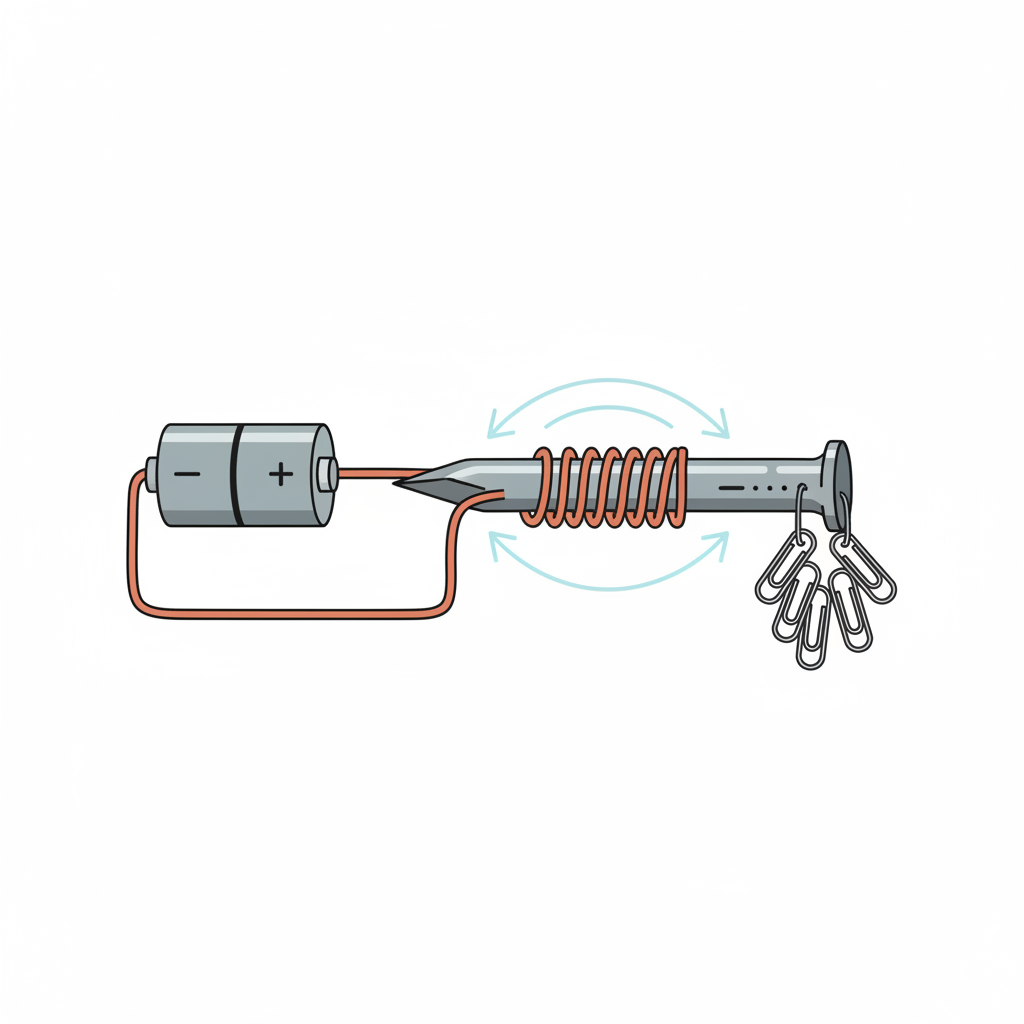
Unlike permanent magnets, an electromagnet creates magnetism using electricity. By coiling copper wire around an iron nail and connecting it to a battery, a magnetic field is generated. This can pick up paper clips just like a standard magnet, but the force disappears the moment the battery is disconnected.
Reference: Permanent vs. Electromagnets
Permanent Magnets
Constant magnetic field.
Does not require a power source.
Electromagnets
Temporary: Field turns on/off with current.
Requires electricity (battery or mains).
Temporary vs. Permanent Magnetisation
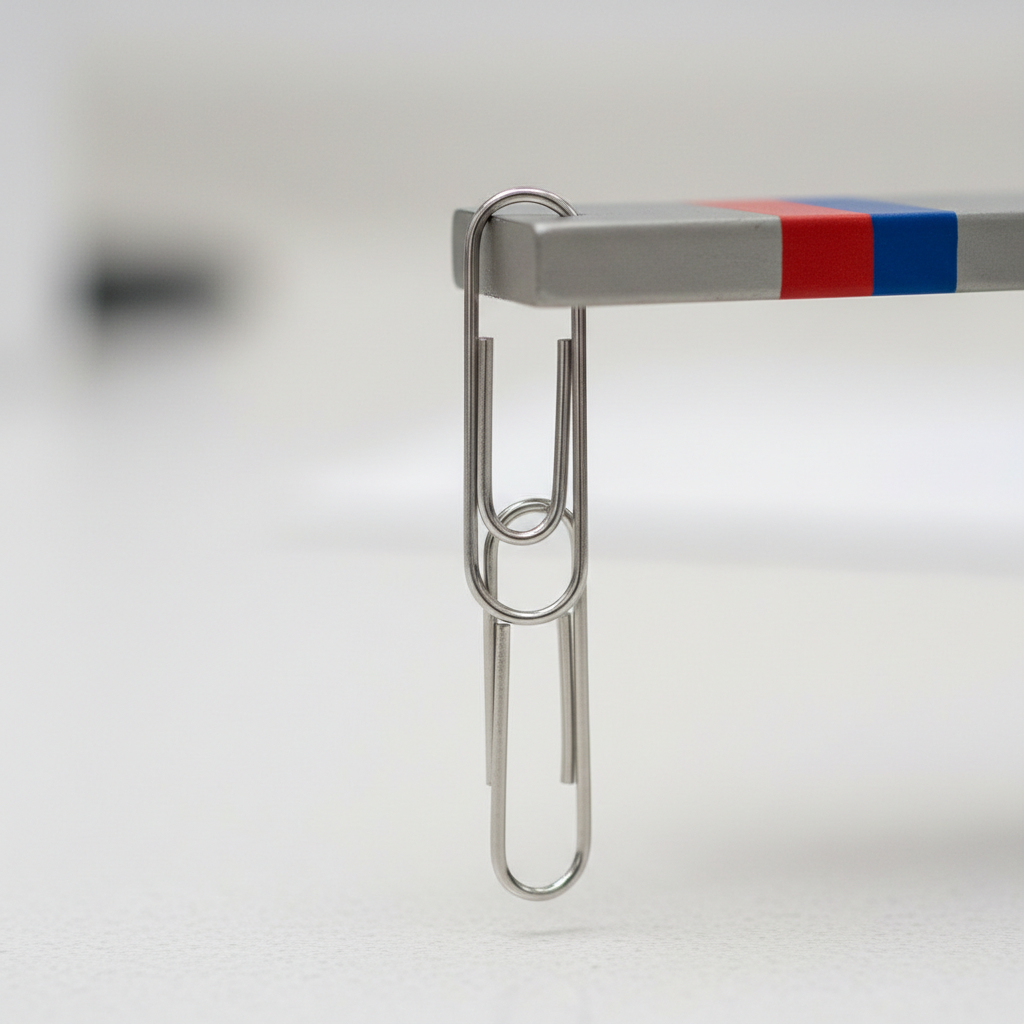
Materials like 'soft iron' are easily magnetized but lose their magnetism quickly (Temporary). Hard steel retains magnetism for a long time (Permanent). For example, rubbing a paper clip with a magnet makes it temporarily magnetic, allowing it to pick up another clip for a short while.
Magnetism in Daily Life
Household: Fridge doors use magnetic strips to seal tightly, keeping food fresh.
Audio: Speakers and headphones use magnets vibrating against coils to produce sound.
Computing: Hard drives use magnetic patterns to store data.
Safety: Security doors and electric bells rely on magnetic circuits.
Real World Power: Industrial Electromagnets
- physics
- magnetism
- electromagnets
- science-education
- magnetic-field
- school-homework