



Argument Against Lowering Australia's Voting Age to 16
Explore the debate on Australia's voting age. This presentation covers brain development, peer influence, and civic knowledge among teenagers.
Should the Voting Age Be Lowered to 16?
A Persuasive Argument Against Lowering the Voting Age in Australia
Australian Democracy & Civic Rights
INTRODUCTION
Voting: Small Act, Big Impact
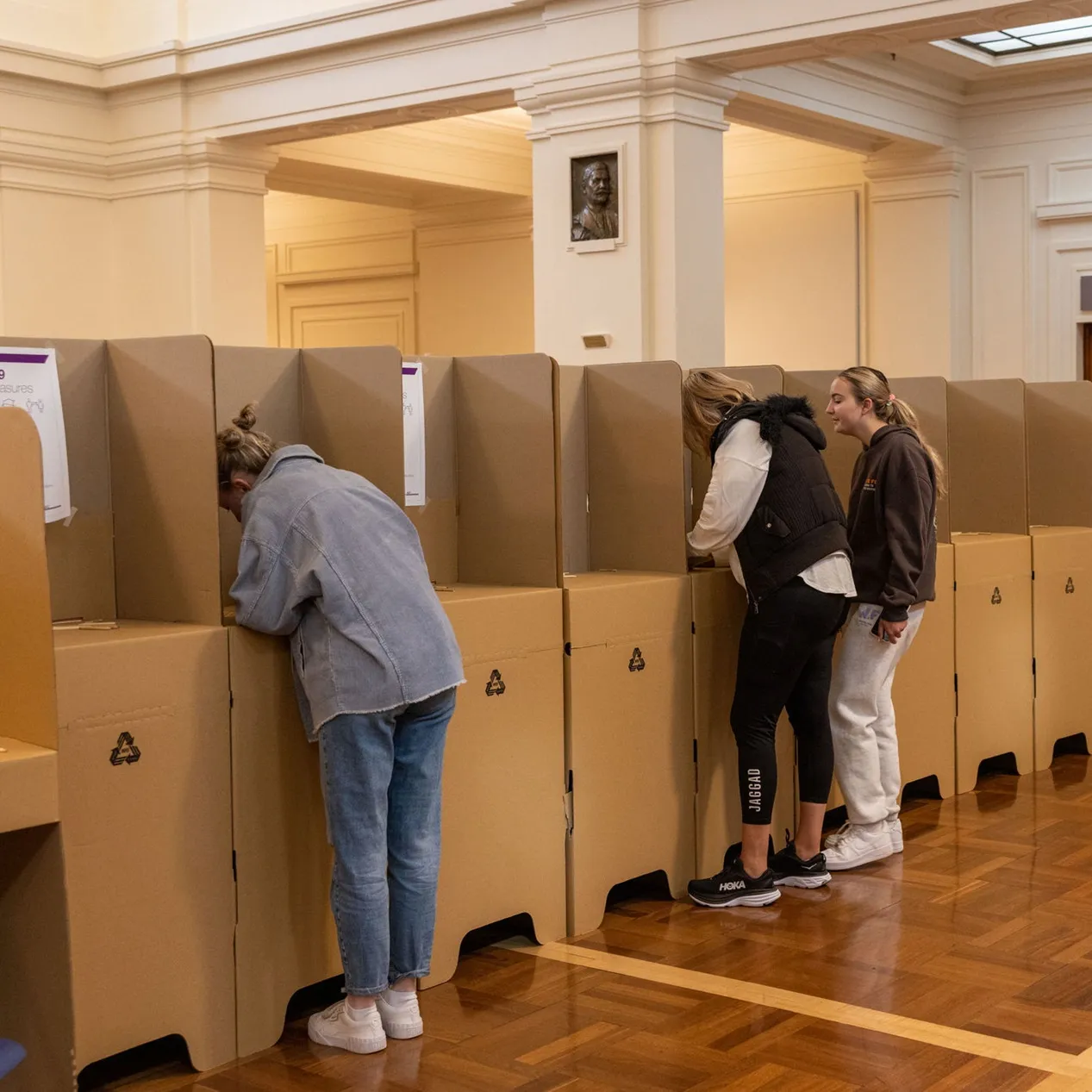
Have you ever voted for something — a class leader or a school choice?
In a democracy, voting is one of the most powerful tools citizens have.
Citizens elect their leaders and shape the direction of their country.
Should Australia lower the voting age from 18 to 16?
Argument 1
Teen Brains Are Still Developing
Voting requires critical thinking, planning, and weighing long-term consequences.
The prefrontal cortex is not fully developed until the mid-twenties. (Australian Law Reform Commission)
Teens rely more on emotion than rational reasoning when making decisions.
Peer Influence Is a Major Factor
Young people are more susceptible to peer pressure than adults. (Journal of Adolescence)
Political views can be shaped by trends, social media, or friends — not independent thought.
The Science Behind the Decision
mid-20s
Age when the prefrontal cortex is fully developed — the brain region responsible for rational decision-making
Higher Peer Susceptibility
Teens are significantly more influenced by peer pressure than adults when forming political opinions — Journal of Adolescence
Many teens may not yet have the cognitive maturity needed to make sound decisions in national elections.
ARGUMENT 2
Experience and Knowledge Matter
Limited Life Experience
Many 16-year-olds are still financially dependent on their families.
Most have not faced real-world responsibilities: paying rent, full-time work, or taxes.
Australian Bureau of Statistics: most 16–18 year olds still rely on family support.
Without these experiences, it is hard to understand how government decisions affect daily life.
Low Civic Knowledge
National Assessment Program Civics and Citizenship 2024: only 28% of Year 10 students reached the proficient level in civics.
Many young people don't fully understand how government and elections work.
The Numbers Speak for Themselves
28%
of Year 10 students reached a proficient level in civics knowledge — National Assessment Program 2024
Majority
of 16–18 year olds still financially dependent on family support — Australian Bureau of Statistics
0 Taxes. 0 Rent. 0 Bills.
Most teens have no direct experience with the financial impacts of government policy
Lowering the voting age risks reducing the quality of democratic decision-making.
CONCLUSION
Australia Should Keep the Voting Age at 18
Teen brain development is incomplete — rational decision-making matures in the mid-twenties.
Most 16-year-olds lack the life experience and civic knowledge required for informed voting.
Lowering the voting age could undermine the quality of our democracy.
Should such a significant responsibility be given to those who may not yet fully understand its consequences?
Australia's democracy depends on informed, experienced, and ready voters.
- voting-age
- australian-politics
- civics
- democracy
- brain-development
- public-policy
- election-law