



KAWACH: Child Labour-Free Districts Roadmap in Uttar Pradesh
Discover the 24-month roadmap for eliminating child labour in UP’s aspirational districts through prevention, convergence, and rehabilitation strategies.
KAWACH: Operationalizing Child Labour–Free Aspirational Districts
A 24-Month Implementation Roadmap for 5 Districts in Uttar Pradesh
British Asian India Foundation | UP Labour Department | Strengthening Systems. Protecting Childhoods.
The Goal & Mandate
<strong style='color:#1e3a8a;'>Vision</strong><br>Aligning with the Hon’ble Chief Minister’s vision of a Child Labour–Free Uttar Pradesh by 2027.<br><br><strong style='color:#1e3a8a;'>Core Objective</strong><br>Transition from “Enforcement Only” to an integrated model of:<br>Prevention + Convergence + Rehabilitation<br><br><strong style='color:#1e3a8a;'>Geographic Focus</strong><br>• Bahraich<br>• Balrampur<br>• Chandauli<br>• Shravasti<br>• Siddharthanagar
Implementation Architecture
<strong>State Level:</strong> Project Steering Committee (UP Labour Department + British Asian India Foundation).
<strong>District Level:</strong> One Technical Personnel (TP) embedded directly within the Labour Department.
<strong>The Bridge:</strong> TP links Labour Enforcement Officers (LEOs) with Panchayats and frontline institutions.
<strong>Block / Panchayat Level:</strong> Child Welfare & Protection Committees (CWPCs) and School Management Committees (SMCs).
Phase 1: The “Scan” (Months 1–4)
<strong>Objective:</strong> Identify high-risk geographies and root causes.<br><br><strong>Key Activities:</strong><br>• GIS-based hotspot mapping<br>• Participatory Rural Appraisal (PRA)<br>• Identification of brick kilns, looms, and informal work clusters.<br><br><strong>Outputs:</strong> District-wise Child Labour Vulnerability Maps.<br><br><strong>System Strengthening:</strong> Joint orientation for Labour, Police, and Education Depts.
Phase 2: Activating the “Frontline” (Months 5–12)
<strong>Objective</strong><br>Build village-level vigilance and prevention capacity.<br><br><strong>The Panchayat Diary</strong><br>A mandatory administrative record to track vulnerable households and children.<br><br><strong>Field Activities</strong><br>• Door-to-door household surveys<br>• Transect Walks during school hours to identify out-of-school children<br>• Training of CWPCs and SMCs
Phase 3: The Convergence Engine
<strong>Objective:</strong> Address economic and social drivers through safety net schemes.
<strong>Education:</strong> Immediate enrolment under Sharda Programme (Out-of-School Children).
<strong>Livelihood:</strong> Priority MGNREGA job cards for at-risk families.
<strong>Health:</strong> Ayushman Bharat card camps in identified hotspots.
<strong>Social Protection:</strong> Mission Vatsalya sponsorship for orphans and vulnerable children.
Phase 4: Monitoring & Sustainability
<strong>Timeline: Months 13–24</strong><br><br><strong>Digital Monitoring</strong><br>Real-time dashboard tracking: Rescue → Rehabilitation → 6-month follow-up.<br><br><strong>Quality Assurance</strong><br>School retention checks and scheme benefit verification.<br><br><strong>Exit Strategy</strong><br>Transfer of Panchayat Diary maintenance to Gram Panchayat Vikas Adhikari (VDO).
Role of the Technical Personnel (TP)
<b>District Coordination:</b> Nodal coordination with DM and departments.
<b>Field Mapping:</b> GIS mapping and Participatory Rural Appraisal.
<b>Capacity Building:</b> Training CWPCs, SMCs, and Panchayats.
<b>Case Support:</b> Identification, referral, and follow-up.
<b>Convergence:</b> Linking families to government schemes.
The TP strengthens existing systems; does not replace government staff.
Red-Flag Early Warning System
<strong>Objective</strong><br>Prevent repeat and sibling-level child labour.<br><br><strong>Strategy</strong><br>Train Anganwadi Workers (AWWs) and ASHAs to report siblings of identified child labourers.<br><br><strong>Rationale</strong><br>Families with one working child are significantly more likely to send siblings to work.
Child-to-Child Monitoring (Bal Manch)
<strong>Objective</strong><br>Use peer intelligence to identify dropouts early.<br><br><strong>Action</strong><br>Formation of Children’s Parliaments in schools.<br><br><strong>Outcome</strong><br>• Early identification of absenteeism and dropouts.<br>• Community-driven prevention mechanism.
Incentivising Model Panchayats
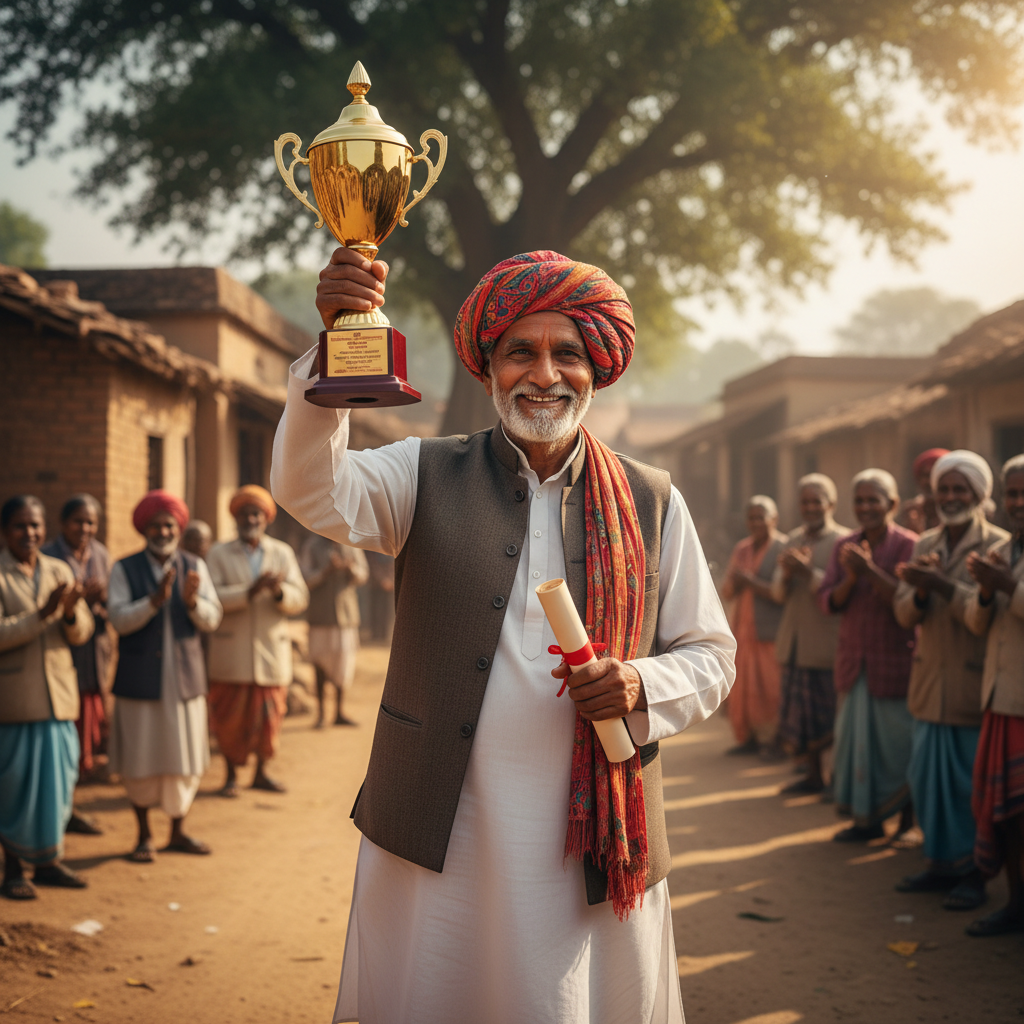
<strong>Objective</strong><br>Encourage prevention through positive competition.<br><br><strong>Strategy</strong><br>“Child-Friendly Panchayat Award” at the district level.<br><br><strong>Impact</strong><br>• Motivates Panchayat leadership<br>• Promotes ownership beyond enforcement
Strategies for Success
<b>Political & Administrative Leadership:</b> Quarterly review meetings chaired by the District Magistrate.
<b>Seasonal Focus:</b> Intensive vigilance during migration and harvest seasons.
<b>Documentation & Visibility:</b> High-quality case studies and photo documentation for CM-level review meetings.
Theory of Change
<div style='display:flex; algin-items:center; justify-content:space-between; width:100%; margin-top:50px;'><div style='text-align:center; flex:1;'><div style='font-size:40px; margin-bottom:10px;'>📍</div><div style='font-size:24px; font-weight:bold;'>Hotspot Mapping</div></div><div style='font-size:40px; color:#555;'>→</div><div style='text-align:center; flex:1;'><div style='font-size:40px; margin-bottom:10px;'>⚠️</div><div style='font-size:24px; font-weight:bold;'>Early Warning</div></div><div style='font-size:40px; color:#555;'>→</div><div style='text-align:center; flex:1;'><div style='font-size:40px; margin-bottom:10px;'>🛡️</div><div style='font-size:24px; font-weight:bold;'>Rescue & Referral</div></div></div><div style='display:flex; algin-items:center; justify-content:center; width:100%; margin:20px 0;'><div style='font-size:40px; color:#555; transform:rotate(90deg);'>→</div></div><div style='display:flex; algin-items:center; justify-content:space-between; width:100%;'><div style='text-align:center; flex:1;'><div style='font-size:40px; margin-bottom:10px;'>🏛️</div><div style='font-size:24px; font-weight:bold;'>Scheme Convergence</div></div><div style='font-size:40px; color:#555;'>→</div><div style='text-align:center; flex:1;'><div style='font-size:40px; margin-bottom:10px;'>🎓</div><div style='font-size:24px; font-weight:bold;'>School Retention</div></div><div style='font-size:40px; color:#555;'>→</div><div style='text-align:center; flex:1;'><div style='font-size:40px; margin-bottom:10px;'>✅</div><div style='font-size:24px; font-weight:bold; color:#16a34a;'>Child Labour–Free Panchayats</div></div></div>
- child-labour-prevention
- uttar-pradesh-development
- social-welfare
- government-roadmap
- rehabilitation-integrated-model
- aspirational-districts
- child-protection