


Made byBobr AI

Trigonometry & Geometry in Indian Temple Architecture

Explore how ancient Indian temples use trigonometry, fractals, and sacred grids like the Vastu-Purusha-Mandala to align architecture with cosmic design.

#indian-architecture#sacred-geometry#vastu-shastra#fractal-architecture#trigonometry#nagara-style#dravidian-architecture#mathematics-in-art
Watch
Pitch

Trigonometry in Indian Temple Architecture

Fractals, Sacred Grids, and the Cosmic Design

Made byBobr AI

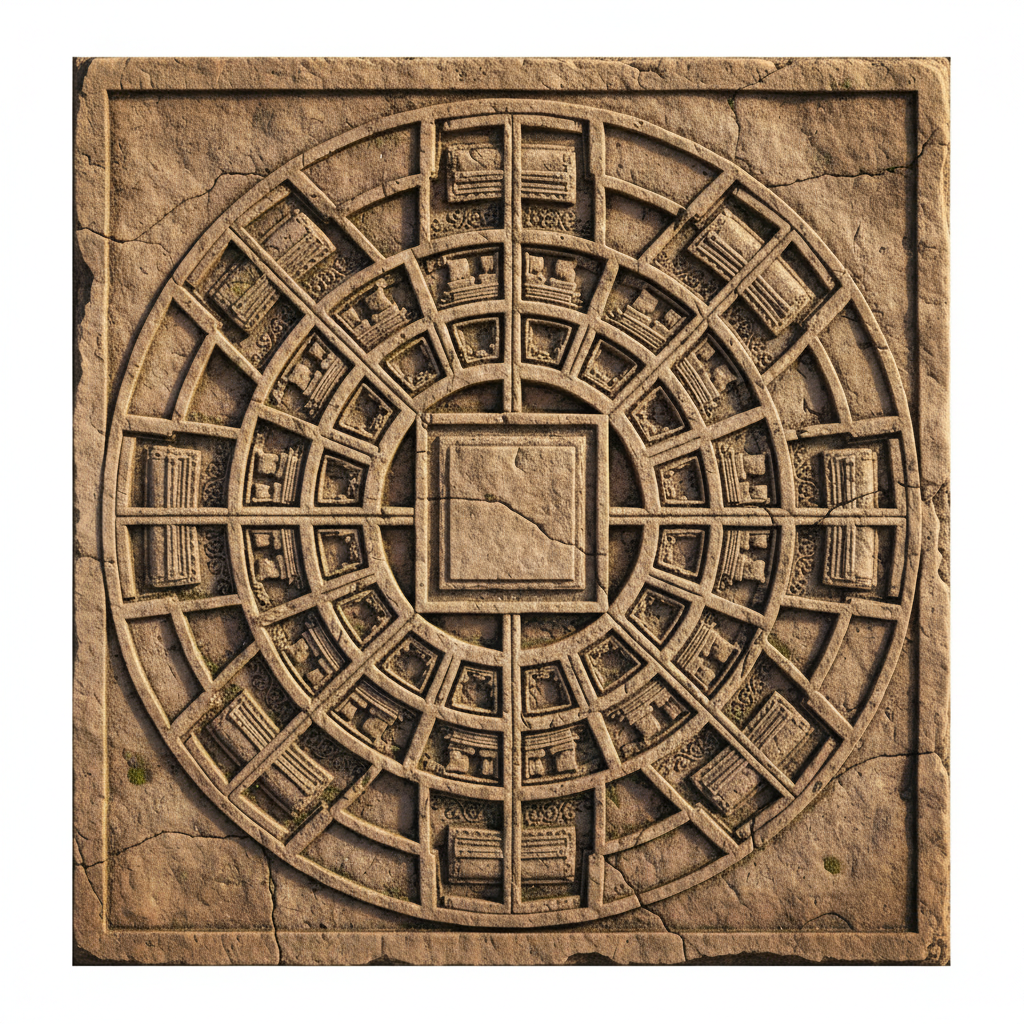
The Vastu-Purusha-Mandala

At the heart of Indian temple architecture lies the Vastu-Purusha-Mandala, a sacred geometric grid. Often laid out as an 8x8 (64-pada) or 9x9 (81-pada) square, this grid aligns the physical structure with cosmic axes. Trigonometry is essential here to calculate the precise intersections of squares and circles, determining where divine energy (the central Brahma-sthana) meets the material world throughout the temple's footprint.

Made byBobr AI

Visualizing the Grid

The square is the fundamental form, representing order and stability. While the grid is square, the superstructure imposes circular movements for circumambulation (Parikrama). The geometric relationship between the square plan and the resulting vertical curves requires complex diagonal and angular calculations.

Made byBobr AI

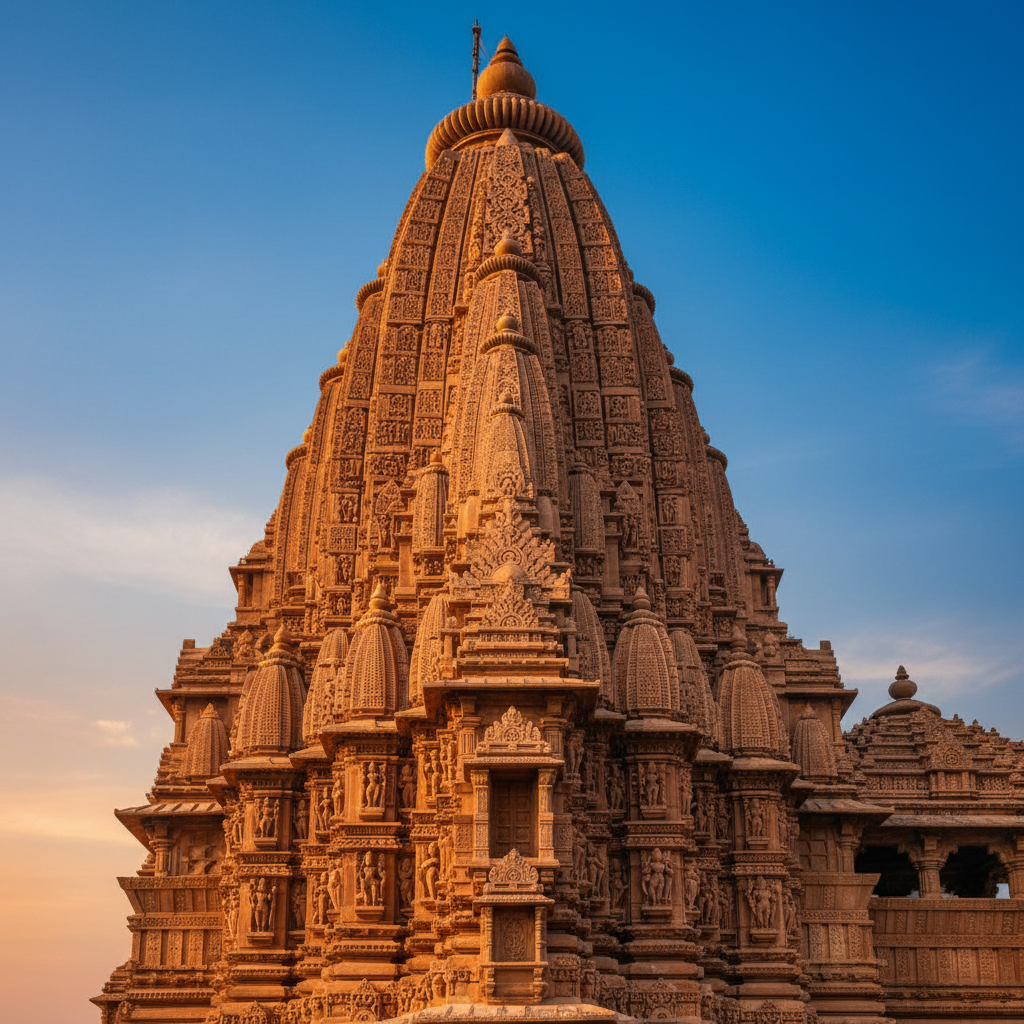
Nagara Style: The Curvilinear Shikhara

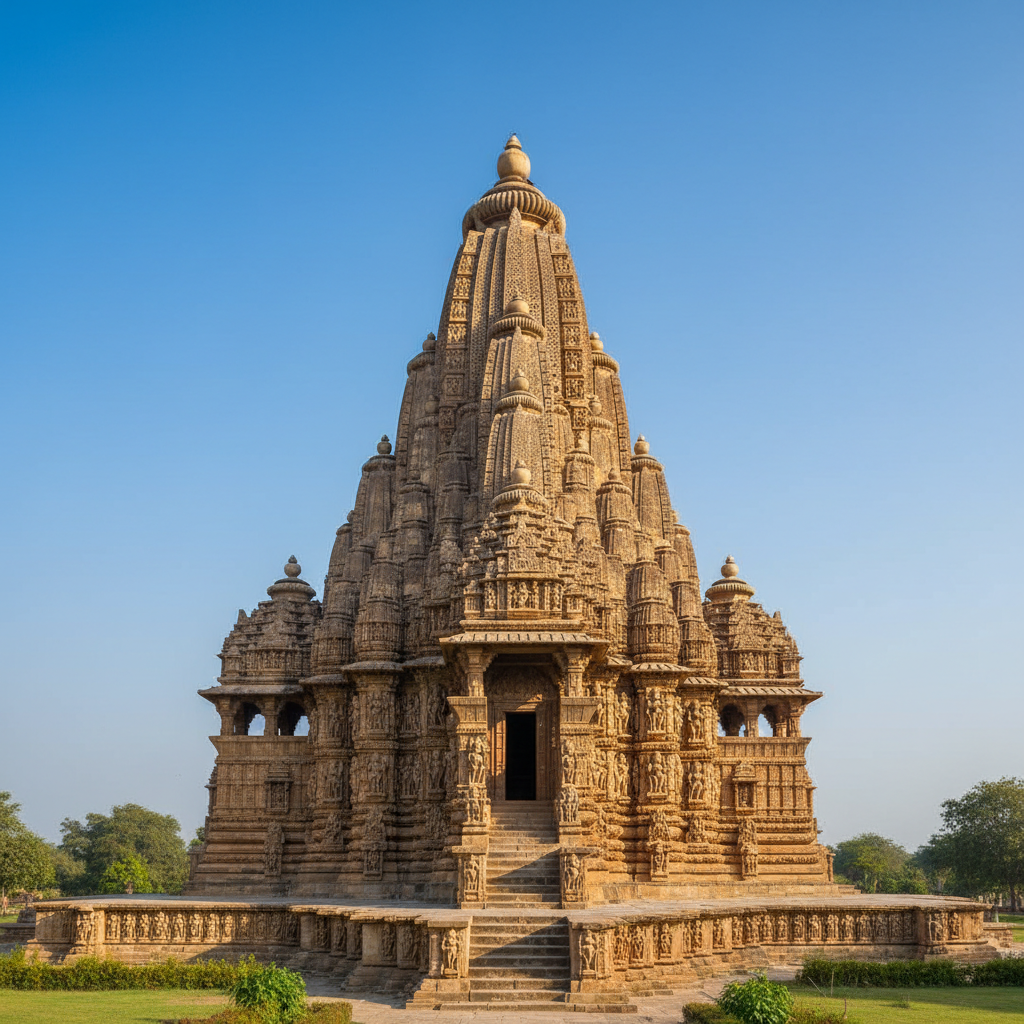
  • Nagara temples (Northern India) are defined by the Shikhara, a tower that mimics a mountain peak.
  • The curvature is not random; it follows a precise trigonometric curve (parabolic or elliptical arcs) calculated to ensure structural load distribution.
  • The plan is often cruciform with graduated projections (rathas), creating a multi-faceted perimeter derived from rotating squares.
Made byBobr AI

The Mathematical Curve of the Shikhara

Made byBobr AI

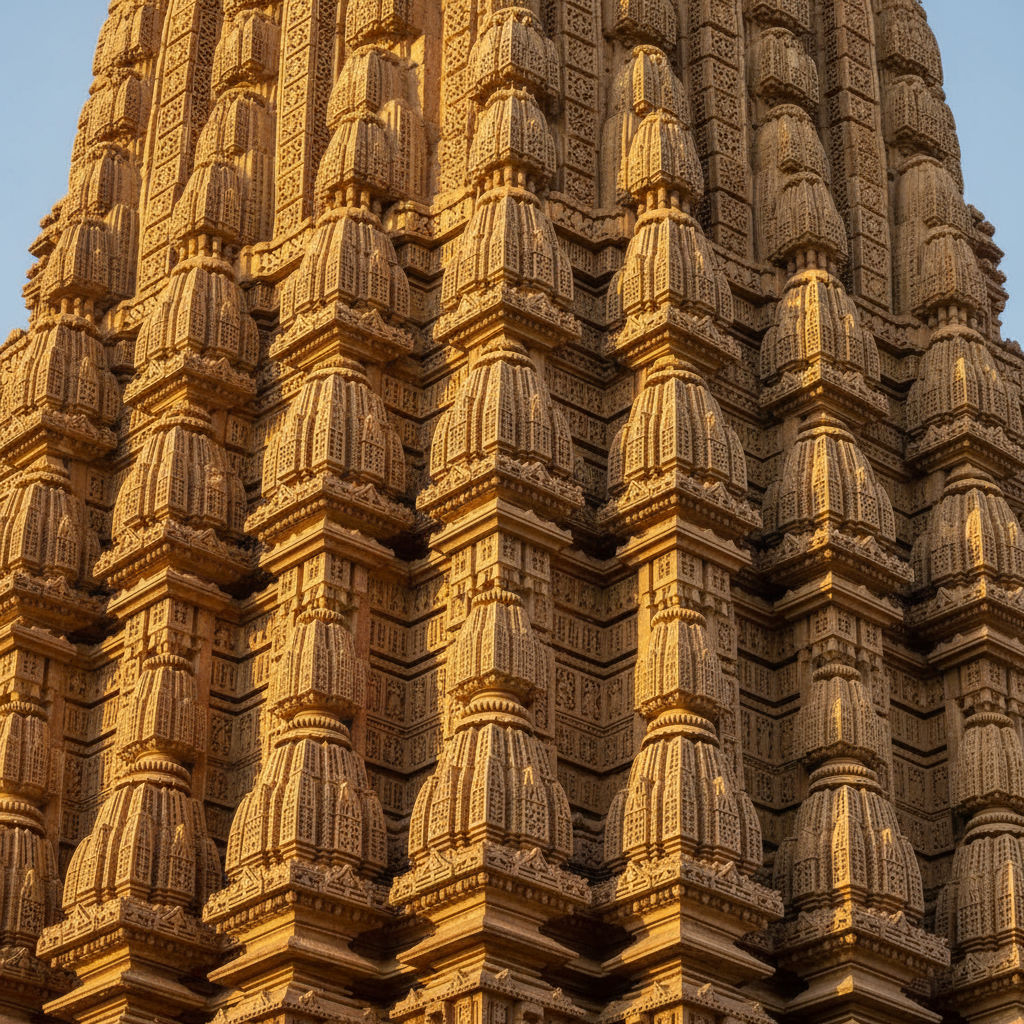
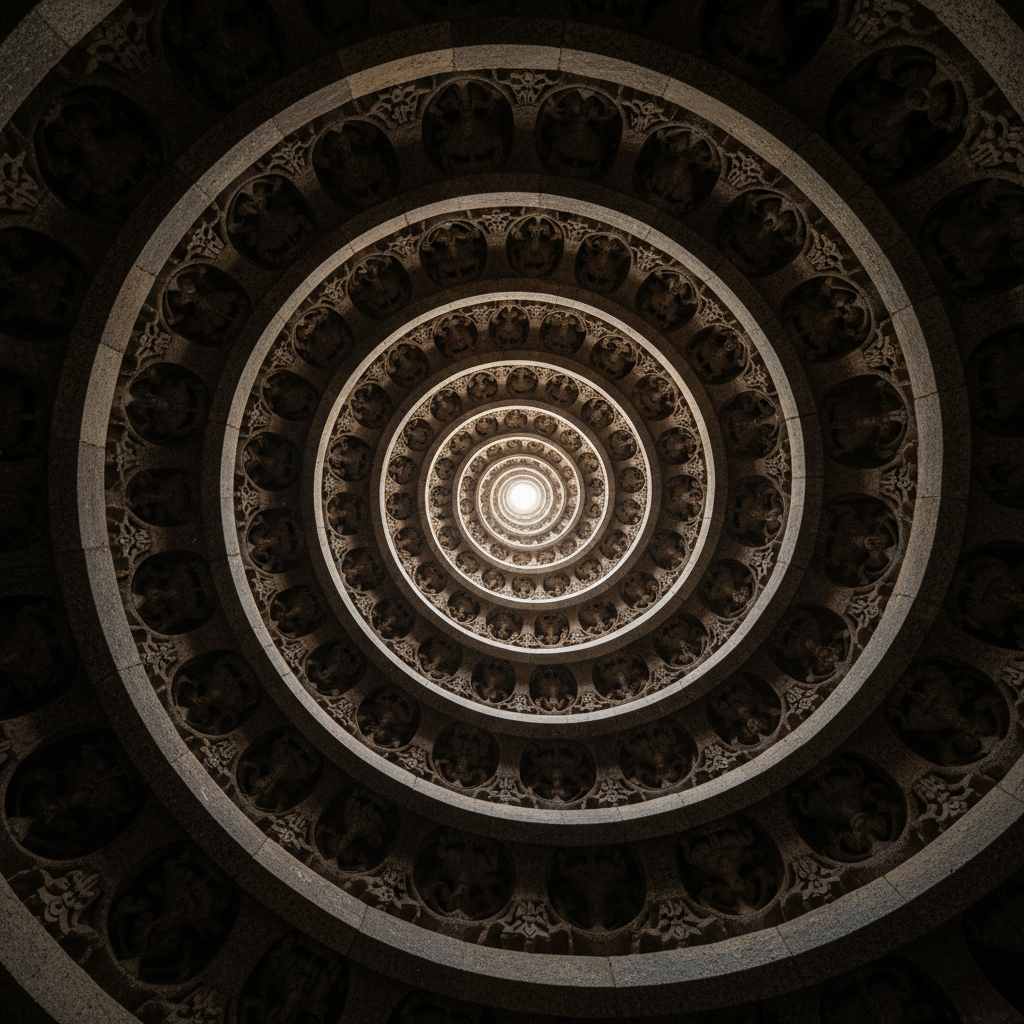
Fractal Geometry in Design

Indian temples are excellent examples of fractal architecture—structures that look the same at different scales. Smaller replicas of the main tower are repeated on the facade, creating a self-similar pattern. This relies on recursive geometric functions (specifically scaling sines and cosines) to generate infinite visual complexity from simple rules.

Made byBobr AI

Recursive Motifs: The Architecture of Infinity

Made byBobr AI

“The temple is neither a house of God nor a place of worship, but an object of realization. The Kandariya Mahadeva temple utilizes trigonometry to create lofty, mountain-like symmetry.”

- Architectural Analysis of Khajuraho

Made byBobr AI

Kandariya Mahadeva: A Masterpiece of Angular Projections

Made byBobr AI

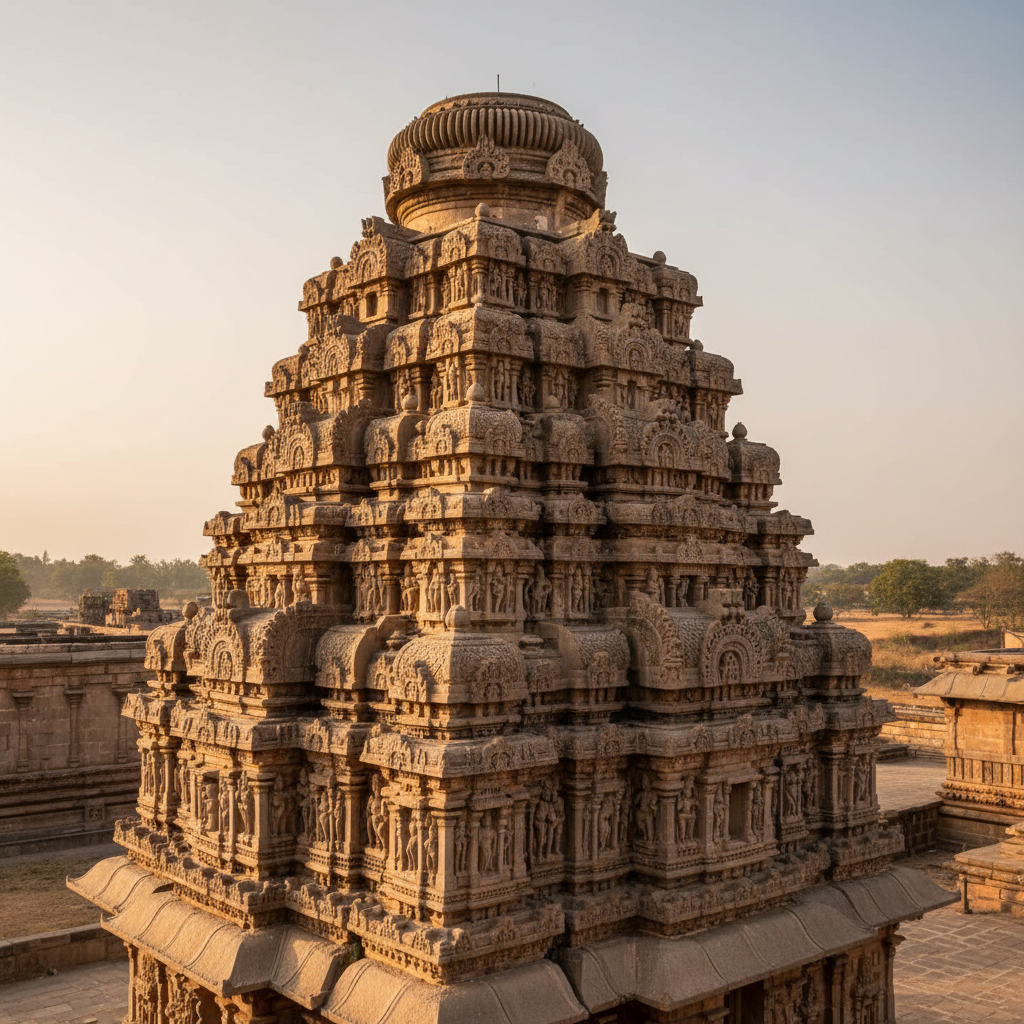
Virupaksha Temple & Triangular Domes

Located in Pattadakal, the Virupaksha Temple (8th Century) demonstrates the transition of geometry into Dravidian styles. The triangular domes and square layouts produce fractal echoes of nature. The builders used diagonal alignments to scale the structures proportionally, ensuring that as the temple expands outwards, the geometric ratios remain constant.

Made byBobr AI

Pattadakal's Geometric Splendor

Made byBobr AI

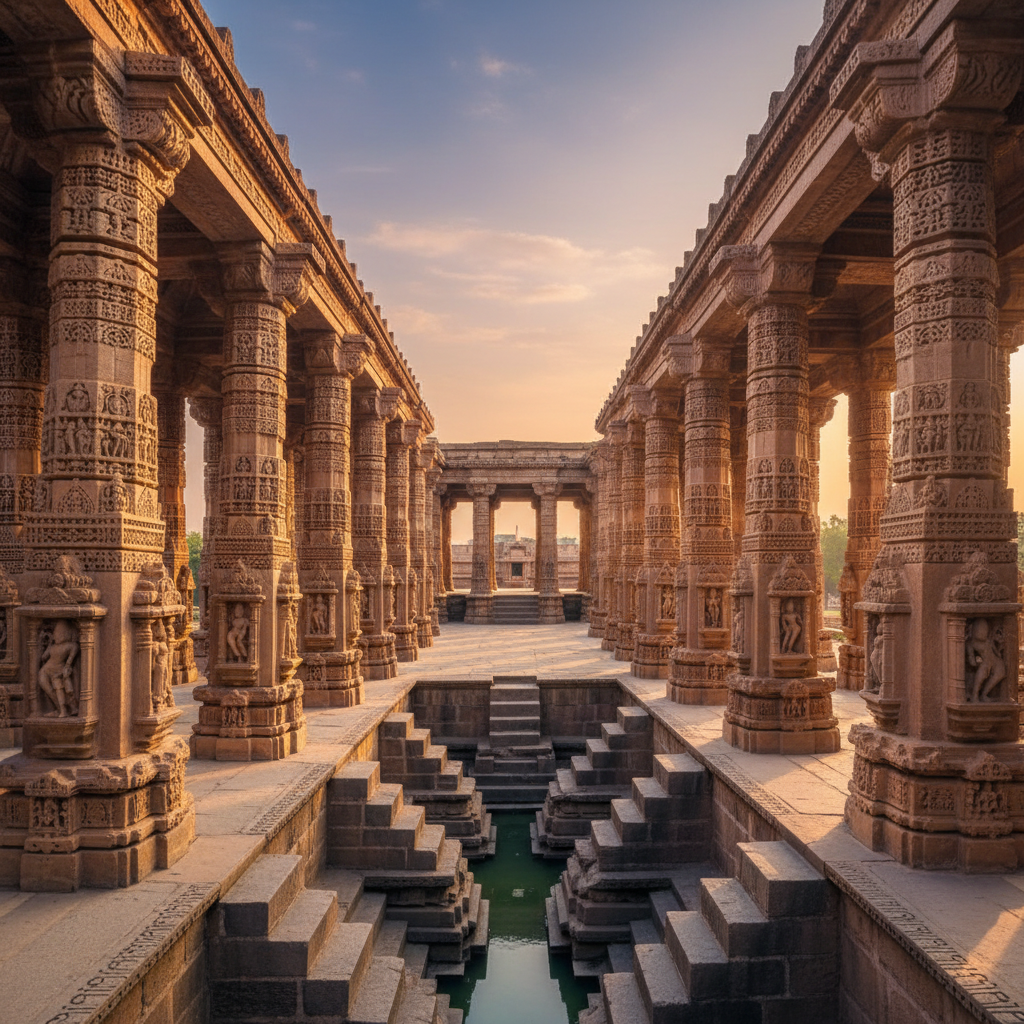
Modhera Sun Temple: Calendrical Precision

The Modhera Sun Temple acts as a massive stone calendar. Basic arithmetic and geometry were used to align these elements so that the sun shines directly into the sanctum on equinoxes.

Chart
Made byBobr AI

52 Pillars Representing the Weeks of the Year

Made byBobr AI

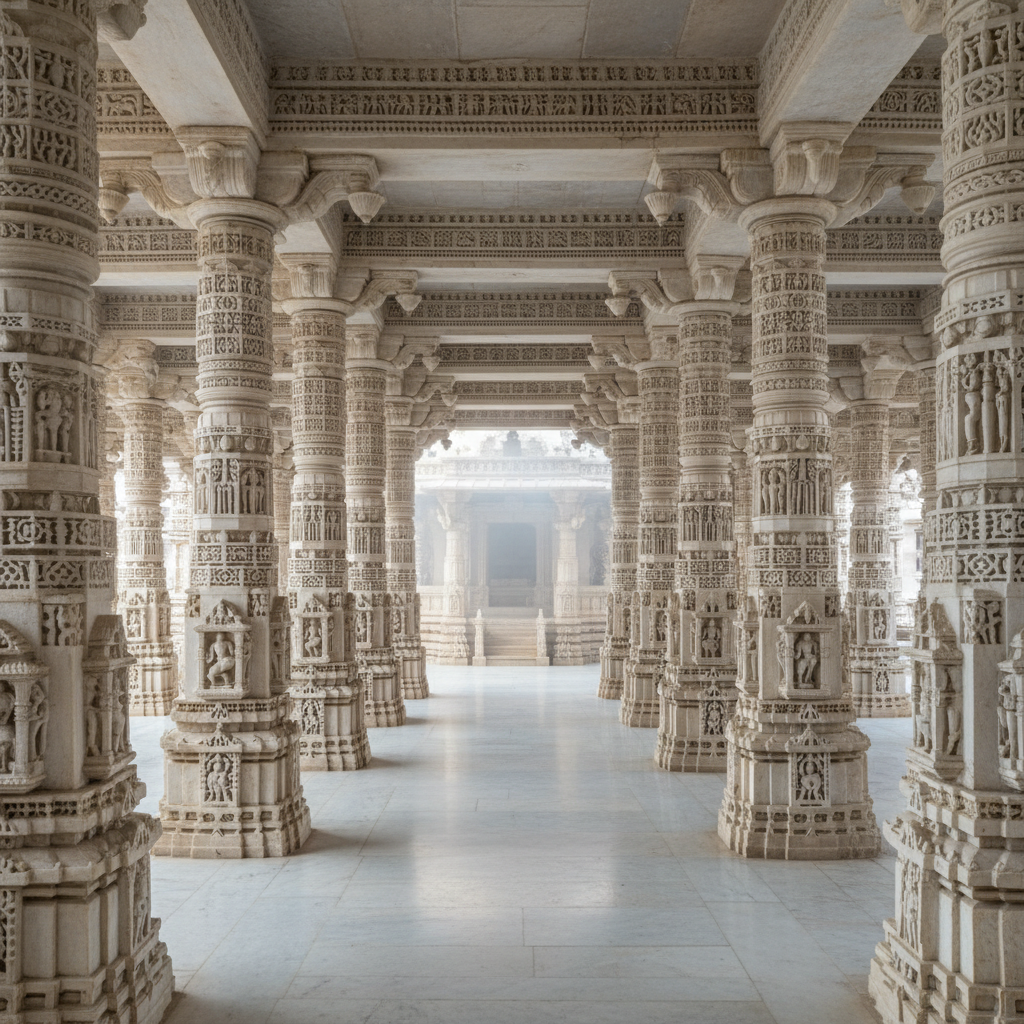
Ranakpur Jain Temple: Sightlines & Symmetry

  • Known for its 1,444 uniquely carved pillars.
  • The architectural layout relies on precise angular calculations to ensure that no two pillars block the line of sight to the central deity statue from any entrance.
  • This required establishing a complex network of intersecting diagonals during the floor planning stage.
Made byBobr AI

1,444 Pillars: A Geometric Web

Made byBobr AI

Sacred Geometry & The Golden Ratio

Many temple floor plans and spiraling towers approximate the Golden Ratio and Fibonacci sequences. Additionally, complex geometric problems like 'squaring the circle' are symbolized in the Sri Yantra—interlocking triangles that form a fractal progression, representing the union of the divine masculine and feminine.

Made byBobr AI

Fibonacci Spirals in Ceiling Motifs

Made byBobr AI

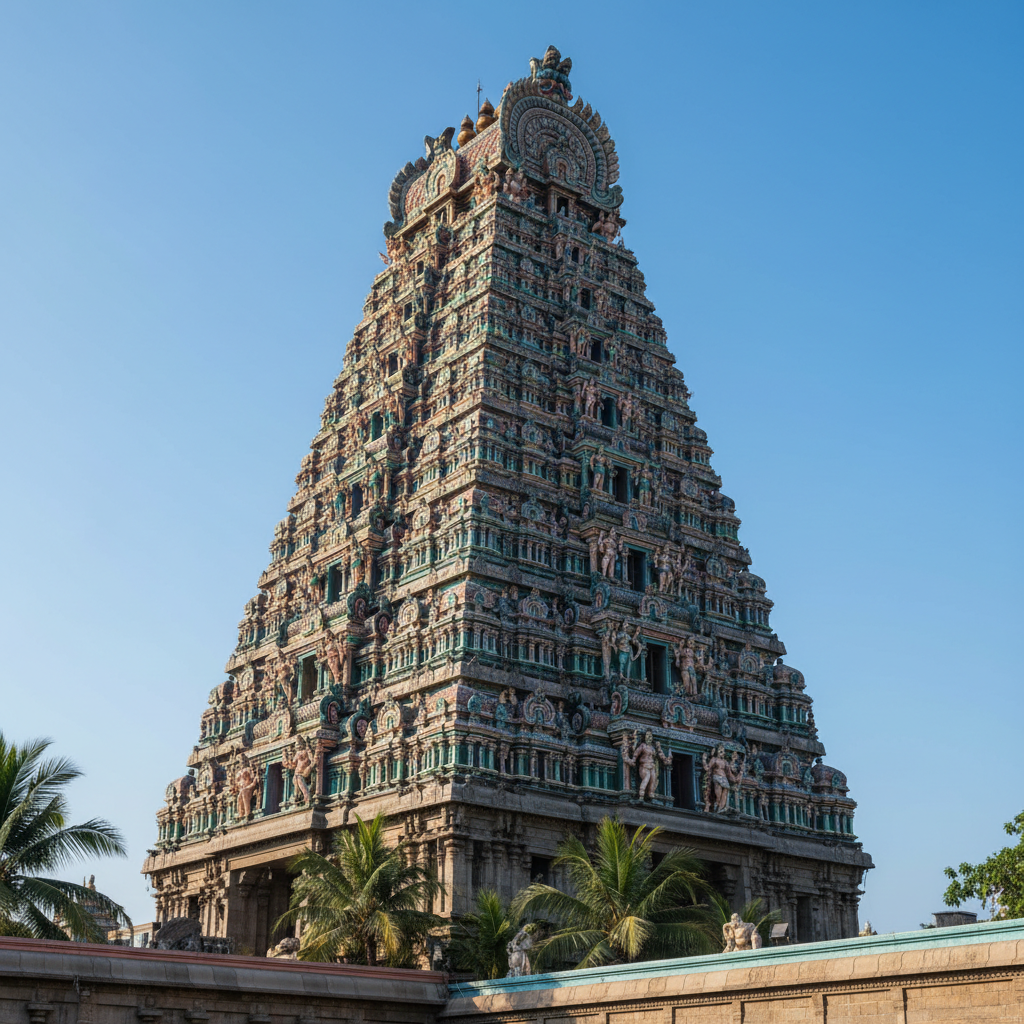
Dravida Gopurams: Ratios of Height

In Dravidian architecture, the Gopurams (entrance towers) follow strict height-to-base ratios mandated by the Silpasastras texts. The decreasing size of each successive tier is calculated to create a sense of imposing height and stability, often using a base 2 or base 4 geometric progression that creates a trapezoidal profile.

Made byBobr AI

The Trapezoidal Geometry of Gopurams

Made byBobr AI

Conclusion: The Algebra of the Divine

Trigonometry in Indian temple architecture was never just about construction; it was about theology. By using fractals, grids, and precise ratios, ancient architects created buildings that reflected the infinite complexity of the universe. The stone became a canvas for cosmic mathematics, proving that in these sacred spaces, science and spirituality were one.

Made byBobr AI
Bobr AI

DESIGNER-MADE
PRESENTATION,
GENERATED FROM
YOUR PROMPT

Create your own professional slide deck with real images, data charts, and unique design in under a minute.

Generate For Free

Trigonometry & Geometry in Indian Temple Architecture

Explore how ancient Indian temples use trigonometry, fractals, and sacred grids like the Vastu-Purusha-Mandala to align architecture with cosmic design.

Trigonometry in Indian Temple Architecture

Fractals, Sacred Grids, and the Cosmic Design

The Vastu-Purusha-Mandala

At the heart of Indian temple architecture lies the Vastu-Purusha-Mandala, a sacred geometric grid. Often laid out as an 8x8 (64-pada) or 9x9 (81-pada) square, this grid aligns the physical structure with cosmic axes. Trigonometry is essential here to calculate the precise intersections of squares and circles, determining where divine energy (the central Brahma-sthana) meets the material world throughout the temple's footprint.

Visualizing the Grid

The square is the fundamental form, representing order and stability. While the grid is square, the superstructure imposes circular movements for circumambulation (Parikrama). The geometric relationship between the square plan and the resulting vertical curves requires complex diagonal and angular calculations.

Nagara Style: The Curvilinear Shikhara

Nagara temples (Northern India) are defined by the Shikhara, a tower that mimics a mountain peak.

The curvature is not random; it follows a precise trigonometric curve (parabolic or elliptical arcs) calculated to ensure structural load distribution.

The plan is often cruciform with graduated projections (rathas), creating a multi-faceted perimeter derived from rotating squares.

The Mathematical Curve of the Shikhara

Fractal Geometry in Design

Indian temples are excellent examples of fractal architecture—structures that look the same at different scales. Smaller replicas of the main tower are repeated on the facade, creating a self-similar pattern. This relies on recursive geometric functions (specifically scaling sines and cosines) to generate infinite visual complexity from simple rules.

Recursive Motifs: The Architecture of Infinity

The temple is neither a house of God nor a place of worship, but an object of realization. The Kandariya Mahadeva temple utilizes trigonometry to create lofty, mountain-like symmetry.

Architectural Analysis of Khajuraho

Kandariya Mahadeva: A Masterpiece of Angular Projections

Virupaksha Temple & Triangular Domes

Located in Pattadakal, the Virupaksha Temple (8th Century) demonstrates the transition of geometry into Dravidian styles. The triangular domes and square layouts produce fractal echoes of nature. The builders used diagonal alignments to scale the structures proportionally, ensuring that as the temple expands outwards, the geometric ratios remain constant.

Pattadakal's Geometric Splendor

Modhera Sun Temple: Calendrical Precision

The Modhera Sun Temple acts as a massive stone calendar. Basic arithmetic and geometry were used to align these elements so that the sun shines directly into the sanctum on equinoxes.

52 Pillars Representing the Weeks of the Year

Ranakpur Jain Temple: Sightlines & Symmetry

Known for its 1,444 uniquely carved pillars.

The architectural layout relies on precise angular calculations to ensure that no two pillars block the line of sight to the central deity statue from any entrance.

This required establishing a complex network of intersecting diagonals during the floor planning stage.

1,444 Pillars: A Geometric Web

Sacred Geometry & The Golden Ratio

Many temple floor plans and spiraling towers approximate the Golden Ratio and Fibonacci sequences. Additionally, complex geometric problems like 'squaring the circle' are symbolized in the Sri Yantra—interlocking triangles that form a fractal progression, representing the union of the divine masculine and feminine.

Fibonacci Spirals in Ceiling Motifs

Dravida Gopurams: Ratios of Height

In Dravidian architecture, the Gopurams (entrance towers) follow strict height-to-base ratios mandated by the Silpasastras texts. The decreasing size of each successive tier is calculated to create a sense of imposing height and stability, often using a base 2 or base 4 geometric progression that creates a trapezoidal profile.

The Trapezoidal Geometry of Gopurams

Conclusion: The Algebra of the Divine

Trigonometry in Indian temple architecture was never just about construction; it was about theology. By using fractals, grids, and precise ratios, ancient architects created buildings that reflected the infinite complexity of the universe. The stone became a canvas for cosmic mathematics, proving that in these sacred spaces, science and spirituality were one.

  • indian-architecture
  • sacred-geometry
  • vastu-shastra
  • fractal-architecture
  • trigonometry
  • nagara-style
  • dravidian-architecture
  • mathematics-in-art