



Made byBobr AI

Trigonometry in Indian Temple Architecture & Sacred Geometry

Explore the advanced mathematics in Indian temples, from Vastu Purusha Mandala grids to fractal patterns, the Golden Ratio, and trigonometric precision.

#sacred-geometry#architecture#indian-heritage#mathematics#vastu-shastra#fractals#trigonometry#ancient-history
Watch
Pitch

Trigonometry in Indian Temple Architecture

The Geometry of the Divine: Fractals, Grids, and The Golden Ratio

Made byBobr AI

Mathematical Foundations

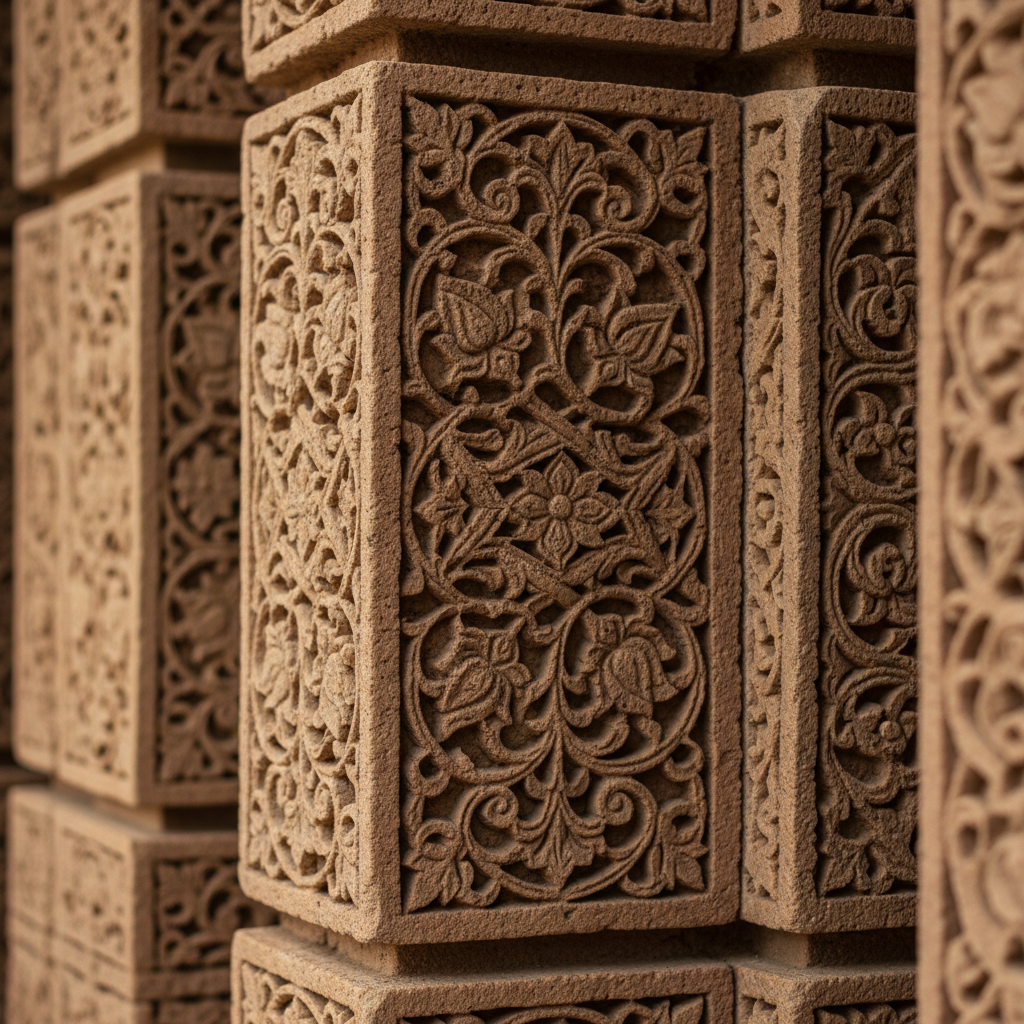
Indian temple architecture is not merely structural but deeply mathematical. Rooted in the Silpa Shastras from the Gupta era, these designs utilize advanced geometry interpretable through trigonometry. The integration of angles, grids, circles, and fractal patterns ensures both structural stability and spiritual alignment, often functioning as a 3D representation of cosmic order.

Made byBobr AI

Vastu Purusha Mandala

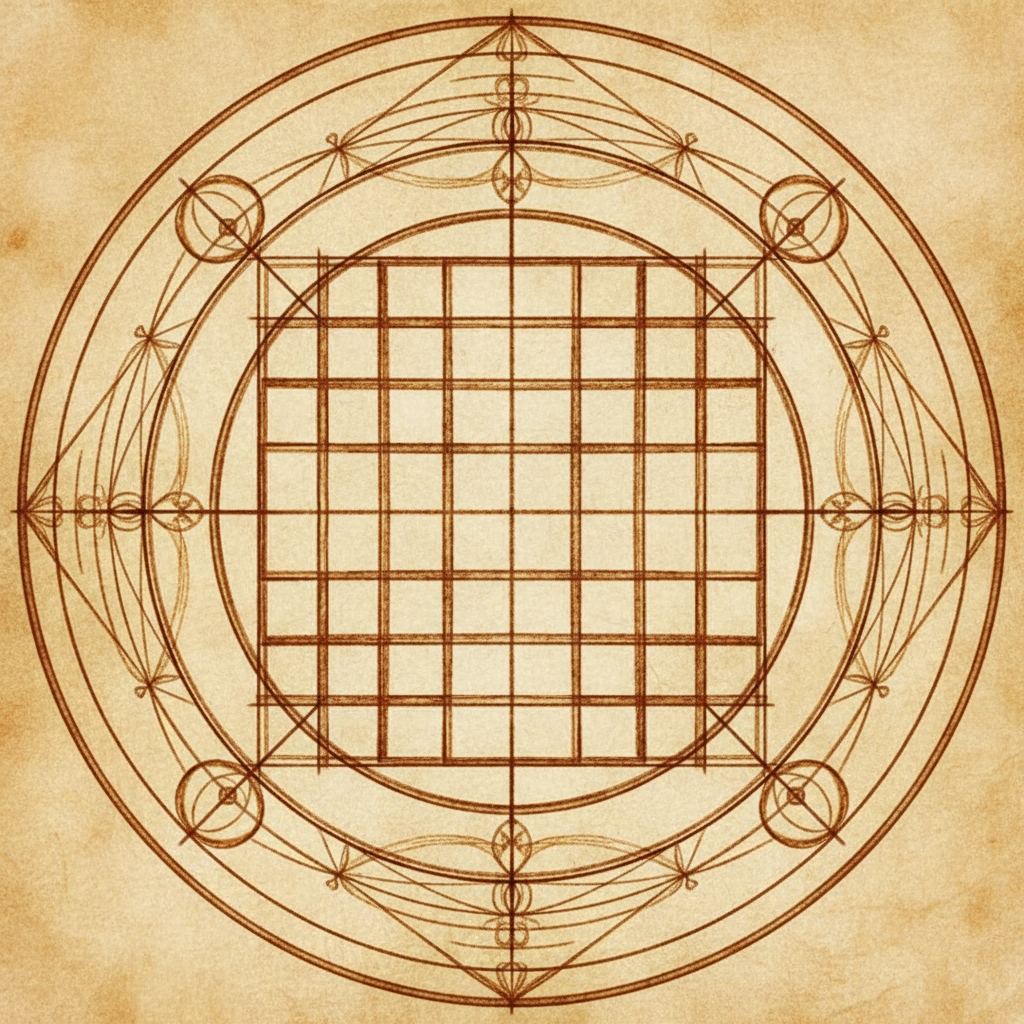
The fundamental blueprint of Hindu temples is the Vastu Purusha Mandala, often an 8×8 grid known as Bhekapada or Ajira. This geometric system forms a sacred square circumscribed by a circle. The intersecting diagonals and cardinal alignments require precise angular calculations, symbolizing the intersection of the distinct universe (square) and the infinite cosmic principle (circle).

Made byBobr AI

Trigonometry of the Circle & Square

  • Square plans often utilize graduated projections, creating cruciform shapes that require determining side lengths relative to radii via Pi.
  • Concentric layers (Padas) range from Brahma (center) to Paishachika (periphery), maintaining symmetrical angular spacing.
  • Diagonals and 45° angles ensure precise axial alignment for spiritual focus and structural load distribution.
Made byBobr AI

Fractal Geometry & Recursion

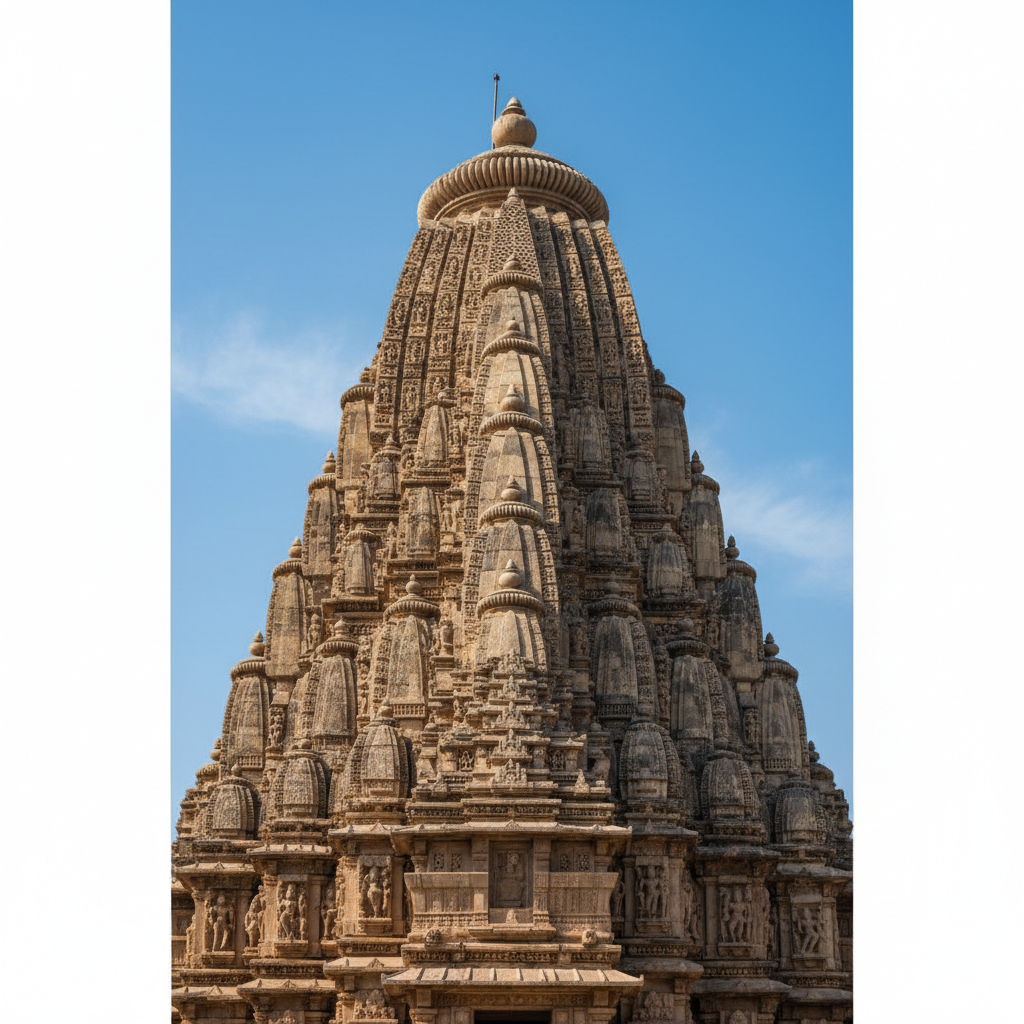
Medieval temples exhibit fractal geometry—self-repeating motifs at different scales. For example, the Virupaksha Temple features triangular domes that echo the mountain shape. These iterative angles and scaling ratios rely on geometric functions to maintain proportion, symbolizing infinite cosmic recursion.

Made byBobr AI

“Temple towers and spirals often approximate the Golden Ratio (ϕ ≈ 1.618), mirroring the Fibonacci sequence found in nature.”

— Geometric Analysis of Indian Heritage

Made byBobr AI

Numerical Symbolism in Architecture

Temples like Modhera and Ranakpur incorporate specific counts of architectural elements to represent cosmological time units (days, weeks) or sacred geometry totals.
Chart
Made byBobr AI

Case Study: Modhera Sun Temple


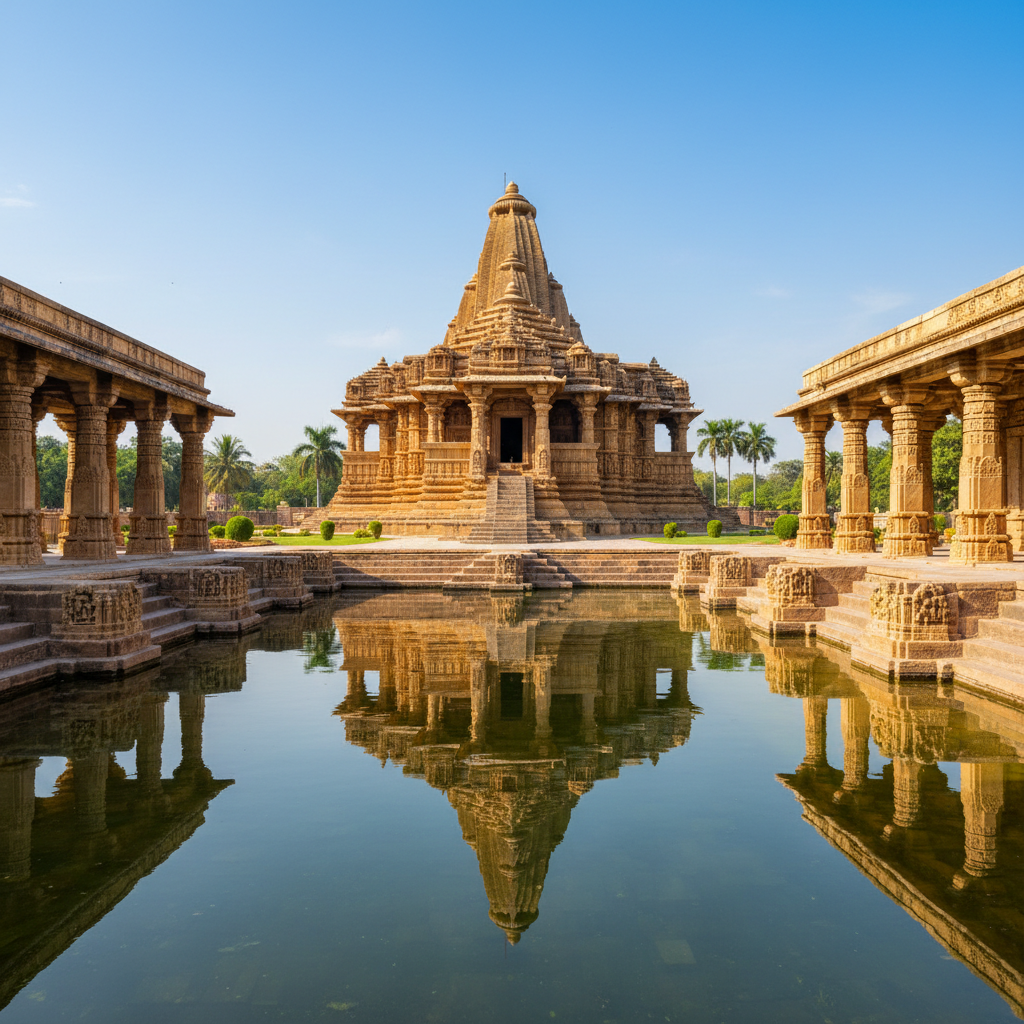
Built to honor the Sun God Surya, the geometric precision here is paramount. It features 52 pillars representing the weeks of the year, divided into 7 sections for the days of the week. The 365 carved elephants at the base correspond to the days of a year. The angular divisions in the mandapa ensure specific solar alignment during equinoxes.

Made byBobr AI

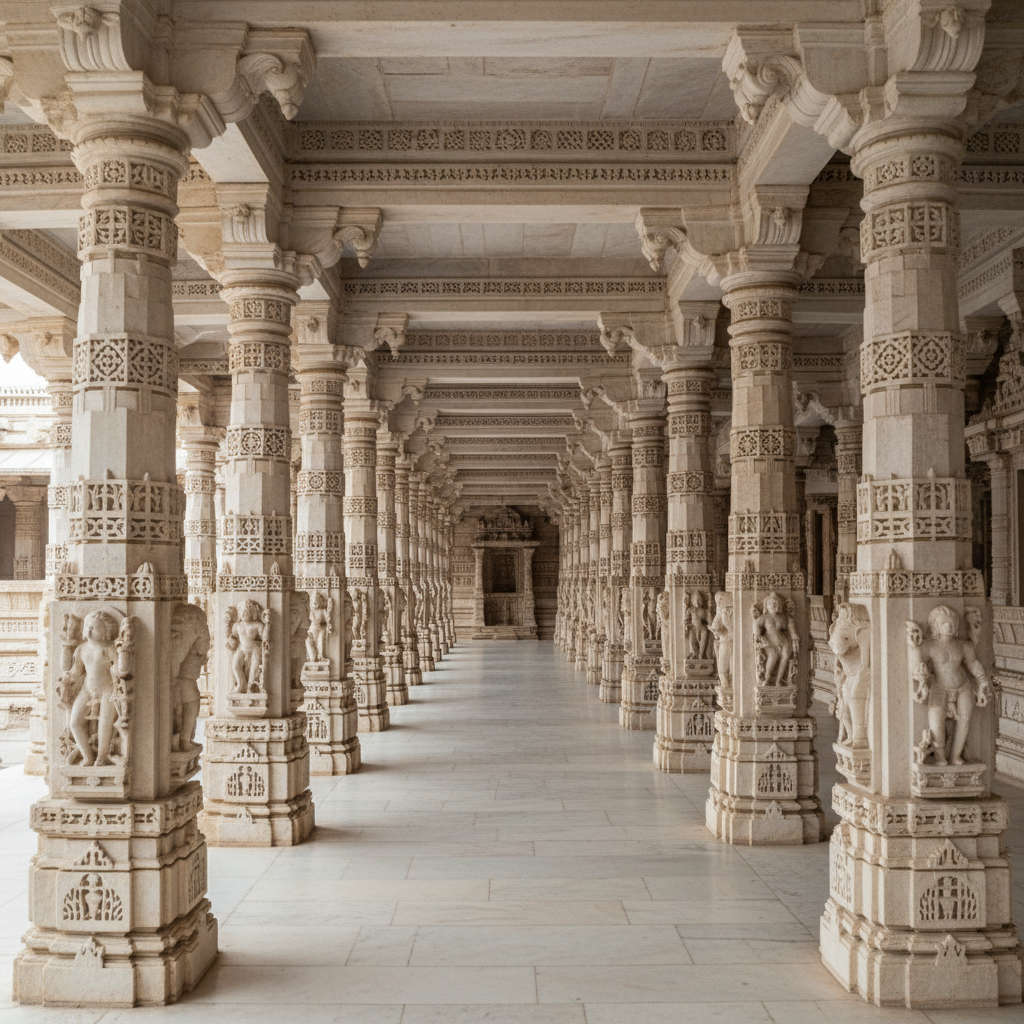
Ranakpur Jain Temple: A Trigonometric Feat

  • Contains 1,444 marble pillars, essentially forming a fractal-like network.
  • Geometric layout ensures clear sightlines from every corner to the idol, requiring complex angular spacing.
  • No two pillars are carved exactly alike, yet they maintain perfect structural symmetry.
Made byBobr AI

Conclusion: A Legacy of Empirical Mastery

Made byBobr AI
Bobr AI

DESIGNER-MADE
PRESENTATION,
GENERATED FROM
YOUR PROMPT

Create your own professional slide deck with real images, data charts, and unique design in under a minute.

Generate For Free

Trigonometry in Indian Temple Architecture & Sacred Geometry

Explore the advanced mathematics in Indian temples, from Vastu Purusha Mandala grids to fractal patterns, the Golden Ratio, and trigonometric precision.

Trigonometry in Indian Temple Architecture

The Geometry of the Divine: Fractals, Grids, and The Golden Ratio

Mathematical Foundations

Indian temple architecture is not merely structural but deeply mathematical. Rooted in the Silpa Shastras from the Gupta era, these designs utilize advanced geometry interpretable through trigonometry. The integration of angles, grids, circles, and fractal patterns ensures both structural stability and spiritual alignment, often functioning as a 3D representation of cosmic order.

Vastu Purusha Mandala

The fundamental blueprint of Hindu temples is the Vastu Purusha Mandala, often an 8×8 grid known as Bhekapada or Ajira. This geometric system forms a sacred square circumscribed by a circle. The intersecting diagonals and cardinal alignments require precise angular calculations, symbolizing the intersection of the distinct universe (square) and the infinite cosmic principle (circle).

Trigonometry of the Circle & Square

Square plans often utilize graduated projections, creating cruciform shapes that require determining side lengths relative to radii via Pi.

Concentric layers (Padas) range from Brahma (center) to Paishachika (periphery), maintaining symmetrical angular spacing.

Diagonals and 45° angles ensure precise axial alignment for spiritual focus and structural load distribution.

Fractal Geometry & Recursion

Medieval temples exhibit fractal geometry—self-repeating motifs at different scales. For example, the Virupaksha Temple features triangular domes that echo the mountain shape. These iterative angles and scaling ratios rely on geometric functions to maintain proportion, symbolizing infinite cosmic recursion.

Temple towers and spirals often approximate the Golden Ratio (ϕ ≈ 1.618), mirroring the Fibonacci sequence found in nature.

Geometric Analysis of Indian Heritage

Numerical Symbolism in Architecture

Temples like Modhera and Ranakpur incorporate specific counts of architectural elements to represent cosmological time units (days, weeks) or sacred geometry totals.

Case Study: Modhera Sun Temple

Built to honor the Sun God Surya, the geometric precision here is paramount. It features 52 pillars representing the weeks of the year, divided into 7 sections for the days of the week. The 365 carved elephants at the base correspond to the days of a year. The angular divisions in the mandapa ensure specific solar alignment during equinoxes.

Ranakpur Jain Temple: A Trigonometric Feat

Contains 1,444 marble pillars, essentially forming a fractal-like network.

Geometric layout ensures clear sightlines from every corner to the idol, requiring complex angular spacing.

No two pillars are carved exactly alike, yet they maintain perfect structural symmetry.

Conclusion: A Legacy of Empirical Mastery

  • sacred-geometry
  • architecture
  • indian-heritage
  • mathematics
  • vastu-shastra
  • fractals
  • trigonometry
  • ancient-history