


VR Onboarding: The Future of Corporate Training
Discover how Virtual Reality transforms employee onboarding, improves retention by 75%, and increases learner confidence by 275%.
Immersive Onboarding
Leveraging Virtual Reality for Imperative Corporate Training
The Evolution of Training
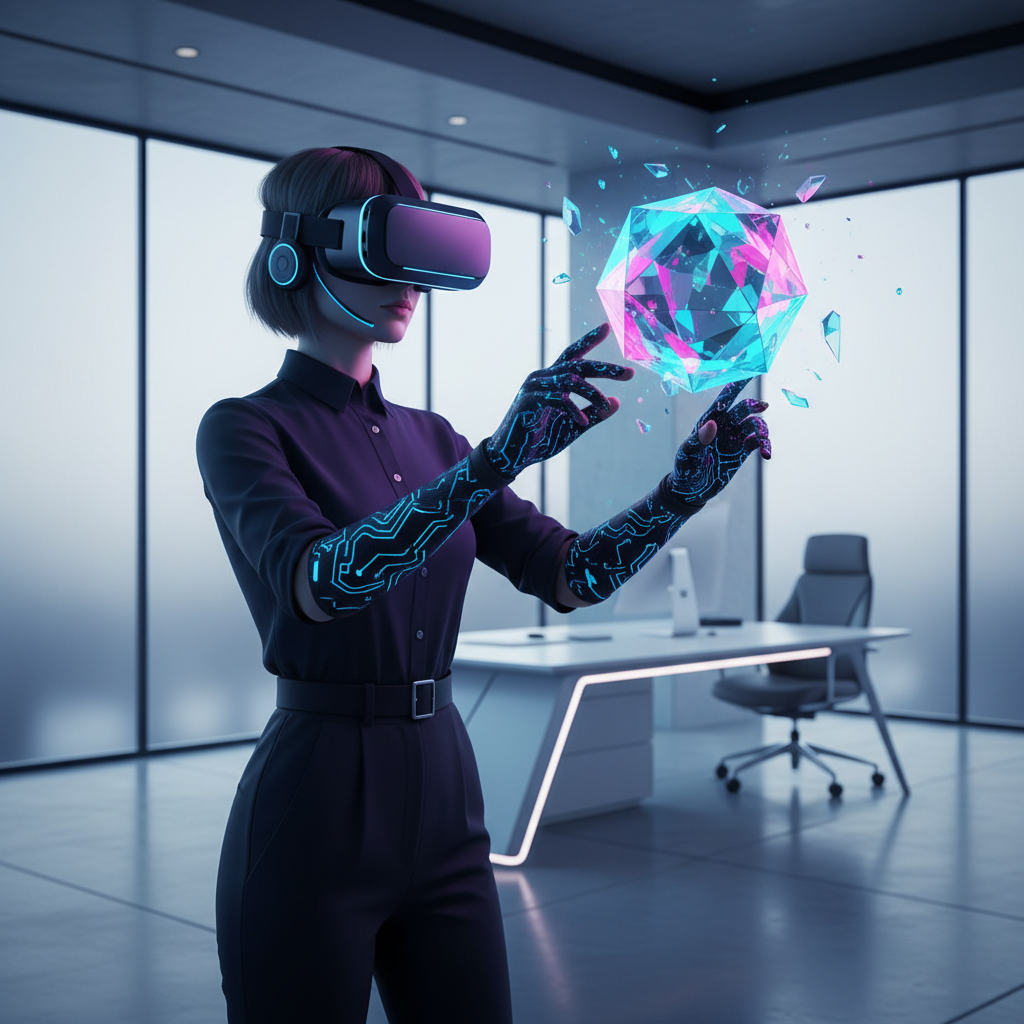
Traditional onboarding often relies on manuals, slideshows, and passive videos. Virtual Reality (VR) shifts this paradigm by placing the employee 'inside' the work environment before their first actual day. This transition from passive observation to active immersion is redefining workforce readiness.
Why Convert to VR Onboarding?
Accelerated Proficiency: Reduce time-to-competency by simulating real-world tasks.
Risk-Free Environment: Mistakes in VR have no real-world consequences.
Standardized Quality: Every new hire receives the exact same high-quality training experience.
Gamification: Increased engagement through interactive scoring and progress tracking.
Imperative Safety Training
For high-risk industries like manufacturing, energy, and construction, VR allows workers to experience hazardous situations—such as chemical spills, machinery malfunctions, or fires—without physical danger. This builds muscle memory for emergency protocols that cannot be safely rehearsed in reality.
Learning Retention Rates
Studies consistently show that 'learning by doing' dramatically outperforms passive learning methods. VR places users in the 'doing' category effortlessly.
Soft Skills & Leadership
VR is not just for technical skills. It is increasingly used for soft skills training, such as conflict resolution, public speaking, and inclusivity training. Avatars allow employees to practice difficult conversations with realistic body language and vocal tone analysis.
Training Time Efficiency
VR learners complete training significantly faster than classroom learners. What takes 2 hours in a classroom can often be achieved in 30 minutes of immersive simulation.
VR learners are 275% more confident to act on what they learned after training compared to classroom learners.
PwC Study on VR Soft Skills Training
Implementation Roadmap
Assessment: Identify high-risk or high-volume roles suited for VR.
Development: Choose between off-the-shelf modules or custom content creation.
Deployment: Set up dedicated VR stations or distribute portable headsets.
Integration: Sync VR completion data with existing LMS platforms.
Ready to Immerse Your Team?
- virtual-reality
- corporate-training
- onboarding-strategy
- hr-technology
- immersive-learning
- workplace-safety