


Made byBobr AI

Innovations in Modern Healthcare: Tech & Patient Care (2025)

Explore how digital health and hybrid care models improve patient outcomes, including AI diagnostics, telehealth adoption rates, and satisfaction metrics.

#healthcare-innovation#telemedicine#digital-health#patient-centered-care#medical-technology#ai-in-medicine#hybrid-care-models
Watch
Pitch

Innovations in Modern Healthcare

Integrating Technology with Patient-Centered Care Models

Medical Board Review | 2025

Made byBobr AI

Executive Summary

The integration of digital health solutions has fundamentally shifted the standard of care. This presentation outlines key findings from recent clinical studies, demonstrating how hybrid care models improve patient outcomes while reducing hospital readmission rates. We examine the synergy between advanced diagnostics and empathetic nursing protocols.

Made byBobr AI

Core Objectives

  • Evaluate the efficacy of telemedicine in chronic disease management.
  • Identify barriers to adoption among elderly patient demographics.
  • Propose a structured framework for data interoperability between clinics.
  • Optimize resource allocation to reduce emergency department overcrowding.
Made byBobr AI

Diagnostic Precision

AI-assisted imaging tools have increased early detection rates by 22% in clinical trials. By reducing human error and flagging anomalies faster, radiologists can focus on complex case interpretation rather than varying routine scans. This shift is critical for improving oncology outcomes.

Made byBobr AI

Telehealth Adoption Rates

Adoption spiked during 2020 but has stabilized at a significantly higher baseline than pre-pandemic levels. The projected growth for 2025 indicates a permanent shift in patient preference for routine consultations.

Chart
Made byBobr AI

Medicine is not merely the business of prescribing cures, but the lifelong dedication to understanding the human condition through science.

Dr. Elena Rossi, Chief Medical Officer

Made byBobr AI

Barriers to Implementation

  • High initial infrastructure costs for secure data servers.
  • Staff training requirements for new digital diagnostic tools.
  • Inconsistent regulatory policies across different state jurisdictions.
  • Patient privacy concerns regarding cloud-based medical records.
Made byBobr AI

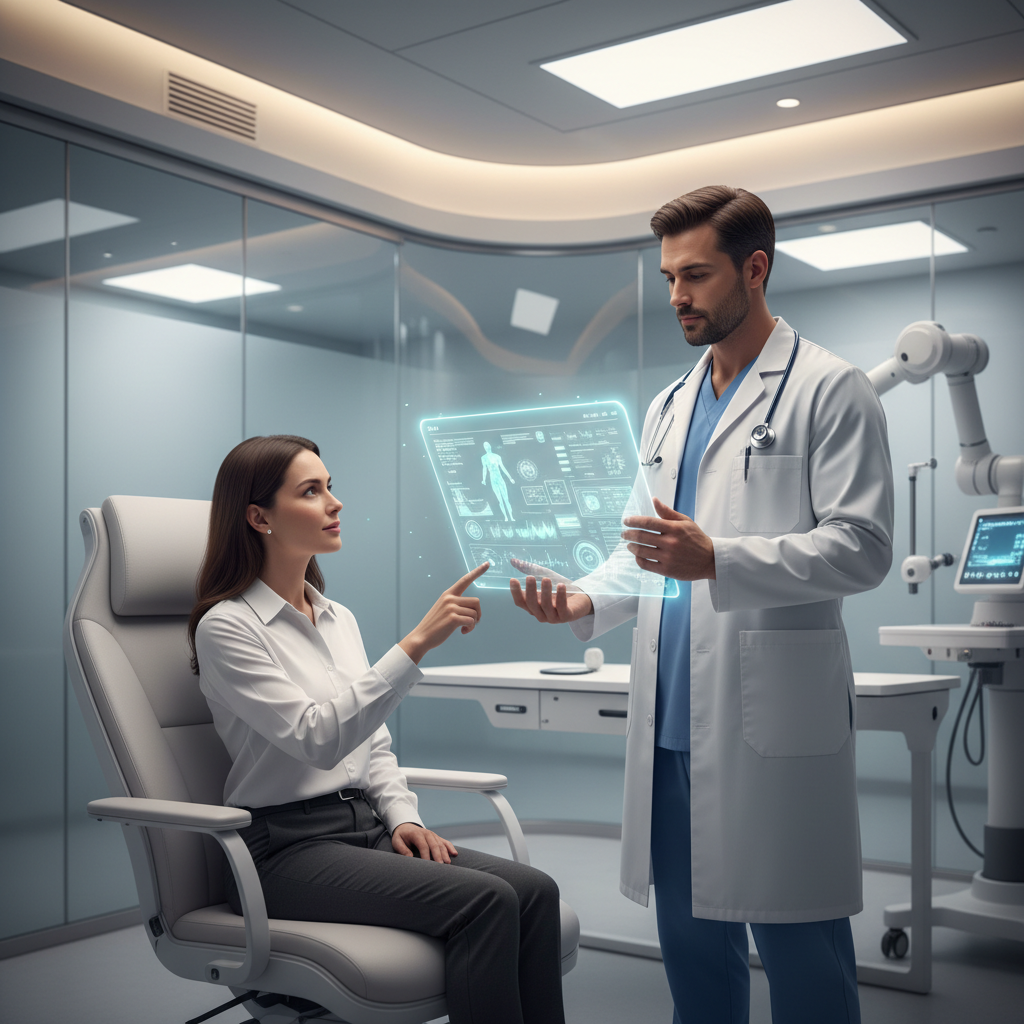
The Future of Patient Care

Made byBobr AI

Patient Satisfaction Metrics

Survey results indicate that hybrid models (blending in-person and digital care) yield the highest satisfaction scores compared to purely traditional or purely digital approaches.

Chart
Made byBobr AI

Thank You

Questions & Discussion

contact@medicalboardreview.org | www.medicalboardreview.org
Made byBobr AI
Bobr AI

DESIGNER-MADE
PRESENTATION,
GENERATED FROM
YOUR PROMPT

Create your own professional slide deck with real images, data charts, and unique design in under a minute.

Generate For Free

Innovations in Modern Healthcare: Tech & Patient Care (2025)

Explore how digital health and hybrid care models improve patient outcomes, including AI diagnostics, telehealth adoption rates, and satisfaction metrics.

Innovations in Modern Healthcare

Integrating Technology with Patient-Centered Care Models

Medical Board Review | 2025

Executive Summary

The integration of digital health solutions has fundamentally shifted the standard of care. This presentation outlines key findings from recent clinical studies, demonstrating how hybrid care models improve patient outcomes while reducing hospital readmission rates. We examine the synergy between advanced diagnostics and empathetic nursing protocols.

Core Objectives

Evaluate the efficacy of telemedicine in chronic disease management.

Identify barriers to adoption among elderly patient demographics.

Propose a structured framework for data interoperability between clinics.

Optimize resource allocation to reduce emergency department overcrowding.

Diagnostic Precision

AI-assisted imaging tools have increased early detection rates by 22% in clinical trials. By reducing human error and flagging anomalies faster, radiologists can focus on complex case interpretation rather than varying routine scans. This shift is critical for improving oncology outcomes.

Telehealth Adoption Rates

Adoption spiked during 2020 but has stabilized at a significantly higher baseline than pre-pandemic levels. The projected growth for 2025 indicates a permanent shift in patient preference for routine consultations.

Medicine is not merely the business of prescribing cures, but the lifelong dedication to understanding the human condition through science.

Dr. Elena Rossi, Chief Medical Officer

Barriers to Implementation

High initial infrastructure costs for secure data servers.

Staff training requirements for new digital diagnostic tools.

Inconsistent regulatory policies across different state jurisdictions.

Patient privacy concerns regarding cloud-based medical records.

The Future of Patient Care

Patient Satisfaction Metrics

Survey results indicate that hybrid models (blending in-person and digital care) yield the highest satisfaction scores compared to purely traditional or purely digital approaches.

Thank You

Questions & Discussion

contact@medicalboardreview.org | www.medicalboardreview.org

  • healthcare-innovation
  • telemedicine
  • digital-health
  • patient-centered-care
  • medical-technology
  • ai-in-medicine
  • hybrid-care-models