


Understanding Methemoglobinemia: Causes and Management
Learn about Methemoglobinemia pathophysiology, symptoms like cyanosis, diagnostic gold standards, and the role of methylene blue treatment.
Methemoglobinemia
Pathophysiology, Diagnosis, and Management
What is Methemoglobinemia?
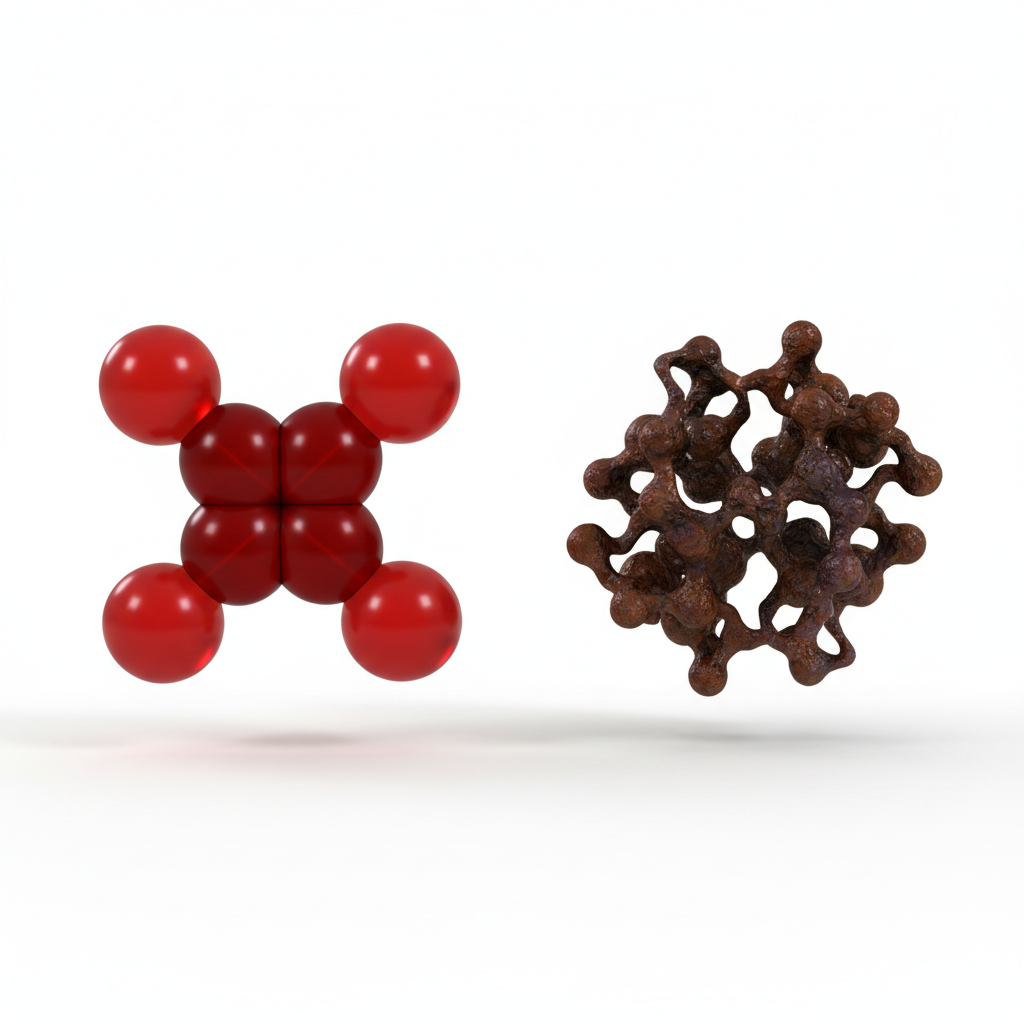
Methemoglobinemia is a blood disorder in which an abnormal amount of methemoglobin is produced. While hemoglobin can carry and release oxygen effective, methemoglobin can carry oxygen but utilizes a ferric iron state (Fe3+) that prevents the effective release of oxygen to body tissues, leading to functional anemia and hypoxia.
Pathophysiology: The Iron Shift
Normal hemoglobin contains iron in the reduced ferrous state (Fe2+). In Methemoglobinemia, the iron within the heme group is oxidized to the ferric state (Fe3+). This change causes a leftward shift in the oxygen-dissociation curve, increasing the affinity of remaining normal heme for oxygen and reducing oxygen delivery to tissues.
Etiology: Acquired vs. Congenital
The vast majority of cases are acquired relative to exposure to oxidizing agents. Congenital cases (Cytochrome b5 reductase deficiency or Hemoglobin M disease) are rare.
Common Precipitating Agents
Local Anesthetics: Benzocaine, Lidocaine, Prilocaine (often used in endoscopy or teething gels).
Antibiotics: Dapsone (used for leprosy, dermatitis herpetiformis) and Sulfonamides.
Nitrates/Nitrites: Contaminated well water (infants), industrial chemicals, amyl nitrite.
Others: Aniline dyes, Metoclopramide, Rasburicase.
Clinical Presentation: Cyanosis
The hallmark sign is central cyanosis (blue discoloration of skin and mucous membranes) that often appears distinct from standard hypoxic cyanosis. Symptoms correlate with MetHb levels: - 10-20%: Asymptomatic cyanosis. - 20-50%: Dyspnea, fatigue, headache, tachycardia. - >50%: Arrhythmias, seizures, coma.
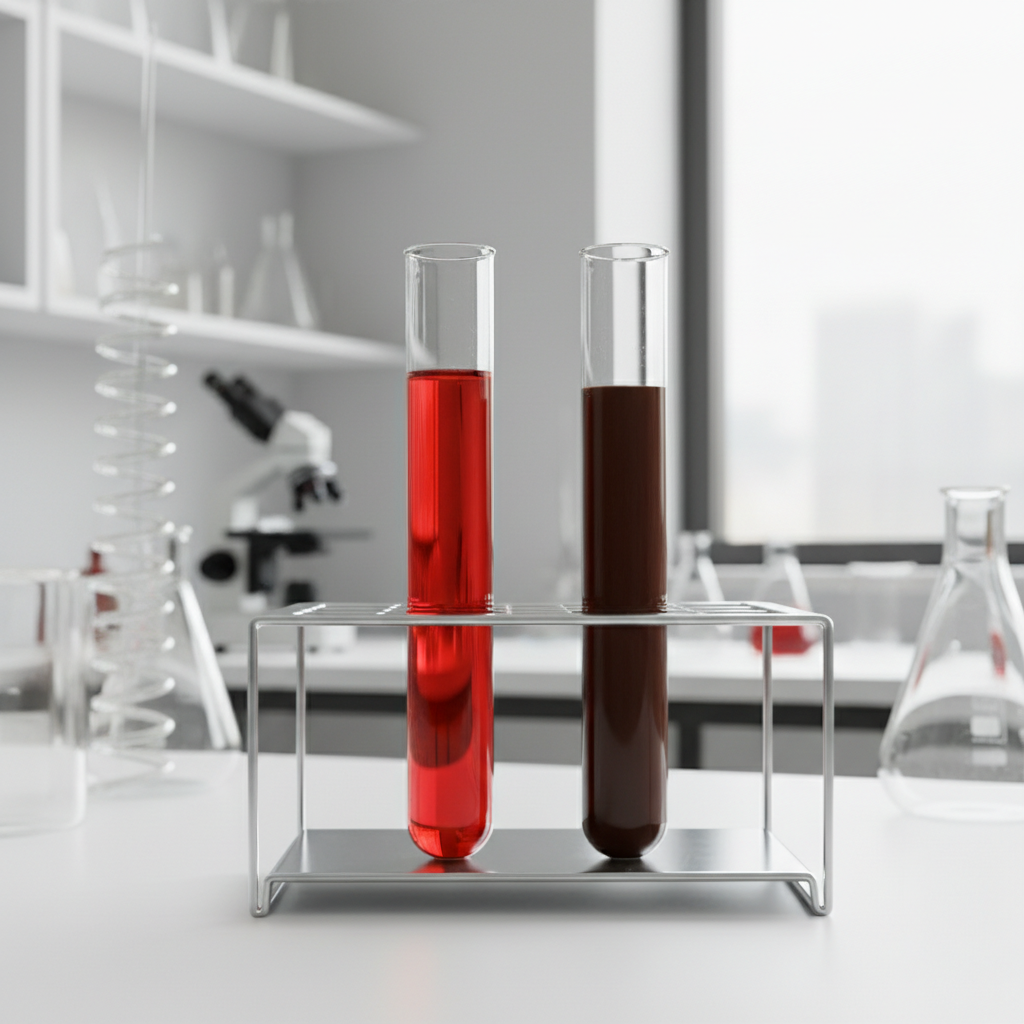
Visual Diagnosis: Chocolate Brown Blood
Blood containing >15% MetHb turns characteristic dark brown and does not redden upon exposure to oxygen.
The Saturation Gap
Standard pulse oximetry provides misleading results directly because it reads absorbance at only two wavelengths (660nm and 940nm). Methemoglobin absorbs effectively at both, causing the Pulse Ox to plateau around 85%, masking the true hypoxia seen in arterial blood gas (Co-oximetry).
Diagnosis: Gold Standard
Multi-wavelength Co-oximetry: The only way to accurately measure MetHb levels.
Arterial Blood Gas (ABG): Note that PaO2 (dissolved oxygen) remains normal despite low oxygen saturation.
Bedside Test: Place a drop of patient blood on white filter paper next to normal blood. Darkening generally persists upon exposure to air.
Saturation Gap: Significant difference (>5%) between Pulse Ox and ABG calculated saturation.
Treatment: Methylene Blue
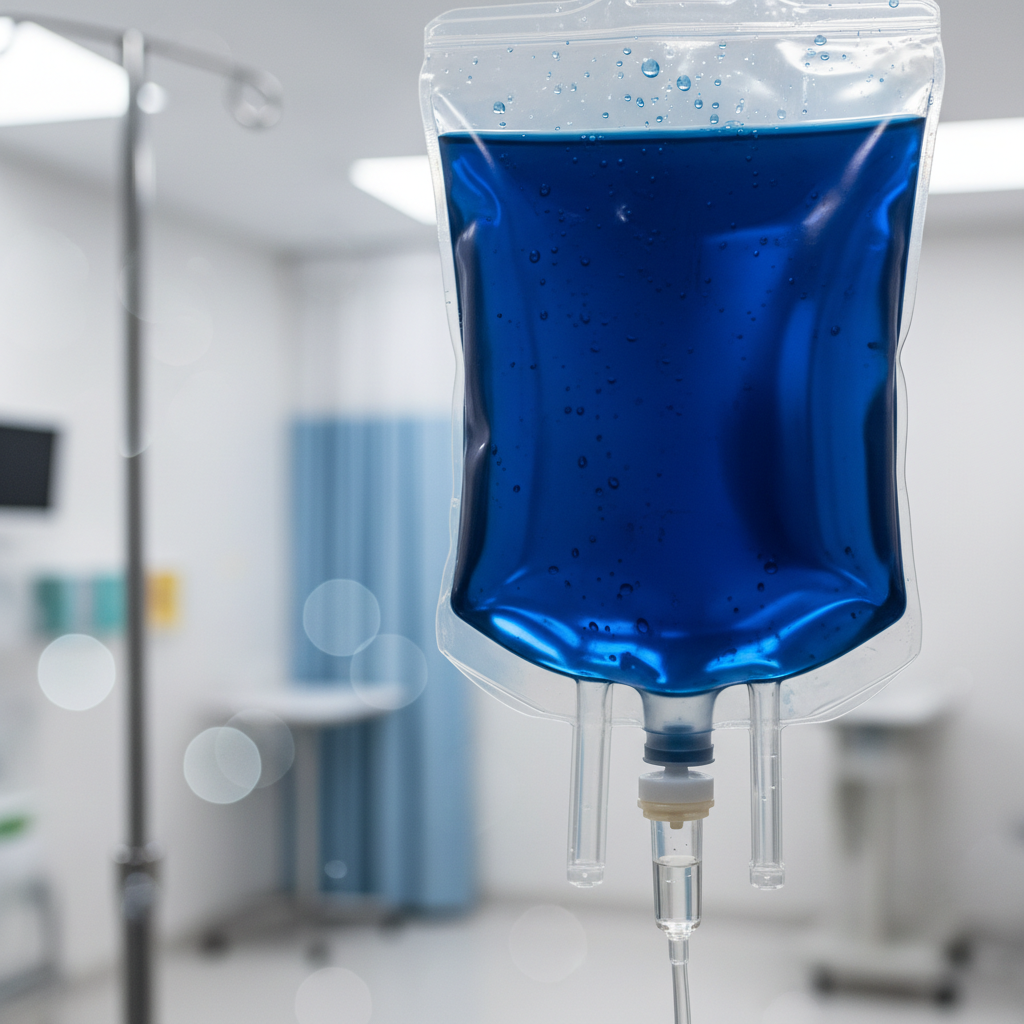
Methylene Blue (1-2 mg/kg IV) is the primary antidote. It serves as a cofactor for NADPH reductase to reduce MetHb back to Hemoglobin. Contraindication: Glucose-6-Phosphate Dehydrogenase (G6PD) deficiency. In G6PD deficiency, Methylene Blue is ineffective and can cause hemolysis.
Think of Methemoglobinemia when a cyanotic patient does not improve with supplemental oxygen.
Clinical Pearl
- methemoglobinemia
- pathophysiology
- methylene-blue
- hematology
- medical-diagnosis
- cyanosis
- blood-disorders