




Heat Conduction in Cylindrical Coordinates: Engineering Guide
Learn about radial heat flow, critical radius of insulation, and heat generation in pipes, wires, and nuclear rods using cylindrical coordinates.
Applications of Heat Conduction in Cylindrical Coordinates
Analysis, Equations, and Applications
Why Cylindrical Coordinates?
In heat transfer engineering, many geometries are circular in nature—pipes, wires, rods, and shell-and-tube heat exchangers. Using Cartesian coordinates (x, y, z) for these shapes makes boundary conditions difficult to define. Cylindrical coordinates (r, φ, z) align naturally with the physical geometry, simplifying the mathematical modeling of radial heat flow.
Radial Heat Conduction
In cylindrical systems like pipes, heat flows radially from the inner surface to the outer surface. Unlike plane walls where the temperature gradient is linear, the temperature distribution in a cylinder is logarithmic. This principle is crucial for calculating heat loss in fluid transport systems.
Critical Radius of Insulation
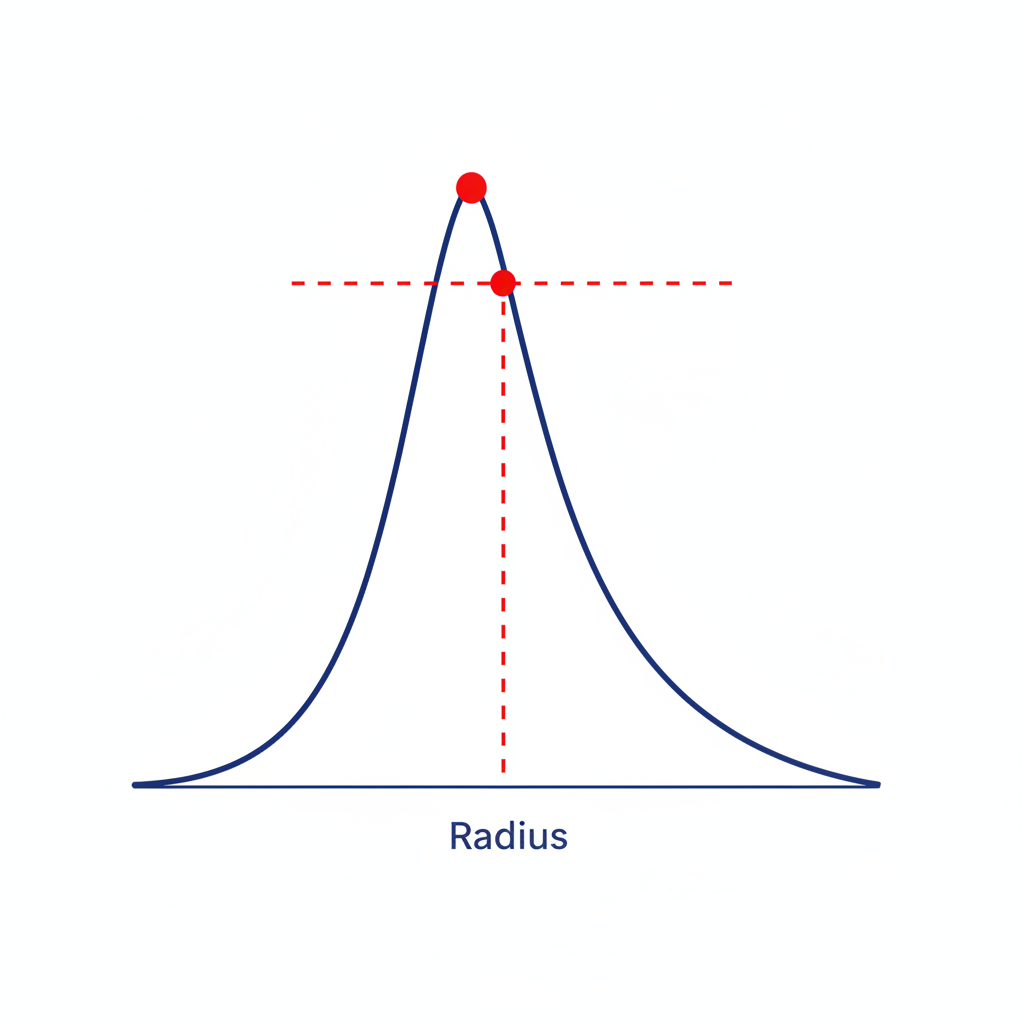
Surprisingly, adding insulation to small wires or pipes can increase heat loss rather than decrease it. This occurs when the increase in outer surface area reduces convection resistance more than the insulation adds conduction resistance. The 'critical radius' defines the tipping point for effective insulation.
Heat Generation Applications
<p>Cylindrical coordinates are essential for analyzing systems with internal heat generation:</p><ul style='margin-top:20px; list-style-type: disc; padding-left: 40px;'><li><b>Electrical Wires:</b> Determining max current to prevent melting.</li><li><b>Nuclear Fuel Rods:</b> Managing core temperatures.</li><li><b>Chemical Reactors:</b> Controlling exothermic reactions in tubes.</li></ul>
- heat-transfer
- mechanical-engineering
- thermodynamics
- cylindrical-coordinates
- heat-conduction
- industrial-design