
Made byBobr AI

Biological Waste Management: Implementing the 3Rs

Learn how BioCycle Solutions uses biological engineering, anaerobic digestion, and composting to turn organic waste into energy and fertilizer.

#waste-management#biotechnology#circular-economy#renewable-energy#composting#sustainability#green-tech
Watch
Pitch

BioCycle Solutions

Revolutionizing Waste Management Through Biological Engineering

Made byBobr AI

The Global Waste Crisis

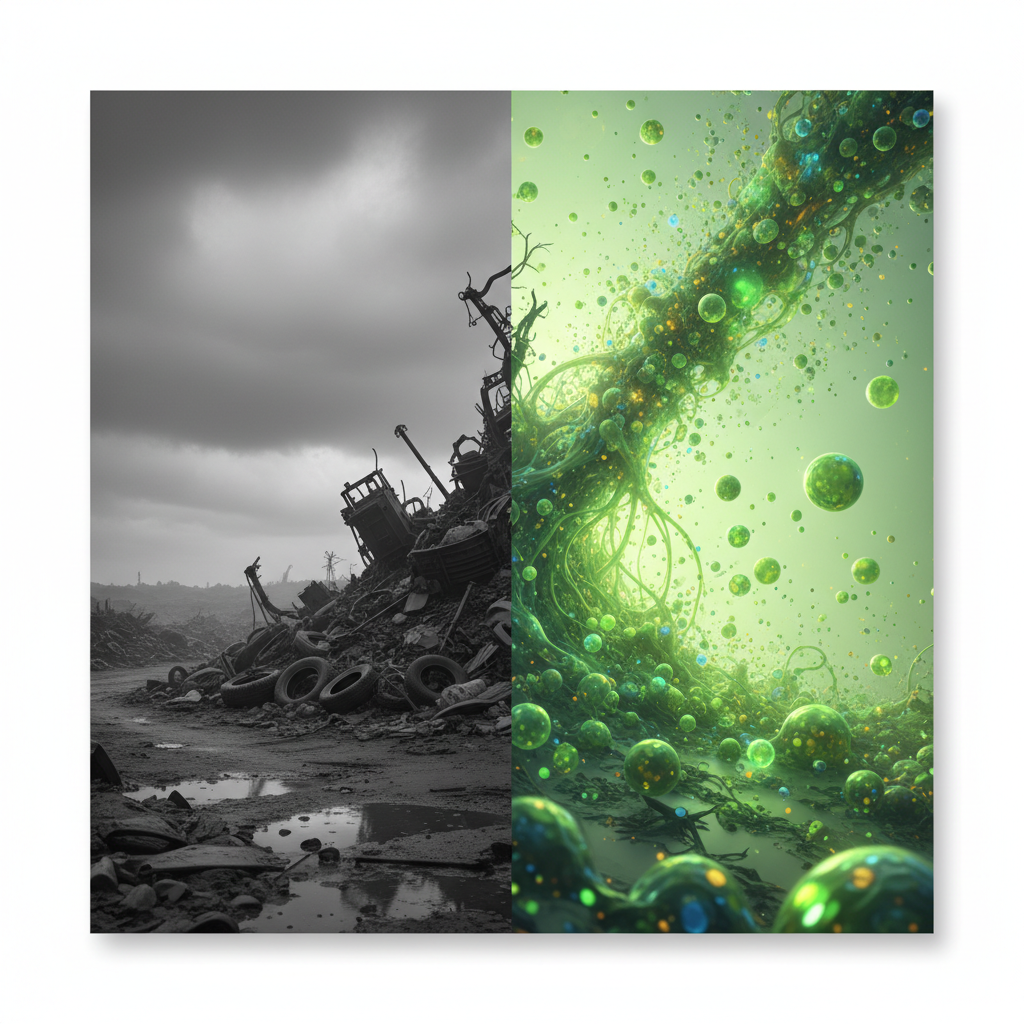
Organic waste, including food scraps and biomass, is overwhelming global landfills. In many regions, 85% of waste is biodegradable but remains unmanaged, releasing harmful methane gas and wasting valuable nutrients.

Biological processes are too slow to keep up with human waste generation, leading to massive resource loss.

A split composition showing a gloomy monochromatic landfill on the left transitioning into bright green floating organic particles on the right, digital art style
Made byBobr AI

Waste Management & The 3Rs

  • Waste Management: The controlled collection, biological treatment, and disposal of waste materials to protect public health and the environment.
  • 1.Reduce: Minimizing waste volume at the source (e.g., efficient microbial degradation).
  • 2.Reuse: Repurposing outputs like compost for agriculture or biogas for energy.
  • 3.Recycle: Biological reprocessing of organic matter into mulch, fertilizer, and soil amendments.
Made byBobr AI
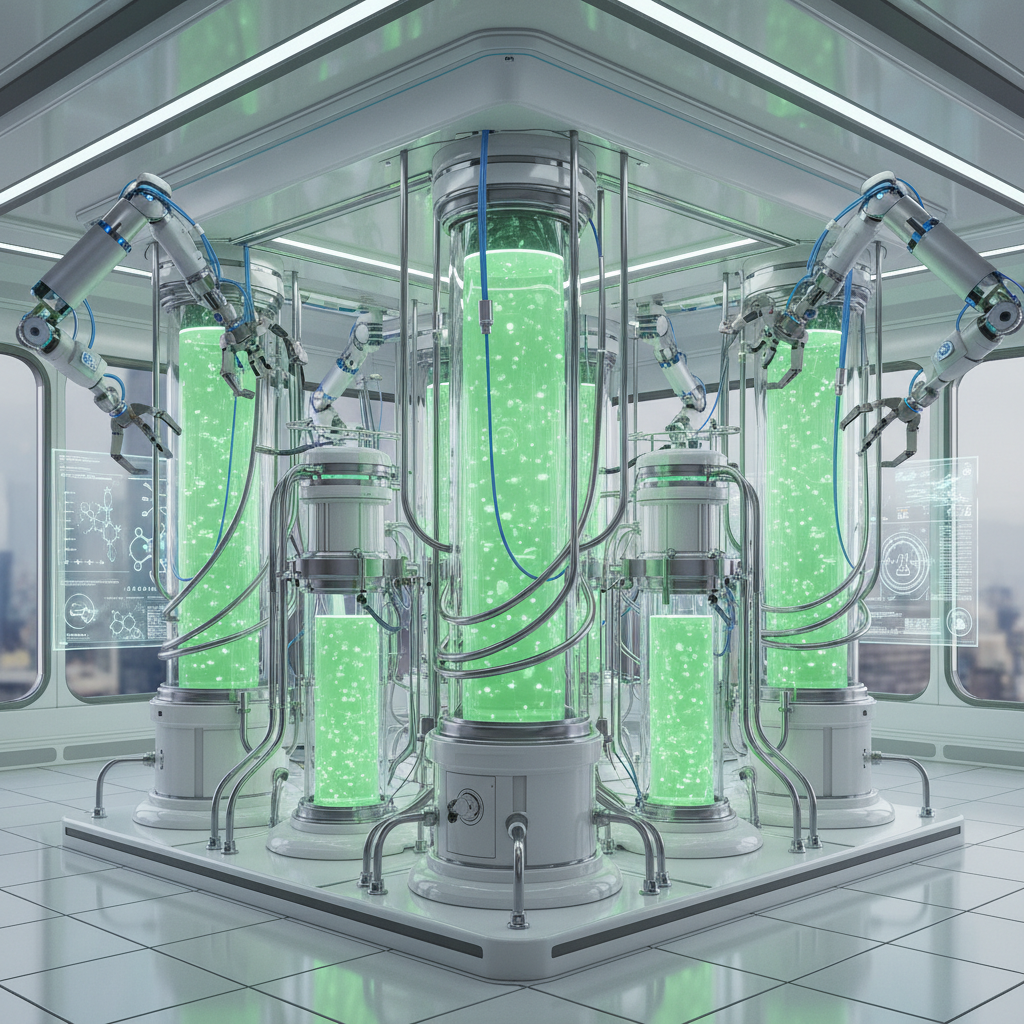
Futuristic glass cylindrical bioreactors glowing green in a clean high-tech laboratory setting, 3d render, photorealistic

The Biorecycling Solution

Our engineered platform uses nature's tools—photosynthesis, composting, and anaerobic digestion—to convert liability into assets.

Energy Recovery

Anaerobic Digestion: Creates biogas (energy) and digestate fertilizer in oxygen-free tanks.

Nutrient Cycling

Advanced Composting: Microbes aerate organics into nutrient-rich soil amendments for farms.

Made byBobr AI

Market Opportunity

The Global Waste Management market is projected to reach over $1.6 Trillion by 2025. Specifically, the Biogas and Organic Waste sectors represent a massive, underserved niche waiting for biological innovation.

Chart
Made byBobr AI

Business Model

01. Service Fees

Processing Fees: Charging municipalities and farms $50-100 per ton for waste off-taking.

02. Energy

Energy Sales: Selling generated Biogas and Electricity directly to the grid or local heating networks.

03. Fertilizers

Product Sales: Premium compost and bio-fertilizers sold to agriculture at $20-50 per ton.

04. Credits

Carbon Credits: Monetizing methane capture and emission reductions.

Made byBobr AI

Go-To-Market Strategy

Awareness

Phase 1: Awareness (Months 1-6). Pilot programs in schools & communities. 'Compost Races' and workshops to demonstrate the biology of decomposition.

Expansion

Phase 2: Scale (Months 7-18). Partner with mid-sized cities for large anaerobic digesters. B2G Contracts.

"Waste is only waste if you waste it!"
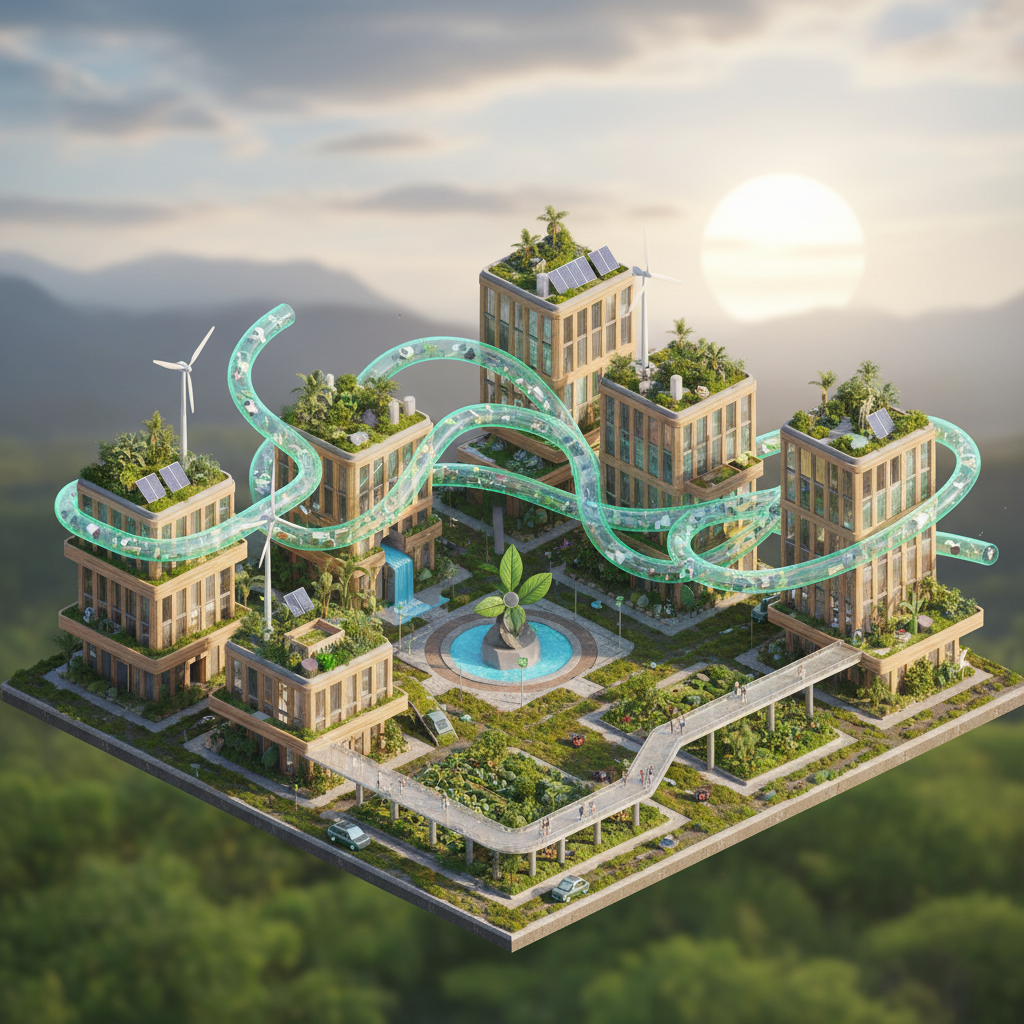
Isometric illustration of a smart eco-city with green roof buildings connected by glowing recycling loops, soft lighting, 3d render
Made byBobr AI

Everyday Examples: The 3Rs in Action

Reduce

Reduce: Opting for minimal packaging at grocery stores to lower waste volume.

Reuse

Reuse: Using wood chips from tree waste as garden mulch instead of buying new soil covers.

Recycle

Recycle: Home composting systems that turn kitchen scraps back into nutrient-dense soil for houseplants.

Made byBobr AI

Competitive Advantage

Unlike traditional landfills which are low-cost but high-pollution, or incinerators which are fast but expensive, BioCycle offers an optimal balance of eco-friendliness, revenue generation, and technological efficiency.

Chart
Made byBobr AI

Financial Projections (5 Year)

Conservative scaling assumes national expansion by Year 4. EBITDA margins reach ~60% as biological processes scale with minimal additional CapEx.

Chart
Made byBobr AI
Bobr AI

DESIGNER-MADE
PRESENTATION,
GENERATED FROM
YOUR PROMPT

Create your own professional slide deck with real images, data charts, and unique design in under a minute.

Generate For Free

Biological Waste Management: Implementing the 3Rs

Learn how BioCycle Solutions uses biological engineering, anaerobic digestion, and composting to turn organic waste into energy and fertilizer.

BioCycle Solutions

Revolutionizing Waste Management Through Biological Engineering

The Global Waste Crisis

Organic waste, including food scraps and biomass, is overwhelming global landfills. In many regions, 85% of waste is biodegradable but remains unmanaged, releasing harmful methane gas and wasting valuable nutrients.

Biological processes are too slow to keep up with human waste generation, leading to massive resource loss.

Waste Management & The 3Rs

Waste Management: The controlled collection, biological treatment, and disposal of waste materials to protect public health and the environment.

Reduce: Minimizing waste volume at the source (e.g., efficient microbial degradation).

Reuse: Repurposing outputs like compost for agriculture or biogas for energy.

Recycle: Biological reprocessing of organic matter into mulch, fertilizer, and soil amendments.

The Biorecycling Solution

Our engineered platform uses nature's tools—photosynthesis, composting, and anaerobic digestion—to convert liability into assets.

Anaerobic Digestion: Creates biogas (energy) and digestate fertilizer in oxygen-free tanks.

Advanced Composting: Microbes aerate organics into nutrient-rich soil amendments for farms.

Market Opportunity

The Global Waste Management market is projected to reach over $1.6 Trillion by 2025. Specifically, the Biogas and Organic Waste sectors represent a massive, underserved niche waiting for biological innovation.

Business Model

Processing Fees: Charging municipalities and farms $50-100 per ton for waste off-taking.

Energy Sales: Selling generated Biogas and Electricity directly to the grid or local heating networks.

Product Sales: Premium compost and bio-fertilizers sold to agriculture at $20-50 per ton.

Carbon Credits: Monetizing methane capture and emission reductions.

Go-To-Market Strategy

Phase 1: Awareness (Months 1-6). Pilot programs in schools & communities. 'Compost Races' and workshops to demonstrate the biology of decomposition.

Phase 2: Scale (Months 7-18). Partner with mid-sized cities for large anaerobic digesters. B2G Contracts.

"Waste is only waste if you waste it!"

Everyday Examples: The 3Rs in Action

Reduce: Opting for minimal packaging at grocery stores to lower waste volume.

Reuse: Using wood chips from tree waste as garden mulch instead of buying new soil covers.

Recycle: Home composting systems that turn kitchen scraps back into nutrient-dense soil for houseplants.

Competitive Advantage

Unlike traditional landfills which are low-cost but high-pollution, or incinerators which are fast but expensive, BioCycle offers an optimal balance of eco-friendliness, revenue generation, and technological efficiency.

Financial Projections (5 Year)

Conservative scaling assumes national expansion by Year 4. EBITDA margins reach ~60% as biological processes scale with minimal additional CapEx.

  • waste-management
  • biotechnology
  • circular-economy
  • renewable-energy
  • composting
  • sustainability
  • green-tech