
Forest Transformations in Java: Land Use & History
Explore the history of forest changes in Java, from Dutch colonial teak exploitation and world war impacts to modern conservation efforts.
Forest Transformations in Java
Impacts of Land Use, Agriculture, and Industry
Name: Raghavendra | Class: IX - C | Roll No: 25
Acknowledgment
I would like to express my special thanks of gratitude to my subject teacher as well as our principal who gave me the golden opportunity to do this wonderful project on the topic 'Forest Transformations in Java'. I would also like to thank my parents and friends who helped me a lot in finalizing this project within the limited time frame.
Index
1. Introduction to Java's Forests
2. Colonial Era Changes & Teak Forestry
3. Impact on Local Communities & Agriculture
4. War & Industrialization Impact
5. Environmental Consequences & Conservation
6. References
Introduction: The Vanishing Forests
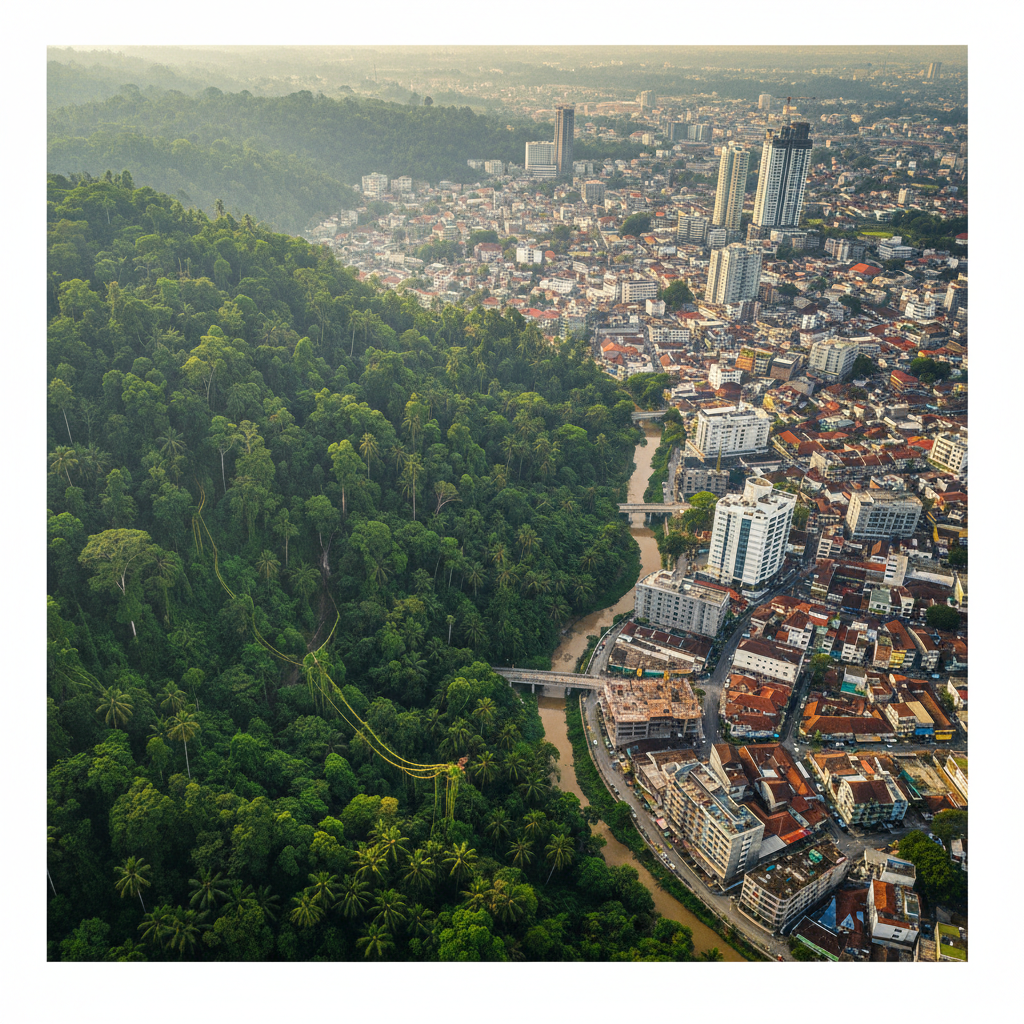
Java is Indonesia's most populous island with over 140 million people. Originally covered in lush tropical rainforests, human activity has drastically reduced this cover. Today, only about 2% of the original forest remains intact. The primary drivers of this transformation are population growth, agricultural expansion, and industrial infrastructure.
Colonial Exploitation: The Teak Era
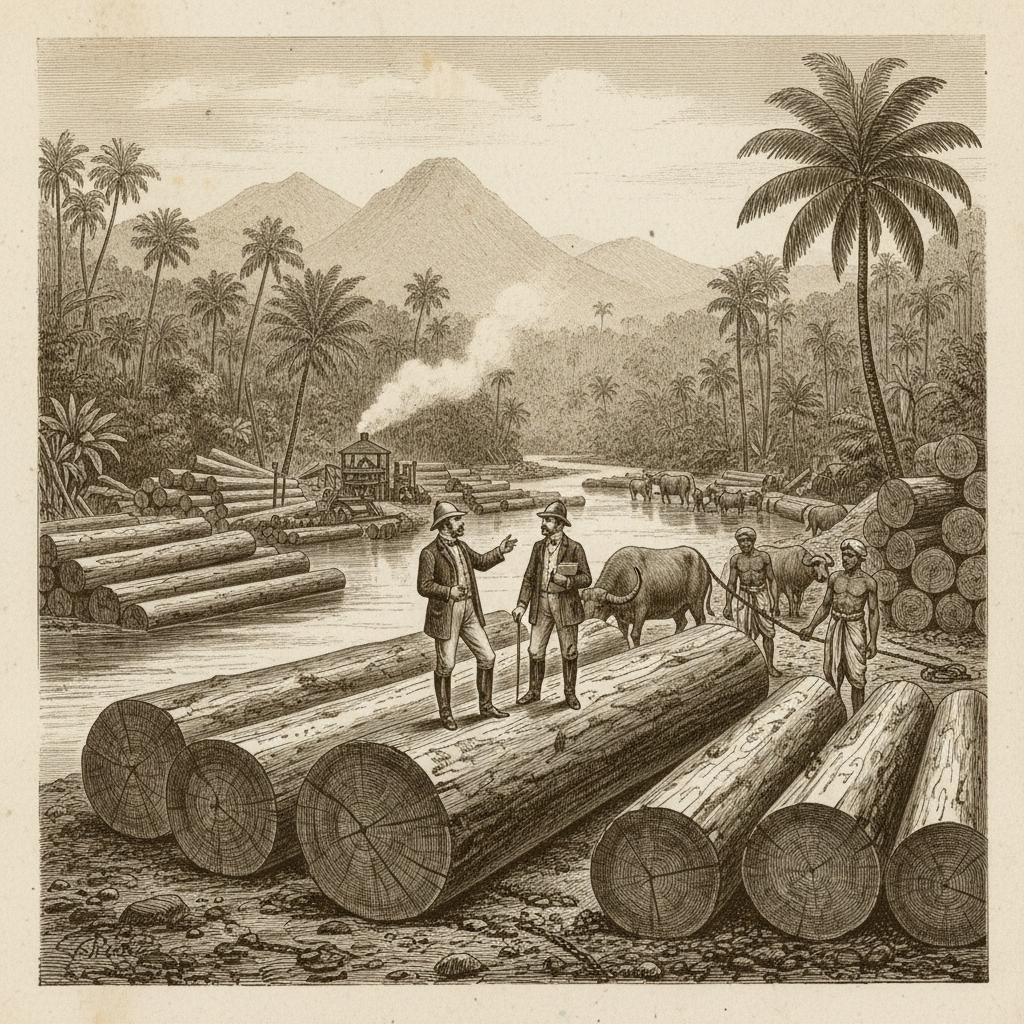
Under Dutch colonial rule (17th-20th century), Java's forests became a resource for shipbuilding. The Dutch implemented scientific forestry, cutting down diverse jungles to plant monoculture Teak forests. While valuable for timber, this destroyed biodiversity and restricted villagers' access to their own lands.
Impact on Agriculture & Communities
Villagers lost traditional rights to forest produce and were punished for grazing cattle in young teak forests.
The 'Blandongdiensten' system forced villagers to cut and transport timber for free, replacing tax payments.
Resistance arose, such as Surontiko Samin's movement (1890s), questioning state ownership of the land.
Introduction of 'Tumpang Sari': Farmers were allowed to plant crops between teak rows in exchange for labor.
Wars and the Scorched Earth Policy
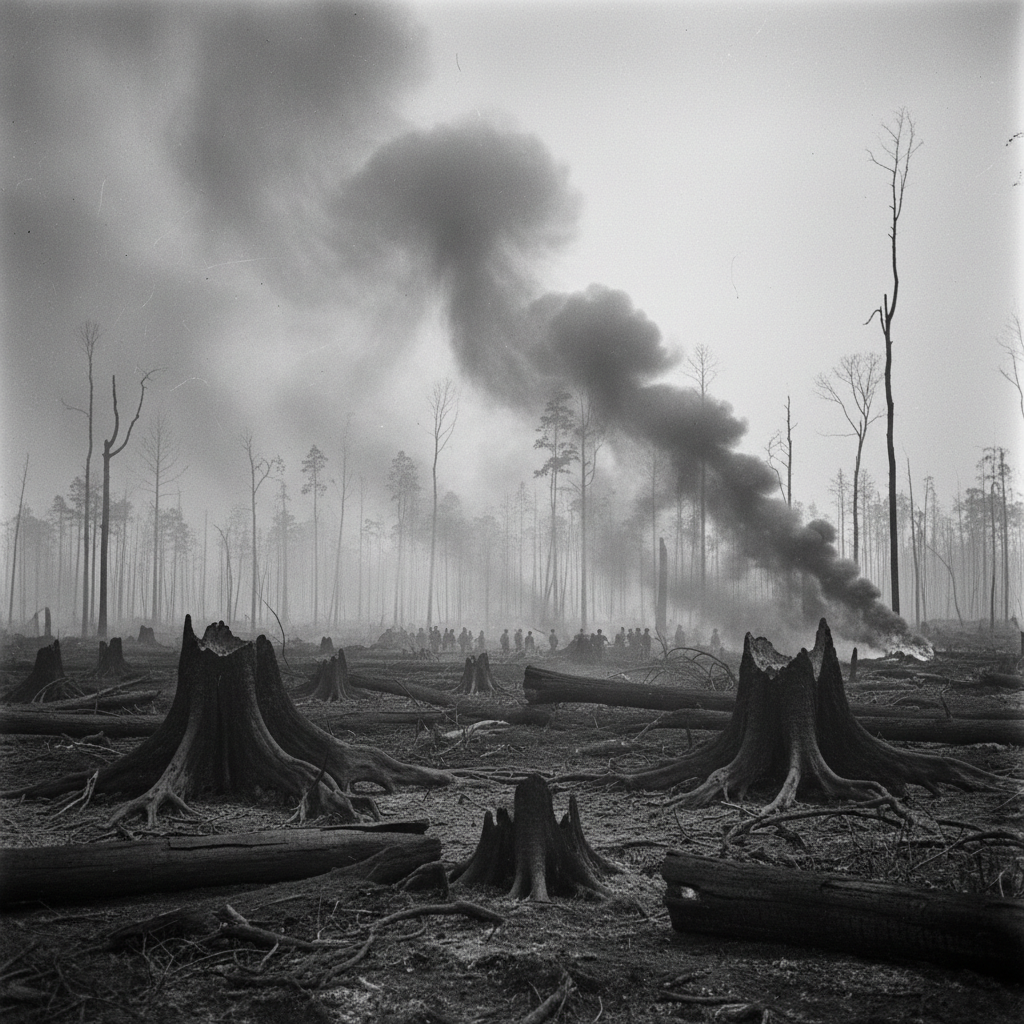
The World Wars accelerated deforestation. To prevent the Japanese from using resources, the Dutch applied a 'scorched earth' policy, destroying sawmills and burning teak logs. During the Japanese occupation, villagers were forced to clear more forests for agriculture, further degrading the ecosystem.
Environmental & Ecological Consequences
Severe Biodiversity Loss: Replacement of natural mixed forests with teak monocultures reduced habitat for diverse species.
Soil Erosion: Removal of ground cover exposed soil to heavy tropical rains, leading to degradation.
Hydrological Issues: Reduced forest cover impacted water retention, contributing to floods and droughts.
Industrial Pollution: Modern industrial zones near forests have further polluted soil and water sources.
Conservation and The Future
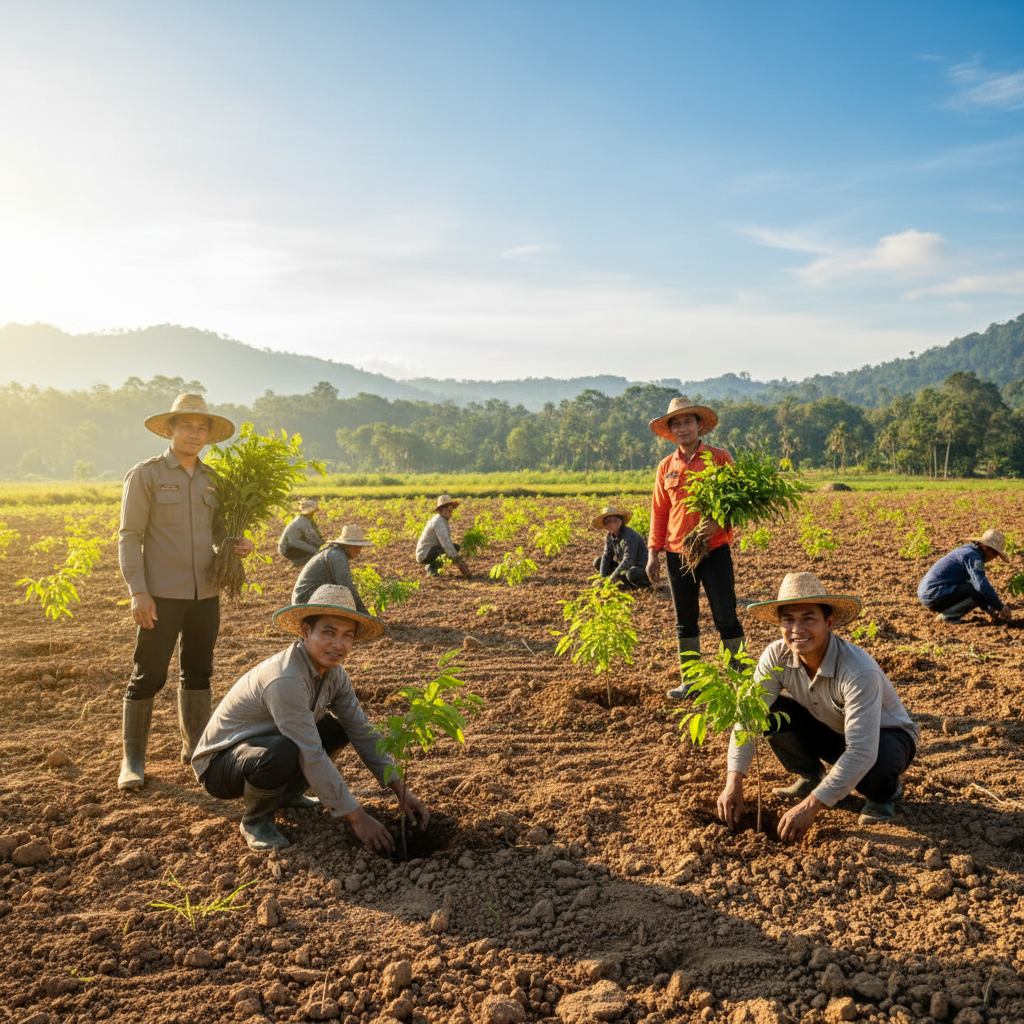
Java is now focusing on social forestry and reforestation. The government and NGOs are involving local communities in forest management, recognizing that sustainable conservation requires the cooperation of the people living near the forests.
References
1. Scribd documentation on Java Deforestation History.
2. Arboriculture blog: State Forestry and Colonial Impact.
3. GeeksforGeeks: Impact of World Wars on Forests.
4. JSTOR: Ecological changes in Java (19th-20th Century).
- java forests
- deforestation history
- dutch colonial forestry
- teak plantations
- environmental conservation
- indonesia history
- social forestry