
The History of Computers: From Abacus to Quantum
Explore the evolution of computing from mechanical gears to modern AI. Learn about ENIAC, transistors, Moore's Law, and the future of quantum processing.
The History of Computers
From Mechanical Gears to Quantum Processing
Presentation Index
Introduction: What is a Computer?
Early Origins: The Abacus & Antikythera
The Mechanical Era: Babbage & Lovelace
First Generation: Vacuum Tubes & ENIAC
The Transistor Revolution
The Integration Era & Modern Computing
Introduction
A computer is a machine that can be instructed to carry out sequences of arithmetic or logical operations automatically via computer programming. Modern computers have the ability to follow generalized sets of operations, called programs, which enable them to perform an extremely wide range of tasks.
Ancient Origins
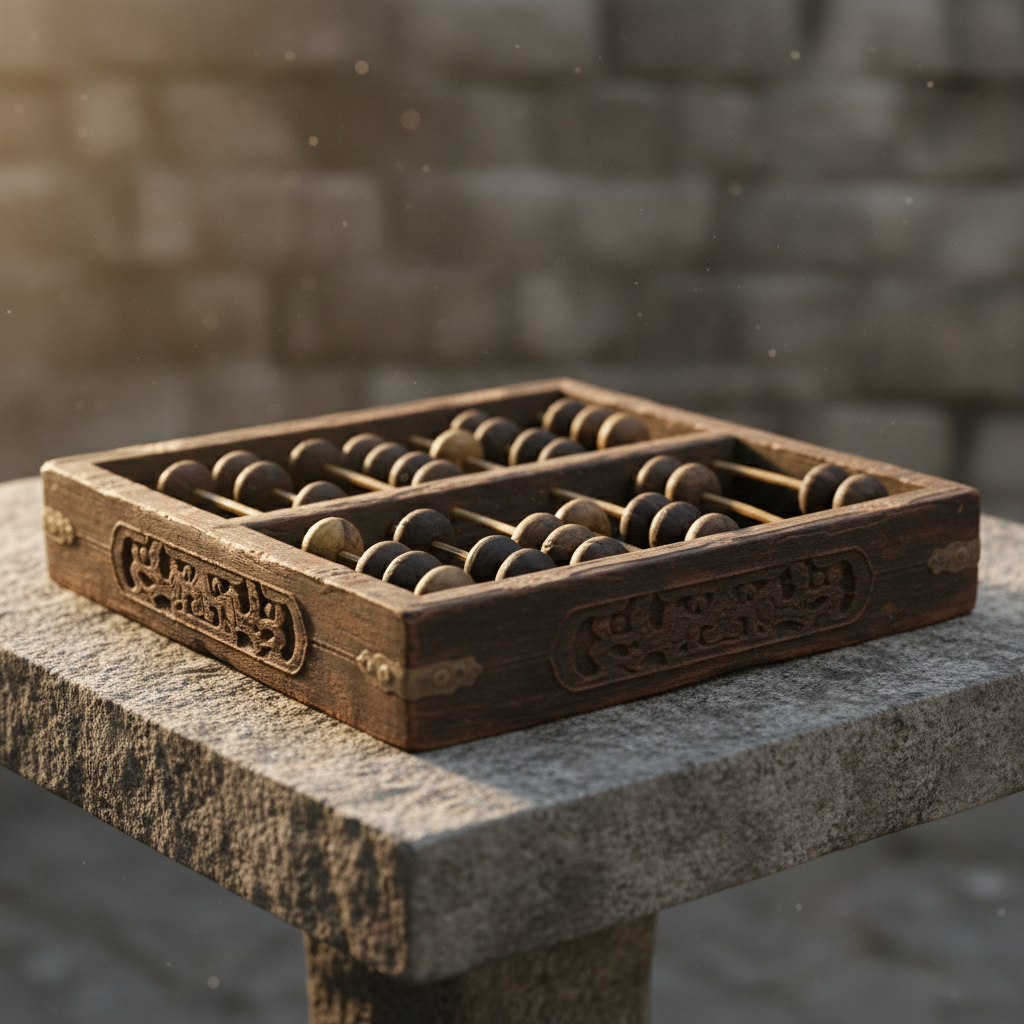
Long before electronics, humans built tools to calculate. The Abacus, invented around 2400 BC in Babylonia, is considered the first computer. Later, devices like the Antikythera mechanism (circa 100 BC) served as complex analog computers to predict astronomical positions.
The Mechanical Era
In the 19th century, Charles Babbage designed the 'Analytical Engine,' a proposed mechanical general-purpose computer. Ada Lovelace, who wrote an algorithm for it, is often recognized as the first computer programmer. They laid the conceptual groundwork for modern computing.
1st Generation: Vacuum Tubes
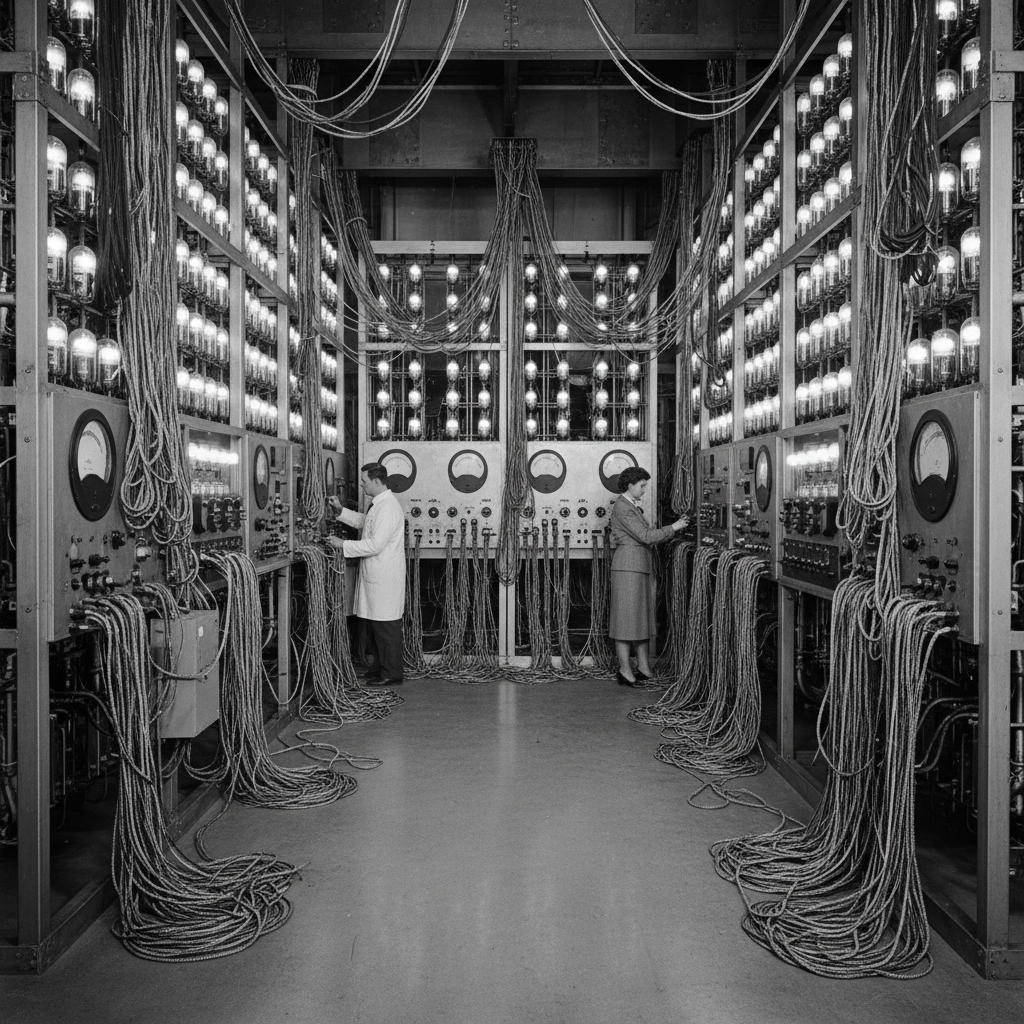
The ENIAC (1945) was the first electronic general-purpose computer. It used over 17,000 vacuum tubes, weighed 30 tons, and occupied 1,800 square feet. These machines were massive, generated tremendous heat, and were programmed via plugboards.
2nd & 3rd Generations
Second Gen (1956-1963): Transistors replaced vacuum tubes. Computers became smaller, faster, cheaper, and more reliable.
Third Gen (1964-1971): Integrated Circuits (ICs). Transistors were miniaturized and placed on silicon chips.
Keyboards and monitors replaced punch cards and printouts.
Moore's Law: The Rise of Processing Power
The number of transistors on microchips has doubled roughly every two years, driving the exponential growth of computing power.
The Internet Age
In the 1990s, the connection of personal computers into a global network (World Wide Web) revolutionized society. Computing moved from calculation to communication, changing how we work, learn, and interact.
The Future: AI & Quantum
The next era of computing power is just beginning.
- history-of-computers
- computing-evolution
- moores-law
- computer-science
- eniac
- quantum-computing
- ada-lovelace