

History of Computers: From Vacuum Tubes to Quantum AI
Explore the evolution of computing: from 1940s ENIAC vacuum tubes and transistors to the PC revolution, the World Wide Web, and modern quantum processing.
The History of Computers
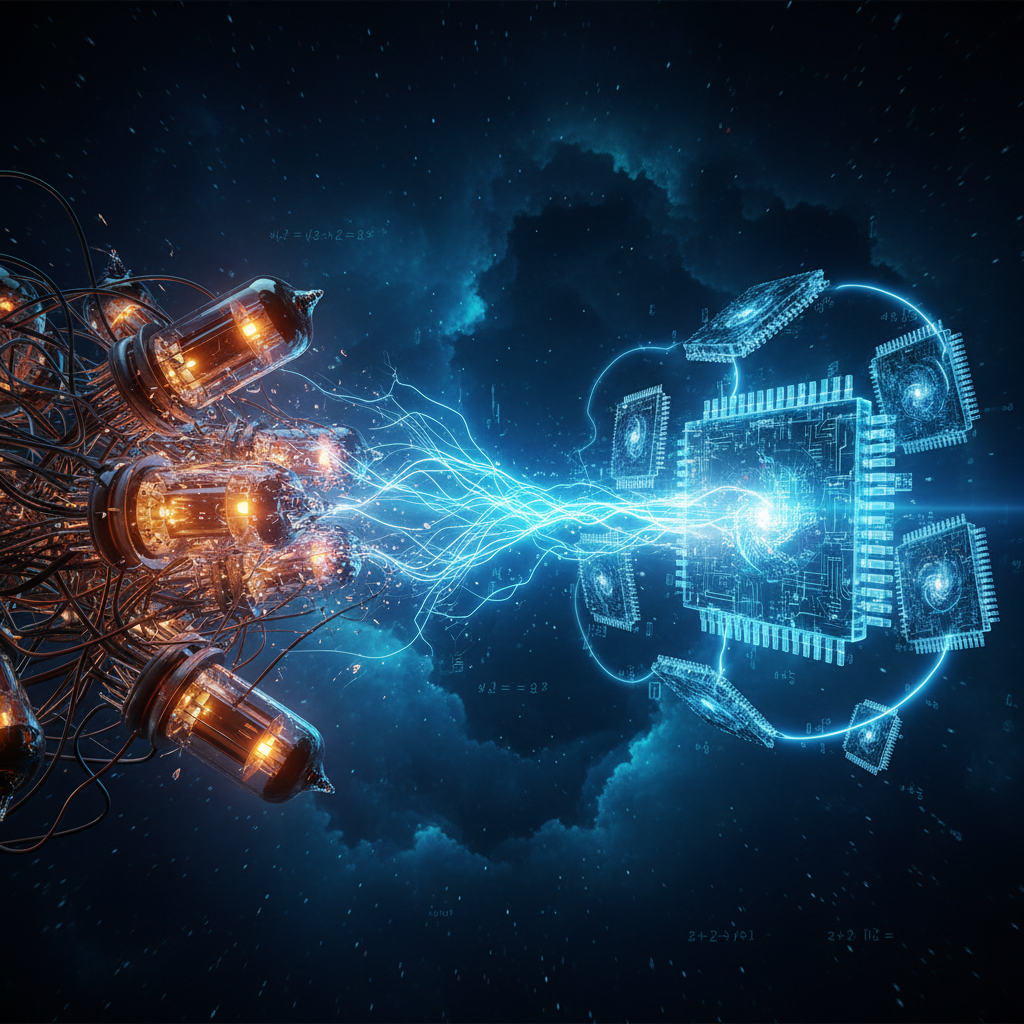
From Vacuum Tubes to Quantum Processing
Table of Contents
<ul><li>Introduction: What Defines a Computer?</li><li>The Vacuum Tube Era: ENIAC (1940s)</li><li>Hardware Innovation: Transistors & Chips</li><li>The Birth of Programming Languages</li><li>The Personal Computing Revolution</li><li>The Internet & World Wide Web</li><li>Modern Era: Mobile & Quantum</li><li>Growth of Connectivity (Data)</li></ul>
Introduction
The history of computers is a journey from mechanical calculation to digital logic. While tools like the Abacus existed for centuries, the electronic computer revolutionized how humanity processes information. This presentation outlines the key milestones that transformed machines from room-sized calculators into devices we carry in our pockets.
1940s: The Era of 'Giant Brains'
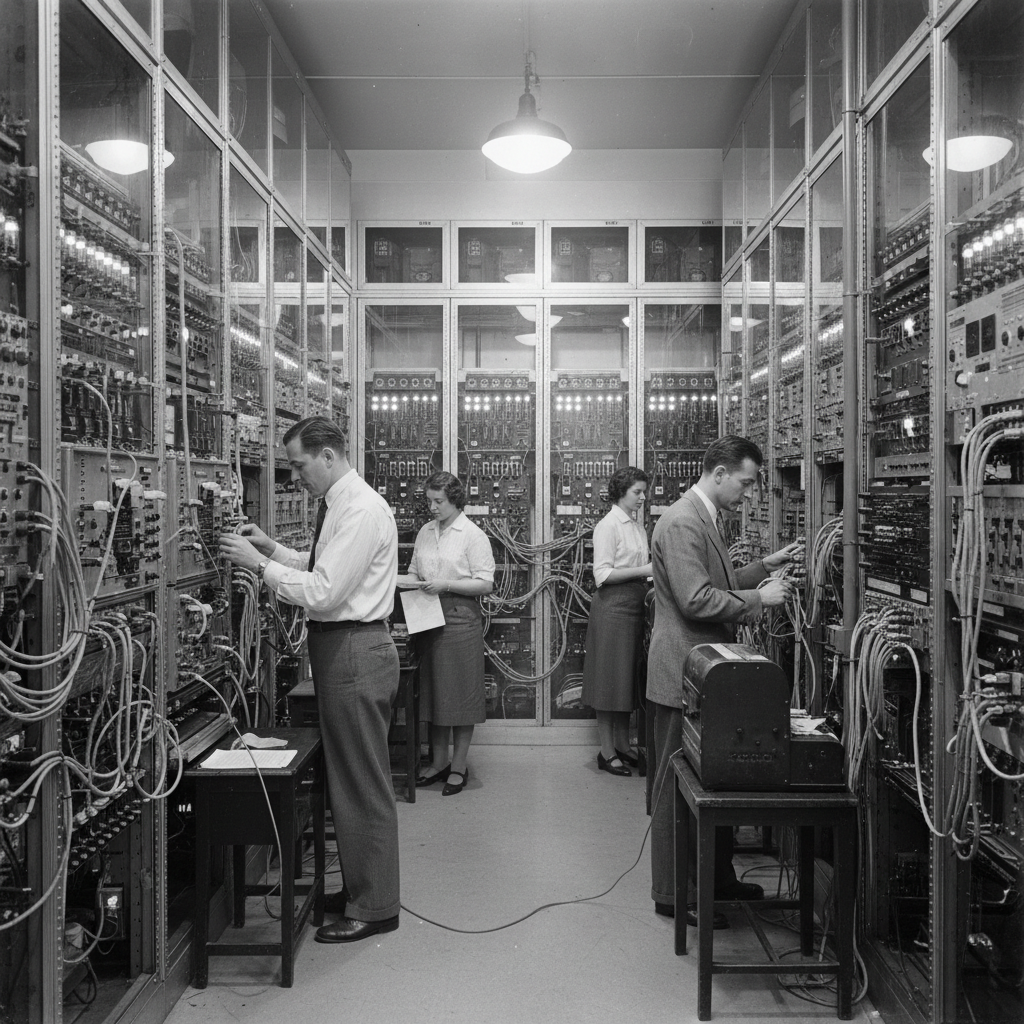
The ENIAC (Electronic Numerical Integrator and Computer), announced in 1946, was the first general-purpose electronic digital computer. Built by J. Presper Eckert and John Mauchly, it was a massive machine occupying a 20x40 foot room. It utilized 18,000 vacuum tubes to perform complex military calculations during WWII.
Hardware Innovation (1950s-70s)
<ul><li><strong>Vacuum to Transistors:</strong> Replaced bulky tubes with smaller, reliable components.</li><li><strong>Integrated Circuit (1958):</strong> Invented by Jack Kilby and Robert Noyce, combining circuits on a single chip.</li><li><strong>Microprocessors:</strong> The Intel 4004 (1971) put a CPU on one chip, paving the way for smaller computers.</li></ul>
The Birth of Software
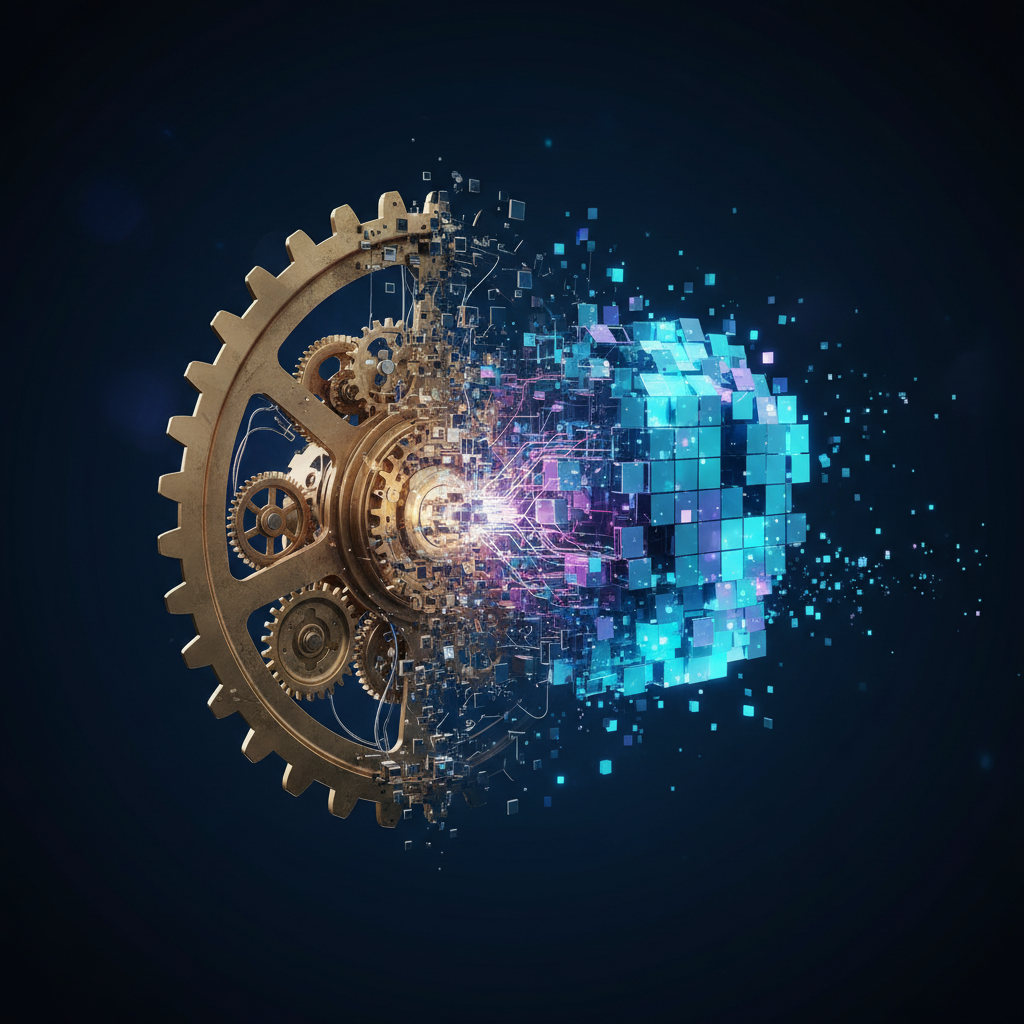
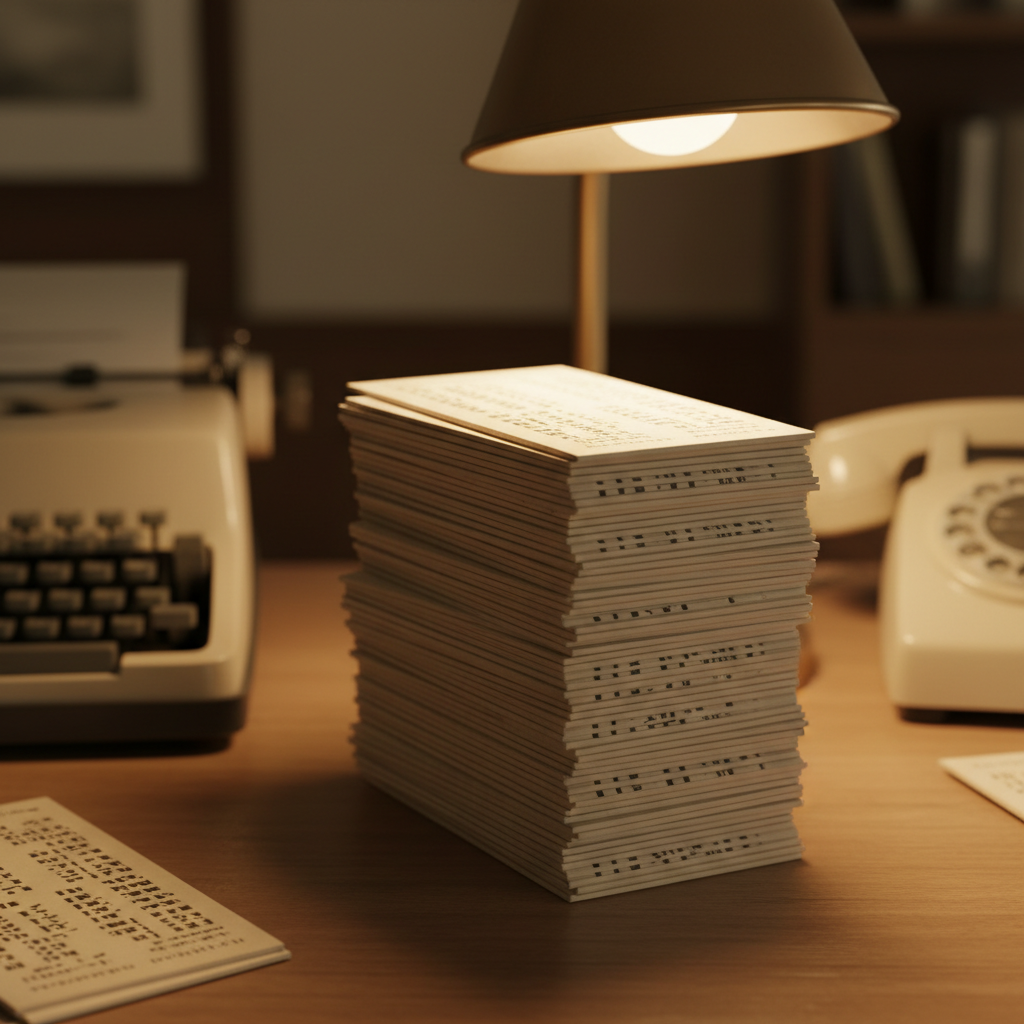
Hardware needed instructions. In the 1950s, the first programming languages emerged to bridge the gap between human logic and machine code. Innovations included Fortran (1957) for science and COBOL (1959) for business. Grace Hopper's development of the compiler was a critical step in making programming accessible.
The PC Revolution (1970s-80s)
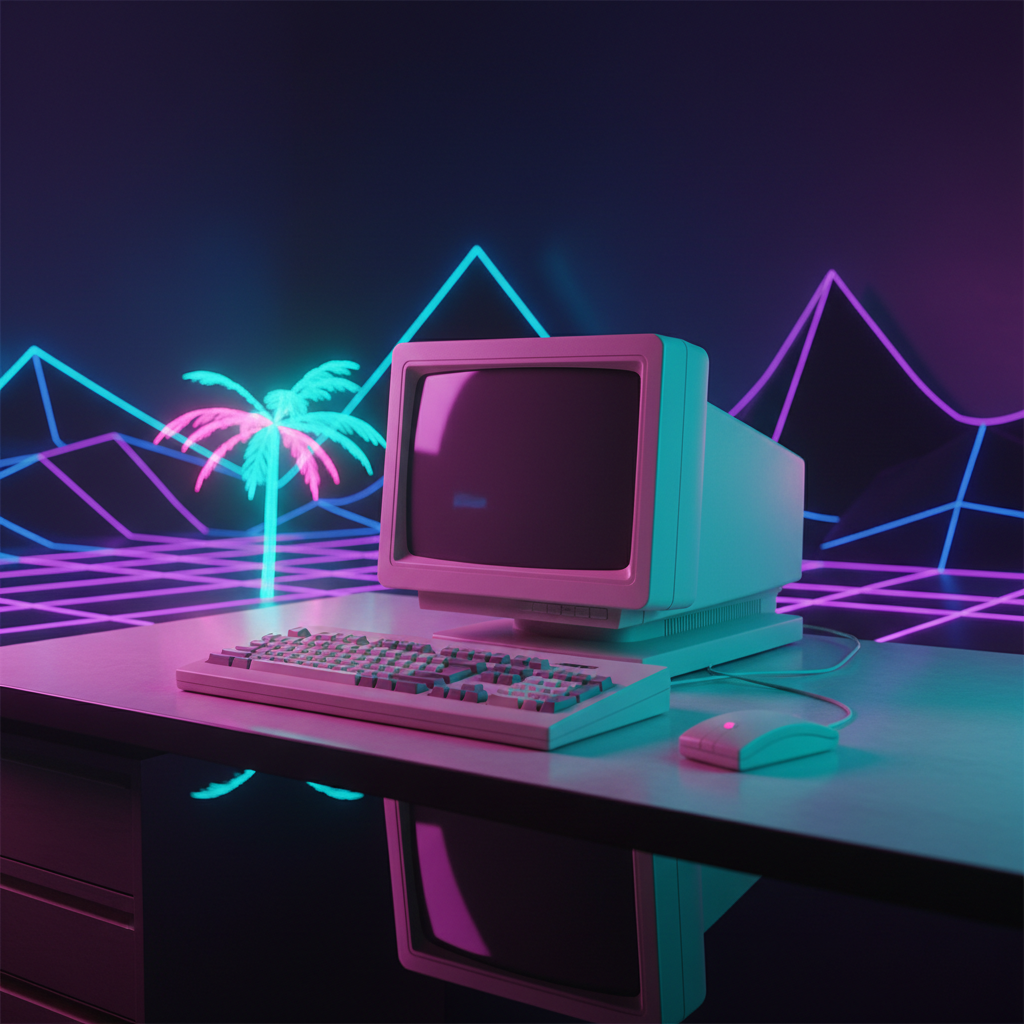
Computers left the laboratory and entered the home. <ul><li><strong>1977:</strong> The 'Trinity' of personal computing launched, including the Apple II.</li><li><strong>1981:</strong> The IBM PC standardization brought computers to business desktops.</li><li><strong>1985:</strong> Microsoft Windows and the Macintosh popularized the Graphical User Interface (GUI).</li></ul>
Connecting the World
The 1960s saw the creation of ARPANET, funded by defense research, which pioneered packet switching. This foundation evolved into the modern Internet. In 1991, Tim Berners-Lee invented the World Wide Web, creating a user-friendly interface that democratized access to information globally.
The Mobile & Quantum Era (2000s+)
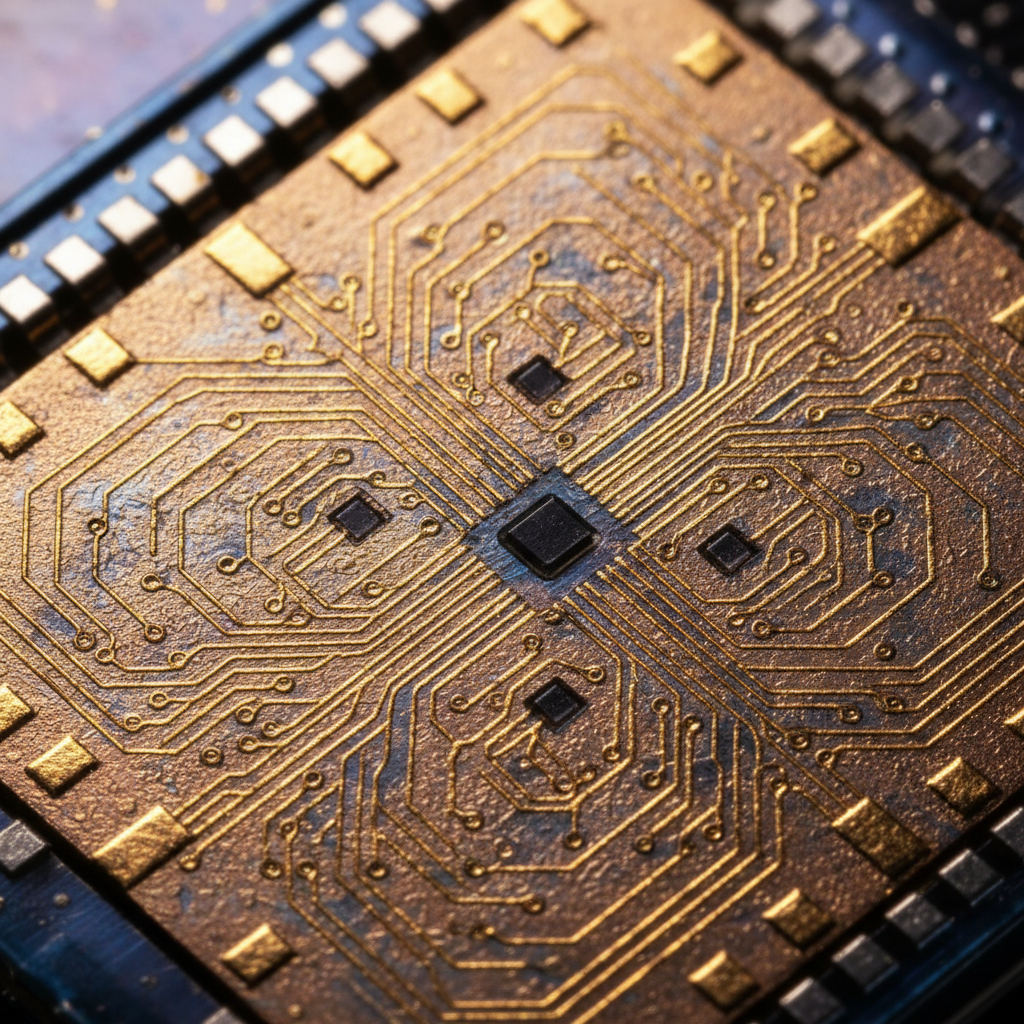
Computing has moved from desks to palms, and now to sub-atomic particles. <br/><br/>The launch of the iPad (2010) and smartphones defined the mobile age. Today, research focuses on Artificial Intelligence using neural networks, and Quantum Computing (2016 milestones), which promises to solve problems unsolvable by classical machines.
Global Internet Users Growth
As computer hardware became cheaper and more powerful, connectivity exploded. This chart illustrates the rapid adoption of the internet, a direct result of the PC and Mobile revolutions.
- computer-history
- eniac
- microprocessors
- pc-revolution
- software-evolution
- quantum-computing
- technology-timeline