

Newton's Laws of Motion in Biomechanics & Physiotherapy
Explore how Newton's three laws apply to physiotherapy, including gait analysis, prosthetic design, and rehabilitation exercises for better patient outcomes.
Newton's Laws of Motion in Biomechanics
Applications for Physiotherapy: Gait, Rehabilitation, and Infinite Motion
HARITHA CHOWDHARY
With reference to the textbook
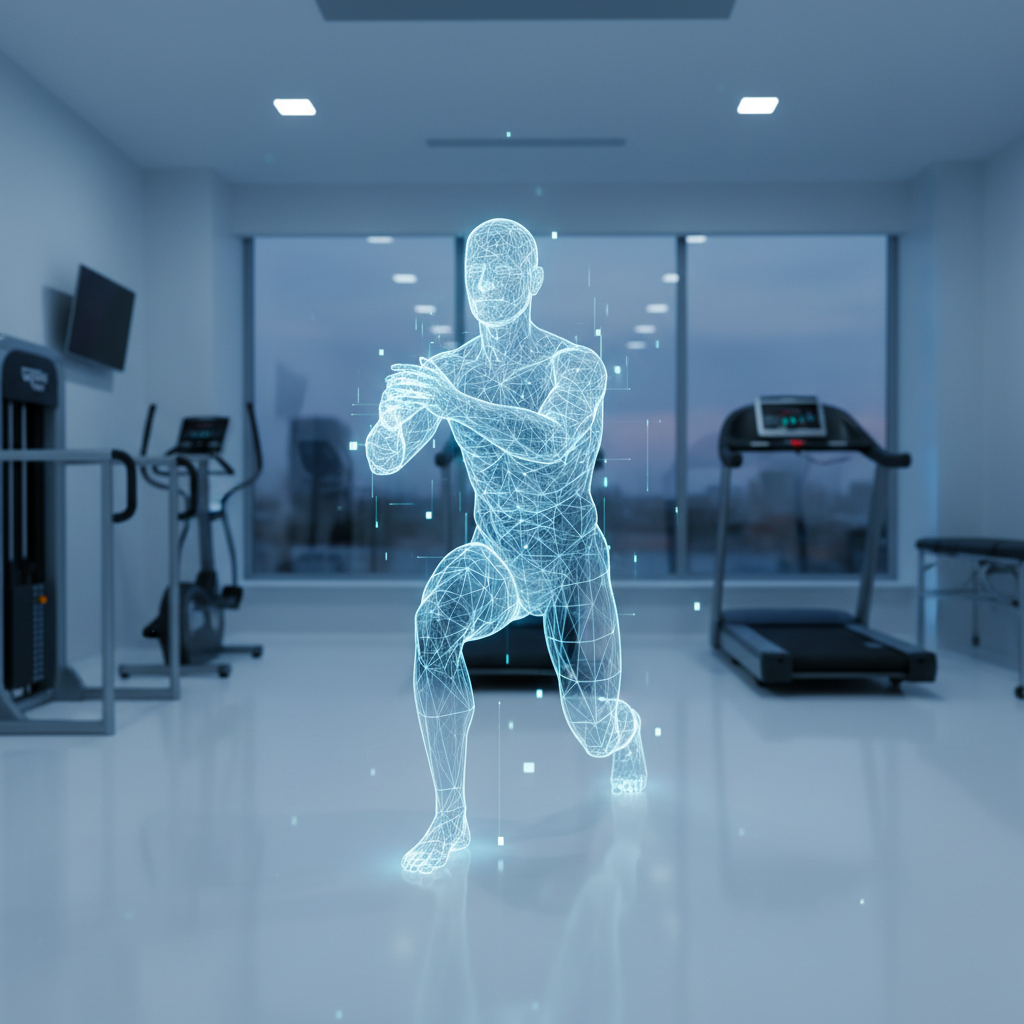
What is Biomechanics?
<b>Biomechanics</b> is the <b>application of mechanical principles to living organisms</b>, especially the human body.<br><br><b>In simple terms:</b><br>it studies <b>how forces act on the body</b> and <b>how the body responds through movement</b>.<br><br><b>In physiotherapy</b>, biomechanics helps us understand:<br>• How muscles produce movement<br>• How joints move and bear loads<br>• How posture, gait, and balance are maintained<br>• How injuries occur and how movements can be corrected during rehabilitation
Newton's First Law: Law of Inertia
Newton’s First Law says: a body remains at rest or in motion unless acted upon by an external force.
Interactive cue: “Why do you fall forward when a bus suddenly stops?” (wait for response)
Biomechanics application: Muscles and ligaments act as forces to overcome inertia. Poor postural control = higher injury risk. Rehab trains the body to control inertia, not fight it blindly.
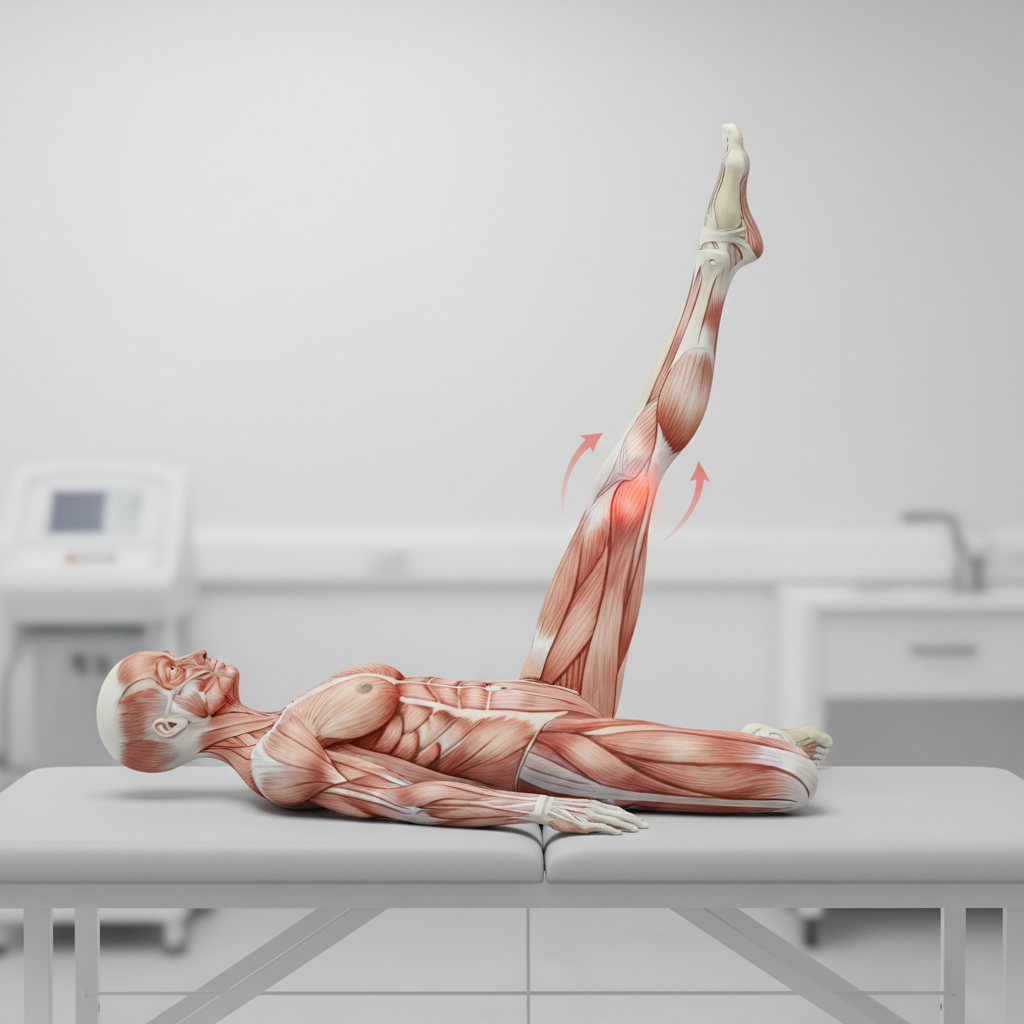
Applications of First Law: Rehabilitation
In post-surgery rehab, we manipulate the 'moment of inertia' to aid patients. For example, flexing the knee during hip exercises reduces the distance of the limb's mass from the hip joint. This reduces the rotational inertia, making it easier for weakened muscles to lift the leg against gravity.
F = m × a
Newton's Second Law: Law of Acceleration
The acceleration of an object is directly proportional to the net force acting on it and inversely proportional to its mass. In biomechanics, this explains how ample muscle force is needed to accelerate the mass of the body.
Newton’s Second Law – Law of Acceleration
“Force equals mass into acceleration.”
Interactive cue: “Which is harder to move—an empty trolley or a loaded one?”
Biomechanics application: Muscle force determines movement speed. Heavier limbs or external loads need more force. Used in gait analysis, strength training, and prosthetics design.
Second Law Application: Prosthetics
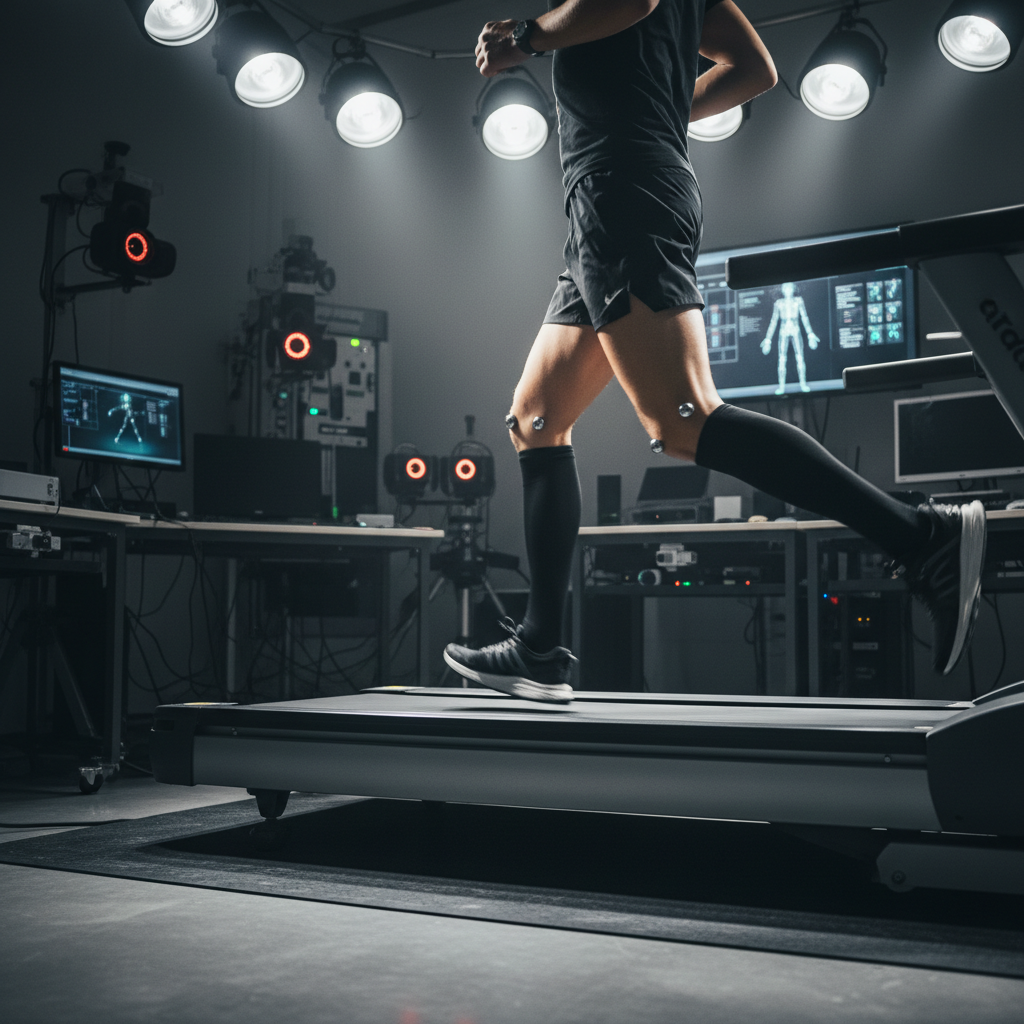
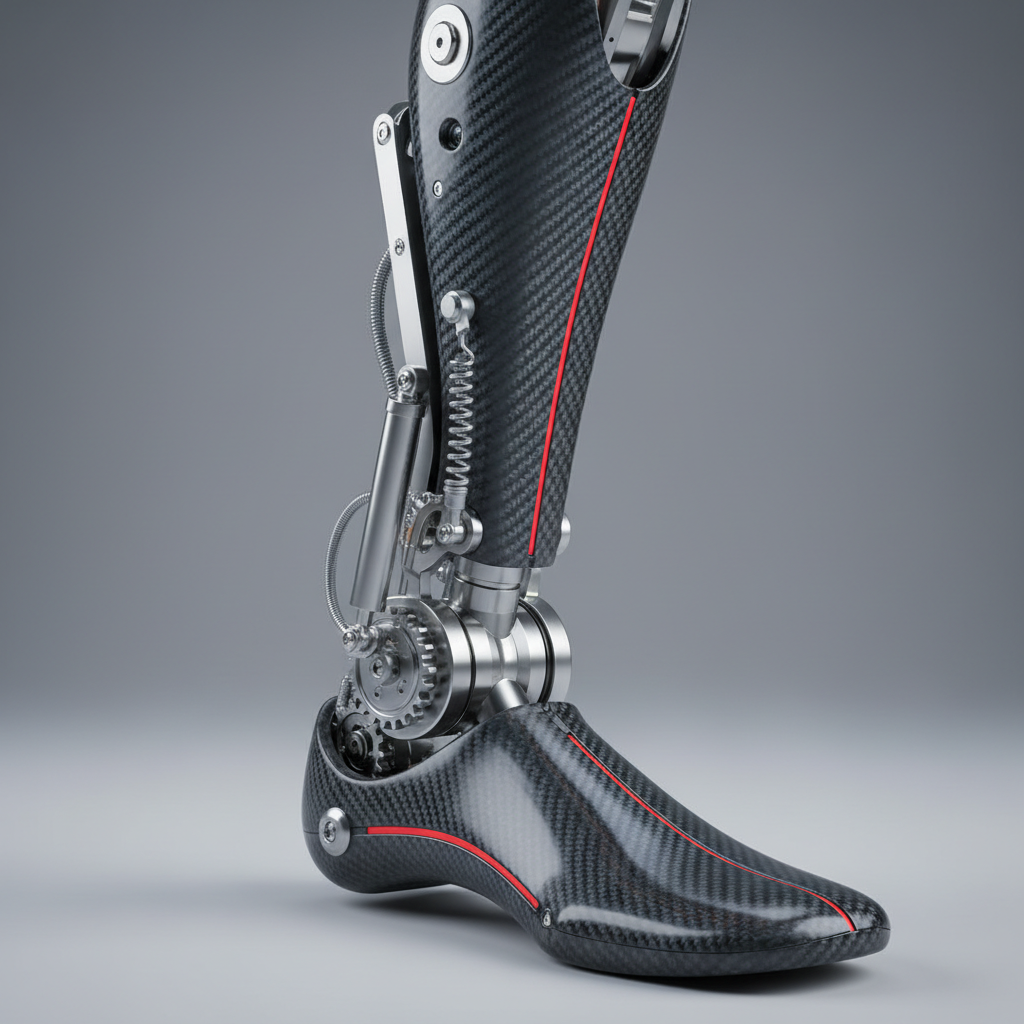
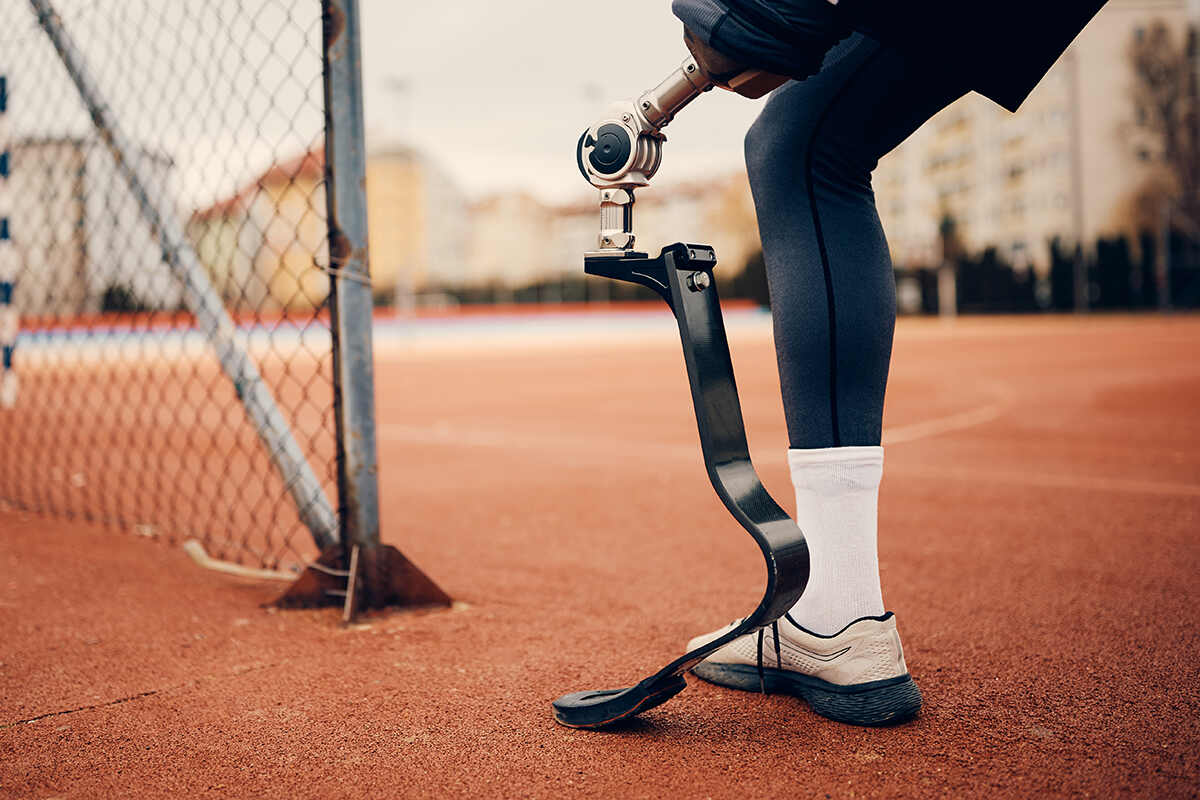
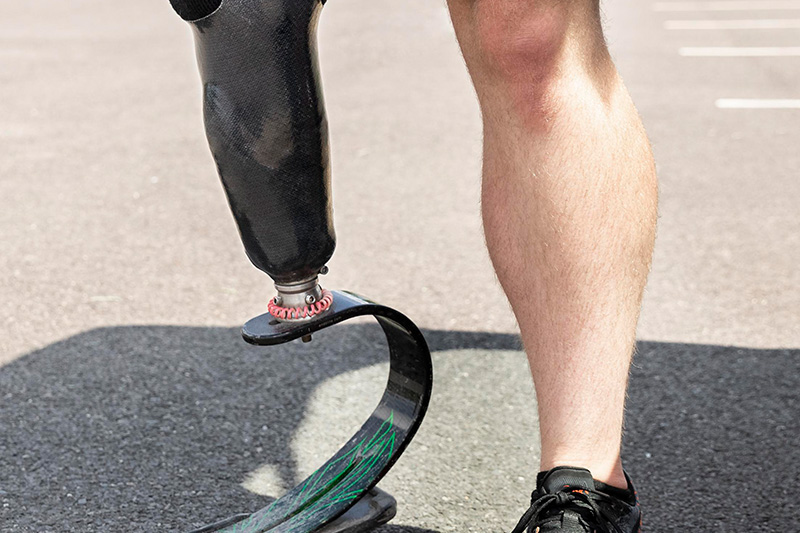
For amputees, the mass of a prosthetic limb is crucial. According to F=ma, a lighter prosthetic leg (lower mass) requires less force from the hip muscles to swing it forward (acceleration). This conserves energy and allows for a more natural walking gait.
Prosthetic Biomechanics in Action
Newton’s Third Law – Action & Reaction
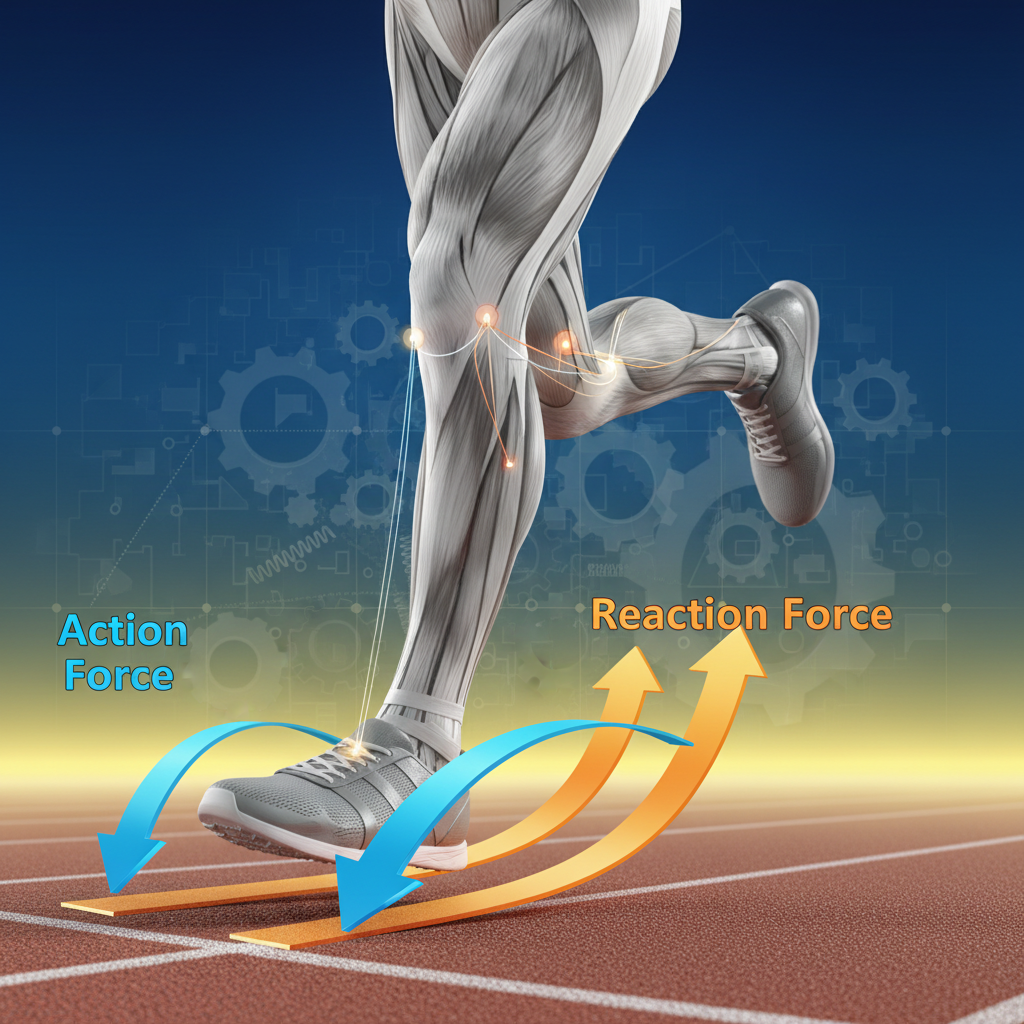
“For every action, there is an equal and opposite reaction.”
Interactive cue: “When you push the ground while walking, what pushes you forward?”
Biomechanics application: Ground reaction forces. Jumping, running, balance. Foundation of sports performance and injury prevention.
Applying Third Law: Gait & Crutches
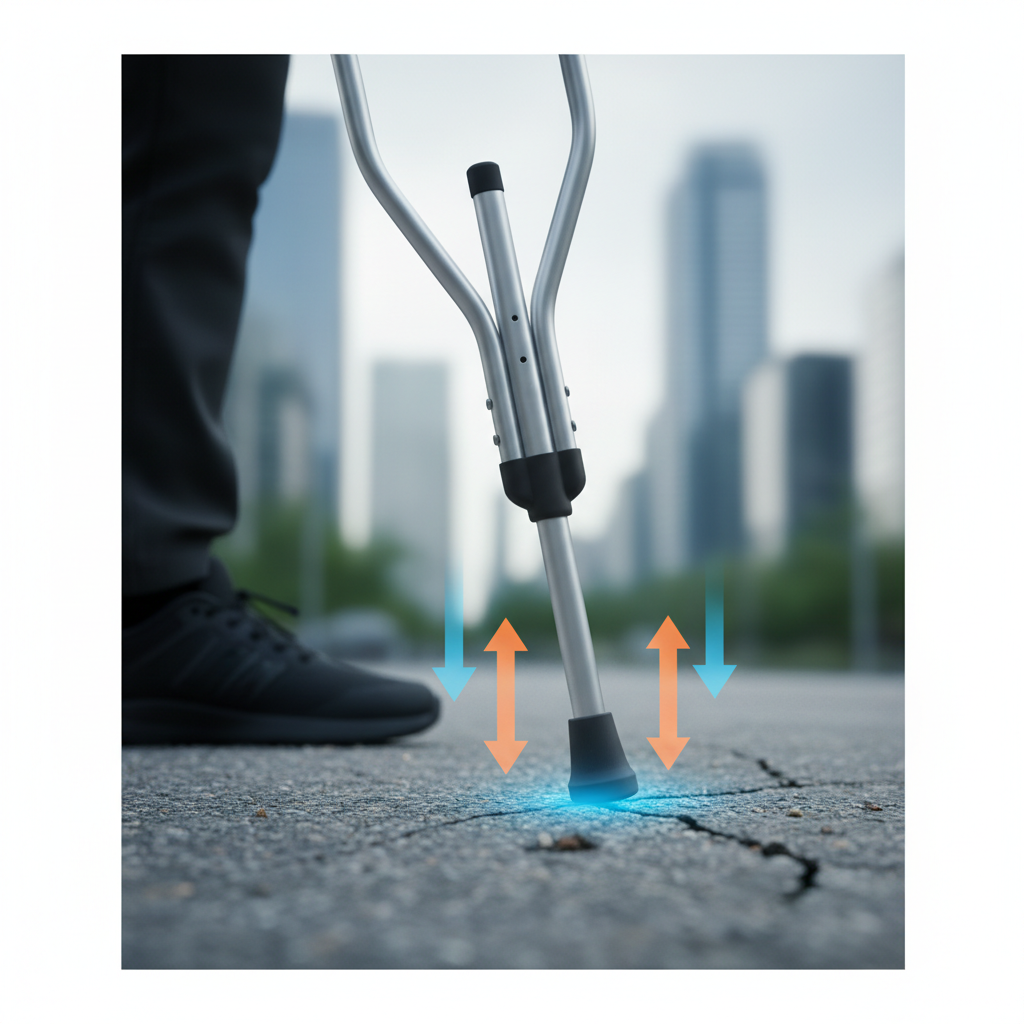
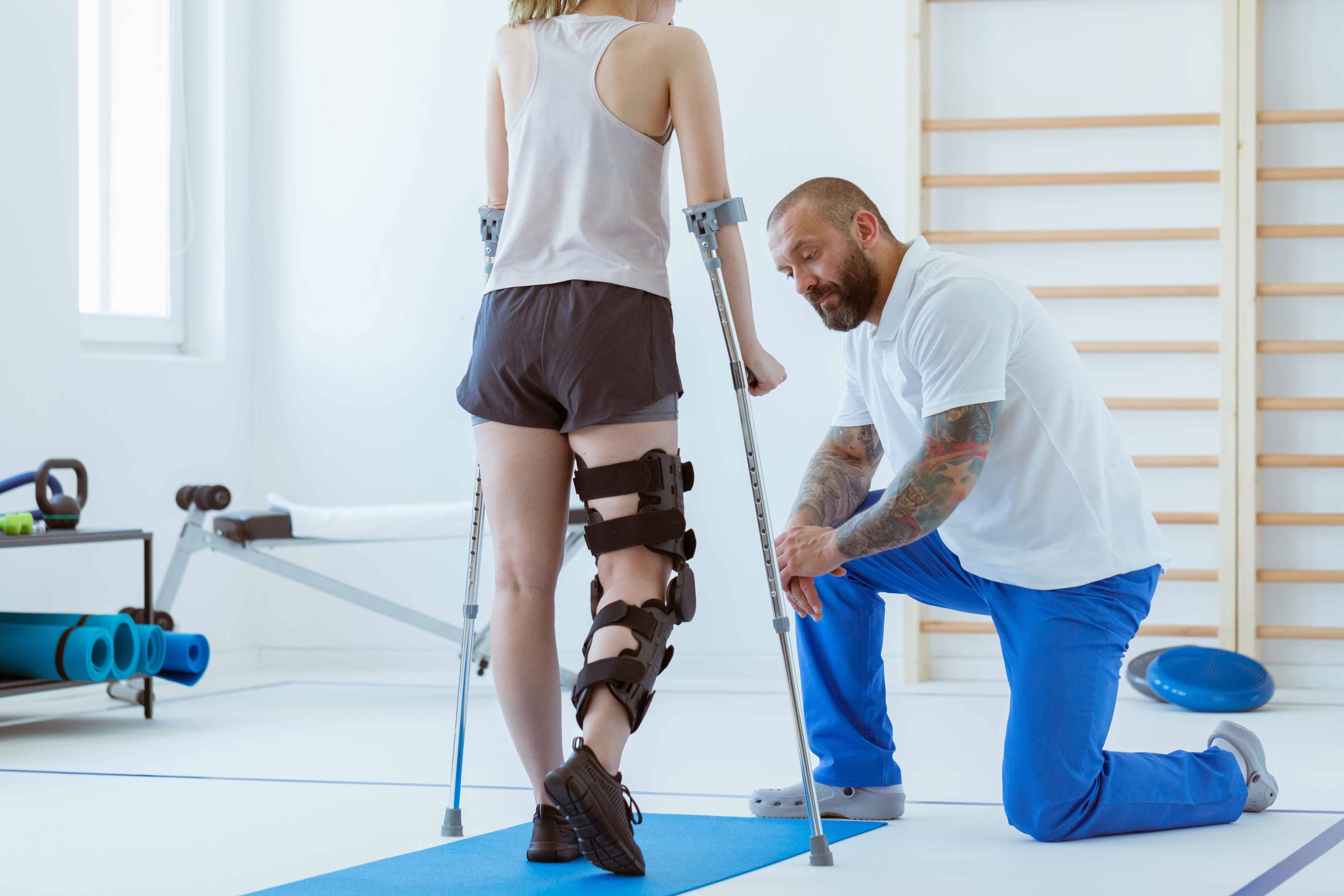
In gait training with crutches, the patient pushes down on the handles (Action). The crutches transfer this force to the floor, and the floor generates a reaction force upward that supports the patient's body weight. Physiotherapists analyze these Ground Reaction Forces to ensure stability and balance.
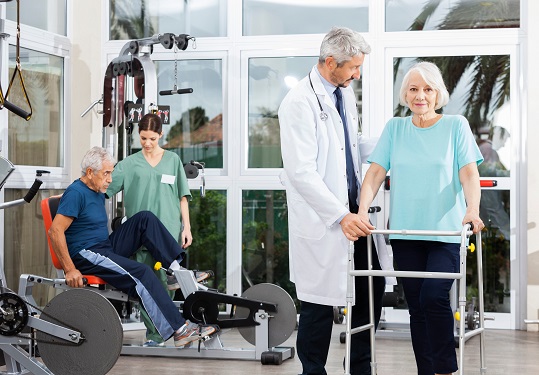
Rehabilitation & Gait Training in Practice
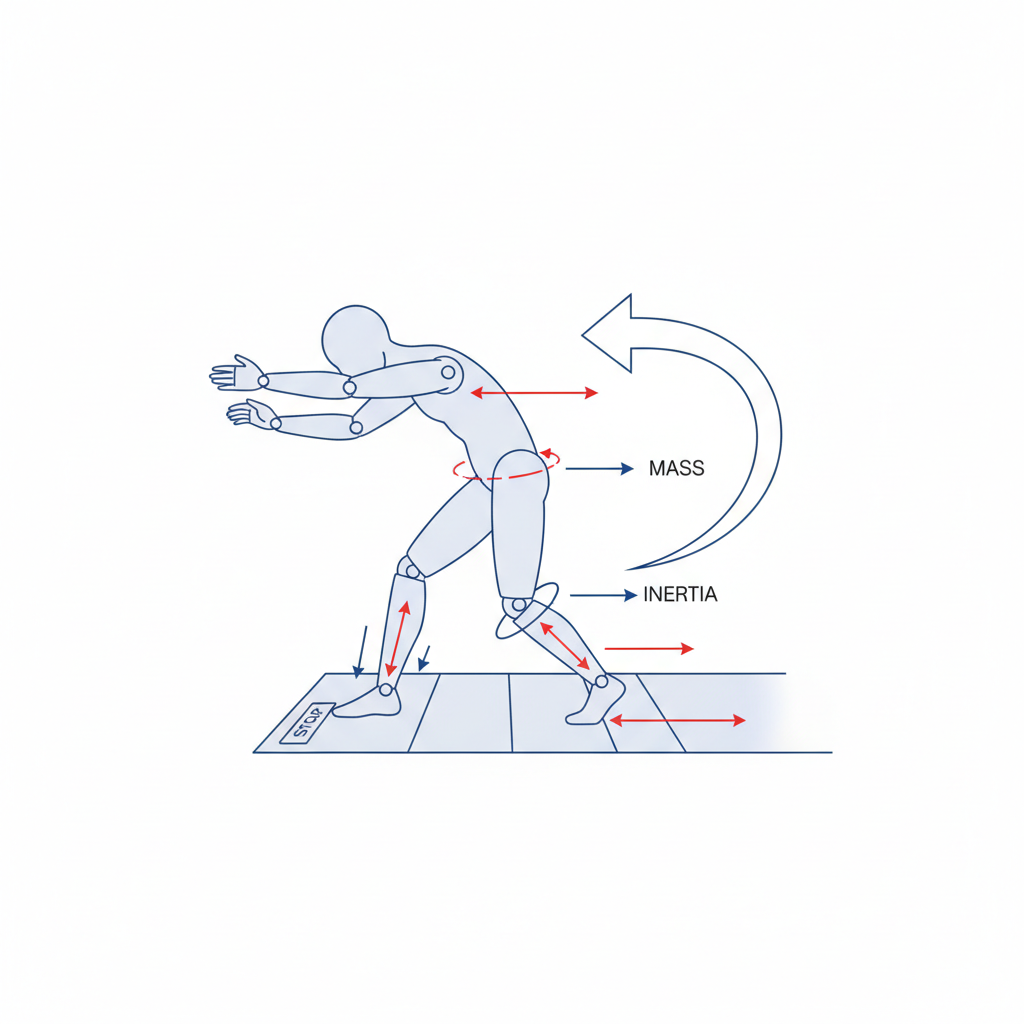
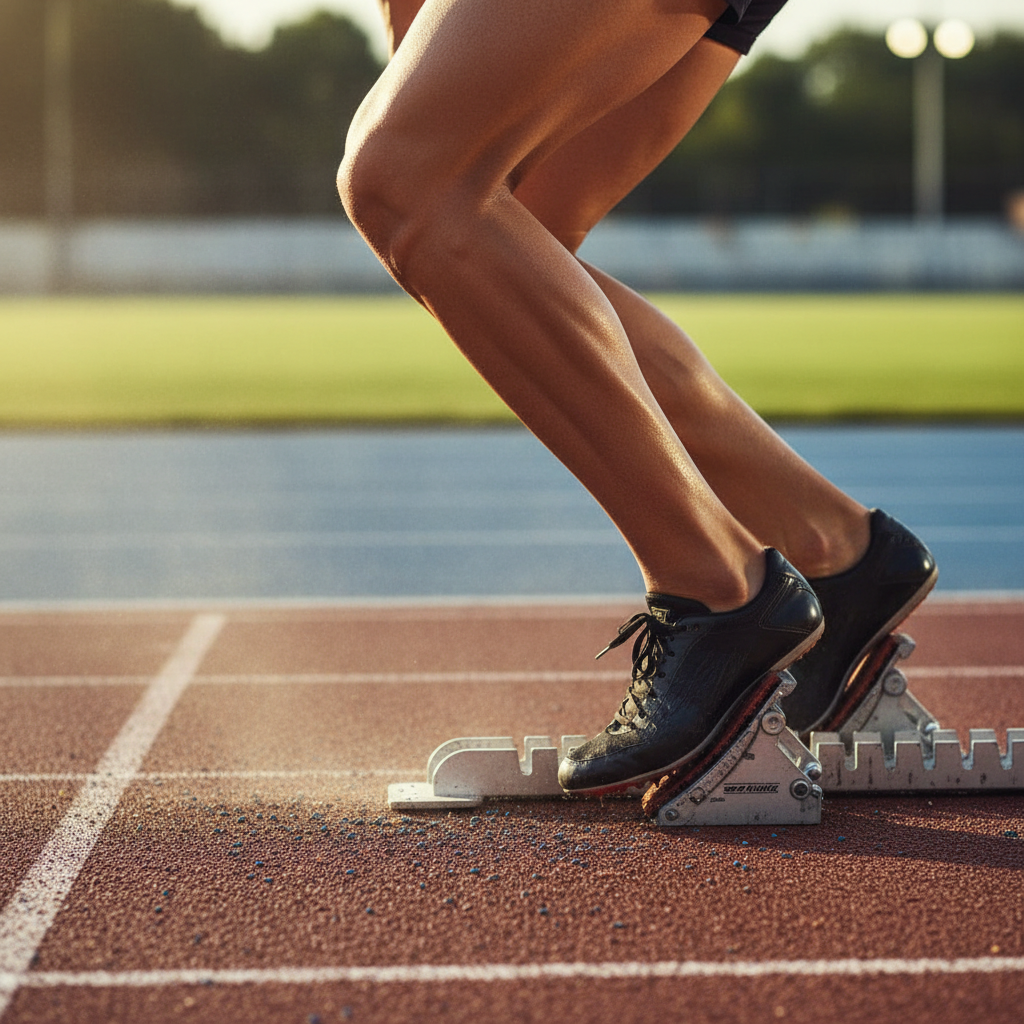
Sports Biomechanics: Starting Blocks
Newton's Laws combine in sports. A sprinter uses blocks (3rd Law) to maximize push-off force. They crouch to lower their center of mass and optimize the angle of force (2nd Law), overcoming static inertia (1st Law). Analyzing these mechanics helps physios treat sprinters with hamstring or Achilles injuries.
Clinical Importance of Newton's Laws
placeholder
Summary & Key Takeaways
Newton’s First Law explains inertia, which helps us understand how the body remains at rest or in motion unless acted upon by muscular forces.
The Second Law relates force to mass and acceleration, forming the basis for understanding muscle strength, movement efficiency, and rehabilitation training.
Newton’s Third Law explains action–reaction forces, which are essential in activities such as walking, running, and jumping through ground reaction forces.
Together, these laws form the foundation of biomechanical analysis in physiotherapy practice.
Practice Questions: Biomechanics & Newton's Laws
1. A patient with weak quadriceps tends to collapse when standing up from a chair. Which law explains this?
2. Why does a heavy patient require more effort to move in bed compared to a lighter one?
3. In jumping and landing mechanics, how do Newton’s laws apply?
4. A patient lying on a very smooth trolley finds it hard to start rolling to side‑lying. Which law explains this?
5. A light child and a heavy adult both try to sit up from supine. Why does the heavier adult need more effort?
Do you have any questions?
- biomechanics
- physiotherapy
- newton's-laws
- kinesiology
- rehabilitation
- gait-analysis
- prosthetics
- sports-science