


Made byBobr AI

Science Exhibition Guide: Innovation through STEM Projects

Learn how to organize a successful science exhibition and master the scientific method to foster STEM innovation and hands-on learning for students.

#science-fair#stem-education#scientific-method#school-projects#innovation#teaching-resources
Watch
Pitch

Science Exhibition

Unleashing Creativity & Innovation Through STEM

Made byBobr AI

What is a Science Exhibition?

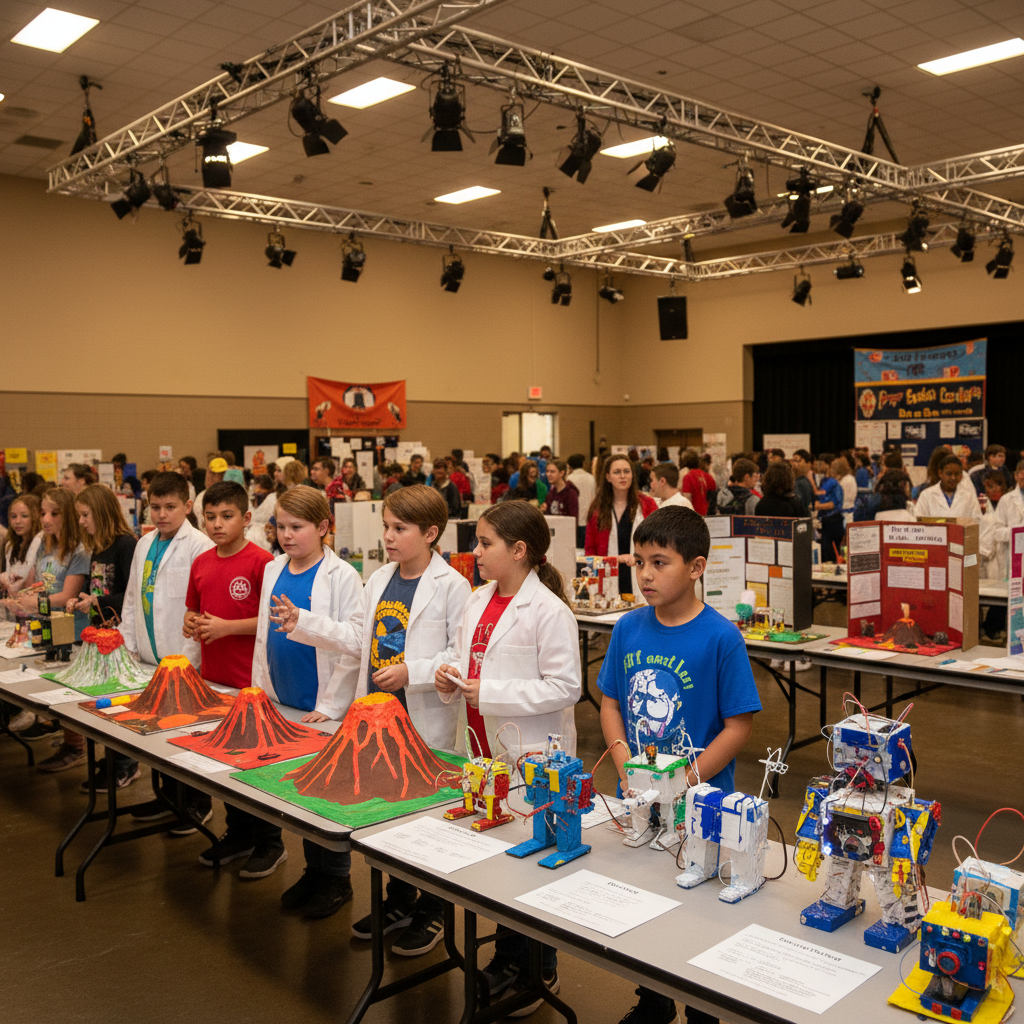
A science exhibition is an educational event where students display scientific projects, experiments, and models. Its primary goal is to bridge theoretical classroom knowledge with practical application, nurturing a deeper understanding of STEM (Science, Technology, Engineering, and Mathematics) fields.

Made byBobr AI

Key Benefits

  • 1 Hands-on Learning: Applies concepts to real-world scenarios.
  • 2 Innovation: Encourages original ideas and problem-solving.
  • 3 Skill Building: Develops research, communication, and critical thinking.
  • 4 Engagement: Fosters a lasting interest in science and technology.
Made byBobr AI

Common Features

Exhibitions typically feature a mix of static models and working experiments across physics, chemistry, biology, and robotics. Projects are presented via posters and live demonstrations, often designed for grades 5 and up to foster scientific attitude.

Made byBobr AI

Demonstrations vs. Experiments

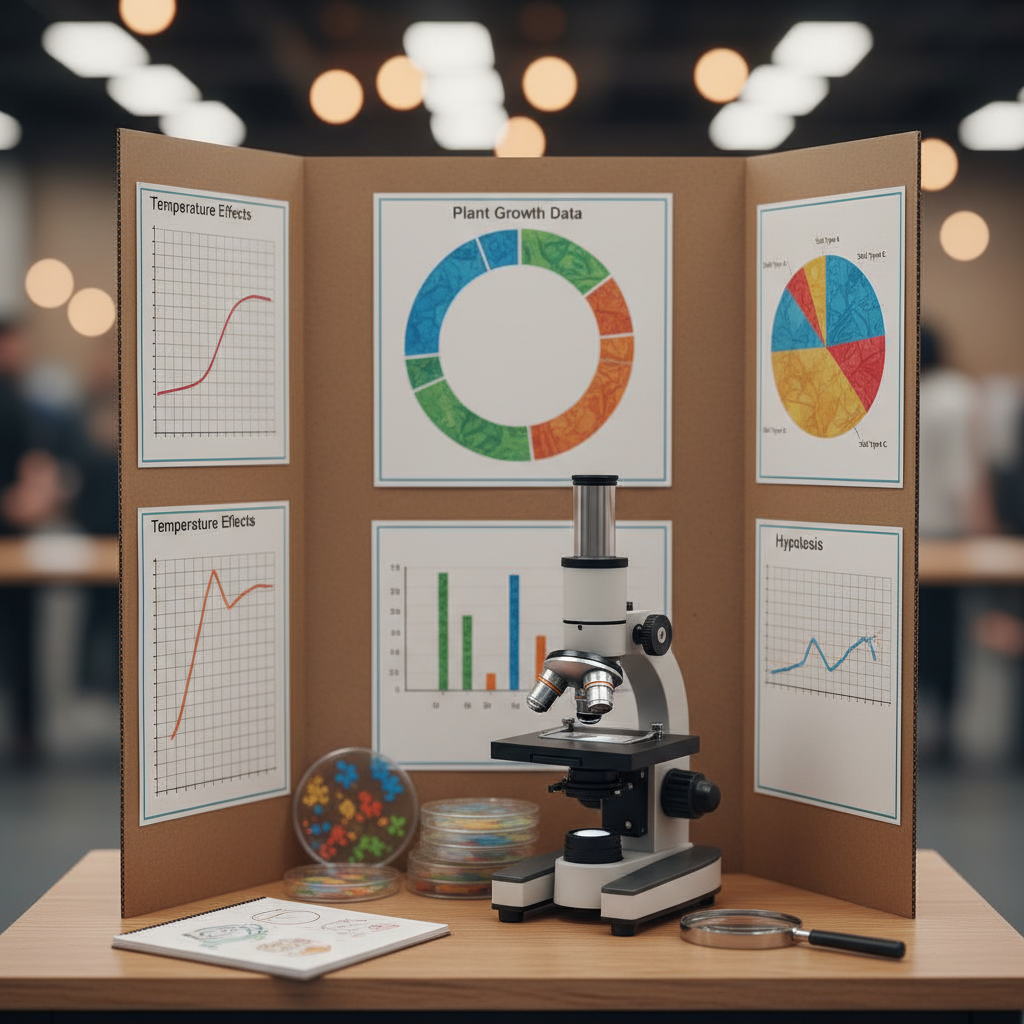
It is crucial to understand the difference. Demonstrations simply illustrate a known phenomenon (e.g., how a magnet works). Experiments follow the scientific method: posing a question, forming a hypothesis, testing it, and analyzing data to reach a conclusion.

Made byBobr AI

Organization Tips

1. Planning

Planning: Clearly define goals, budget, and venue early on.

2. Committee

Committee: Form focus groups for logistics and promotion.

3. Themes

Themes: Select engaging topics like AI, Sustainability, or Space.

4. Execution

Execution: Democratize science by welcoming all skill levels.

Made byBobr AI

The Scientific Method

1. Ask a Question 2. Do Background Research 3. Construct a Hypothesis 4. Test with an Experiment 5. Analyze Data and Draw Conclusions 6. Communicate Results

Made byBobr AI
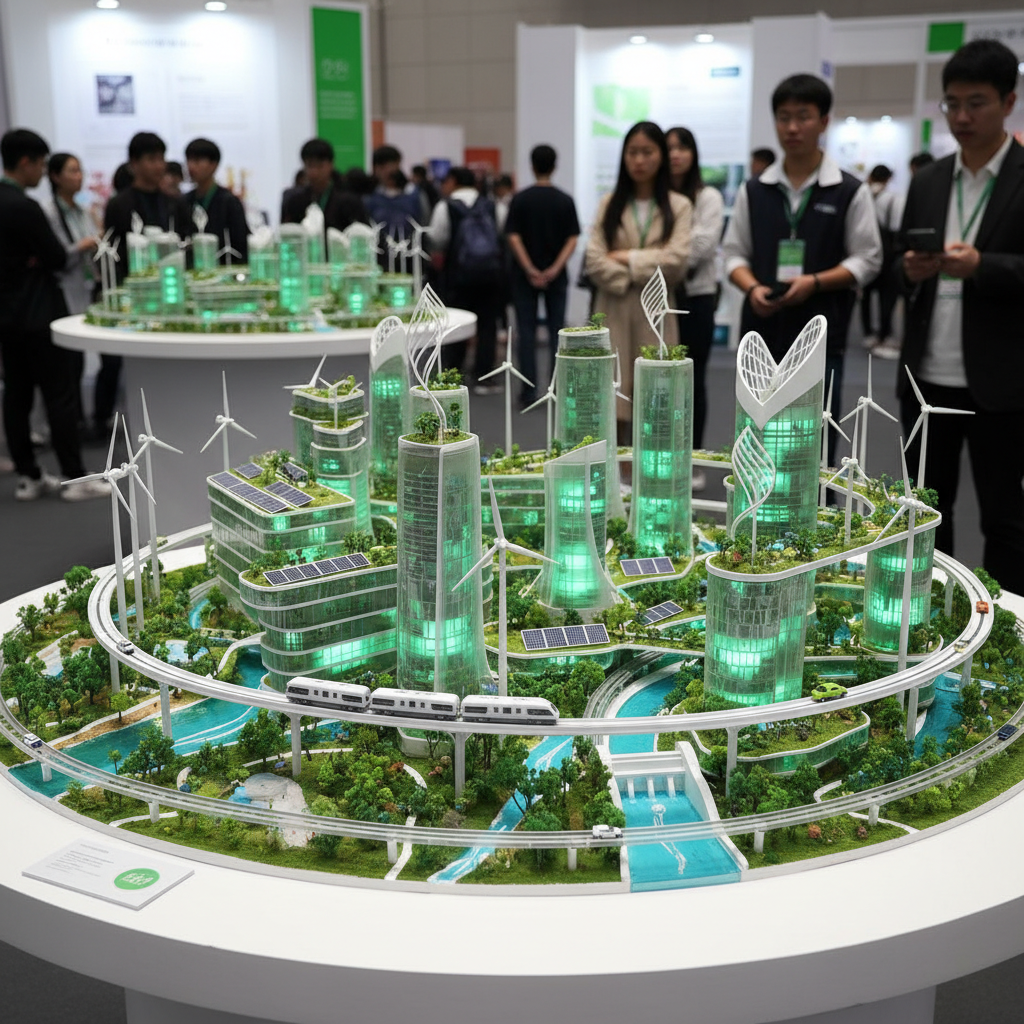
Inspiring Future Innovators
Made byBobr AI

The important thing is not to stop questioning. Curiosity has its own reason for existing.

Albert Einstein

Made byBobr AI

Thank You!

Keep Exploring, Creating, and Discovering.

Made byBobr AI
Bobr AI

DESIGNER-MADE
PRESENTATION,
GENERATED FROM
YOUR PROMPT

Create your own professional slide deck with real images, data charts, and unique design in under a minute.

Generate For Free

Science Exhibition Guide: Innovation through STEM Projects

Learn how to organize a successful science exhibition and master the scientific method to foster STEM innovation and hands-on learning for students.

Science Exhibition

Unleashing Creativity & Innovation Through STEM

What is a Science Exhibition?

A science exhibition is an educational event where students display scientific projects, experiments, and models. Its primary goal is to bridge theoretical classroom knowledge with practical application, nurturing a deeper understanding of STEM (Science, Technology, Engineering, and Mathematics) fields.

Key Benefits

Hands-on Learning: Applies concepts to real-world scenarios.

Innovation: Encourages original ideas and problem-solving.

Skill Building: Develops research, communication, and critical thinking.

Engagement: Fosters a lasting interest in science and technology.

Common Features

Exhibitions typically feature a mix of static models and working experiments across physics, chemistry, biology, and robotics. Projects are presented via posters and live demonstrations, often designed for grades 5 and up to foster scientific attitude.

Demonstrations vs. Experiments

It is crucial to understand the difference. Demonstrations simply illustrate a known phenomenon (e.g., how a magnet works). Experiments follow the scientific method: posing a question, forming a hypothesis, testing it, and analyzing data to reach a conclusion.

Organization Tips

Planning: Clearly define goals, budget, and venue early on.

Committee: Form focus groups for logistics and promotion.

Themes: Select engaging topics like AI, Sustainability, or Space.

Execution: Democratize science by welcoming all skill levels.

The Scientific Method

1. Ask a Question 2. Do Background Research 3. Construct a Hypothesis 4. Test with an Experiment 5. Analyze Data and Draw Conclusions 6. Communicate Results

Inspiring Future Innovators

The important thing is not to stop questioning. Curiosity has its own reason for existing.

Albert Einstein

Thank You!

Keep Exploring, Creating, and Discovering.

  • science-fair
  • stem-education
  • scientific-method
  • school-projects
  • innovation
  • teaching-resources