









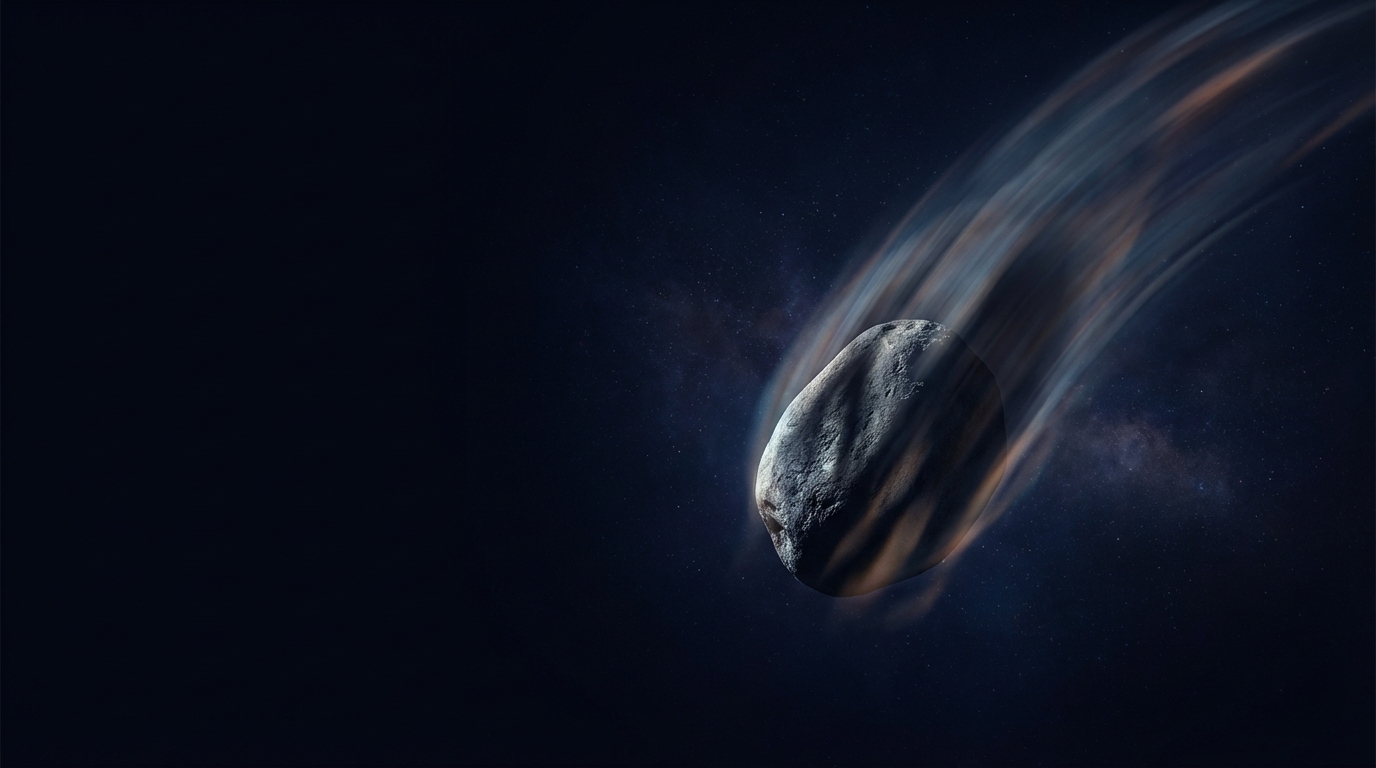



Der Freie Fall: Physik, Grundlagen & Formeln erklärt
Lerne alles über den freien Fall: Von Galileis Experimenten über die Erdbeschleunigung g=9,81 m/s² bis hin zum Luftwiderstand und Rechenbeispielen.
Der Freie Fall
Grundlagen der Beschleunigung
Agenda der Präsentation
<li style="margin-bottom: 30px; page-break-inside: avoid; break-inside: avoid; font-size: 28px; color: #2c3e50; line-height: 1.4; padding-left: 20px; border-left: 3px solid #e0e0e0;"><strong style="display: block; color: #0d1b2a; margin-bottom: 4px;">1. Einführung</strong>Definition des Freien Falls</li> <li style="margin-bottom: 30px; page-break-inside: avoid; break-inside: avoid; font-size: 28px; color: #2c3e50; line-height: 1.4; padding-left: 20px; border-left: 3px solid #e0e0e0;"><strong style="display: block; color: #0d1b2a; margin-bottom: 4px;">2. Geschichte</strong>Aristoteles vs. Galilei</li> <li style="margin-bottom: 30px; page-break-inside: avoid; break-inside: avoid; font-size: 28px; color: #2c3e50; line-height: 1.4; padding-left: 20px; border-left: 3px solid #e0e0e0;"><strong style="display: block; color: #0d1b2a; margin-bottom: 4px;">3. Erdbeschleunigung</strong>Konstante g = 9,81 m/s²</li> <li style="margin-bottom: 30px; page-break-inside: avoid; break-inside: avoid; font-size: 28px; color: #2c3e50; line-height: 1.4; padding-left: 20px; border-left: 3px solid #e0e0e0;"><strong style="display: block; color: #0d1b2a; margin-bottom: 4px;">4. Vakuum</strong>Fall ohne Luftwiderstand</li> <li style="margin-bottom: 30px; page-break-inside: avoid; break-inside: avoid; font-size: 28px; color: #2c3e50; line-height: 1.4; padding-left: 20px; border-left: 3px solid #e0e0e0;"><strong style="display: block; color: #0d1b2a; margin-bottom: 4px;">5. Newtonsche Gesetze</strong>Axiome der Bewegung</li> <li style="margin-bottom: 30px; page-break-inside: avoid; break-inside: avoid; font-size: 28px; color: #2c3e50; line-height: 1.4; padding-left: 20px; border-left: 3px solid #e0e0e0;"><strong style="display: block; color: #0d1b2a; margin-bottom: 4px;">6. Kinematik I</strong>Geschwindigkeit-Zeit-Gesetz</li> <li style="margin-bottom: 30px; page-break-inside: avoid; break-inside: avoid; font-size: 28px; color: #2c3e50; line-height: 1.4; padding-left: 20px; border-left: 3px solid #e0e0e0;"><strong style="display: block; color: #0d1b2a; margin-bottom: 4px;">7. Kinematik II</strong>Weg-Zeit-Gesetz</li> <li style="margin-bottom: 30px; page-break-inside: avoid; break-inside: avoid; font-size: 28px; color: #2c3e50; line-height: 1.4; padding-left: 20px; border-left: 3px solid #e0e0e0;"><strong style="display: block; color: #0d1b2a; margin-bottom: 4px;">8. Energie</strong>Potenzielle & Kinetische Energie</li> <li style="margin-bottom: 30px; page-break-inside: avoid; break-inside: avoid; font-size: 28px; color: #2c3e50; line-height: 1.4; padding-left: 20px; border-left: 3px solid #e0e0e0;"><strong style="display: block; color: #0d1b2a; margin-bottom: 4px;">9. Experimente</strong>Fallturm Bremen & NASA</li> <li style="margin-bottom: 30px; page-break-inside: avoid; break-inside: avoid; font-size: 28px; color: #2c3e50; line-height: 1.4; padding-left: 20px; border-left: 3px solid #e0e0e0;"><strong style="display: block; color: #0d1b2a; margin-bottom: 4px;">10. Luftwiderstand</strong>Stokes-Reibung & cw-Wert</li> <li style="margin-bottom: 30px; page-break-inside: avoid; break-inside: avoid; font-size: 28px; color: #2c3e50; line-height: 1.4; padding-left: 20px; border-left: 3px solid #e0e0e0;"><strong style="display: block; color: #0d1b2a; margin-bottom: 4px;">11. Terminalgeschwindigkeit</strong>Gleichgewicht der Kräfte</li> <li style="margin-bottom: 30px; page-break-inside: avoid; break-inside: avoid; font-size: 28px; color: #2c3e50; line-height: 1.4; padding-left: 20px; border-left: 3px solid #e0e0e0;"><strong style="display: block; color: #0d1b2a; margin-bottom: 4px;">12. Fallschirmsprung</strong>Physiologische Aspekte</li> <li style="margin-bottom: 30px; page-break-inside: avoid; break-inside: avoid; font-size: 28px; color: #2c3e50; line-height: 1.4; padding-left: 20px; border-left: 3px solid #e0e0e0;"><strong style="display: block; color: #0d1b2a; margin-bottom: 4px;">13. Planetare Unterschiede</strong>Fall auf Mond & Mars</li> <li style="margin-bottom: 30px; page-break-inside: avoid; break-inside: avoid; font-size: 28px; color: #2c3e50; line-height: 1.4; padding-left: 20px; border-left: 3px solid #e0e0e0;"><strong style="display: block; color: #0d1b2a; margin-bottom: 4px;">14. Schwerelosigkeit</strong>Parabelflüge & ISS</li> <li style="margin-bottom: 30px; page-break-inside: avoid; break-inside: avoid; font-size: 28px; color: #2c3e50; line-height: 1.4; padding-left: 20px; border-left: 3px solid #4da6ff;"><strong style="display: block; color: #0d1b2a; margin-bottom: 4px;">15. Zusammenfassung</strong>Fazit & Diskussion</li>
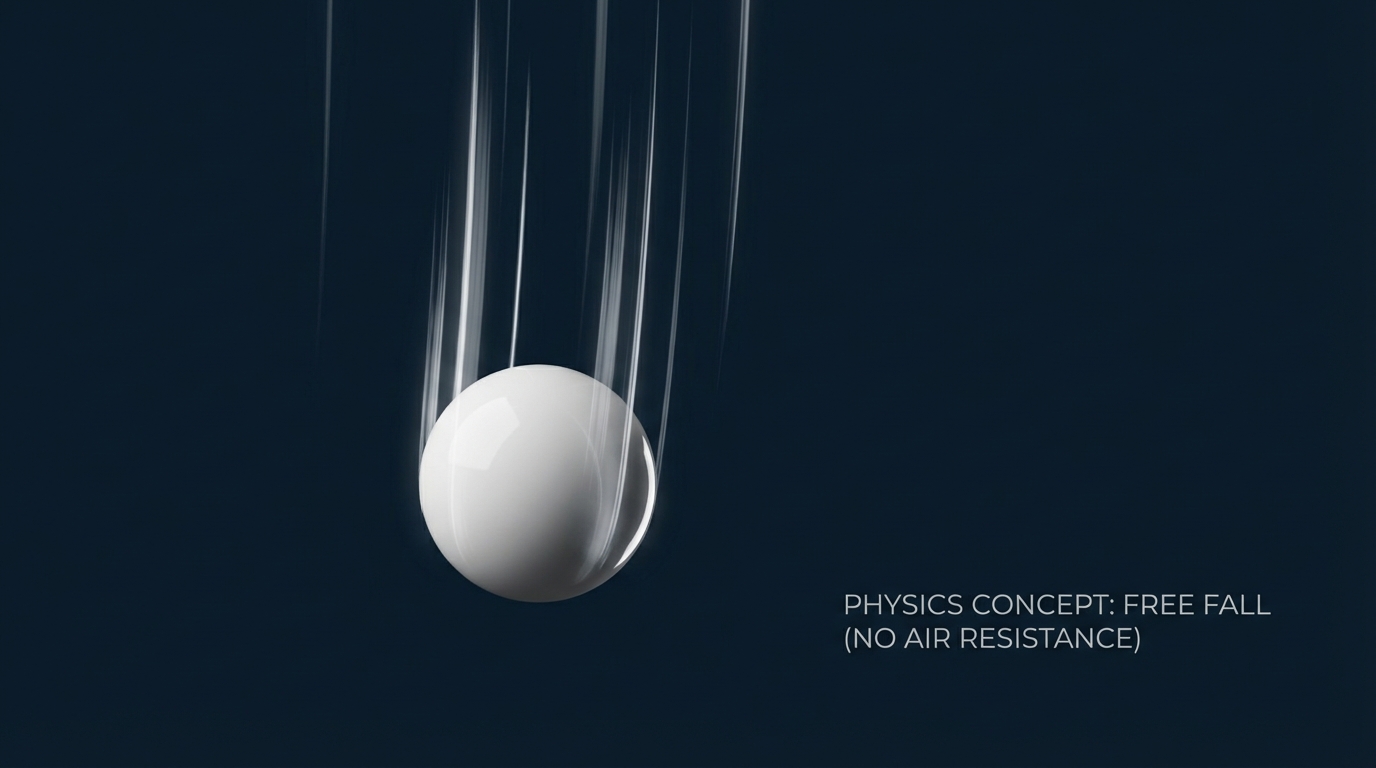
Was ist der freie Fall?
Der freie Fall ist eine Bewegung, bei der nur die Schwerkraft auf einen Körper wirkt. Luftwiderstand spielt keine Rolle. In diesem Zustand fallen alle Objekte – egal ob schwer oder leicht – gleich schnell zu Boden.
Galileo Galilei
Historischer Kontext: Das legendäre Experiment am Schiefen Turm von Pisa.
Die Erdbeschleunigung
9,81
Die Fallbeschleunigung g ist ein Maß für das Gravitationsfeld der Erde. Ein Körper im freien Fall erhöht seine Geschwindigkeit pro Sekunde um 9,81 m/s.
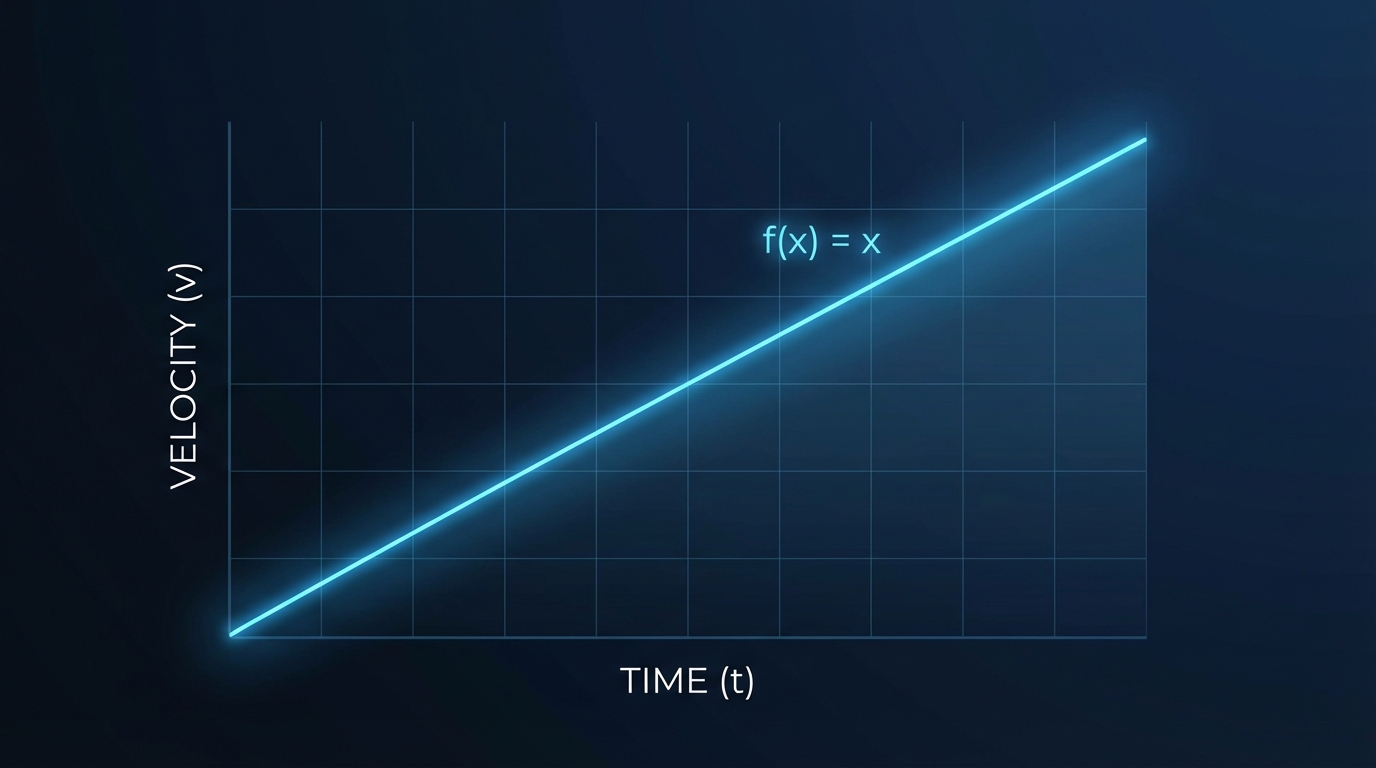
Zeit & Geschwindigkeit
v = g · t
Die Geschwindigkeit nimmt im freien Fall mit jeder Sekunde stetig zu. Dieser lineare Zusammenhang bedeutet: Doppelte Fallzeit führt zu doppelter Geschwindigkeit.
Zeit-Weg-Gesetz
s = ½ · g · t²
Der zurückgelegte Weg wächst mit dem Quadrat der Zeit. Doppelte Fallzeit bedeutet daher vierfache Fallstrecke.
BEDEUTUNG DER MASSE
Fallen schwere Dinge schneller? Das Vakuum-Experiment beweist: Feder und Hammer fallen exakt gleich schnell.
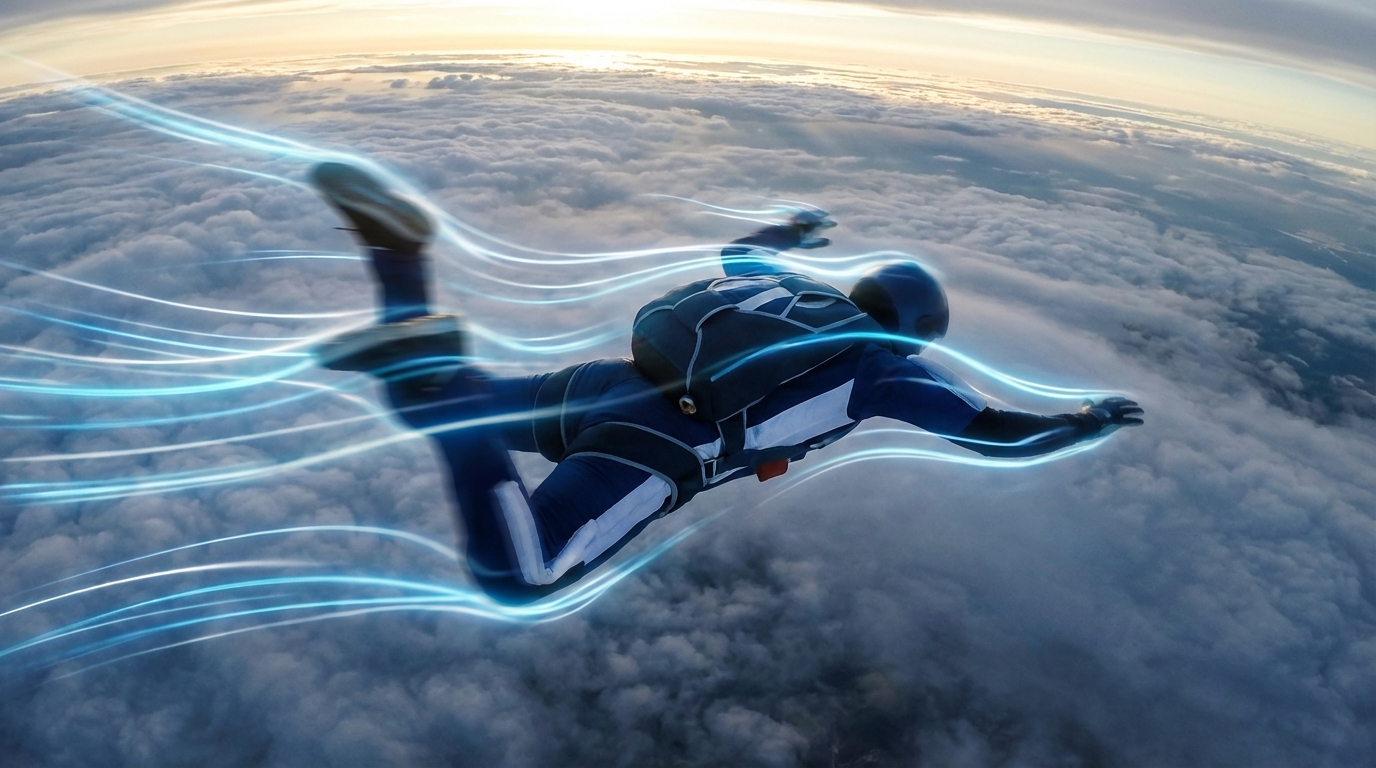
Der Luftwiderstand in der Realität
Luftwiderstand als Gegenkraft
Endgeschwindigkeit
Wenn der Luftwiderstand so stark wie die Schwerkraft wird, heben sich die Kräfte auf. Das Objekt beschleunigt nicht mehr und fällt mit konstanter Geschwindigkeit.
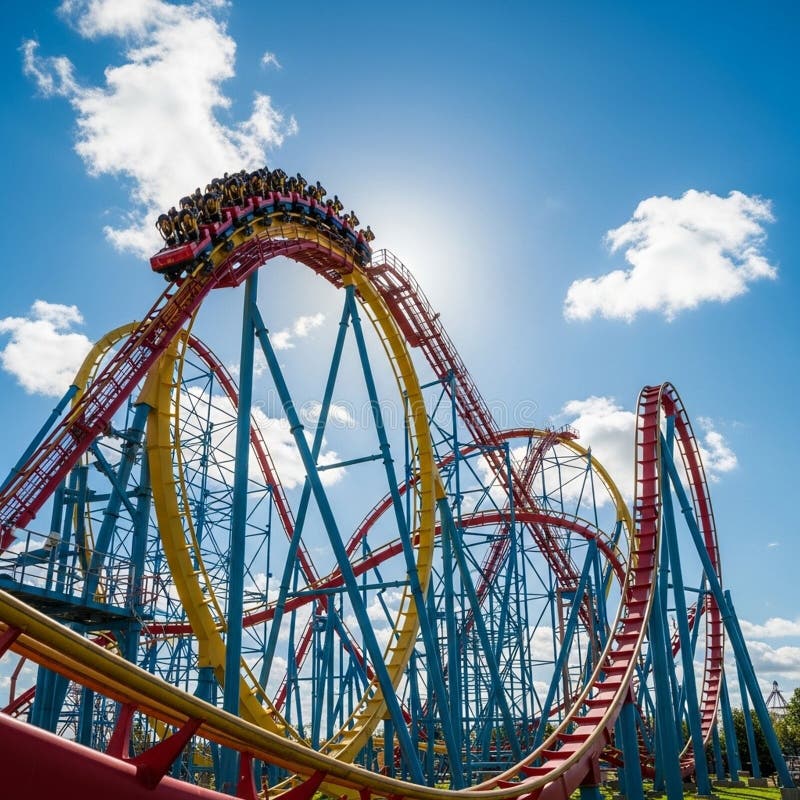
BEISPIELE AUS DEM ALLTAG
Turmspringer<br>Bungee-Jumping<br>Achterbahn
Ein Rechenbeispiel
Gegeben: t = 3 s g ≈ 9,81 m/s² Formel: v = g · t Rechnung: v = 9,81 m/s² · 3 s Ergebnis: v = 29,43 m/s
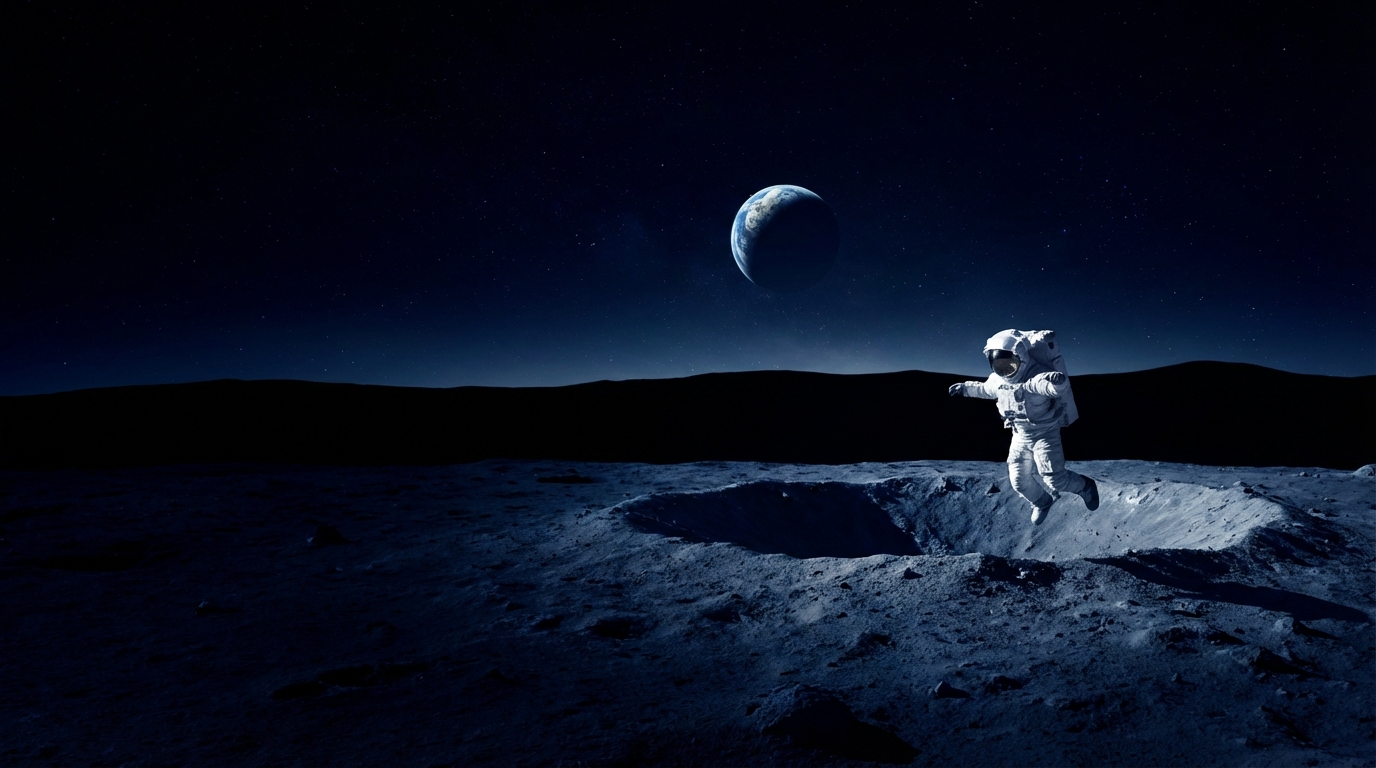
Der freie Fall im Weltall
Erde: g ≈ 9,81 m/s² Mond: g ≈ 1,62 m/s²
Zusammenfassung
<ul style='list-style: none; padding: 0; margin: 0;'><li style='margin-bottom: 30px; display: flex; align-items: flex-start;'><span style='color: #4da6ff; margin-right: 20px; font-weight: bold;'>✓</span> Wichtige Erkenntnisse der Analyse zusammengefasst</li><li style='margin-bottom: 30px; display: flex; align-items: flex-start;'><span style='color: #4da6ff; margin-right: 20px; font-weight: bold;'>✓</span> Strategische Neuausrichtung für das kommende Jahr</li><li style='margin-bottom: 30px; display: flex; align-items: flex-start;'><span style='color: #4da6ff; margin-right: 20px; font-weight: bold;'>✓</span> Optimierung der internen Prozesse und Ressourcen</li><li style='margin-bottom: 0; display: flex; align-items: flex-start;'><span style='color: #4da6ff; margin-right: 20px; font-weight: bold;'>✓</span> Nächste Schritte und konkreter Zeitplan</li></ul>
Vielen Dank für eure Aufmerksamkeit!
Platz für Fragen
- physik
- freier-fall
- erdbeschleunigung
- kinematik
- mechanik
- galileo-galilei
- schule