



Optimizing Lot Sizes for Efficient Manufacturing | Lean Lab
Learn how to master optimal lot sizes using EOQ, EMQ, LFL, and POQ. Balance setup costs and holding costs to improve manufacturing flexibility and speed.
Elements of Lean Production
Optimizing Lot Sizes for Efficient Manufacturing
Understanding Lot Size
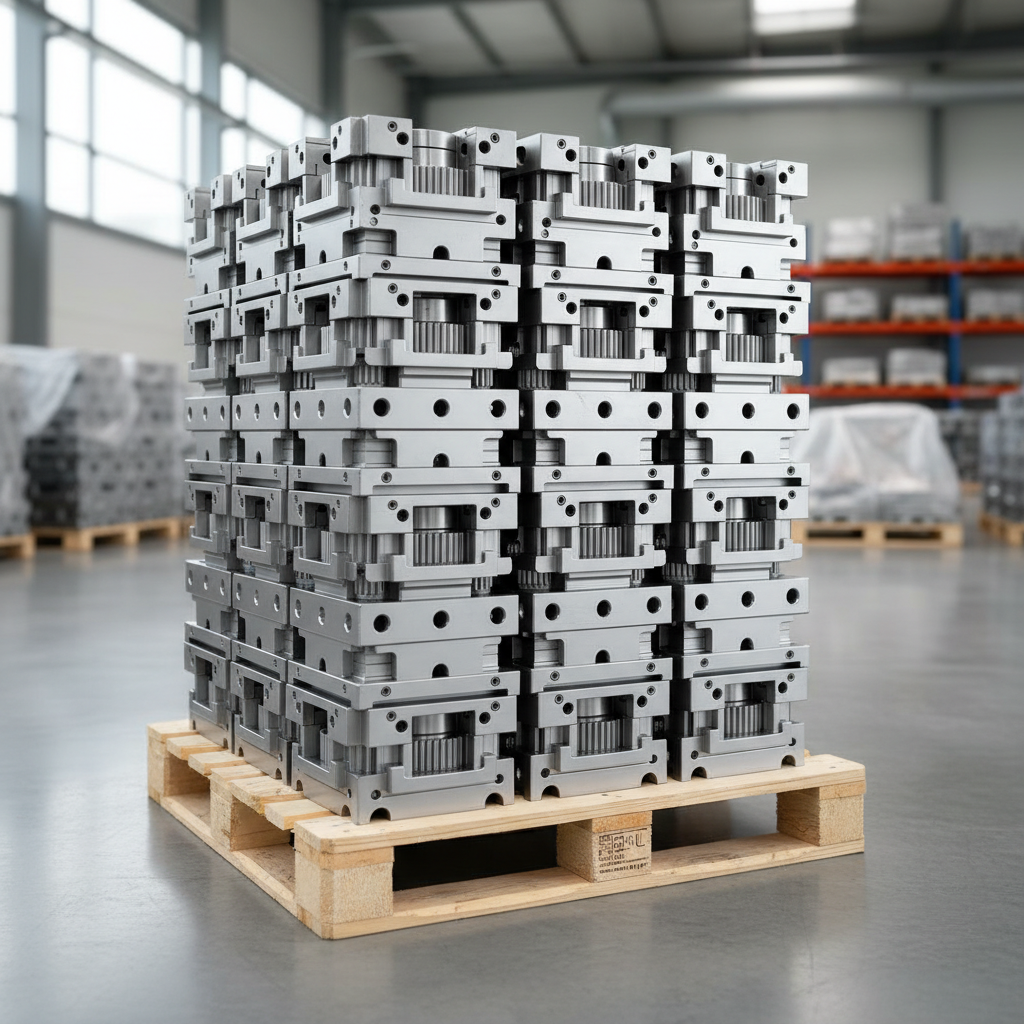
Lot size refers to the quantity of items produced or procured in a single production run or order. Efficient manufacturing relies on determining the 'optimal lot size' because it directly impacts critical operational metrics: cost, inventory levels, flexibility, lead time, and market responsiveness.
The Lot Size Cost Trade-off
Finding the optimal lot size involves balancing two opposing forces: Setup Costs (which decrease as lot size increases) and inventory Holding Costs (which increase as lot size increases). The intersection points to the most cost-efficient quantity.
Why Smaller Lots Matter
Lead Time Reduction: Smaller lots move faster through the system, reducing waiting time between operations.
Quality Improvement: Defects are exposed quickly, allowing for easier root cause identification and less scrap.
Flexibility: Enables quick changeovers to new products, supporting mass customization and demand changes.
Resource Utilization: Balanced sizes prevent congestion and bottlenecks in the flow.
Lot-for-Lot (LFL) Approach
This approach involves ordering or producing exactly what is required for each period. It is commonly used in MRP systems. • Pros: Zero or minimal inventory, High flexibility, Low holding costs. • Cons: High setup frequency, increased ordering costs.
Period Order Quantity (POQ)
Concept: Order enough inventory to cover demand for a fixed number of periods.
Mechanism: converts the EOQ logic into time buckets (e.g., ordering every 2 weeks).
Advantage: Fewer orders than LFL and lower inventory than strictly large-batch systems.
Limitation: Still carries inventory and requires accurate demand forecasting.
Economic Order Quantity (EOQ)
EOQ is the specific order quantity that minimizes the total inventory holding costs and ordering costs. Key Assumptions: Constant demand, instant replenishment. Formula: EOQ = sqrt(2DS / H) (D=Demand, S=Ordering Cost, H=Holding Cost)
Economic Manufacturing Quantity (EMQ)
Application: Used when production is performed internally at a finite rate, and production speed > demand rate.
Feature: Inventory builds up gradually rather than arriving instantly (like in EOQ).
Advantage: More realistic for in-house manufacturing; typically results in lower inventory than basic EOQ.
Limitations: Still assumes stable production and demand; not suited for highly variable systems.
Reduction Effects on Competitive Criteria
Cost: Reduced holding costs, lower rework/scrap, and improved cash flow.
Quality: Faster defect detection and smaller defect batches improve overall process control.
Delivery Speed: Shorter manufacturing lead times result in faster order fulfillment.
Reliability & Flexibility: More predictable schedules and easier handling of product variety.
The Traditional 'Large Batch' Logic
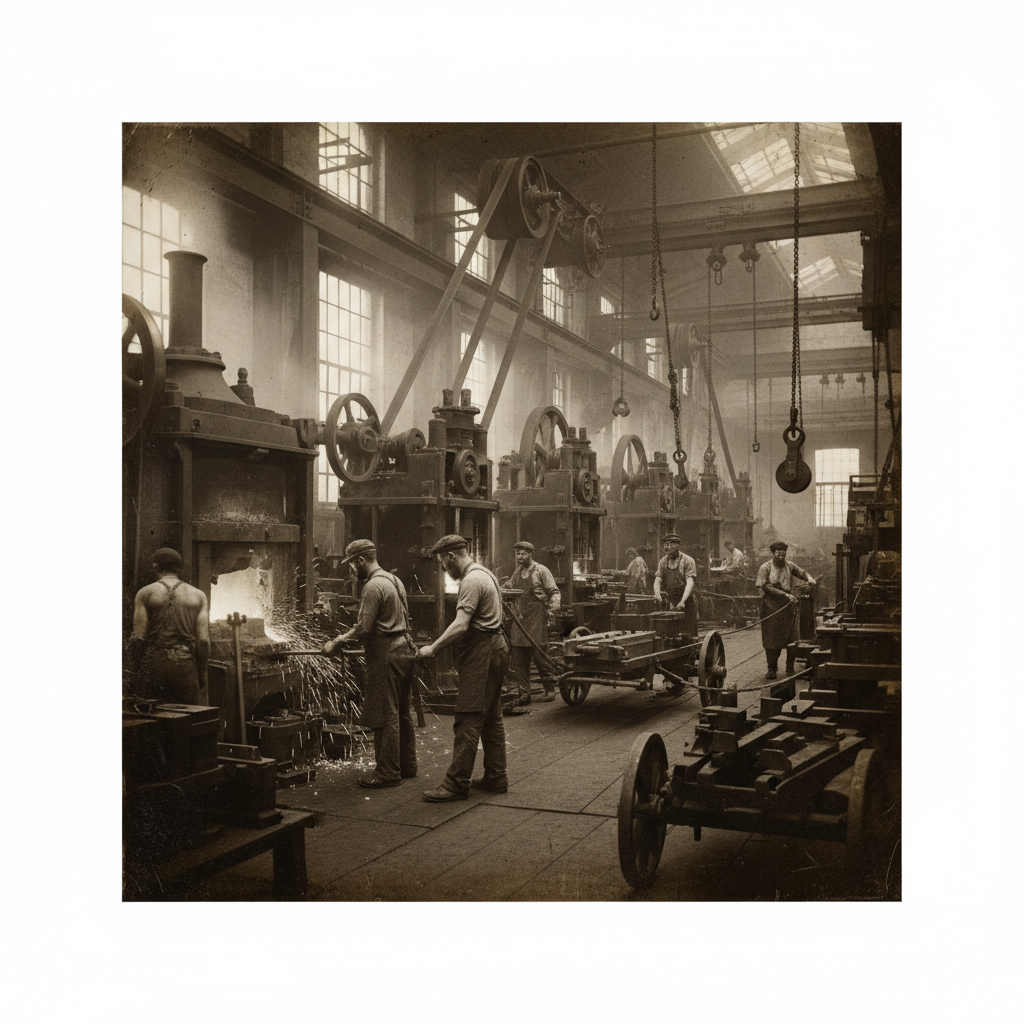
Historically, large batches were preferred due to: • High Setup Costs: Manual setups took time, encouraging quantity spreading. • Limited Automation: Inflexible machines made changeovers difficult. • Economies of Scale: A focus on maximizing 'up-time' utilization. • Poor Demand Info: Lack of real-time data forced forecast-based bulking.
Efficient manufacturing requires scientific determination of lot sizes to minimize total cost while improving quality, speed, flexibility, and customer satisfaction.
Elements of Lean Production
- lean-manufacturing
- lot-size-optimization
- supply-chain-management
- eoq-formula
- industrial-engineering
- manufacturing-efficiency
- inventory-management