




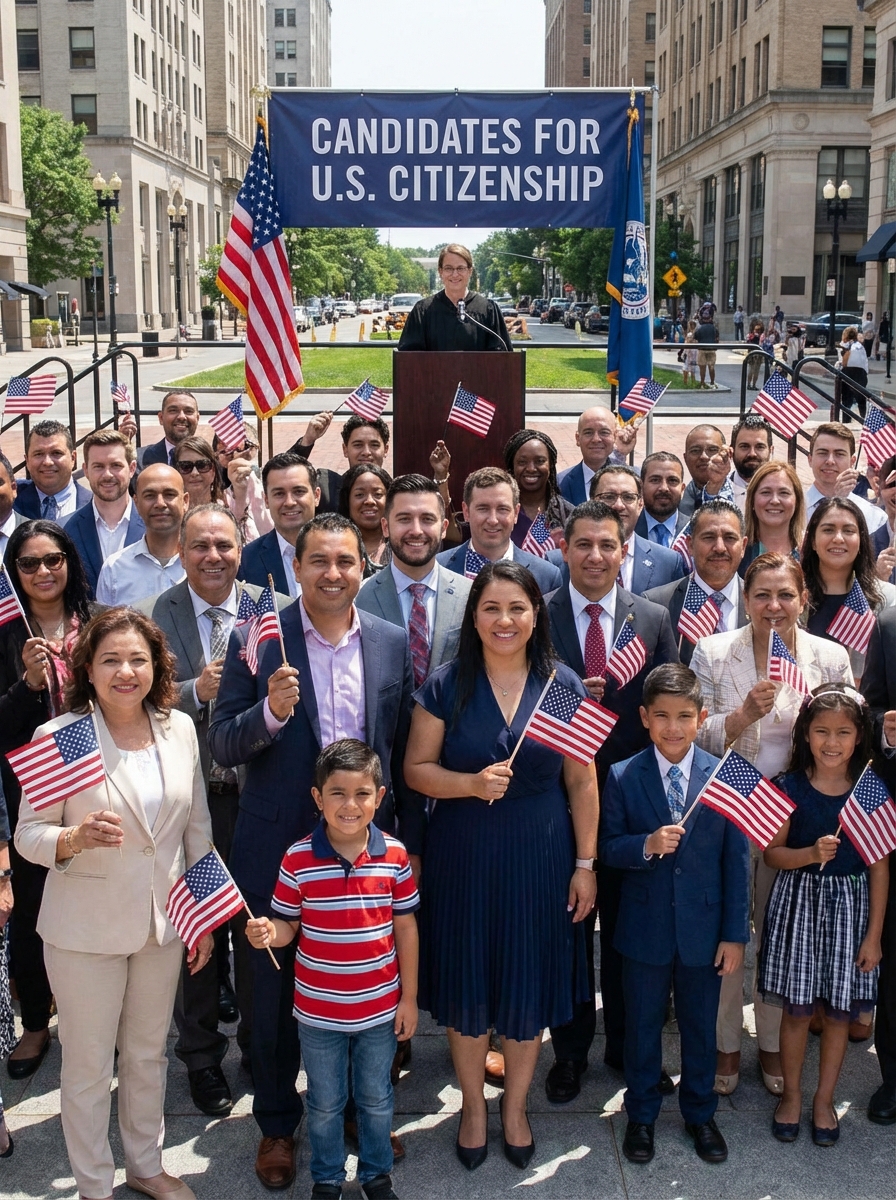


Understanding US Immigration: History, Policy & Myths
Explore US immigration history, from the 1882 Chinese Exclusion Act to 2025 policy shifts. Learn key terms, pathways to legal status, and migration data.
Understanding U.S. Immigration
History, Policy, Human Stories, and Data
Defining the Terms
<strong>Immigrant:</strong> A person who comes to live permanently in a foreign country.
<strong>Refugee:</strong> A person forced to flee their country because of persecution, war, or violence.
<strong>Asylum Seeker:</strong> A person who has left their country and is seeking protection but has not yet been legally recognized as a refugee.
<strong>Migrant:</strong> A person who moves from one place to another, often to find work or better living conditions.
Why Do People Move?
<ul><li>War and Conflict</li><li>Political Persecution</li><li>Poverty / Economic Collapse</li><li>Environmental Disasters</li></ul>
<ul><li>Economic Opportunity (Jobs)</li><li>Safety and Stability</li><li>Family Reunification</li><li>Political Freedom</li></ul>
A History of Policy (1880 - 1924)
1882: The Chinese Exclusion Act
The first significant law restricting immigration into the United States based on race and class.
1924: National Origins Act
Established strict quotas based on nationality, heavily favoring Northern Europeans and restricting others.
Modern Era Policy (1965 - Present)
<ul><li style='margin-bottom:30px'><strong>1965: Immigration & Nationality Act</strong><br>Abolished the quota system; prioritized family reunification and skilled labor.</li><li style='margin-bottom:30px'><strong>1986: IRCA</strong><br>Provided amnesty for ~3M undocumented immigrants but increased employer sanctions.</li><li style='margin-bottom:30px'><strong>2012: DACA</strong><br>Deferred action (protection from deportation) for childhood arrivals ('Dreamers').</li><li style='margin-bottom:30px'><strong>2020-2025: Recent Shifts</strong><br>COVID restrictions (Title 42), surges in 2024, followed by stricter enforcement in 2025.</li></ul>
Where Are New Immigrants Coming From?
Distribution of Growth by Origin (Based on 2025 Data)
Data Check: Myths vs. Reality
<div style='margin-bottom:40px'><h3 style='color:#f1c40f; font-size:42px;'>Myth: "Most immigrants are here illegally."</h3><p style='color:white; font-size:32px;'><strong>Fact:</strong> The majority of the foreign-born population (approx. 71%) are legal residents, including naturalized citizens, green card holders, and visa holders.</p></div><div><h3 style='color:#f1c40f; font-size:42px;'>Myth: "Immigration is always increasing."</h3><p style='color:white; font-size:32px;'><strong>Fact:</strong> While it hit a record in early 2025, migration flows fluctuate. Net migration dropped by nearly 1.5 million between 2024 and mid-2025 due to policy changes.</p></div>
Pathways to Legal Immigration
Family Sponsorship
U.S. citizens and Lawful Permanent Residents can sponsor specific relatives. This is the most common pathway.
Employment
Employers sponsor workers with specific skills. Includes temporary visas (H-1B) and permanent Green Cards.
Humanitarian
Protection for Refugees and Asylees fleeing persecution. Admissions are determined by annual government ceilings.
Recent Trends: Net International Migration
After reaching an unprecedented peak of nearly 2.8 million in 2024, net migration has sharply declined in 2025. This drop is driven by stricter enforcement, deportations, and policy shifts, bringing numbers closer to historical baselines.
The Human Story
"Behind every statistic is a family seeking safety, a worker seeking opportunity, or a child seeking a future."
Current Debates & Perspectives
Border Security & Rule of Law
Focuses on the need for controlled borders, reducing illegal crossings, and the economic impact on local communities.
Humanitarian Aid & Economic Needs
Focuses on providing asylum to those fleeing danger and the necessity of immigrant labor for economic growth (agriculture, tech, care).
Conclusion & Reflection
<ul><li>Immigration is defined by both pull factors (opportunity) and push factors (conflict).</li><li>U.S. policy has evolved from strict quotas to a mixed system of family, work, and humanitarian pathways.</li><li>While recent years saw record numbers, 2025 marks a shift toward stricter control and lower migration.</li></ul>
- immigration-policy
- us-history
- social-studies
- demographics
- educational
- migration-trends