

The 1950s: A Visual Archive of Culture and History
Explore the 1950s through key events like the rise of suburbia, the birth of rock 'n' roll, Civil Rights milestones, and the dawn of the Space Age.
The 1950s: A Visual Archive
A curated collection of random snapshots from the decade of change.
The Rise of Suburbia
This aerial view shows the geometric precision of Levittown, New York, the archetype of post-war suburban development built between 1947 and 1951. Returning veterans utilized the GI Bill to purchase these mass-produced homes, triggering a massive migration from urban centers to the manufactured countryside. This shift fundamentally altered the American landscape, establishing the nuclear family and car-centric living as the new societal norm.
The King of Rock 'n' Roll
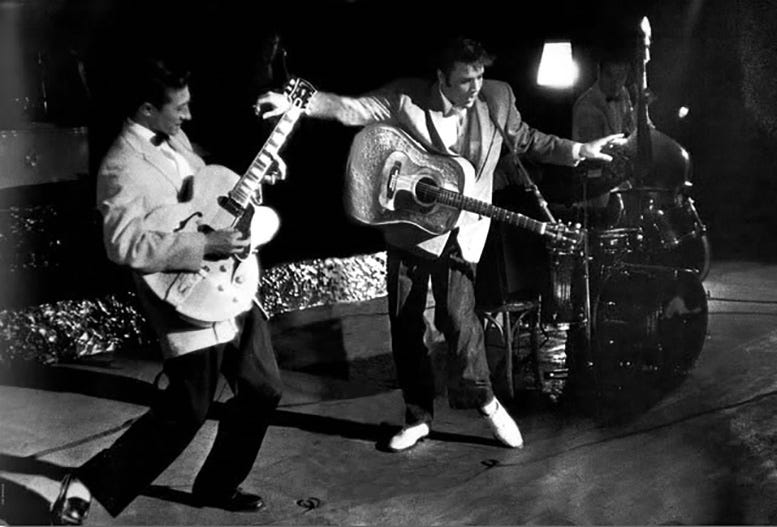
Elvis Presley is captured here in mid-performance during his breakout year of 1956, a period that saw the release of 'Heartbreak Hotel.' His fusion of country, rhythm and blues, and gospel challenged the conservative social norms of the Eisenhower era and scandalized older generations. This moment marks the definitive explosion of youth culture, where teenagers became a distinct demographic with significant cultural and economic power.
Automotive Excess
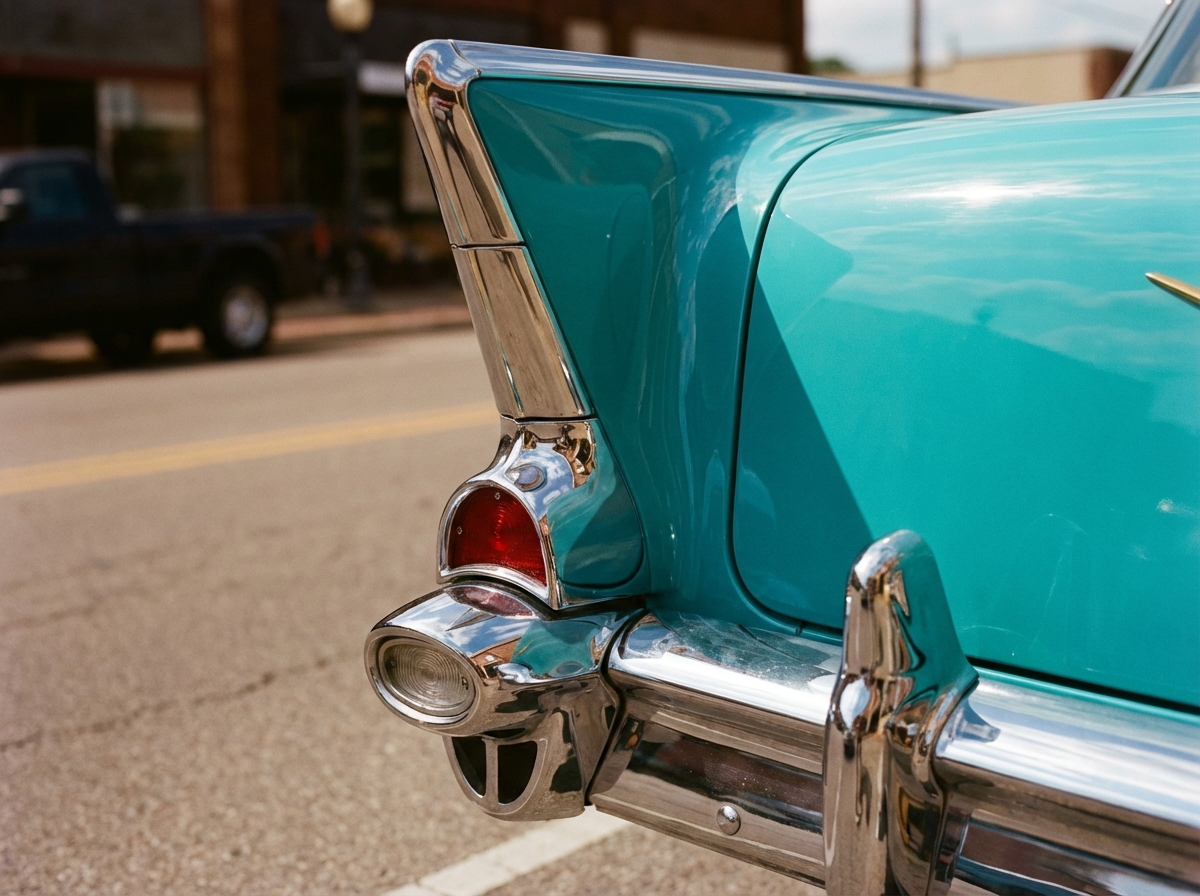
This detail shot of a 1957 Chevrolet Bel Air showcases the era's obsession with chrome and aviation-inspired tailfins. Influenced by the Jet Age and space exploration, automobile designers like Harley Earl sought to make cars look fast even when standing still. These vehicles represent the peak of American industrial confidence and the central role the automobile played in freedom and status.
The Montgomery Bus Boycott
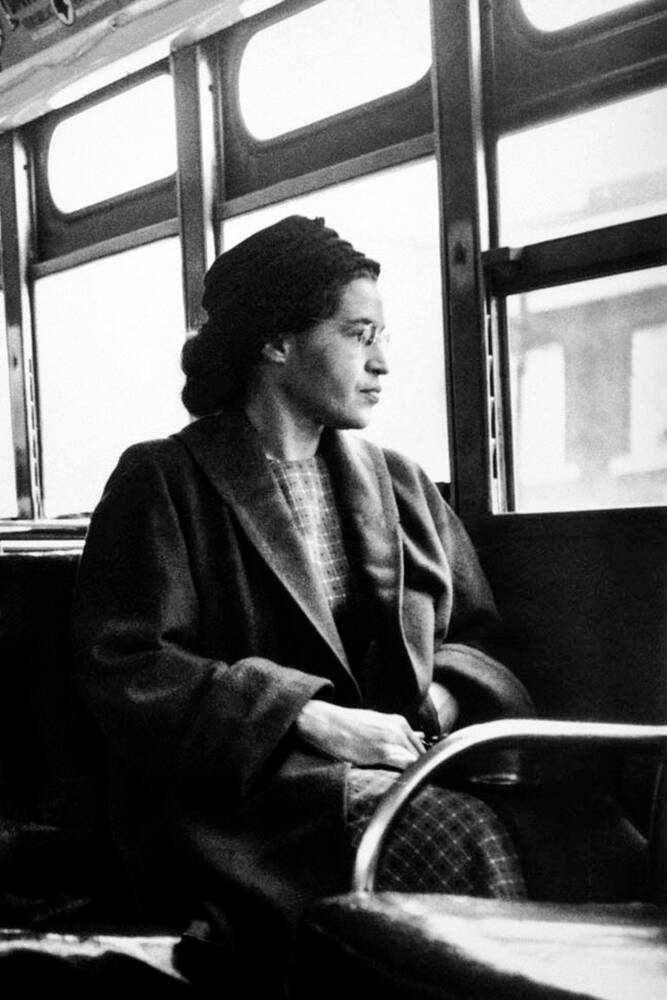
Rosa Parks sits near the front of a Montgomery bus in 1956, following the Supreme Court ruling that declared segregation on public buses unconstitutional. Her refusal to give up her seat in December 1955 sparked a 381-day boycott led by a young Martin Luther King Jr. This peaceful protest demonstrated the economic power of Black Americans and served as a foundational victory for the emerging Civil Rights Movement.
The Domestic Sphere
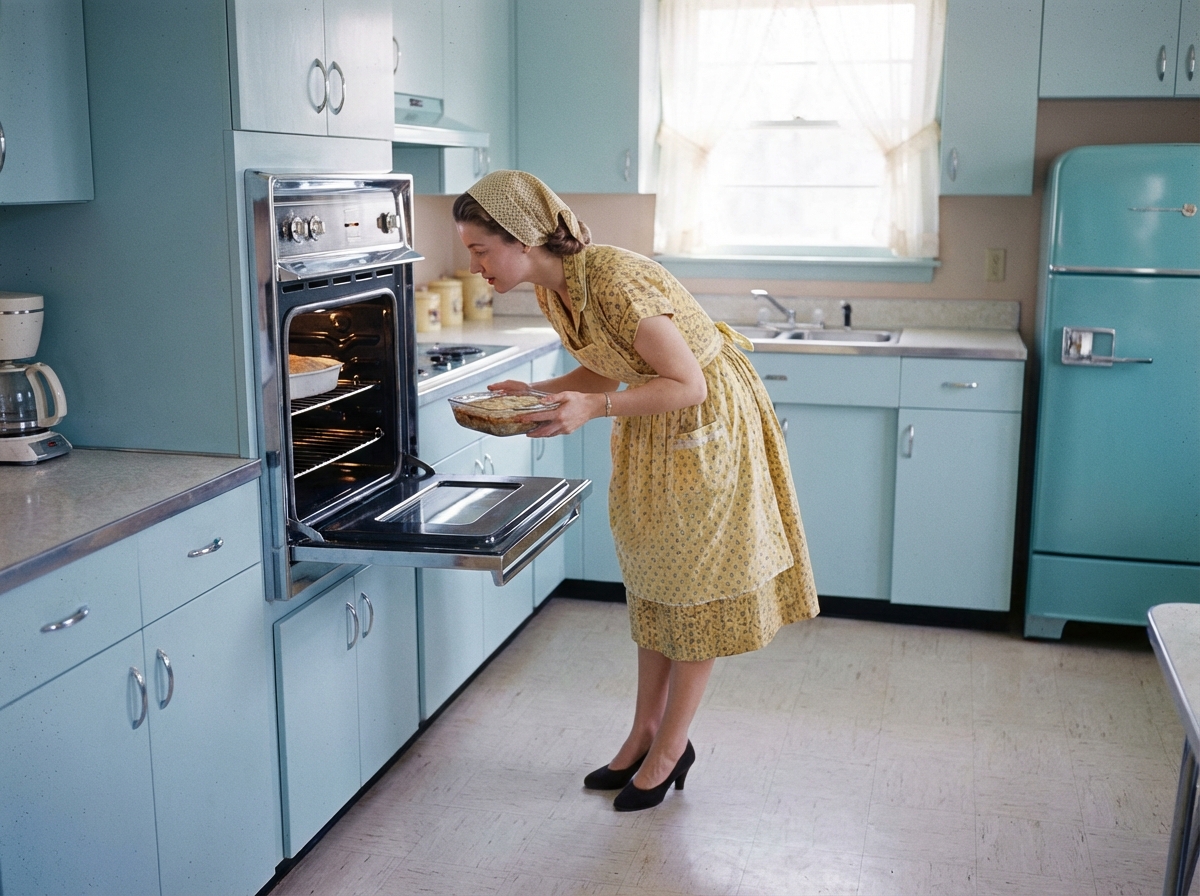
A woman tends to a meal in a 'modern' kitchen outfitted with the latest electric appliances in soft pastel hues. The 1950s saw a marketing blitz focused on domestic perfection, positioning labor-saving devices as the key to happiness for the idealized American housewife. While these technologies reduced physical labor, they simultaneously reinforced rigid gender roles that confined women to the home.
The Forgotten War
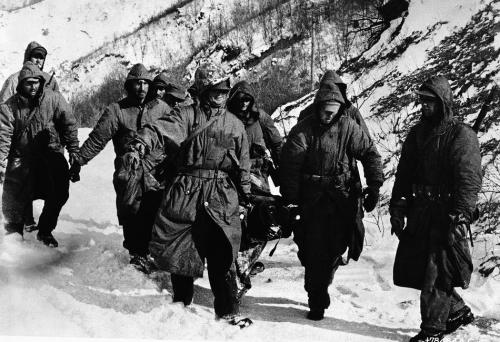
American troops trudge through freezing conditions during the Korean War (1950–1953), the first major military conflict of the Cold War. Ostensibly a United Nations police action to stop the spread of communism from North to South Korea, the war ended in a stalemate that solidified the division of the peninsula. It demonstrated the US commitment to the Truman Doctrine of containment, setting the stage for decades of geopolitical tension.
The Golden Age of Television
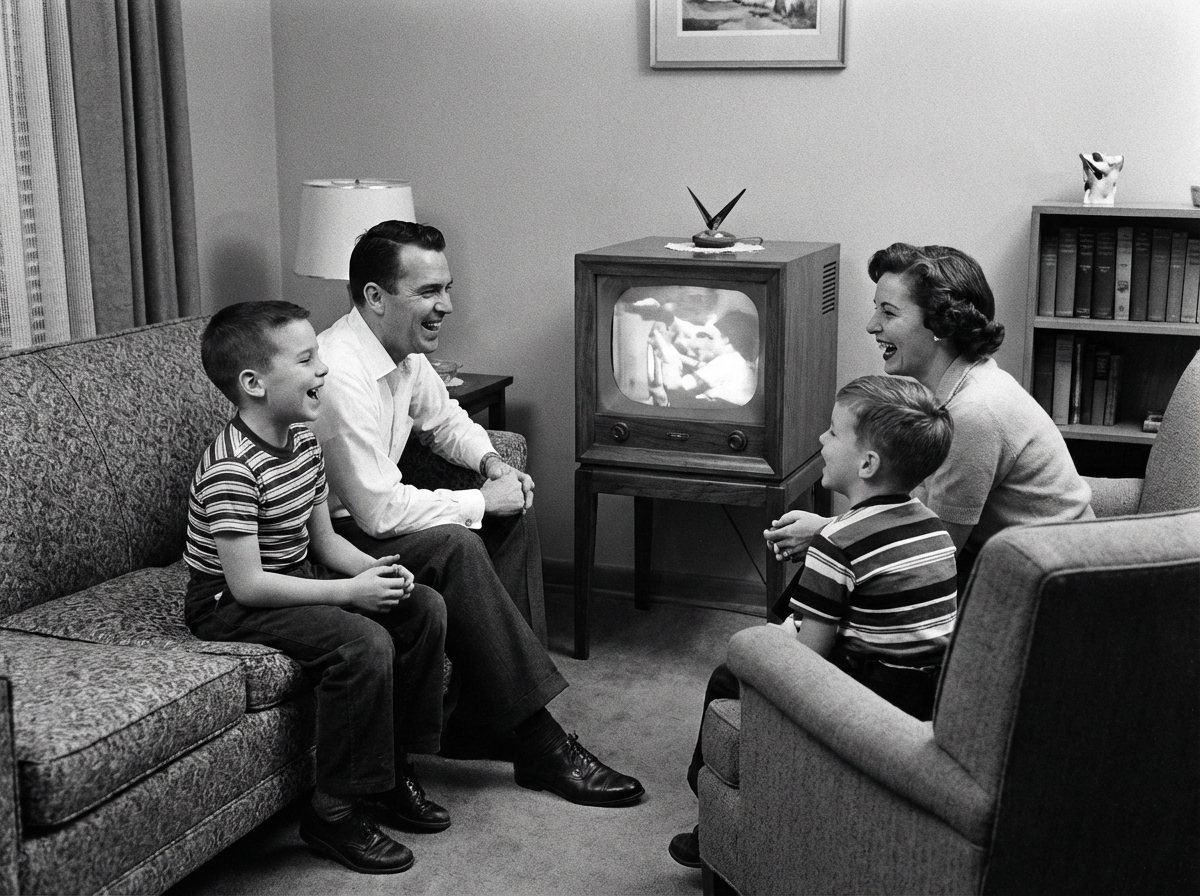
A family gathers around a small console television set, a scene that became the centerpiece of American evenings in the 1950s. Ownership of TV sets skyrocketed from under 10% in 1950 to nearly 90% by 1960, bringing shows like 'I Love Lucy' and the evening news directly into the home. This mass medium homogenized culture, creating shared national experiences while simultaneously reshaping family dynamics and leisure time.
Cinema Under the Stars
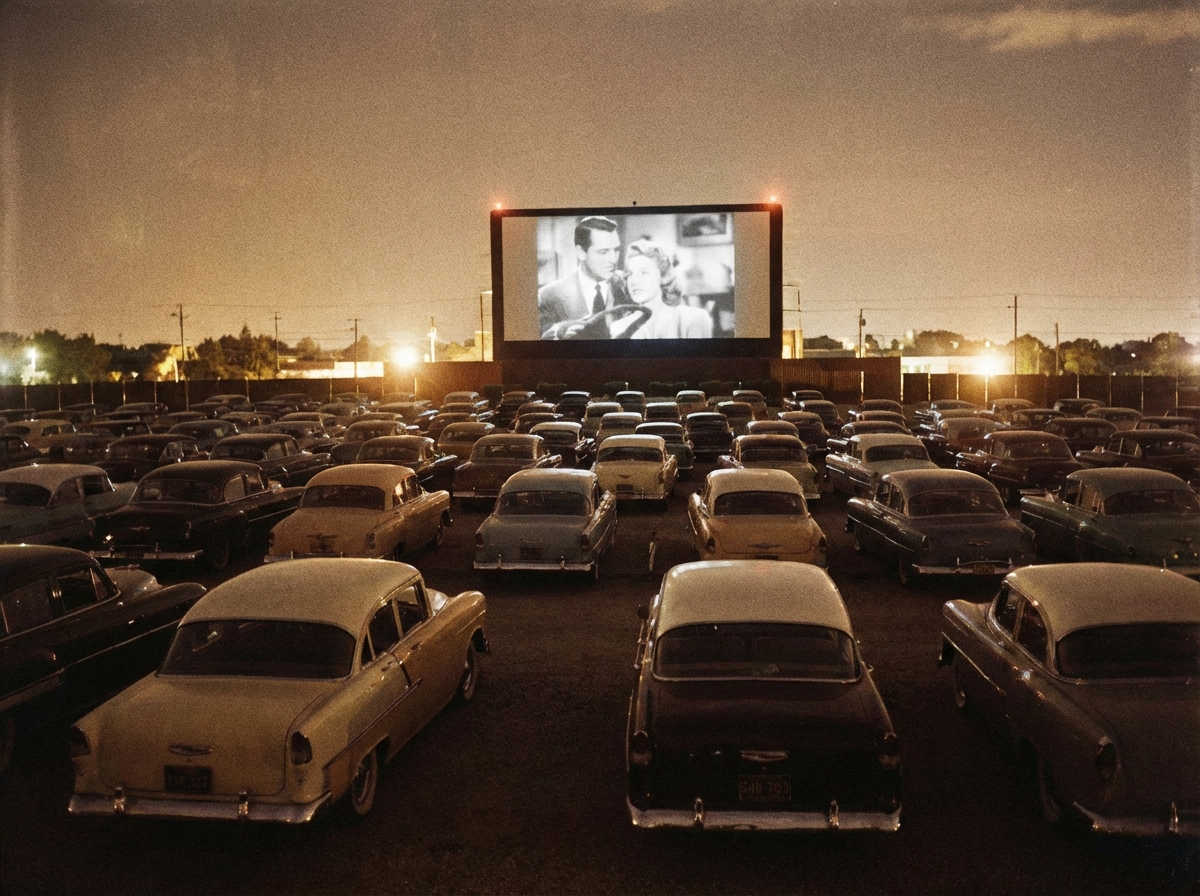
Rows of cars fill a drive-in theater at dusk, a phenomenon that reached its peak popularity with over 4,000 locations across the US by the late 1950s. Catering to the car culture and the baby boom (offering a place for families with crying infants), drive-ins were also notorious teenage hangouts. They represented the collision of Hollywood entertainment and the automobile, creating a unique communal social ritual.
Conquering Polio
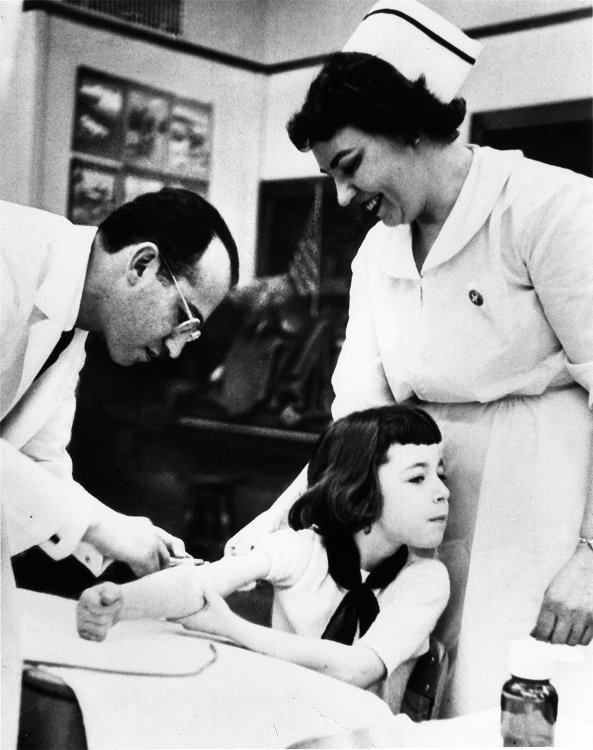
Dr. Jonas Salk administers the polio vaccine, which was declared safe and effective on April 12, 1955, causing church bells to ring out across the nation. Before this breakthrough, polio outbreaks caused widespread panic and paralyzed thousands of children annually. The vaccine's success was a triumph of modern science and public health, effectively eradicating a major source of fear in post-war American life.
The Icon of Glamour
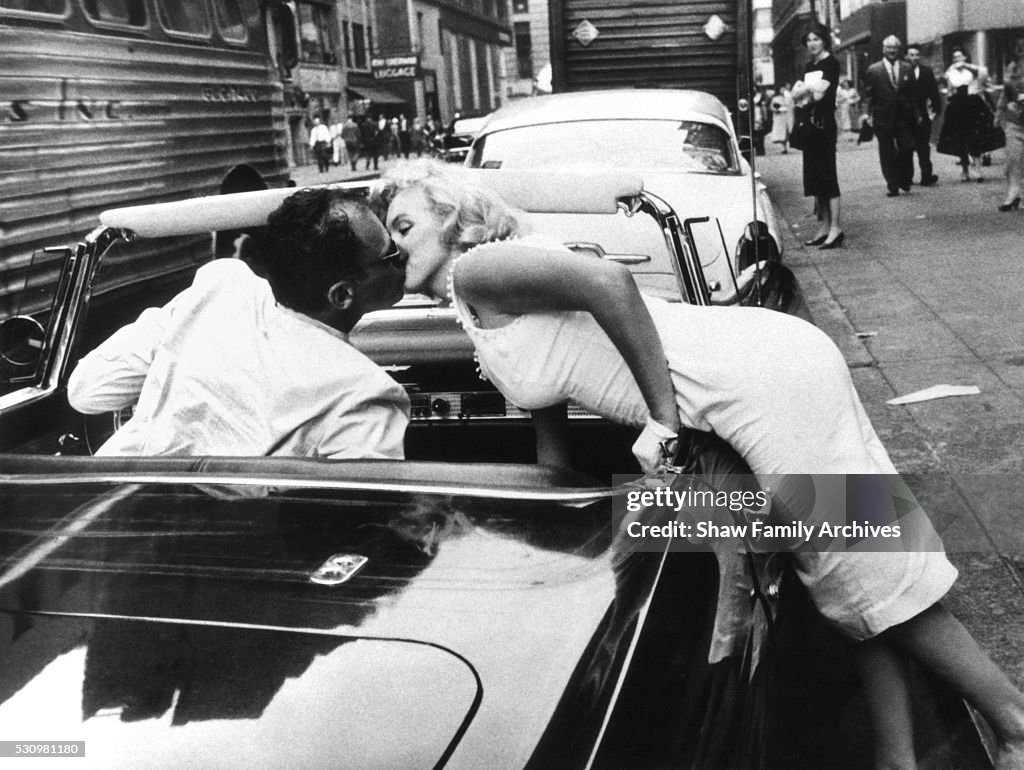
This candid snapshot of Marilyn Monroe captures the ultimate sex symbol of the 1950s at the height of her fame. While projecting an image of the 'blonde bombshell' in films like *Gentlemen Prefer Blondes* (1953), she simultaneously battled the restrictive studio system and public scrutiny. Her image defined the era's complex relationship with sexuality, celebrity, and the commodification of beauty.
The Sputnik Shock
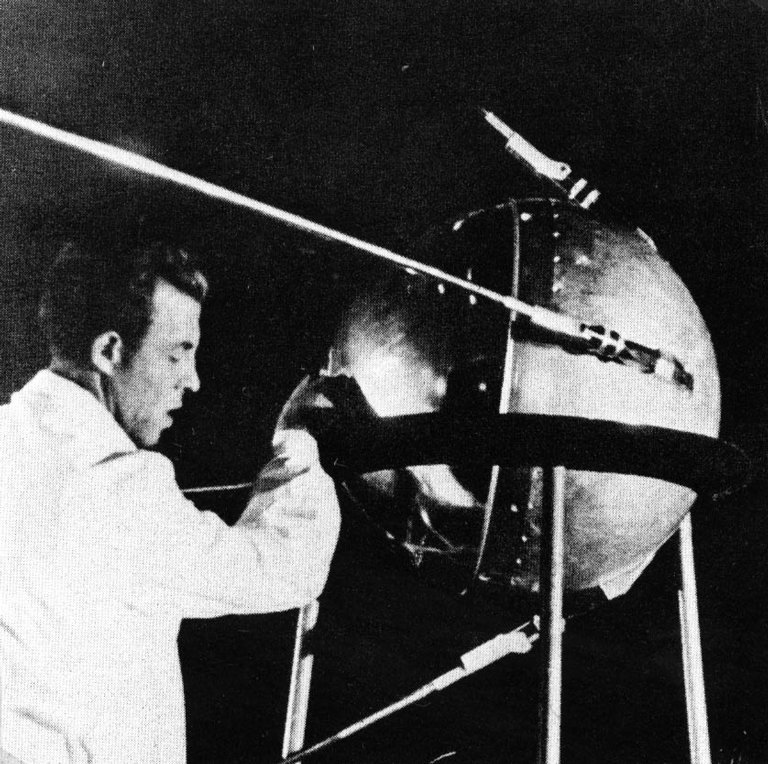
A technician examines a model of Sputnik 1, the first artificial Earth satellite, launched by the Soviet Union on October 4, 1957. The launch shattered American confidence in its technological superiority and triggered the 'Space Race,' leading to the creation of NASA the following year. It fundamentally shifted the focus of the Cold War to the heavens and spurred massive investment in US science and math education.
The 'New Look' Silhouette
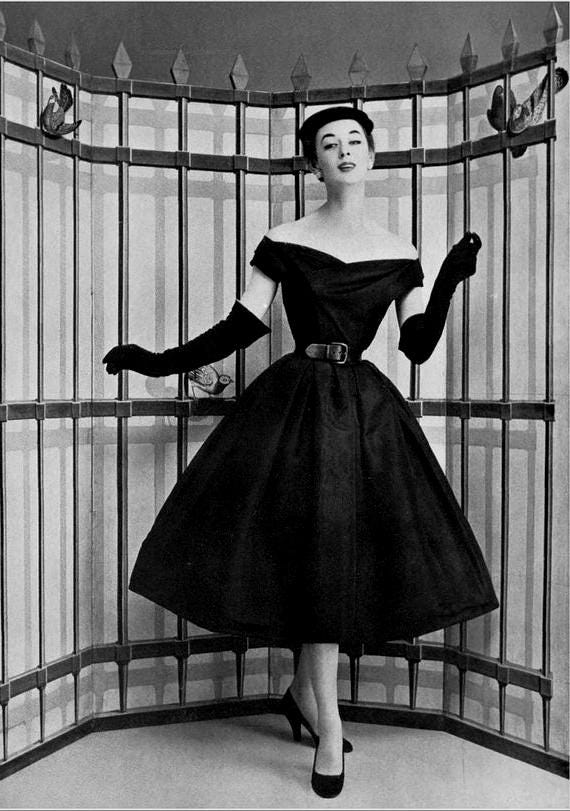
Models display the cinched waists and full skirts characteristic of the 'New Look' popularized by Christian Dior, which dominated 1950s high fashion. This hyper-feminine aesthetic was a sharp departure from the utilitarian clothing of the war years, requiring supportive undergarments and copious fabric. It visually reinforced the decade's return to traditional gender roles and the celebration of abundance over rationing.
The Fad Culture
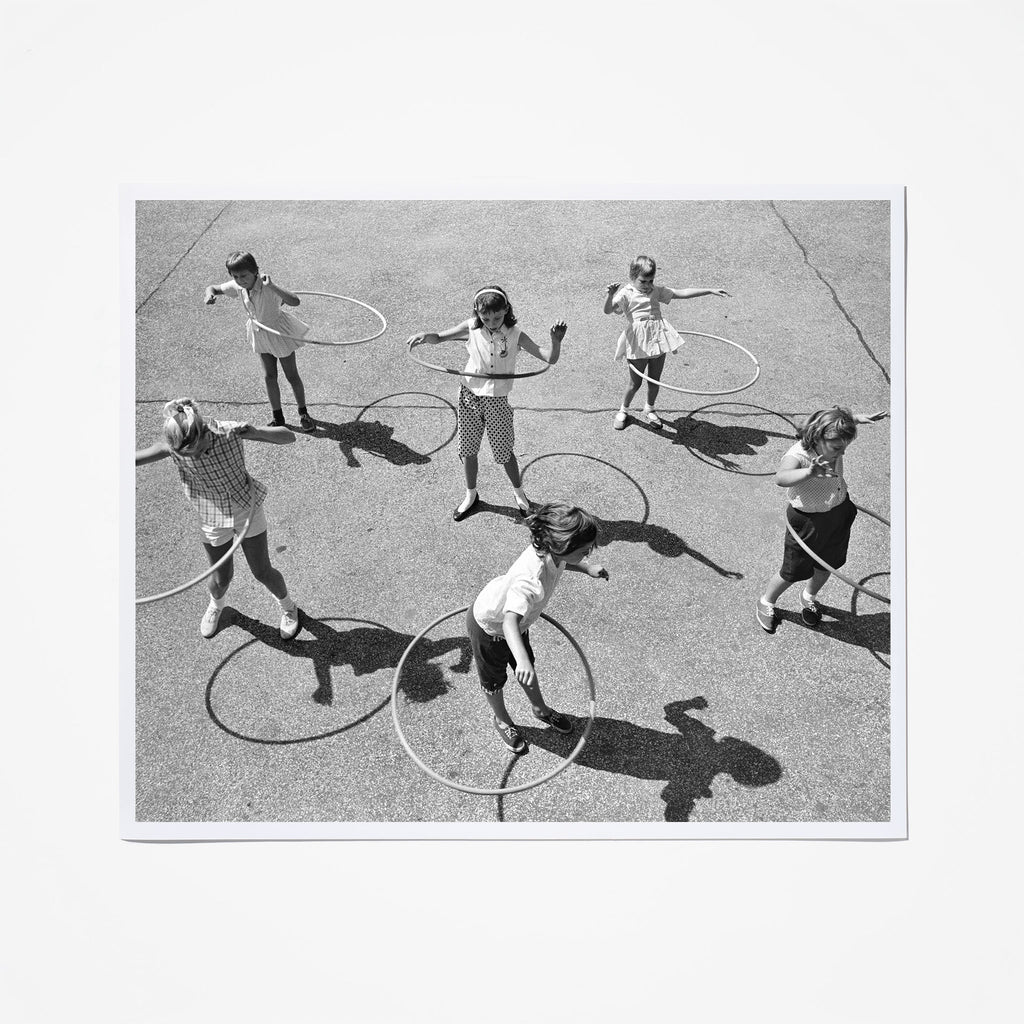
Children demonstrate the intense craze surrounding the Hula Hoop, which sold over 25 million units in just four months after its introduction by Wham-O in 1958. This simple plastic toy exemplified the new power of marketing to the Baby Boomer demographic, the first generation of children to be targeted directly by television advertising. It reflects the era's lighthearted, consumerist enthusiasm and the fleeting nature of pop culture trends.
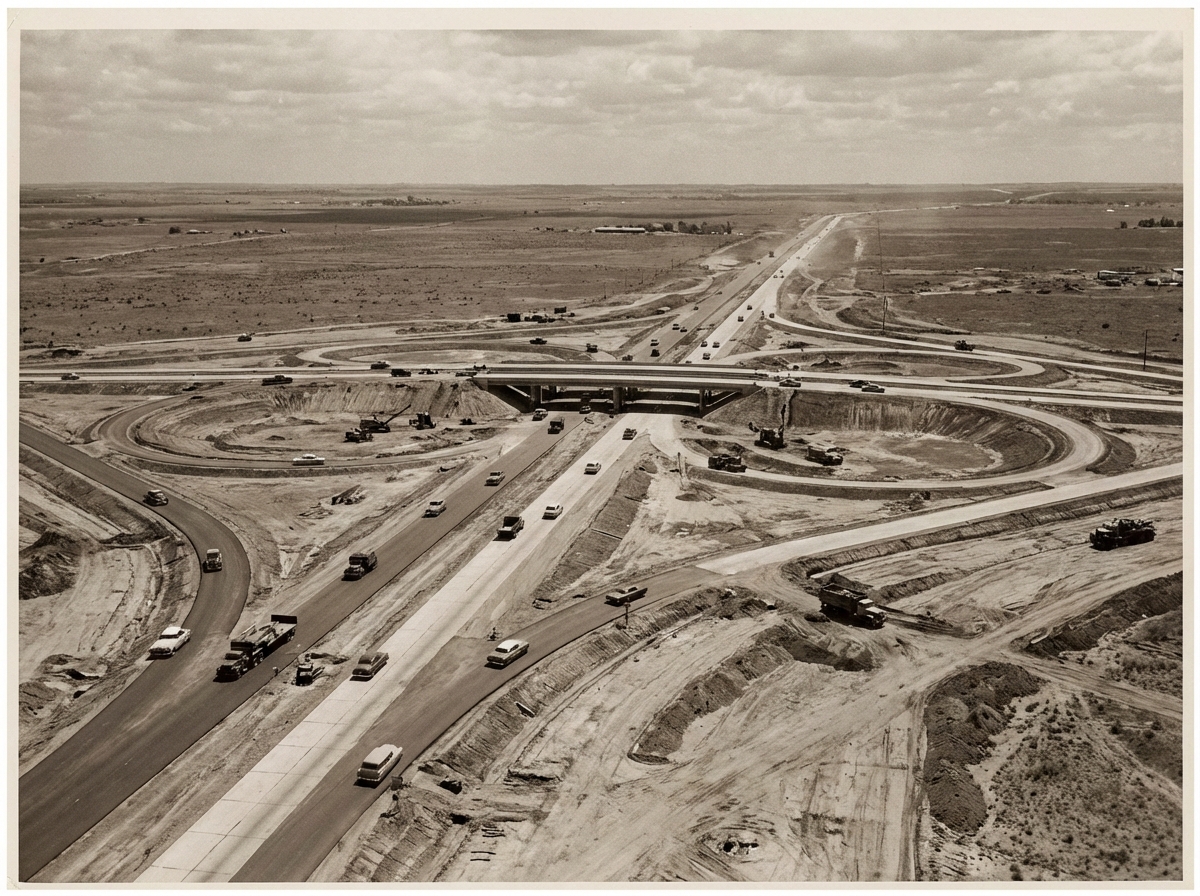
Paving the Nation
Construction proceeds on a massive interchange, part of the Interstate Highway System authorized by President Eisenhower in 1956. This public works project, the largest in American history, was designed for both economic efficiency and national defense, facilitating rapid troop movement. The highways permanently altered American geography, strangling passenger rail and bypassing small towns while catalyzing the growth of trucking and tourism.
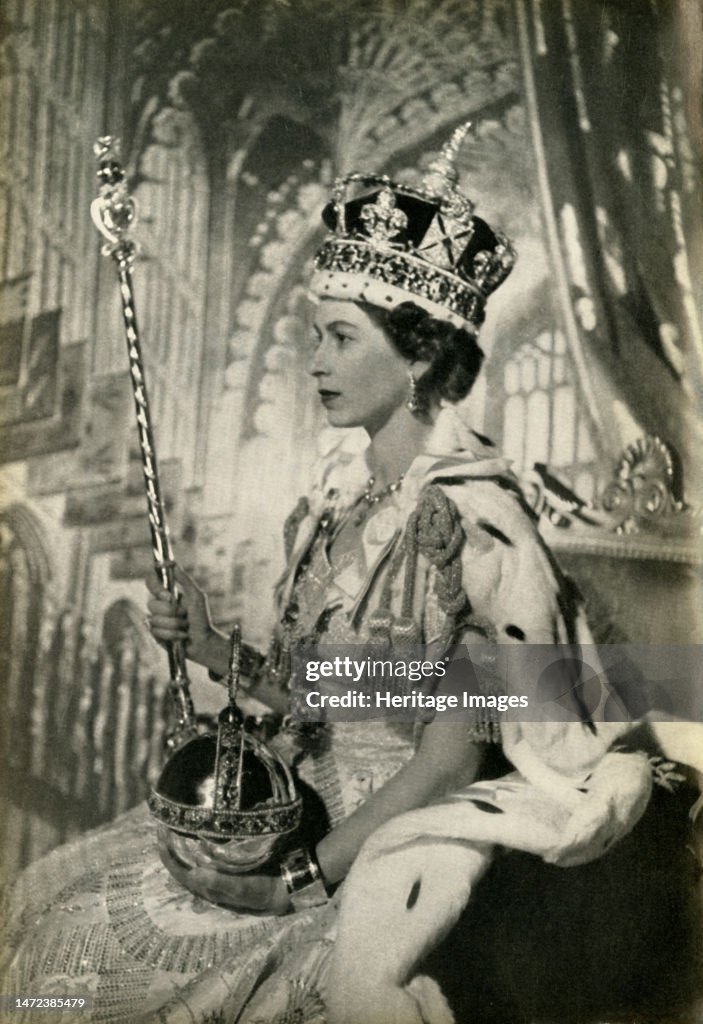
A New Elizabethan Age
Queen Elizabeth II is crowned at Westminster Abbey on June 2, 1953, in the first major international event to be fully televised. The broadcast modernized the monarchy, bringing ancient rituals into the living rooms of 27 million Britons and millions more worldwide. It symbolized a moment of hope and continuity for a Britain still recovering from the devastation and rationing of World War II.
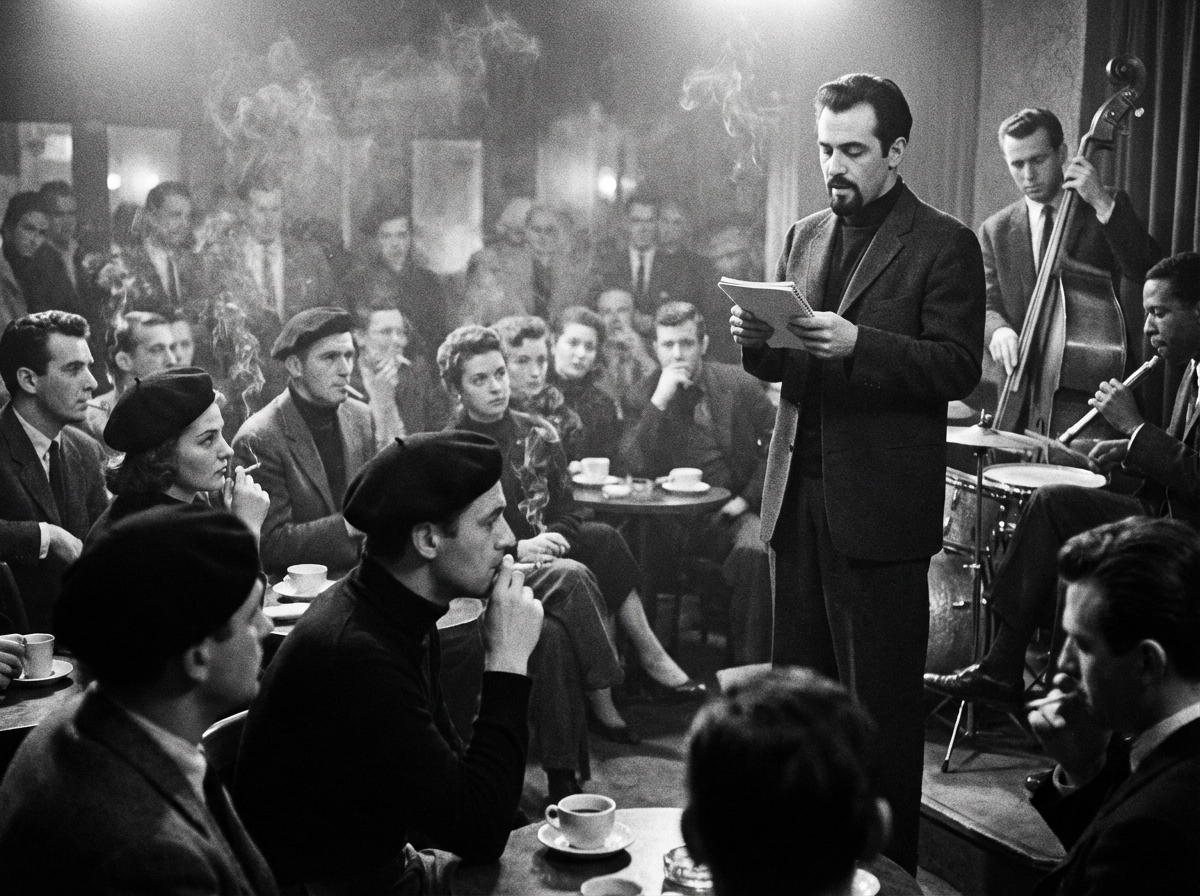
The Beat Generation
Young intellectuals gather in a dimly lit coffee house, arguably the birthplace of the counterculture that would explode in the 1960s. The 'Beatniks,' led by writers like Jack Kerouac and Allen Ginsberg, rejected 1950s materialism and conformity in favor of spontaneity, jazz, and spiritual exploration. Though mocked by the mainstream media, their rebellion planted the seeds for the social upheavals of the following decade.
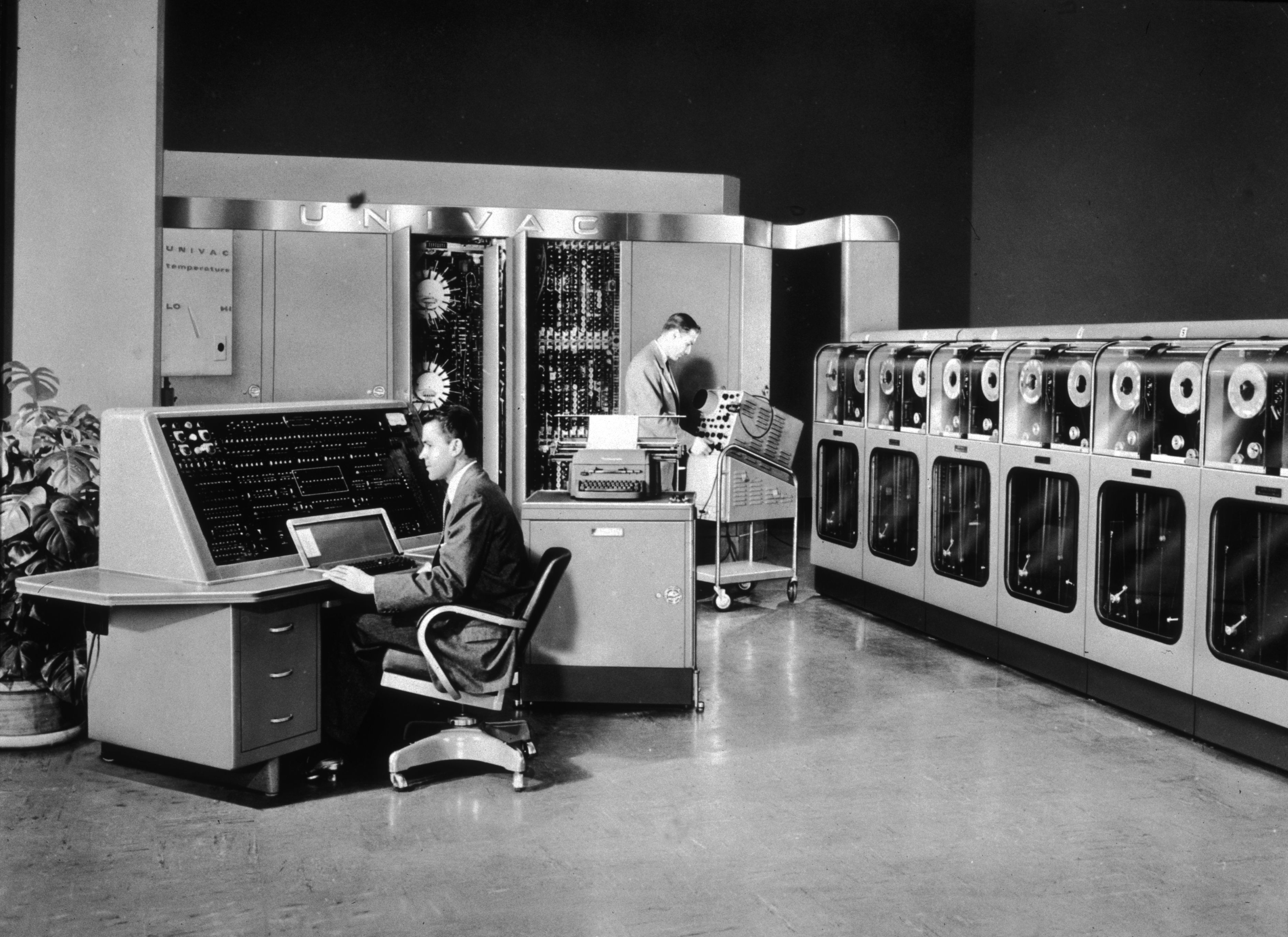
The Dawn of Computing
Operators manage the massive tape drives of a UNIVAC (Universal Automatic Computer), the first commercial computer in the US, which famously predicted Eisenhower's landslide victory in 1952. These room-sized machines, though primitive by modern standards, marked the transition from mechanical calculation to electronic data processing. They were the exclusive domain of government and big business, symbolizing the era's faith in technocratic management.
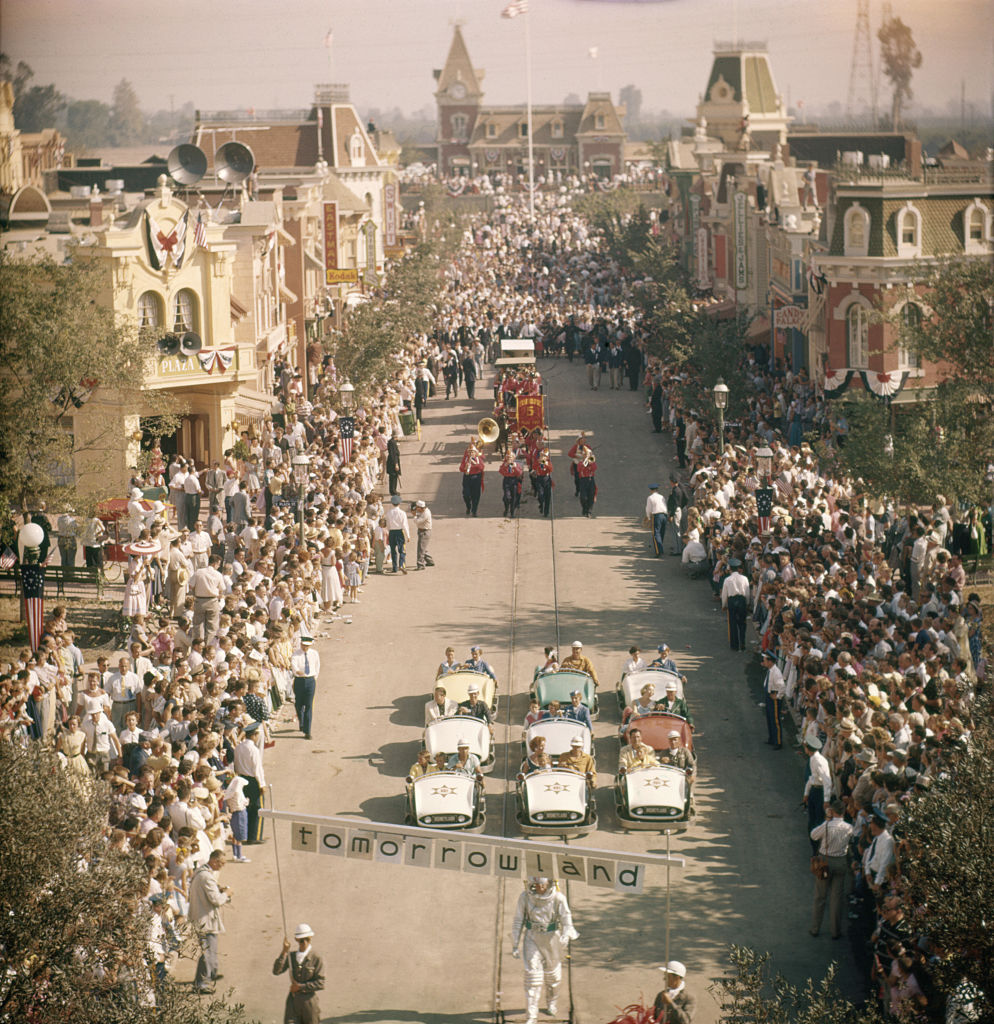
The Happiest Place on Earth
Crowds swarm Main Street, U.S.A. shortly after Disneyland's chaotic opening in Anaheim, California, in July 1955. Walt Disney's theme park was a revolutionary concept that sanitized the amusement park experience, offering a meticulously controlled environment dedicated to nostalgia and fantasy. It became an instant pilgrimage site for the American middle class, physically manifesting the values of the Disney brand.
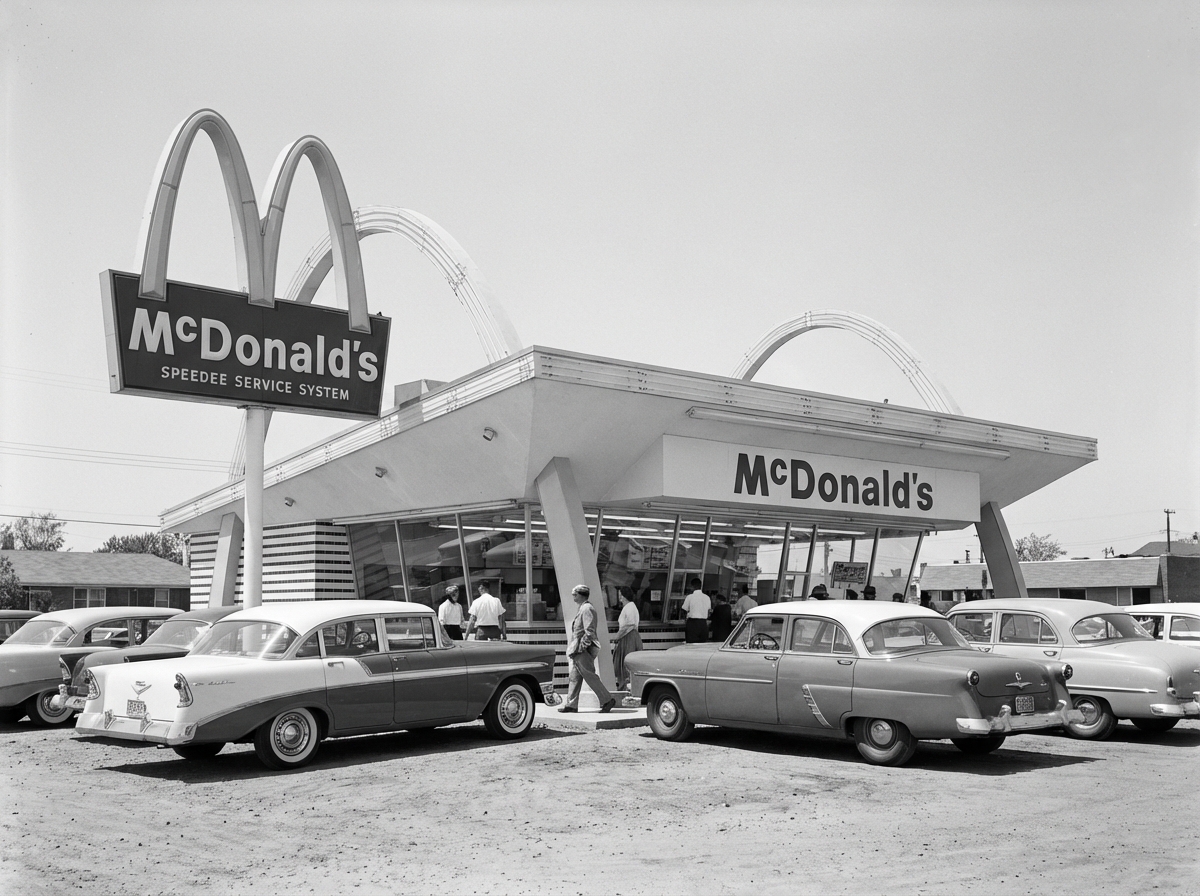
The Birth of Fast Food
The original franchised McDonald's in Des Plaines, Illinois, stands with its distinctive Golden Arches in 1955, established by Ray Kroc. By applying assembly-line principles to food preparation, McDonald's offered unprecedented speed, consistency, and low prices. This model transformed global eating habits and became a potent symbol of American capitalism and efficiency.
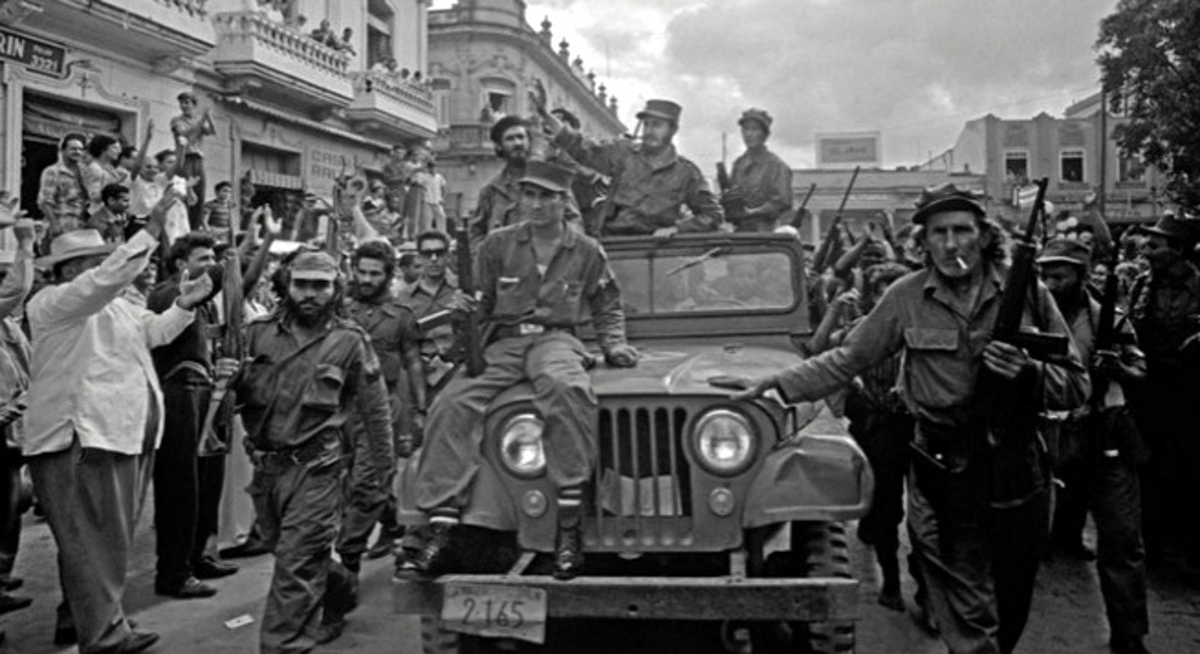
Revolution in Cuba
Fidel Castro and his rebel forces enter Havana victoriously in January 1959, marking the success of the Cuban Revolution and the overthrow of dictator Fulgencio Batista. This event, occurring at the very end of the decade, brought the Cold War directly to the Western Hemisphere, just 90 miles from Florida. The subsequent alignment of Cuba with the Soviet Union would define US foreign policy for generations to come.
- 1950s-history
- post-war-america
- cold-war
- cultural-history
- civil-rights-movement
- space-race
- vintage-photos