




Made byBobr AI

Kant's Duty Ethics: The Categorical Imperative Today

Explore Immanuel Kant's deontological ethics, the Categorical Imperative, and its application to digital privacy, data ethics, and modern moral dilemmas.

#immanuel-kant#deontology#moral-philosophy#categorical-imperative#data-ethics#digital-privacy#ethics
Watch
Pitch

KANT AND DUTY ETHICS

Relevance in Contemporary Times

"

Act only according to that maxim whereby you can will it to become a universal law.

— Immanuel Kant

Department of Philosophy | Contemporary Ethics

Made byBobr AI

WHAT IS DEONTOLOGY?

ETYMOLOGY

Derived from the Greek word 'deon', which intrinsically translates directly to DUTY.

CORE PRINCIPLE

We are morally obligated to act according to established principles and rules — regardless of the outcome.

KEY CONTRASTS

Fundamentally opposed to Utilitarianism (judging actions by happiness produced) and Consequentialism (ends justify the means).

KANTIAN FRAMEWORK (1788)

Kant's secular deontological theory proposes that morality is derived strictly from human REASON, not divine command.

MORAL PHILOSOPHY • INTRODUCTION

Made byBobr AI

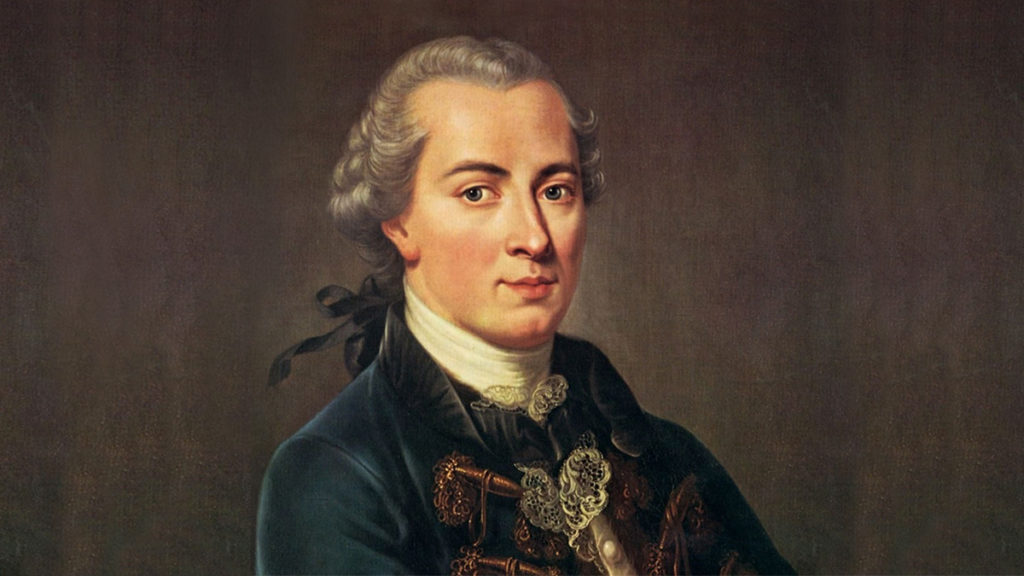
IMMANUEL KANT

The Father of Deontological Ethics

  • Born: 1724, Königsberg, Prussia
  • Died: 1804
  • Key Works:
    • Groundwork of the Metaphysics of Morals (1785)
    • Critique of Practical Reason (1788)
    • Metaphysics of Morals (1798)
  • Believed: Human beings have a unique capacity for RATIONALITY
  • Emotions, inclinations & consequences should NOT drive moral action
  • Morality must be based on OBLIGATION and REASON

Morality is not the doctrine of how we may make ourselves happy, but how we may make ourselves worthy of happiness.

Made byBobr AI

THE CATEGORICAL IMPERATIVE

Three Formulations of Kant's Moral Law

FORMULATION 1: UNIVERSAL LAW

"

Act only according to that maxim whereby you can at the same time will that it should become a universal law.

FORMULATION 2: HUMANITY AS END

"

Act so that you treat humanity, whether in your own person or that of another, always as an end and never as a means only.

FORMULATION 3: KINGDOM OF ENDS

"

Act as if you were through your maxim a law-making member of a kingdom of ends.

These imperatives are CATEGORICAL — binding on all rational beings, unconditionally

Made byBobr AI

FORMULATION 1

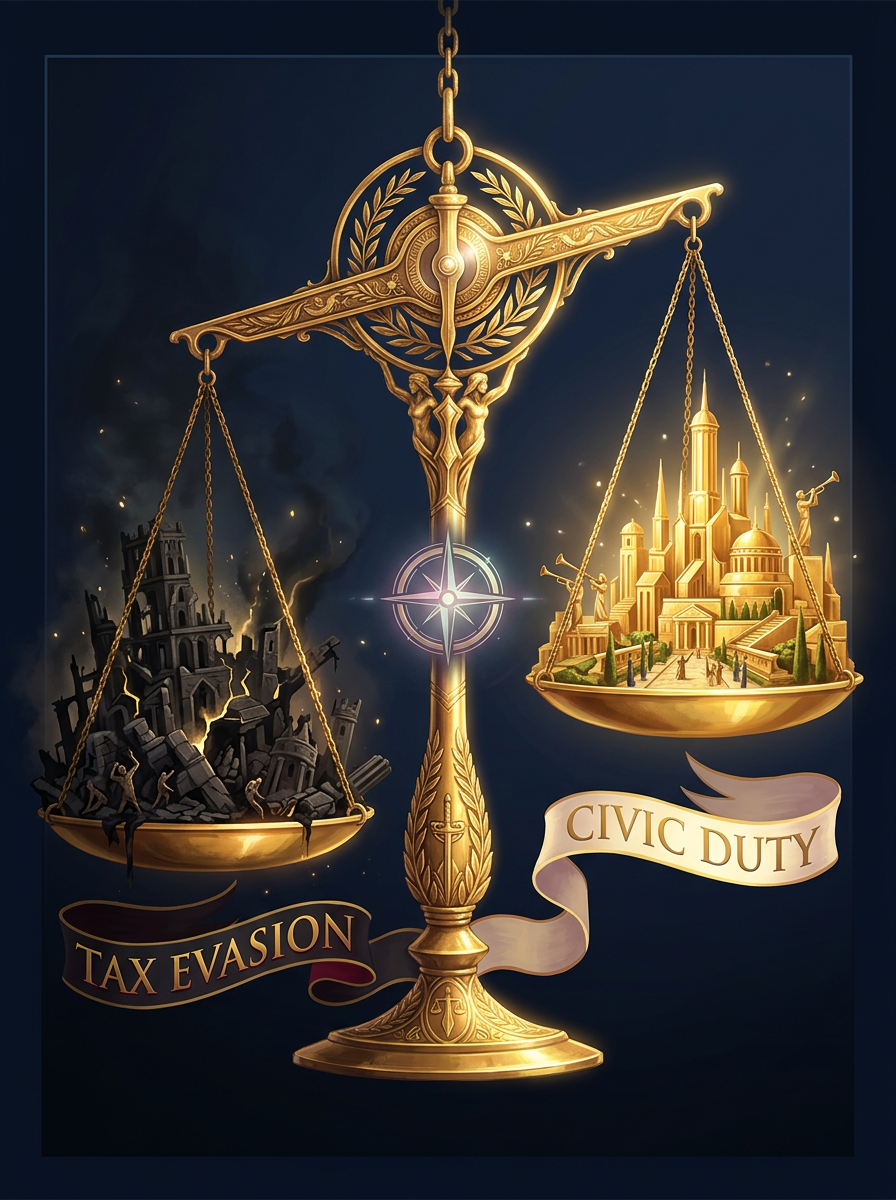
The Universal Law Test: Tax Evasion

The Maxim

"It's acceptable to avoid paying my fair share of taxes because I can get away with it."

Universalize It

What if EVERY citizen with money avoided paying taxes?

The Result

Roads crumble. Schools fail. Hospitals collapse. The society that enabled wealth collapses.

KANT'S VERDICT: IMMORAL

You want society's benefits but refuse the obligation to maintain it.

KANTIAN ALTERNATIVE

Pay legally required taxes. Advocate reform through democratic means.

Perfect Duty vs Imperfect Duty: Paying taxes is a Perfect Duty under the universal law because a universe where everyone defies tax laws makes the concept of a state impossible. There is no logical way to will this as a universal law.

Made byBobr AI

HUMANITY AS AN END

FORMULATION 2: NEVER MERELY A MEANS

The Scenario

Trying to cancel Amazon Prime — Cancel button is tiny, grey, hidden. "Keep Subscription" is bright green and glowing. Three screens of guilt-tripping.

The Designer's Maxim

"I will use psychology and frustration to trick users into doing what benefits my company."

The Problem

The user is treated as a lab rat. Their confusion and fatigue are TOOLS to reduce churn.

✗ Kant's Verdict: Immoral

You are deliberately undermining another person's rational autonomy.

✓ Kantian Alternative

Make cancellation as easy as sign-up. Respect the user's rational choice.

"Every person is an end in themselves — never merely a tool."

Dark Pattern ✗
Ethical Design ✓
Made byBobr AI

FORMULATION 3: THE KINGDOM OF ENDS

Act as a legislating member of a community of rational beings

THE TWO ROLES IN THE KINGDOM OF ENDS

🏛
THE LAWMAKER
Every time you act, imagine passing a law everyone in the world must follow.
THE SUBJECT
You must also live under those same laws.

REAL-WORLD CASE — WATER SCARCITY

  • 15,000 liters of water to produce 1 kg of beef
  • 2,700 liters for a single cotton t-shirt
  • Water-scarce nations (India, Middle East) export water-intensive crops while facing groundwater depletion

THE TEST

REJECTED MAXIM
"Water is cheap. The market decides who gets it."
→ Treats water as infinite commodity, ignores future generations.
KANTIAN RULE
"Water is a common heritage. Basic needs must be ensured for all. Sustainability for future generations must be prioritized."

WHY KANTIAN?

UNIVERSALIZABLE: Everyone deserves water regardless of wealth.
RESPECTS DIGNITY: Acknowledges the intrinsic value and basic necessities of all human beings.
KINGDOM OF ENDS: Water governance by all, not captured by the powerful.
Made byBobr AI

DIGITAL PRIVACY & DATA ETHICS

Applying Kant's Categorical Imperative to the Digital World

Violating the Maxim

  • Tech companies hide data-tracking clauses in 50-page legal documents

  • Sell user behavior patterns without meaningful consent

  • The user is treated as a PRODUCT — a means to profit

  • Dark patterns manipulate consent

  • "If you're not paying, you are the product"

Kingdom of Ends — Ethical Design

  • Privacy by Default: System assumes user has right to their digital personhood

  • Only use data the user actively and knowingly shares

  • Transparent, readable privacy policies

  • Easy opt-out mechanisms

  • User as a rational agent with full autonomy

Current Reality
Kantian Ideal
Data harvested silently
Informed consent always
Algorithmic manipulation
Transparent algorithms
Users as data points
Users as rational ends
"

Your data is an extension of your personhood — treat it with dignity.

"
Made byBobr AI

CASE STUDY: LYING TO PROTECT A FRIEND

Kant in the Hostel — Duty vs. Duty

THE SCENARIO

You are a first-year student. Three second-year seniors knock on your door looking for your roommate Ankit — a quiet boy from a small town. They intend to rag and humiliate him. Ankit is hiding in the bathroom. The senior demands:

"Tera roommate kahan hai? Tell us. NOW."

THE CONFLICT IN KANTIAN TERMS

Formulation
What It Demands
The Problem
Universal Law
Do not lie. Truth must be universal.
Telling truth delivers a vulnerable person into harm's way.
Humanity as End
Never use Ankit merely as a means.
Telling truth to protect yourself uses Ankit's suffering as your shield.
Kingdom of Ends
Act as legislator of rational beings.
Raggers have exited the Kingdom of Ends. They are not rational communicators — they are bullies.

THE RESOLUTION

"A senior using intimidation has forfeited his right to honest communication. The duty to protect the vulnerable OVERRIDES the duty of truth to an aggressor."

WHAT A KANTIAN WOULD DO:

OPTION A (EVASION)
"He mentioned the library..."
— Strategic ambiguity
OPTION B (DIRECT LIE)
Justified lie to protect safety
— Defends human dignity
AFTER THE INCIDENT
Report to Anti-Ragging Committee
— Also a Kantian duty
Made byBobr AI

CRITICISMS OF KANTIAN ETHICS

Where Does Duty Ethics Fall Short?

01

IGNORES OUTCOMES

Kant completely discounts consequences as a factor in moral evaluation. Killing one person to save millions is still impermissible under Kantian ethics — even if it saves humanity.

Example: If a terrorist has a bomb and you can save 1000 lives by torturing them for the location, Kant says: still wrong.

02

CONFLICTS WITH INTUITION

Kantian moral duty often contradicts our natural human inclinations and common sense. Following moral law over our gut instinct can feel deeply unnatural in real situations.

Example: You must not lie — even to a murderer asking where your friend is hiding.

03

WEAK ON VIRTUE & GOOD LIFE

Deontological ethics is weaker in guiding us on HOW to live well or develop virtues of character. It tells us what NOT to do, but less about how to flourish.

Example: Kant tells you to be fair, not to be kind, generous, or emotionally wise.

Kantian Ethics

Focuses strictly on universal duties and intentions, ignoring outcomes entirely.

Utilitarianism

Evaluates actions purely by the net positive consequences they produce.

Virtue Ethics

Emphasizes developing moral character and practical wisdom for a good life.

No ethical theory is complete alone — wisdom lies in balance.

Made byBobr AI

CONCLUSION

The Kantian Engineer

Summary

  • Kant reminds us that DIGNITY IS NON-NEGOTIABLE
  • Moral worth comes from acting from DUTY and REASON — not fear, profit, or emotion
  • The Categorical Imperative gives us a universal, rational test for any action

The Tech Imperative

  • As engineers and citizens, we must build systems that RESPECT human agency
  • Privacy by design, fair algorithms, honest UX — these are Kantian duties
  • Every line of code, every policy decision — ask: "Can I universalize this?"

The Kantian Question for Daily Life

"

Am I making a special exception for myself?

Am I treating people like tools?

Am I building a community where everyone can thrive — not just the fast and the loud?

Kant doesn't ask you to be nice. He asks you to be FAIR.

"
"

Two things fill the mind with wonder — the starry heavens above me and the moral law within me.

— Immanuel Kant

Made byBobr AI
Bobr AI

DESIGNER-MADE
PRESENTATION,
GENERATED FROM
YOUR PROMPT

Create your own professional slide deck with real images, data charts, and unique design in under a minute.

Generate For Free

Kant's Duty Ethics: The Categorical Imperative Today

Explore Immanuel Kant's deontological ethics, the Categorical Imperative, and its application to digital privacy, data ethics, and modern moral dilemmas.

KANT AND DUTY ETHICS

Relevance in Contemporary Times

Department of Philosophy | Contemporary Ethics

WHAT IS DEONTOLOGY?

ETYMOLOGY

Derived from the Greek word <strong style="color:#FFFFFF;">'deon'</strong>, which intrinsically translates directly to <strong style="color:#FFFFFF;">DUTY</strong>.

CORE PRINCIPLE

We are morally obligated to act according to established principles and rules — <strong style="color:#FFFFFF;">regardless of the outcome</strong>.

KEY CONTRASTS

Fundamentally opposed to <em>Utilitarianism</em> (judging actions by happiness produced) and <em>Consequentialism</em> (ends justify the means).

KANTIAN FRAMEWORK (1788)

Kant's secular deontological theory proposes that morality is derived strictly from <strong style="color:#FFFFFF;">human REASON</strong>, not divine command.

MORAL PHILOSOPHY • INTRODUCTION

IMMANUEL KANT

The Father of Deontological Ethics

Morality is not the doctrine of how we may make ourselves happy, but how we may make ourselves worthy of happiness.

THE CATEGORICAL IMPERATIVE

Three Formulations of Kant's Moral Law

FORMULATION 1: UNIVERSAL LAW

Act only according to that maxim whereby you can at the same time will that it should become a universal law.

FORMULATION 2: HUMANITY AS END

Act so that you treat humanity, whether in your own person or that of another, always as an end and never as a means only.

FORMULATION 3: KINGDOM OF ENDS

Act as if you were through your maxim a law-making member of a kingdom of ends.

These imperatives are CATEGORICAL — binding on all rational beings, unconditionally

FORMULATION 1

The Universal Law Test: Tax Evasion

HUMANITY AS AN END

FORMULATION 2: NEVER MERELY A MEANS

FORMULATION 3: THE KINGDOM OF ENDS

Act as a legislating member of a community of rational beings

THE TWO ROLES IN THE KINGDOM OF ENDS

Every time you act, imagine passing a law everyone in the world must follow.

You must also live under those same laws.

REAL-WORLD CASE — WATER SCARCITY

15,000 liters of water to produce 1 kg of beef

2,700 liters for a single cotton t-shirt

Water-scarce nations (India, Middle East) export water-intensive crops while facing groundwater depletion

THE TEST

REJECTED MAXIM

"Water is cheap. The market decides who gets it."

→ Treats water as infinite commodity, ignores future generations.

KANTIAN RULE

"Water is a common heritage. Basic needs must be ensured for all. Sustainability for future generations must be prioritized."

WHY KANTIAN?

Everyone deserves water regardless of wealth.

Acknowledges the intrinsic value and basic necessities of all human beings.

Water governance by all, not captured by the powerful.

DIGITAL PRIVACY & DATA ETHICS

Applying Kant's Categorical Imperative to the Digital World

Violating the Maxim

Tech companies hide data-tracking clauses in 50-page legal documents

Sell user behavior patterns without meaningful consent

The user is treated as a PRODUCT — a means to profit

Dark patterns manipulate consent

"If you're not paying, you are the product"

Kingdom of Ends — Ethical Design

Privacy by Default: System assumes user has right to their digital personhood

Only use data the user actively and knowingly shares

Transparent, readable privacy policies

Easy opt-out mechanisms

User as a rational agent with full autonomy

Current Reality

Kantian Ideal

Data harvested silently

Informed consent always

Algorithmic manipulation

Transparent algorithms

Users as data points

Users as rational ends

Your data is an extension of your personhood — treat it with dignity.

CASE STUDY: LYING TO PROTECT A FRIEND

Kant in the Hostel — Duty vs. Duty

THE SCENARIO

You are a first-year student. Three second-year seniors knock on your door looking for your roommate Ankit — a quiet boy from a small town. They intend to rag and humiliate him. Ankit is hiding in the bathroom. The senior demands:

"Tera roommate kahan hai? Tell us. NOW."

THE CONFLICT IN KANTIAN TERMS

Formulation

What It Demands

The Problem

Universal Law

Do not lie. Truth must be universal.

Telling truth delivers a vulnerable person into harm's way.

Humanity as End

Never use Ankit merely as a means.

Telling truth to protect yourself uses Ankit's suffering as your shield.

Kingdom of Ends

Act as legislator of rational beings.

Raggers have exited the Kingdom of Ends. They are not rational communicators — they are bullies.

THE RESOLUTION

A senior using intimidation has forfeited his right to honest communication. The duty to protect the vulnerable OVERRIDES the duty of truth to an aggressor.

WHAT A KANTIAN WOULD DO:

OPTION A (EVASION)

"He mentioned the library..."

— Strategic ambiguity

OPTION B (DIRECT LIE)

Justified lie to protect safety

— Defends human dignity

AFTER THE INCIDENT

Report to Anti-Ragging Committee

— Also a Kantian duty

CRITICISMS OF KANTIAN ETHICS

Where Does Duty Ethics Fall Short?

IGNORES OUTCOMES

Kant completely discounts consequences as a factor in moral evaluation. Killing one person to save millions is still impermissible under Kantian ethics — even if it saves humanity.

If a terrorist has a bomb and you can save 1000 lives by torturing them for the location, Kant says: still wrong.

CONFLICTS WITH INTUITION

Kantian moral duty often contradicts our natural human inclinations and common sense. Following moral law over our gut instinct can feel deeply unnatural in real situations.

You must not lie — even to a murderer asking where your friend is hiding.

WEAK ON VIRTUE & GOOD LIFE

Deontological ethics is weaker in guiding us on HOW to live well or develop virtues of character. It tells us what NOT to do, but less about how to flourish.

Kant tells you to be fair, not to be kind, generous, or emotionally wise.

Kantian Ethics

Focuses strictly on universal duties and intentions, ignoring outcomes entirely.

Utilitarianism

Evaluates actions purely by the net positive consequences they produce.

Virtue Ethics

Emphasizes developing moral character and practical wisdom for a good life.

No ethical theory is complete alone — wisdom lies in balance.

CONCLUSION

The Kantian Engineer

Summary

The Tech Imperative

The Kantian Question for Daily Life

Two things fill the mind with wonder — the starry heavens above me and the moral law within me.

  • immanuel-kant
  • deontology
  • moral-philosophy
  • categorical-imperative
  • data-ethics
  • digital-privacy
  • ethics