






Made byBobr AI

5A Model for Cardiac Rehab: Case Study & Behavior Change

Learn how to apply the 5A Model in cardiac rehabilitation for post-MI patients, focusing on anxiety management, behavior change, and exercise prescription.

#cardiac-rehabilitation#5a-model#behavior-change#kinesiophobia#physical-therapy#smartwatch-health#post-mi-care
Watch
Pitch

The 5A Model in Cardiac Rehabilitation

Case Study: Sr. Singh – Behavior Change & Anxiety Management

A modern cardiac rehabilitation center with medical professionals discussing a patient file, bright and clean clinical atmosphere, photorealistic

Interdisciplinary Team Presentation

Made byBobr AI

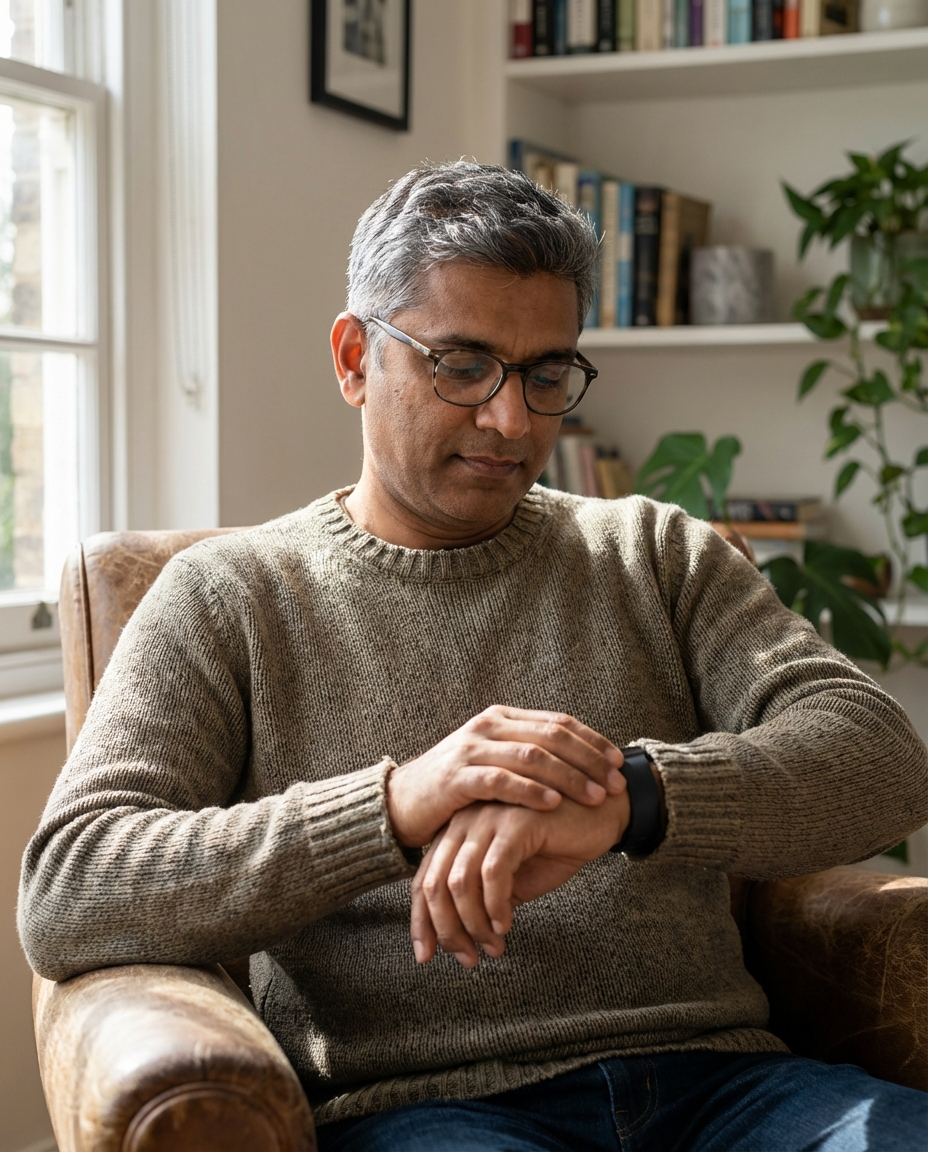
Patient Profile: Sr. Singh

  • Demographics: 55 years old, active family life, tech-savvy.
  • History: Status post acute myocardial infarction (2 months ago), post-angioplasty.
  • Clinical Status: Stable but reduced aerobic capacity (VO₂ max 19 ml/kg/min).
  • Psychosocial: High motivation but specifically suffers from cardiac anxiety/panic when heart rate rises.
Portrait of a 55-year-old Indian man looking thoughtfully at a smartwatch on his wrist, home setting, natural lighting, realistic style
Made byBobr AI

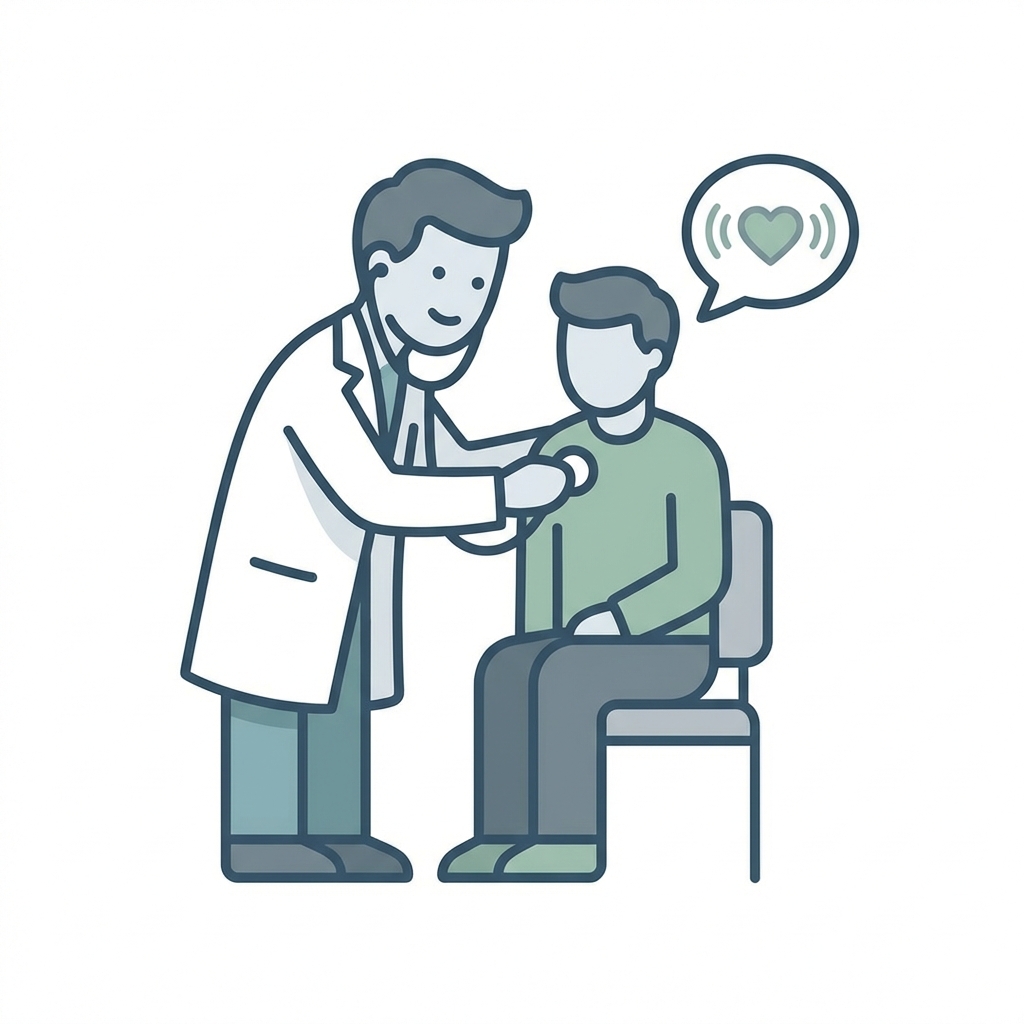
1. ASK – The Patient Perspective

Consultation illustration, doctor listening to patient, empathy, medical icon style, minimalism

Key Findings

Patient is highly motivated but experiences panic attacks when HR increases. He avoids exertion due to fear of reinfarction (kinesiophobia).

Patient Goals

Explicit: Wants to 'exercise safely' and 'understand heart rate limits'.
Implicit: Desires to regain confidence to keep up with his children and return to work.

Made byBobr AI

2. ADVISE – Personalized Education

  • Reassurance: Explain medical stability post-angioplasty. Exercise reduces future risk.
  • Key Message: 'High HR' during exercise is normal, not dangerous.
  • Digital Coaching: Focus on trends, not single spikes. Define Green Zone (95-120 bpm).
Chart
Made byBobr AI

3. ASSESS – Readiness & Barriers

Current Motivation State: HIGH (Action Phase).

Simple red icon depicting an obstacle or hurdle

Barriers

• Fear and panic when HR > 120 bpm • Catastrophic thinking • 'Medical language' overload • Cognitive complaints (concentration)
Simple green icon depicting support or helping hands

Facilitators

• Supportive partner (healthcare knowledge) • High digital skills / Smartwatch owner • Strong intrinsic motivation (children) • Access to rehab structure
Made byBobr AI

4. ASSIST – The Exercise Prescription (FITT)

Factor
Prescription for Sr. Singh (Early Phase)
Frequency
3–5x/week (Supervised + Home)
Intensity
HR Zone: 95–120 bpm | Borg: 3–5 (Moderate)
Time
15–20 min progressing to 30–40 min
Type
Aerobic (Walking/Cycling) + Low Intensity Resistance
Made byBobr AI

4. ASSIST – Action Plan (SMART Goals)

Goal 1: Anxiety Reduction

Specific: Use breathing techniques when HR rises.
Measurable: Keep anxiety score < 4/10 during sessions.
Time-bound: Achieve consistently by Week 3.

Goal 2: Digital Literacy

Specific: Use smartwatch to stay in 'Green Zone'.
Measurable: Maintain HR 95–120 bpm for 15 mins.
Time-bound: Successfully log 3 sessions by Week 2.

Abstract digital illustration of a target or goal with checkmarks, business blue style
Made byBobr AI

5. ARRANGE – Follow-up & Evaluation

2–3 Weeks: Short Term

Evaluate fear levels during exercise. Check HR control and understanding of the Borg scale.

6–12 Weeks: Mid Term

Reassess functional capacity (Submax test / 6MWT). Monitor mood and confidence.

Long Term

Transition to independent training. Relapse prevention. Sustainable lifestyle integration.

Made byBobr AI

Evidence & Guidelines (KNGF)

KNGF-richtlijn Hartrevalidatie (2023/2024)

The revised guideline emphasizes person-centered care and shared decision-making for patients post-MI.

Training Recommendations:

• Aerobic Training: 50–80% VO2 peak / HRR.
• Frequency: 3–5 times per week.
• Strength: 30–80% 1RM (starting after 6–8 weeks).
• Focus: Combine intensity with safety; no direct contraindications in stabilized patients.

Official medical guideline document stack, clean minimal style, blue and white theme
Made byBobr AI

Summary & Key Takeaways

Use the 5A Model to structure behavior change counseling.
For Sr. Singh, success relies on managing anxiety (Ask/Assess) before increasing intensity.
Digital literacy is a key 'Assist' tool: Turn data fears into data empowerment.
Happy older man jogging in a park, sunlight, healthy lifestyle, confident, photorealistic
Made byBobr AI
Bobr AI

DESIGNER-MADE
PRESENTATION,
GENERATED FROM
YOUR PROMPT

Create your own professional slide deck with real images, data charts, and unique design in under a minute.

Generate For Free

5A Model for Cardiac Rehab: Case Study & Behavior Change

Learn how to apply the 5A Model in cardiac rehabilitation for post-MI patients, focusing on anxiety management, behavior change, and exercise prescription.

The 5A Model in Cardiac Rehabilitation

Case Study: Sr. Singh – Behavior Change & Anxiety Management

Interdisciplinary Team Presentation

Patient Profile: Sr. Singh

Demographics: 55 years old, active family life, tech-savvy.

History: Status post acute myocardial infarction (2 months ago), post-angioplasty.

Clinical Status: Stable but reduced aerobic capacity (VO₂ max 19 ml/kg/min).

Psychosocial: High motivation but specifically suffers from cardiac anxiety/panic when heart rate rises.

1. ASK – The Patient Perspective

Key Findings

Patient is highly motivated but experiences panic attacks when HR increases. He avoids exertion due to fear of reinfarction (kinesiophobia).

Patient Goals

Explicit: Wants to 'exercise safely' and 'understand heart rate limits'.<br>Implicit: Desires to regain confidence to keep up with his children and return to work.

2. ADVISE – Personalized Education

Reassurance: Explain medical stability post-angioplasty. Exercise reduces future risk.

Key Message: 'High HR' during exercise is normal, not dangerous.

Digital Coaching: Focus on trends, not single spikes. Define Green Zone (95-120 bpm).

3. ASSESS – Readiness & Barriers

Current Motivation State: HIGH (Action Phase).

• Fear and panic when HR > 120 bpm • Catastrophic thinking • 'Medical language' overload • Cognitive complaints (concentration)

• Supportive partner (healthcare knowledge) • High digital skills / Smartwatch owner • Strong intrinsic motivation (children) • Access to rehab structure

4. ASSIST – The Exercise Prescription (FITT)

Factor

Prescription for Sr. Singh (Early Phase)

Frequency

3–5x/week (Supervised + Home)

Intensity

HR Zone: 95–120 bpm | Borg: 3–5 (Moderate)

Time

15–20 min progressing to 30–40 min

Type

Aerobic (Walking/Cycling) + Low Intensity Resistance

4. ASSIST – Action Plan (SMART Goals)

Goal 1: Anxiety Reduction

Specific: Use breathing techniques when HR rises.<br>Measurable: Keep anxiety score < 4/10 during sessions.<br>Time-bound: Achieve consistently by Week 3.

Goal 2: Digital Literacy

Specific: Use smartwatch to stay in 'Green Zone'.<br>Measurable: Maintain HR 95–120 bpm for 15 mins.<br>Time-bound: Successfully log 3 sessions by Week 2.

5. ARRANGE – Follow-up & Evaluation

2–3 Weeks: Short Term

Evaluate fear levels during exercise. Check HR control and understanding of the Borg scale.

6–12 Weeks: Mid Term

Reassess functional capacity (Submax test / 6MWT). Monitor mood and confidence.

Long Term

Transition to independent training. Relapse prevention. Sustainable lifestyle integration.

Evidence & Guidelines (KNGF)

KNGF-richtlijn Hartrevalidatie (2023/2024)

The revised guideline emphasizes person-centered care and shared decision-making for patients post-MI.

Training Recommendations:

• Aerobic Training: 50–80% VO2 peak / HRR.<br>• Frequency: 3–5 times per week.<br>• Strength: 30–80% 1RM (starting after 6–8 weeks).<br>• Focus: Combine intensity with safety; no direct contraindications in stabilized patients.

Summary & Key Takeaways

Use the 5A Model to structure behavior change counseling.

For Sr. Singh, success relies on managing anxiety (Ask/Assess) before increasing intensity.

Digital literacy is a key 'Assist' tool: Turn data fears into data empowerment.

  • cardiac-rehabilitation
  • 5a-model
  • behavior-change
  • kinesiophobia
  • physical-therapy
  • smartwatch-health
  • post-mi-care