


Relational vs. NoSQL Databases: Comparative Analysis
Explore the differences between SQL and NoSQL databases, including ACID properties, scaling, data integrity, and use cases for banking and big data.
Relational vs. NoSQL Databases
A Comparative Analysis of Architecture, Benefits, and Use Cases
Relational Databases (RDBMS)
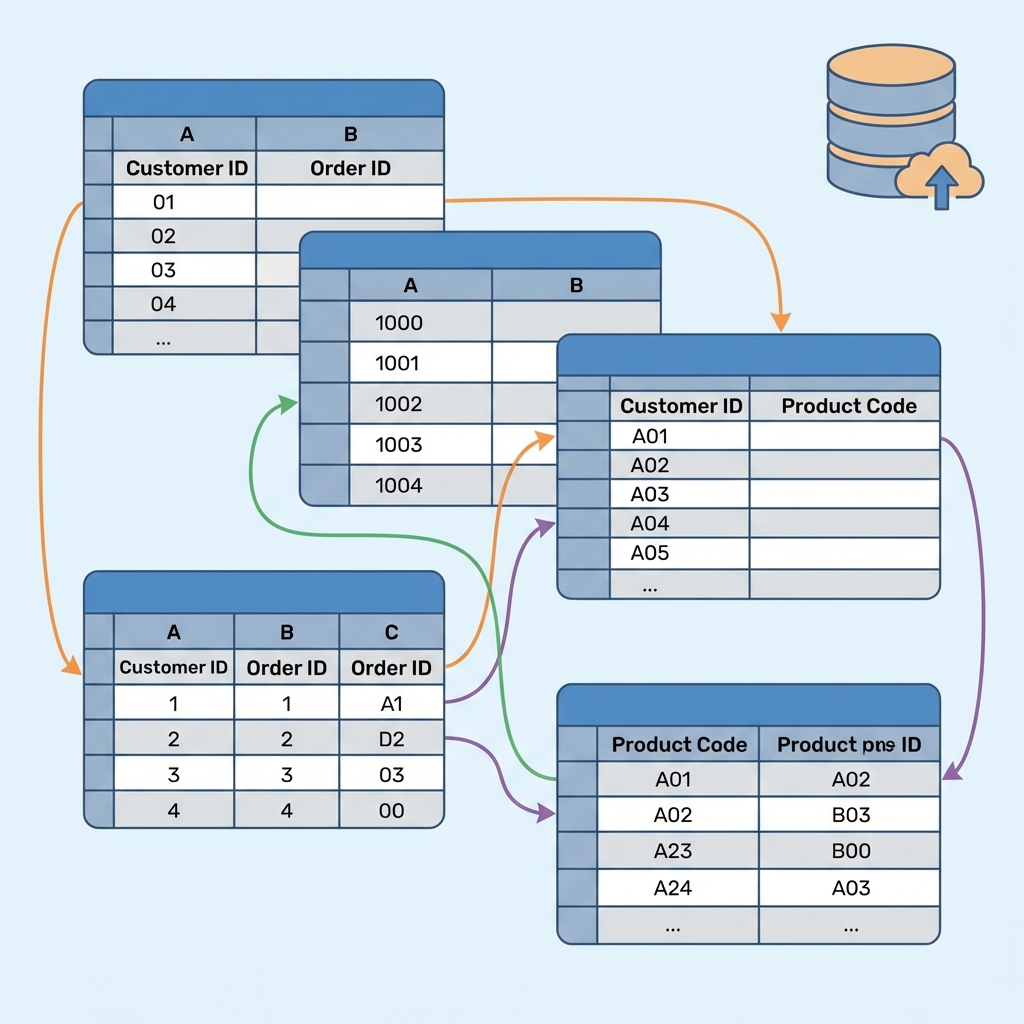
Based on the relational model introduced by E.F. Codd, these databases organize data into rows and columns within tables. They emphasize ACID properties (Atomicity, Consistency, Isolation, Durability).
RDBMS: Overview
Benefit: Data Integrity
Strict schema enforcement and ACID compliance ensure that data remains accurate and consistent, making it ideal for critical transactional systems.
Limitation: Rigidity
Modifying the database schema (e.g., adding columns) can be complex and cause downtime, especially with large datasets, limiting agility.
Use Case: Financial Systems
Traditional banking applications rely on RDBMS to handle complex transactions where error-free consistency is non-negotiable.
NoSQL Databases
NoSQL (Not Only SQL) databases emerged to handle large volumes of unstructured or semi-structured data. They focus on flexibility, scalability, and high performance.
NoSQL: Overview
Benefit: Scalability
Designed for horizontal scaling, allowing systems to handle massive traffic simply by adding more servers to the cluster (sharding).
Limitation: Consistency
Often relies on 'Eventual Consistency' rather than immediate consistency (BASE model), which may not be suitable for all applications.
Use Case: Big Data & Social
Handling unstructured user-generated content, real-time analytics, and content management systems where schema evolves rapidly.
Comparison 1: Schema Design
Relational (SQL)
Pre-defined schema. Data structure must be determined before inserting data. Changes are difficult.
Non-Relational (NoSQL)
Dynamic schema. Can insert data without a predefined structure. Unstructured data is welcome.
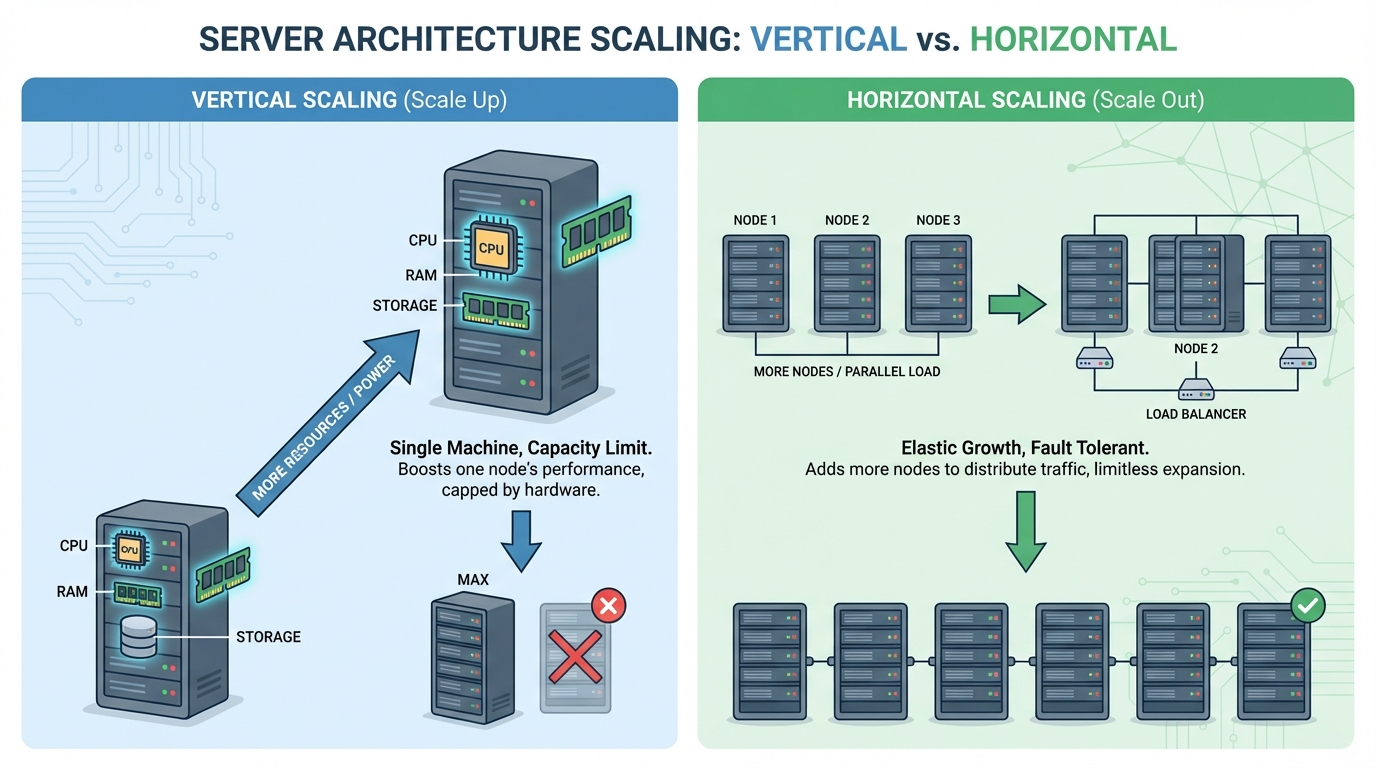
Comparison 2: Scaling Philosophy
Vertical Scaling (SQL): Adding more power (CPU, RAM) to an existing machine. Limited by hardware caps.
Horizontal Scaling (NoSQL): Adding more machines to a pool of resources. Theoretically limitless scale.
Summary Comparison
Relational
NoSQL
Benefit
High Data Integrity (ACID)
High Scalability & Flexibility
Limitation
Rigid Schema, Difficult to Scale
Eventual Consistency (BASE)
Feature Diff 1
Structured/Table Data
Unstructured/Document Data
Feature Diff 2
Vertical Scaling
Horizontal Scaling
Use Case
Banking / Transactions
Social Media / Big Data
- relational-database
- nosql
- sql
- database-architecture
- rdbms
- big-data
- data-integrity