



Made byBobr AI

Hydraulic Gear Transmission: Design and Working Principles

Explore the fundamentals of gear ratios, power transmission, and hydraulic actuation through a miniature model study using Pascal’s Law and DC motors.

#mechanical-engineering#gear-transmission#hydraulic-system#pascal-law#torque-conversion#educational-model#spur-gears
Watch
Pitch
Mangalore Institute of Technology & Engineering logo transparent background

MANGALORE INSTITUTE OF TECHNOLOGY & ENGINEERING

(A Unit of Rajalaxmi Education Trust®, Mangalore) Autonomous Institute affiliated to VTU, Belagavi, Approved by AICTE, New Delhi Accredited by NAAC with A+ Grade & ISO 9001:2015 Certified Institution

DEPARTMENT OF MECHANICAL ENGINEERING

Miniature Model Report on "Hydraulic Gear Transmission"

Submitted by:

Mohammed Ebrahim Ravi kiran Sreerag KV

Under guidance of:

Mr. AVINASH HEGDE
(Assistant Professor)
2025-26
Made byBobr AI
MITE Mangalore Institute logo

Certificate

This is to certify that the Miniature Model entitled "Hydraulic Gear Transmission" was carried out by Mohammed Ebrahim, Ravi kiran, and Sreerag KV, students of the 1st Semester, and is accepted as the model work submitted in fulfilment of the requirement for the completion of the "Fundamentals of Mechanical Engineering" course (Code: 23ESCC113) during the academic year 2025-26.
Signature of the Guide
Signature of H.O.D
Made byBobr AI
Image placeholder

Fig. Miniature Model of Hydraulic Gear Transmission

Evaluation Marks Details:

Particulars Max. Marks Obtained Marks
Miniature Model 10
Report & Presentation 10
Total 20
Made byBobr AI

INTRODUCTION

The Hydraulic Gear Transmission model is a mechanical device designed to demonstrate the fundamental principles of torque conversion, speed variation, and hydraulic actuation.

Unlike fixed-drive systems, this model showcases how different gear ratios can be utilized to alter the output speed and torque of a rotating shaft. Furthermore, it integrates a hydraulic shifting mechanism (using syringes) to simulate the gear-engagement process found in modern machinery.

Educational Focus:
- Power Transmission: Energy transfer from motor to driven shaft.
- Gear Ratios: Relationship between speed and torque.
- Fluid Mechanics: Pascal’s Law for actuation.
diagram of simple gear train meshing gears illustration white background
Made byBobr AI

WORKING PRINCIPLE

1. Gear Meshing / Transmission
The motor shaft connects to a driver gear which meshes with a driven gear (or cone stack). Changing engaged gears alters the ratio:
- Small Driver → Large Driven: Increases Torque, Decreases Speed.
- Large Driver → Small Driven: Decreases Torque, Increases Speed.
2. Hydraulic Actuation
Uses two syringes connected by a fluid tube based on Pascal's Law.
- Master Syringe: Input force pushes fluid.
- Slave Syringe: Syringe extends to push the gear assembly laterally, simulating a clutch/shift mechanism.
diagram of two medical syringes connected by tubing filled with colored water hydraulic principle
Made byBobr AI

LIST OF COMPONENTS

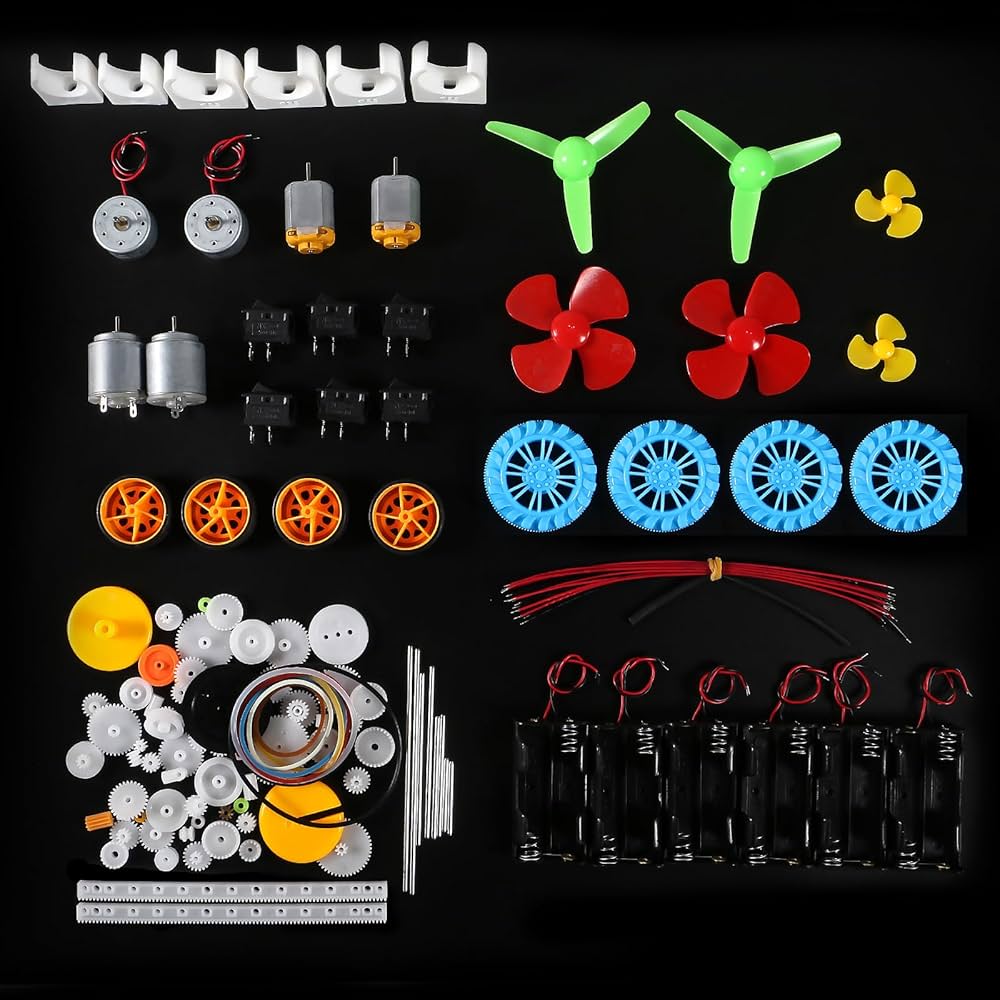
  • DC Motor: 12V High-Speed Motor
  • Gear Set: Plastic Spur Gears / Cone Gears
  • Hydraulic System: 10ml Syringes & Flexible Tubing
  • Shafts & Axles: Steel or Plastic axles
  • Power Source: 9V Battery
  • Base: Rigid support platform (Cardboard/Wood)
collage of engineering components: DC motor, plastic gears, medical syringe, 9V battery, plastic tubing
Made byBobr AI

DETAILS / SPECIFICATIONS

DC Motor

A permanent magnet DC motor responsible for generating the necessary RPM (Rotations Per Minute).

Gear Train

A set of meshing gears with varying teeth counts (e.g., 10T, 20T, 30T) to demonstrate step-up and step-down transmission.

Hydraulic Actuator

Utilizes Pascal’s Law. Pressure in master cylinder is transmitted to slave cylinder for mechanical movement.

Chassis

Stable frame holding motor and shafts in alignment to prevent gear slippage.

Made byBobr AI

APPLICATIONS

Automotive Industry: The fundamental concept behind manual and automatic car gearboxes.
Industrial Machinery: Used in lathes, milling machines, and conveyor belts where variable speeds are required.
Heavy Equipment: Hydraulic shifting is widely used in excavators, cranes, and earth-movers.
Robotics: For joint actuation and torque management in robotic arms.
car gearbox engine transmission cutoff view detailed engineering illustration
Made byBobr AI

FUTURE SCOPE

futuristic robotic gear mechanism arduino connected glossy 3d render
  • Automation: Integration of micro-servos and Arduino to shift gears automatically based on speed (Automatic Transmission).
  • CVT (Continuously Variable Transmission): Replacing fixed gears with a belt-and-pulley system for seamless speed changes.
  • Sensors: Adding RPM sensors to display real-time speed and gear ratio on an LCD screen.
  • Electrification: Adapting the gearbox for high-efficiency Electric Vehicle (EV) powertrains.
Made byBobr AI

REFERENCES

  1. K.R. Gopalkrishna, Elements of Mechanical Engineering, Subhas Stores.
  2. Basant Agrawal, Basic Mechanical Engineering, Wiley India.
  3. Shigley's Mechanical Engineering Design, McGraw-Hill.
  4. Standard engineering course materials for Code 23ESCC113.
THANK YOU
Made byBobr AI
Bobr AI

DESIGNER-MADE
PRESENTATION,
GENERATED FROM
YOUR PROMPT

Create your own professional slide deck with real images, data charts, and unique design in under a minute.

Generate For Free

Hydraulic Gear Transmission: Design and Working Principles

Explore the fundamentals of gear ratios, power transmission, and hydraulic actuation through a miniature model study using Pascal’s Law and DC motors.

MANGALORE INSTITUTE OF TECHNOLOGY & ENGINEERING

(A Unit of Rajalaxmi Education Trust®, Mangalore) Autonomous Institute affiliated to VTU, Belagavi, Approved by AICTE, New Delhi Accredited by NAAC with A+ Grade & ISO 9001:2015 Certified Institution

DEPARTMENT OF MECHANICAL ENGINEERING

Miniature Model Report on "Hydraulic Gear Transmission"

Mohammed Ebrahim Ravi kiran Sreerag KV

Mr. AVINASH HEGDE

2025-26

This is to certify that the Miniature Model entitled "Hydraulic Gear Transmission" was carried out by Mohammed Ebrahim, Ravi kiran, and Sreerag KV, students of the 1st Semester, and is accepted as the model work submitted in fulfilment of the requirement for the completion of the "Fundamentals of Mechanical Engineering" course (Code: 23ESCC113) during the academic year 2025-26.

Fig. Miniature Model of Hydraulic Gear Transmission

INTRODUCTION

The Hydraulic Gear Transmission model is a mechanical device designed to demonstrate the fundamental principles of torque conversion, speed variation, and hydraulic actuation.<br><br>Unlike fixed-drive systems, this model showcases how different gear ratios can be utilized to alter the output speed and torque of a rotating shaft. Furthermore, it integrates a hydraulic shifting mechanism (using syringes) to simulate the gear-engagement process found in modern machinery.<br><br><b>Educational Focus:</b><br>- <b>Power Transmission:</b> Energy transfer from motor to driven shaft.<br>- <b>Gear Ratios:</b> Relationship between speed and torque.<br>- <b>Fluid Mechanics:</b> Pascal’s Law for actuation.

WORKING PRINCIPLE

<b>1. Gear Meshing / Transmission</b><br>The motor shaft connects to a driver gear which meshes with a driven gear (or cone stack). Changing engaged gears alters the ratio:<br>- <i>Small Driver → Large Driven:</i> Increases Torque, Decreases Speed.<br>- <i>Large Driver → Small Driven:</i> Decreases Torque, Increases Speed.

<b>2. Hydraulic Actuation</b><br>Uses two syringes connected by a fluid tube based on Pascal's Law.<br>- <b>Master Syringe:</b> Input force pushes fluid.<br>- <b>Slave Syringe:</b> Syringe extends to push the gear assembly laterally, simulating a clutch/shift mechanism.

LIST OF COMPONENTS

<ul><li><b>DC Motor:</b> 12V High-Speed Motor</li><li><b>Gear Set:</b> Plastic Spur Gears / Cone Gears</li><li><b>Hydraulic System:</b> 10ml Syringes & Flexible Tubing</li><li><b>Shafts & Axles:</b> Steel or Plastic axles</li><li><b>Power Source:</b> 9V Battery</li><li><b>Base:</b> Rigid support platform (Cardboard/Wood)</li></ul>

DETAILS / SPECIFICATIONS

DC Motor

A permanent magnet DC motor responsible for generating the necessary RPM (Rotations Per Minute).

Gear Train

A set of meshing gears with varying teeth counts (e.g., 10T, 20T, 30T) to demonstrate step-up and step-down transmission.

Hydraulic Actuator

Utilizes Pascal’s Law. Pressure in master cylinder is transmitted to slave cylinder for mechanical movement.

Chassis

Stable frame holding motor and shafts in alignment to prevent gear slippage.

APPLICATIONS

<b>Automotive Industry:</b> The fundamental concept behind manual and automatic car gearboxes.

<b>Industrial Machinery:</b> Used in lathes, milling machines, and conveyor belts where variable speeds are required.

<b>Heavy Equipment:</b> Hydraulic shifting is widely used in excavators, cranes, and earth-movers.

<b>Robotics:</b> For joint actuation and torque management in robotic arms.

FUTURE SCOPE

<ul><li><b>Automation:</b> Integration of micro-servos and Arduino to shift gears automatically based on speed (Automatic Transmission).</li><li><b>CVT (Continuously Variable Transmission):</b> Replacing fixed gears with a belt-and-pulley system for seamless speed changes.</li><li><b>Sensors:</b> Adding RPM sensors to display real-time speed and gear ratio on an LCD screen.</li><li><b>Electrification:</b> Adapting the gearbox for high-efficiency Electric Vehicle (EV) powertrains.</li></ul>

REFERENCES

<ol><li>K.R. Gopalkrishna, <i>Elements of Mechanical Engineering</i>, Subhas Stores.</li><li>Basant Agrawal, <i>Basic Mechanical Engineering</i>, Wiley India.</li><li>Shigley's <i>Mechanical Engineering Design</i>, McGraw-Hill.</li><li>Standard engineering course materials for Code 23ESCC113.</li></ol>

  • mechanical-engineering
  • gear-transmission
  • hydraulic-system
  • pascal-law
  • torque-conversion
  • educational-model
  • spur-gears