

Made byBobr AI

Industrial Aluminum Production: Bayer & Hall-Héroult Processes

Explore the complete journey of aluminum from bauxite ore to metal, covering chemical foundations, the electrolysis mechanism, and energy recycling benefits.

#aluminum-production#bayer-process#hall-heroult#electrolysis#bauxite#industrial-chemistry#metal-recycling
Watch
Pitch
abstract macro photography of brushed aluminum metal texture, sleek industrial lighting, metallic silver and blue tones, 8k resolution, minimalist background

Industrial Aluminum Production

From Bauxite to Metal: The Bayer & Hall-Héroult Processes

Made byBobr AI

The Raw Material: Bauxite

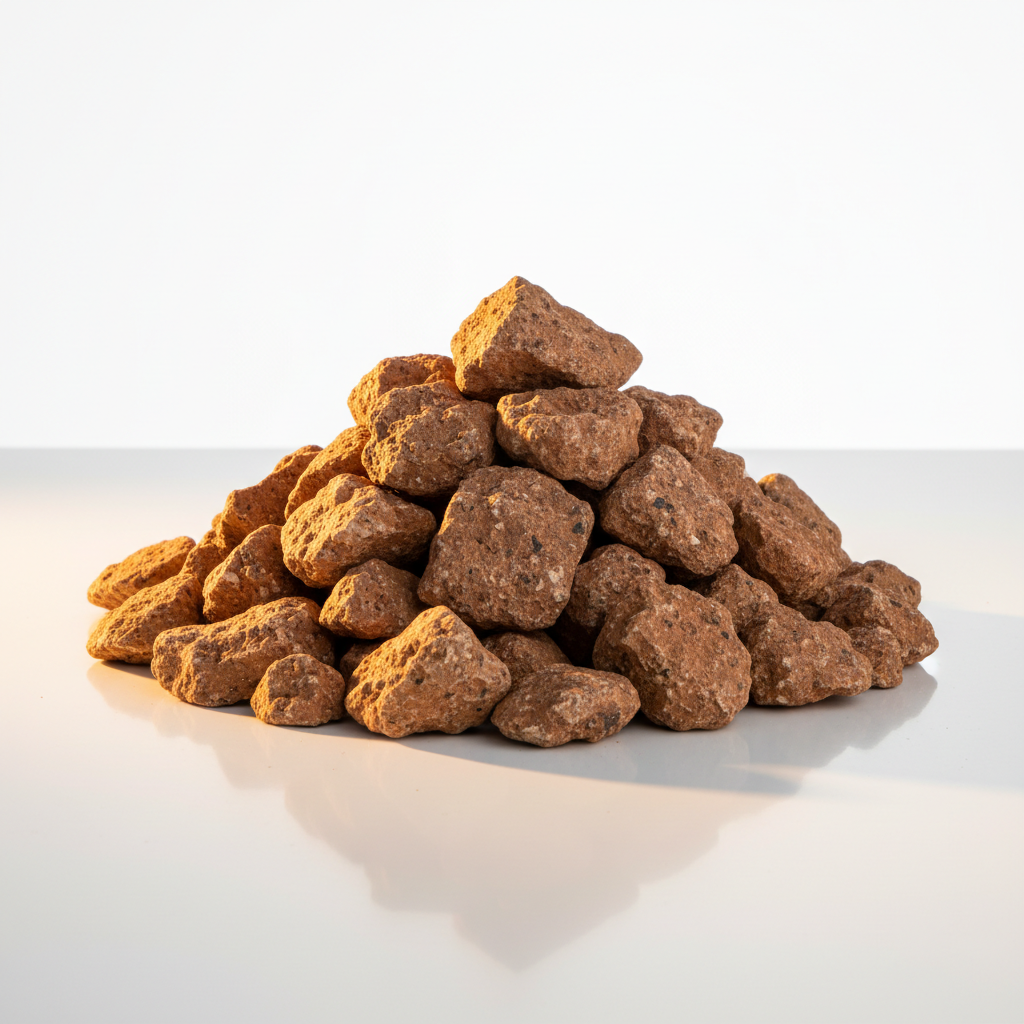
  • • Primary source: Bauxite ore containing Aluminum Oxide (Al2O3).
  • • Impurities: Iron oxides (red mud) and silicates must be removed.
  • • Weathering process: Formed in tropical regions via silicate weathering.
pile of raw reddish-brown bauxite rock ore on a clean laboratory surface, cinematic lighting
Made byBobr AI

Chemical Foundations: Amphoteric Behavior

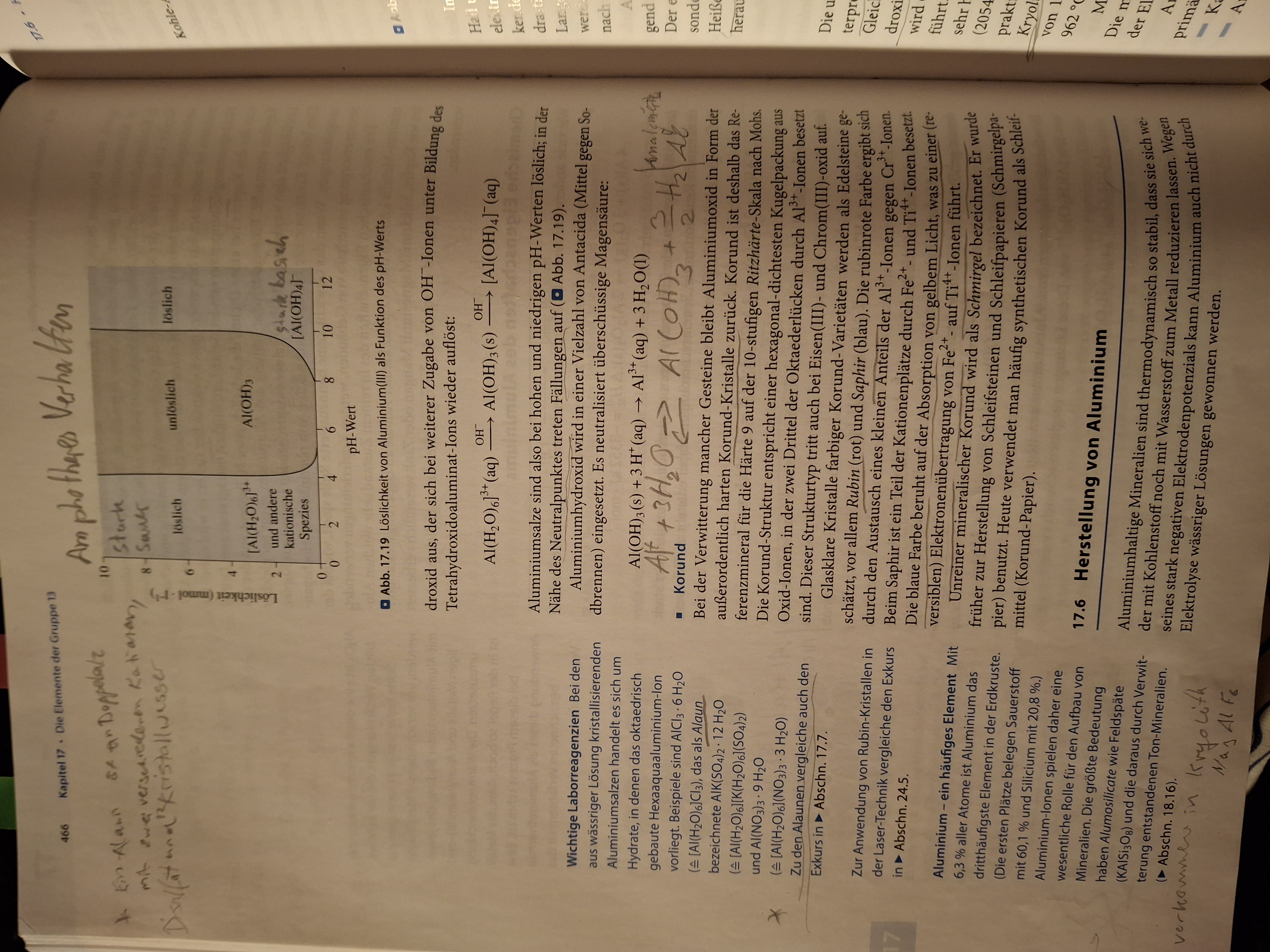
Aluminum Hydroxide Al(OH)3 exhibits amphoteric properties, dissolving in both acids and strong bases. This property is crucial for the Bayer Process to separate pure Alumina from impurities.

Key Reaction

Al(OH)3 + OH- → [Al(OH)4]-

Image placeholder
Made byBobr AI

The Hall-Héroult Electrolysis Process

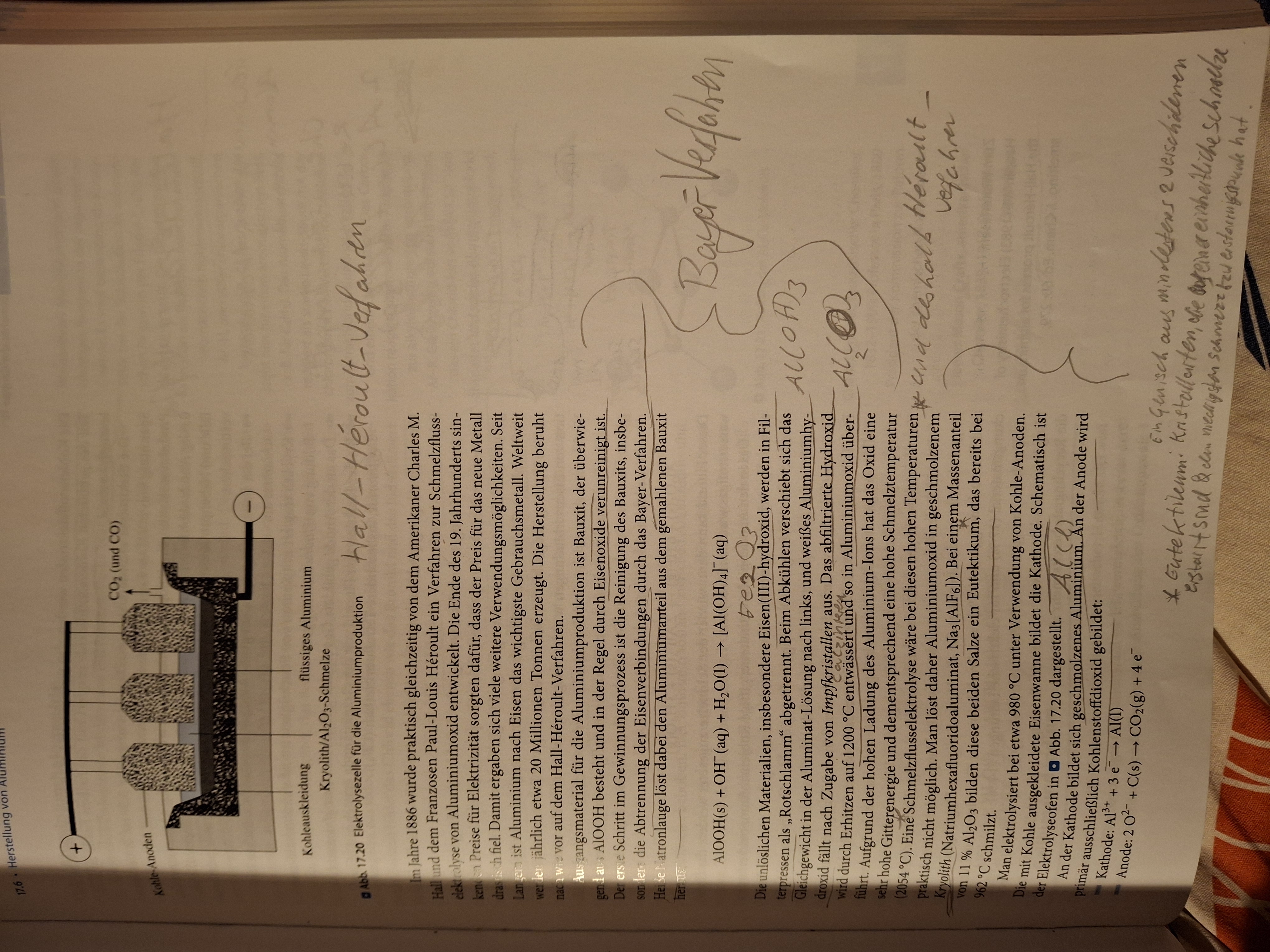
Produces 99.5-99.8% pure aluminum. Alumina (Al2O3) is dissolved in molten Cryolite (Na3AlF6) at approx. 960°C to lower the melting point.

Image placeholder
Made byBobr AI

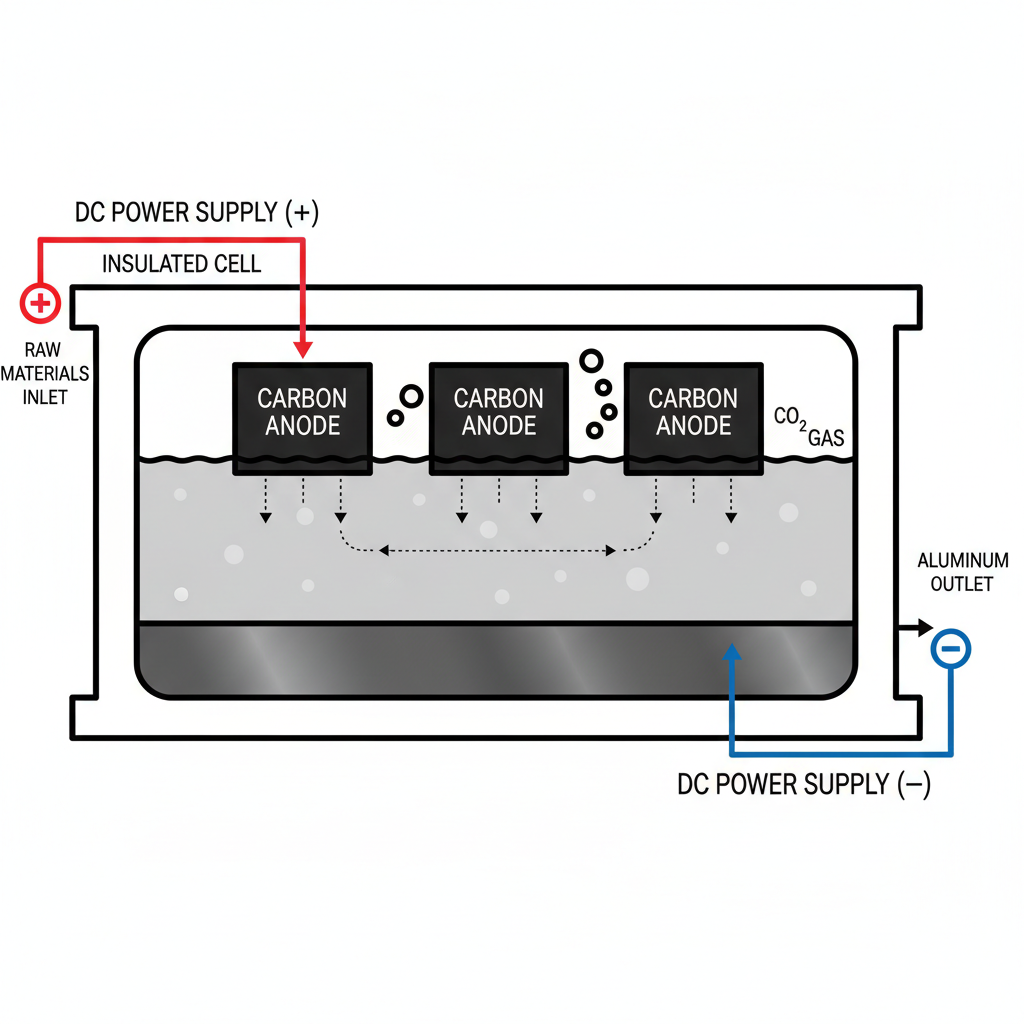
Electrolysis Mechanism

Reduction (Cathode)

Cathode: Liquid Aluminum forms at the bottom of the cell. Reaction: Al³⁺ + 3e⁻ → Al(l)

Oxidation (Anode)

Anode: Carbon blocks react with oxygen. Reaction: 2O²⁻ + C(s) → CO2(g) + 4e⁻

Note: Anodes are consumed during the process and must be regularly replaced along with Fluoride salts.

scientific diagram of electrolysis cell, cross section showing molten aluminum layer at bottom and carbon anodes dipping from top, technical schematic style, vector look
Made byBobr AI

Energy Consumption Analysis

Comparison of energy required for primary production versus recycling. Recycling requires only ~5% of the original energy input.

Chart
Made byBobr AI

Environmental Challenges

01. CO₂ Emissions

Anode consumption generates significant CO₂. Primary production has a high carbon footprint.

02. PFC Emissions

Occasional "anode effects" release CF4 and C2F6, potent greenhouse gases.

03. Red Mud

Iron-rich waste from the Bayer process poses storage and alkalinity hazards.

04. Fluoride Limits

Strict controls required to prevent hydrogen fluoride release into local ecosystems.

Made byBobr AI

Important Compounds: Aluminum Chloride

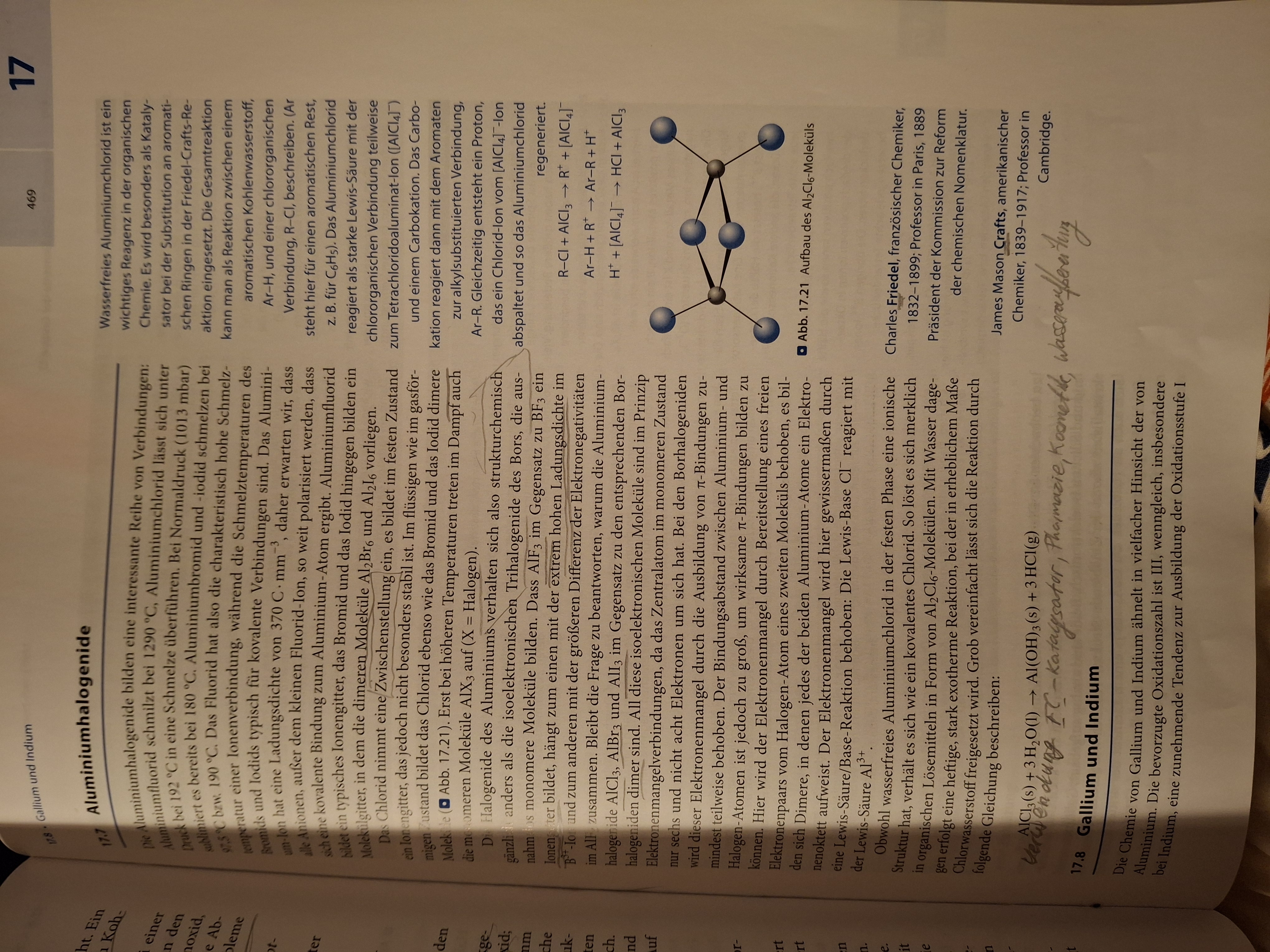
Aluminum halides, specifically AlCl3, play a critical role in organic chemistry. AlCl3 acts as a strong Lewis Acid catalyst.

Application: Friedel-Crafts alkylation and acylation. Structure: Exists as a dimer (Al2Cl6) in gas phase or non-polar solvents.

Image placeholder
Made byBobr AI

Strategic Outlook

Economic Driver:
Recycling is the Future: Due to the high energy cost of primary production (approx 15 kWh/kg), recycling provides huge economic margin.
Market Demand:
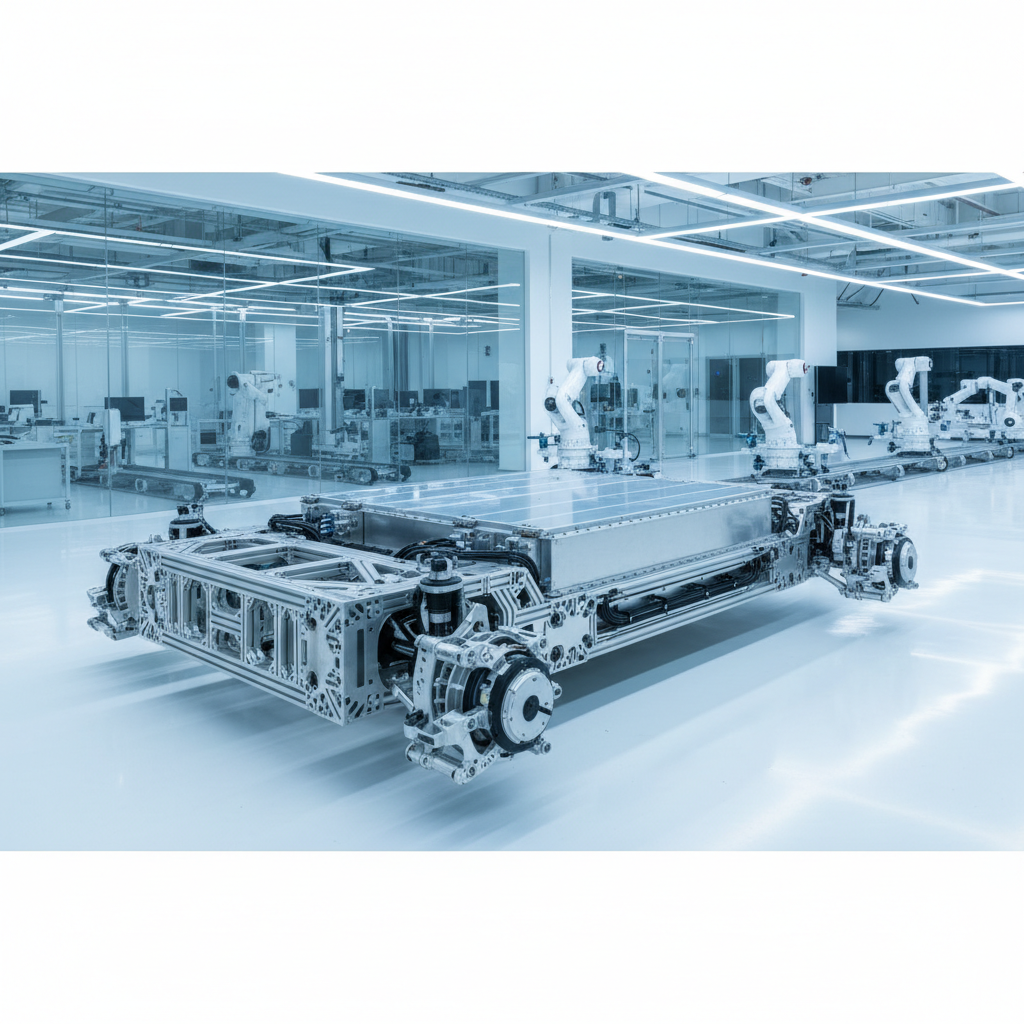
Material Properties: Lightweight, corrosion-resistant (due to protective oxide layer), and high conductivity ensure growing demand in EV and aerospace sectors.
modern electric vehicle chassis made of aluminum, clean high tech factory background, bright lighting, industrial design
Made byBobr AI
artistic macro shot of aluminum metal shavings and chemistry glassware, 3d render, hyperrealistic, depth of field

Summary

From ore to innovation

Made byBobr AI
Bobr AI

DESIGNER-MADE
PRESENTATION,
GENERATED FROM
YOUR PROMPT

Create your own professional slide deck with real images, data charts, and unique design in under a minute.

Generate For Free

Industrial Aluminum Production: Bayer & Hall-Héroult Processes

Explore the complete journey of aluminum from bauxite ore to metal, covering chemical foundations, the electrolysis mechanism, and energy recycling benefits.

Industrial Aluminum Production

From Bauxite to Metal: The Bayer & Hall-Héroult Processes

The Raw Material: Bauxite

Primary source: Bauxite ore containing Aluminum Oxide (Al2O3).

Impurities: Iron oxides (red mud) and silicates must be removed.

Weathering process: Formed in tropical regions via silicate weathering.

Chemical Foundations: Amphoteric Behavior

Aluminum Hydroxide Al(OH)3 exhibits amphoteric properties, dissolving in both acids and strong bases. This property is crucial for the Bayer Process to separate pure Alumina from impurities.

The Hall-Héroult Electrolysis Process

Produces 99.5-99.8% pure aluminum. Alumina (Al2O3) is dissolved in molten Cryolite (Na3AlF6) at approx. 960°C to lower the melting point.

Electrolysis Mechanism

Cathode: Liquid Aluminum forms at the bottom of the cell. Reaction: Al³⁺ + 3e⁻ → Al(l)

Anode: Carbon blocks react with oxygen. Reaction: 2O²⁻ + C(s) → CO2(g) + 4e⁻

Note: Anodes are consumed during the process and must be regularly replaced along with Fluoride salts.

Energy Consumption Analysis

Comparison of energy required for primary production versus recycling. Recycling requires only ~5% of the original energy input.

Environmental Challenges

CO₂ Emissions

Anode consumption generates significant CO₂. Primary production has a high carbon footprint.

PFC Emissions

Occasional "anode effects" release CF4 and C2F6, potent greenhouse gases.

Red Mud

Iron-rich waste from the Bayer process poses storage and alkalinity hazards.

Fluoride Limits

Strict controls required to prevent hydrogen fluoride release into local ecosystems.

Important Compounds: Aluminum Chloride

Aluminum halides, specifically AlCl3, play a critical role in organic chemistry. AlCl3 acts as a strong Lewis Acid catalyst.

Application: Friedel-Crafts alkylation and acylation. Structure: Exists as a dimer (Al2Cl6) in gas phase or non-polar solvents.

Strategic Outlook

Recycling is the Future: Due to the high energy cost of primary production (approx 15 kWh/kg), recycling provides huge economic margin.

Material Properties: Lightweight, corrosion-resistant (due to protective oxide layer), and high conductivity ensure growing demand in EV and aerospace sectors.

Summary

From ore to innovation

  • aluminum-production
  • bayer-process
  • hall-heroult
  • electrolysis
  • bauxite
  • industrial-chemistry
  • metal-recycling